
Is a DO a Doctor? Understanding MD and DO Degree Differences
· 19 min read

When you’re looking for a doctor, you might see letters like "MD" or "DO" after their name. It’s easy to get confused about what these titles mean. But understanding them can help you choose the best care for yourself or your family.

Let’s start by clearing up a common question: is a do a doctor? Yes, absolutely. Both MDs and DOs are fully licensed doctors who can treat patients, prescribe medicine, and perform surgery. They both complete many years of school and training.
An MD stands for Doctor of Medicine. This is the most common medical degree in the United States. Doctors with an MD degree learn a traditional approach to medicine, focusing on diagnosing and treating illnesses with medications, surgery, and other standard treatments. They attend what are called allopathic medical schools.
A DO stands for Doctor of Osteopathic Medicine. Doctors with a DO degree also go through similar training as MDs, but their education includes an added focus on the body’s interconnected systems. This means they often look at how your lifestyle and environment affect your health. They also receive special hands-on training called osteopathic manipulative medicine, or OMM. This training teaches them how to use their hands to diagnose and treat illnesses by focusing on muscles, bones, and joints. This can affect how they approach your care, often taking a more holistic view of your health and well-being. Both types of doctors complete similar schooling and can do the same job, but their training approaches are a bit different, as highlighted in "MD vs. DO: Is There a Difference?" from Cleveland Clinic Health Essentials.
So, why do these titles matter when you seek care in 2026? Knowing the difference can help you understand your doctor’s approach to your health. If you prefer a doctor who also considers your body’s structure and overall lifestyle more deeply in your treatment plan, a DO might be a good fit for you. If you are mainly focused on traditional medical treatments, an MD will also provide excellent care. Both are highly trained professionals ready to help you.
With so much information out there about health and medical care, it’s easy to feel overwhelmed. To make good choices about your health, you need clear and reliable facts. Filter the Noise by seeking out trusted sources and understanding what different medical titles mean for your care.
Understanding what MD and DO stand for is simpler than it might seem. Both are important medical degrees that let someone practice as a doctor. MD means "Doctor of Medicine," and DO means "Doctor of Osteopathic Medicine." While they both become fully licensed doctors, their paths to becoming a physician and their views on health have different starting points.
MDs come from what is called allopathic medicine. This type of medicine has been around for a very long time. It focuses mainly on treating diseases and conditions once they happen, often using medicines or surgery. When you think of a typical doctor’s visit, like getting a prescription for an infection or having an operation, that’s often the allopathic way. Most medical schools around the world teach this method, focusing on symptoms and specific treatments for illnesses, as explained in articles like Osteopathic Medicine DO vs MD Explained (2026).
DOs follow osteopathic medicine, which began in the late 1800s with a doctor named Andrew Taylor Still. He believed that the body has a strong ability to heal itself and that all parts of the body are connected. This means that a problem in one area, like your back, could affect your overall health. So, DO schools teach doctors to look at the whole person, including their lifestyle, environment, and how their body parts work together. They also learn special hands-on techniques called osteopathic manipulative medicine (OMM) to help diagnose and treat problems with muscles, bones, and joints. This approach is a key difference, making their training unique compared to MDs, as highlighted in the Fundamental Osteopathic Medical Competency Domains 2026 guidelines. For more detailed insights, you can review What Your Doctor’s Degree Actually Means.
Even with these different training approaches, both MDs and DOs must pass similar tough exams and complete residencies after medical school. This ensures that every doctor, whether an MD or a DO, meets high standards of care. In the United States and many other countries, both types of doctors are fully licensed and can prescribe medications, perform surgery, and work in all areas of medicine. This answers the question, is a do a doctor, with a clear yes. They often train side-by-side in hospitals and clinics, proving that their skills are equally valued in the healthcare system. The American Medical Association also discusses this, asking DO vs. MD: How much does the medical school degree type matter?.
For those who started their medical training in other countries, called international medical graduates, there are clear pathways to get licensed in places like the United States. Many states have created new ways for these doctors to practice, sometimes without needing to complete another residency in the U.S., as noted in a report by the States with Enacted and Proposed Licensure Pathways for International Medical Graduates. Services like International Credential Evaluation Services help check if a doctor’s education from another country meets the standards here. This shows that the system values all highly trained professionals.
So, while the history and training might differ a bit, both MDs and DOs are expert doctors. When you are looking for any medical professional, like a doctor or a therapist, it’s wise to understand their qualifications. It’s also helpful to know common medical terms. For instance, if you see a prescription with the Acronym BID Medical Meaning, it means taking medicine twice a day. Knowing these small details can help you better understand your care. And if you’re ever looking to choose a new healthcare provider, learning How to Read Therapist Reviews can also be a helpful step.
Even though MDs and DOs both become doctors, their paths through medical school and training have some special features. Both start with a deep dive into science, learning how the human body works down to the smallest parts.
The Foundation of Medical School
Whether you are studying to be an MD or a DO, your first years in medical school are mostly spent in classrooms and labs. You learn about anatomy, which is the study of the body’s parts, and physiology, which is how those parts work together. You also study things like how diseases start and how medicines help. After this classroom learning, students move on to clinical rotations. This is where they spend time in different parts of hospitals and clinics, helping real patients and learning from experienced doctors.

During these rotations, they learn about many areas like children’s health, surgery, and family medicine. Just like MD students, "Osteopathic medical students study all of the basic and clinical sciences," according to the Allopathic and Osteopathic Medicine overview. This shows a strong overlap in the core knowledge both types of doctors gain.
Special Focus for DOs: OMT
One of the biggest differences for DO students is their special training in Osteopathic Manipulative Treatment, or OMT.
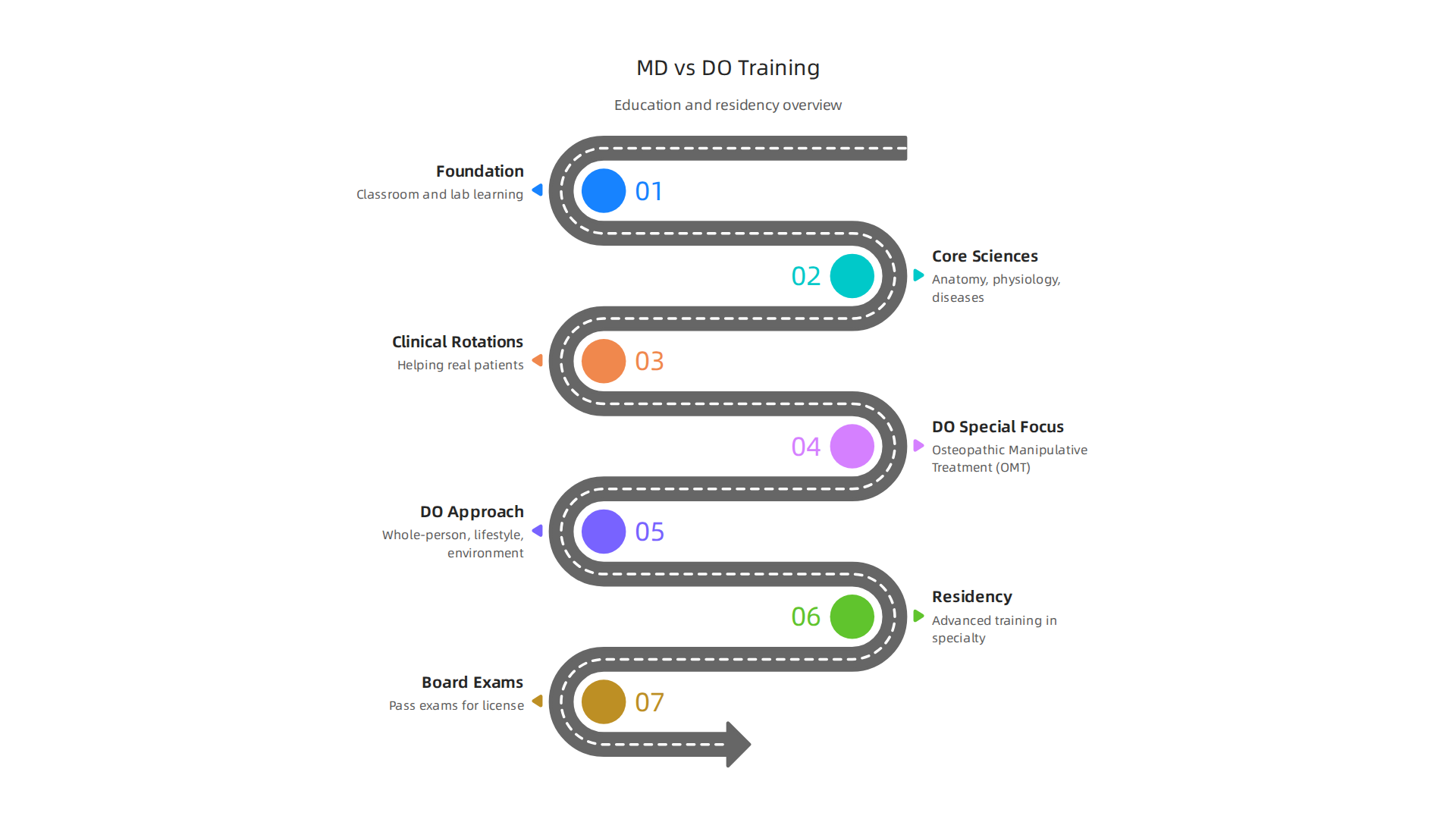
This is a hands-on method where DOs use their hands to feel and diagnose problems with a patient’s muscles, bones, and joints. They then use gentle movements and stretches to help the body heal itself. This extra hands-on training is a key part of becoming a DO, as explained in DO vs MD – Osteopathic vs Allopathic – What’s the Difference?. DO schools also put a lot of focus on the "whole person" approach. This means they consider how everything in a patient’s life, like their diet, stress, and even their home, affects their health. Each osteopathic school might teach in its own way, but they all aim to give this broad view of care, as noted by the Osteopathic Medical Education and Accreditation.
Residency and Board Exams
After finishing medical school, both MD and DO graduates must complete a residency program. A residency is like a long internship where new doctors get advanced training in a specific medical area, such as becoming a surgeon, a pediatrician, or a skin doctor. These programs usually last from three to seven years.
During and after their residency, both MDs and DOs must pass tough board exams to get their final license to practice medicine. MD students usually take exams from the National Board of Medical Examiners (NBME). DO students can also take NBME exams, or they can choose to take exams specific to osteopathic medicine. This ensures that all doctors meet very high standards, as detailed in Common Paths in Medical Education. The type of medical school someone attends, whether allopathic or osteopathic, does not stop them from choosing almost any medical specialty they want to pursue. This means that a DO can become a top specialist just like an MD. This shows that the answer to "is a do a doctor" is a clear yes, with the ability to practice across all medical fields. Understanding what these different doctor titles mean can help you feel more confident in your healthcare choices, which is why it’s important to know the full scope of what these medical doctor titles mean for your care.
Knowing the differences between MDs and DOs also helps you understand how their approaches might look in a real clinic. While both types of doctors use science to diagnose and treat sickness, a DO’s training often shines in areas like primary care. This is because osteopathic doctors focus on treating the whole person. They look at how a patient’s diet, stress, and even their daily life affect their health. This big picture view, combined with hands-on OMT, can be very helpful for ongoing health and wellness. Actually, a large number of DOs choose to work in primary care fields. According to 2024 figures, about 57% of DOs work in primary care specialties, showing their strong presence in these important roles, as noted in "DO vs. MD: How much does the medical school degree type matter?".
But here’s the thing: both MDs and DOs can choose almost any medical specialty they want. They can be surgeons, heart doctors, children’s doctors, or even specialize in mental health. For example, an MD or a DO can become a psychiatrist, which is a medical doctor who helps people with mental health conditions. They can prescribe medicine and offer different kinds of therapy. It’s a common path for both. Both degrees open doors to careers that improve health and wellness, whether it’s through traditional medical treatments or a more holistic approach.
When we talk about mental health care, both MDs and DOs play a vital role. In 2026, there is a growing trend to combine physical health care with mental health care, especially in primary care doctor’s offices. This is known as behavioral health integration. It means doctors work to address both your body and mind in one place. Doctors with either an MD or DO degree can be at the forefront of this type of integrated care, helping patients with both physical and mental health concerns. The American Psychological Association provides a helpful Behavioral Health Integration Fact Sheet on this topic. It shows how important it is for different health workers to team up.
Whether you are seeking help for a physical problem or looking for mental health support, many different specialists are available. If you are exploring therapy options, it is helpful to understand Care Counseling: What It Is and How to Find the Right Therapy For You. Doctors with MD or DO degrees can recommend or work alongside therapists. Knowing the professional qualifications of any medical provider, including therapists, can help you find the right fit for your needs. This shared ability to specialize means that when you ask, "is a do a doctor," the answer is a resounding yes, fully equipped to practice across the entire medical landscape.
Choosing a provider for mental health care: practical considerations
When it comes to finding help for your mental health, knowing that both MDs and DOs are fully trained medical doctors opens up many options. The real question then becomes, which type of doctor, or other mental health professional, might be the best fit for you? It often comes down to personal preference, the kind of care you’re looking for, and your specific needs.

If you lean towards a more whole-person approach that connects physical health to mental well-being, an osteopathic doctor (DO) might feel like a good choice. Their training often includes osteopathic manipulative treatment (OMT), which uses hands-on methods to help the body heal. For some people, addressing physical tension or pain can be a helpful part of their mental health journey, especially if stress shows up in their body. For instance, DO students learn about the body’s systems and how they work together, much like allopathic students, but with an added focus on manual diagnosis and treatment as noted by the Osteopathic Medical Education and Accreditation.
On the other hand, an allopathic doctor (MD) will also provide excellent mental health care, especially if medication management is a key part of your treatment plan. Many psychiatrists, who are medical doctors specializing in mental health, hold an MD degree. Both MDs and DOs complete rigorous medical school and residency programs, so when you ask "is a do a doctor," the answer is clearly yes, and both are capable of helping with mental health. If you want to learn more about their training paths, read our article on DO vs MD: What These Medical Doctor Titles Mean For Your Care.
How to check a doctor’s qualifications
No matter if you choose an MD or a DO for your mental health care, it’s wise to check their credentials. This means looking into their licenses, board certifications, and any hospital privileges they might have. This step ensures you’re seeing a qualified professional.
Here’s how you can do it:
- State Medical Boards: Every doctor must have a license to practice medicine. You can usually check their license status and any disciplinary actions through your state’s medical board website.
- Board Certifications: Doctors can get certified by special boards in their chosen field, like psychiatry. This shows they have extra training and have passed challenging exams. You can often find this information on the board’s website or through professional organizations.
- Professional Organizations: Groups like the American Medical Association (AMA) or the American Osteopathic Association (AOA) often have directories where you can verify a doctor’s membership and sometimes their certifications.
- Hospital Privileges: If a doctor works in a hospital, you can confirm their privileges with that hospital.
Looking into these details helps you feel confident in your choice. It’s also helpful to look at reviews and ask about their clinical focus or specific approaches to mental health care. For guidance on assessing various providers, including understanding how to read therapist reviews and find the right therapist, we have helpful information available. Knowing these things can help you find a mental health professional who truly understands your needs and supports your journey to wellness.
In 2026, with so much information out there, it can sometimes be hard to know what’s true. Filter the Noise to make clear judgments about your health care.
After checking a doctor’s qualifications, the next step is to have a good talk with them. This chat helps you figure out if they are the right fit for your mental health journey.

It’s like working together on your care, which doctors call "shared decision-making." When you and your doctor make choices together, patients often feel better about their care and stick with their plans more easily. This teamwork can improve your overall well-being, as shown in studies about patient engagement and shared decision-making.
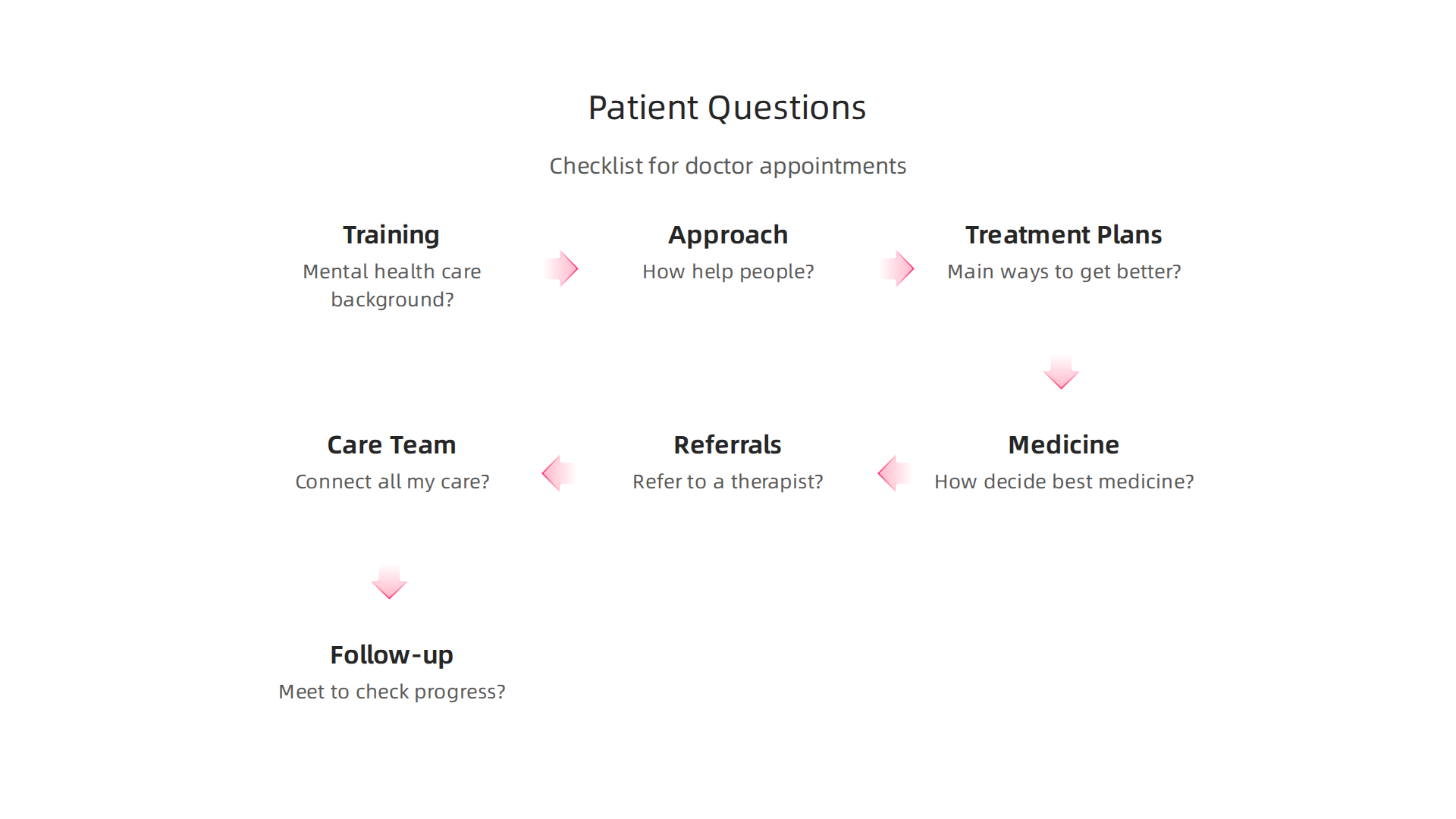
Here are some helpful questions to ask at your appointment:
-
About their training and experience:
- "What kind of training do you have in mental health care?" This helps you understand their background, whether they’re an MD, a DO, or another kind of mental health expert. Remember, if you’re wondering if is a do a doctor, the answer is yes, they are fully licensed medical doctors.
- "What is your approach to helping people with conditions like mine?"
- "How many years have you been helping people with mental health concerns?"
- "Are there any specific therapist qualifications or certifications you’d like me to know about?"
-
About treatment plans:
- "What are the main ways you help patients get better?" This could be talking therapy, medicine, or both.
- "If medicine is suggested, how do you decide which one is best for me?"
- "How often would I need to take the medicine, and how would I know what a medical acronym BID or other prescription abbreviations mean?" It’s important to understand your prescriptions fully.
- "Can you refer me to a therapist if I also need talking therapy?" Many doctors work closely with therapists to give you complete care. Getting a deeper understanding of care counseling can be a great step.
-
About how they work with other care providers:
- "Do you work with other doctors, like my family doctor, to make sure all my health care is connected?" Many health systems are trying to connect mental health care with primary care better, which can be very helpful for patients. This idea of connecting different types of care is called behavioral health integration.
- "How do you share information with other providers, if I allow it?"
-
About follow-up and progress:
- "How often will we meet to check on my progress?"
- "How will we know if my treatment is working?"
- "What should I do if I feel worse between appointments?"
When your doctor answers these questions, listen for clear and kind explanations. A good doctor will help you understand all your choices and make you feel like a partner in your care. They should also be ready to explain any medical terms, like "bid abbreviation medical," so you always know what’s going on. This helps you feel more confident and involved in your journey to better mental health.
When you’re choosing a doctor, knowing their training is important. But it’s also good to understand how doctors are recognized by law, especially if you move or live in different countries. For example, in the United States, both MDs (Doctors of Medicine) and DOs (Doctors of Osteopathic Medicine) are fully licensed medical doctors. They can both treat patients, do surgery, and prescribe medicines. So, if you’re asking, "is a do a doctor?" the answer is a clear yes. Both types of doctors complete similar training and residency programs, which are like long internships after medical school.
However, things can get a bit more complex when we look at how medical degrees are seen around the world. What makes a doctor legally recognized in one country might be different in another. This is especially true for doctors who trained outside the country where they want to practice. For example, some states in the U.S. have created new ways for foreign-trained doctors to get a license, making it easier for them to help patients here. In 2026, many states are working to make these pathways clearer, allowing more international doctors to practice in the United States. For instance, some new laws allow international medical graduates to get a state license without needing to complete another residency in the U.S. This helps address doctor shortages and brings diverse skills to patient care. You can find more details about these changes in reports on States Allowing International Doctors to Practice in the United States.
The difference between an MD and a DO usually doesn’t affect the care you receive or your insurance coverage in the U.S. Both are seen as equal medical professionals. However, when it comes to international recognition, a medical degree from one country might need to be carefully checked and approved in another. Organizations often help evaluate these international credentials to make sure doctors meet the standards needed to practice legally. This process ensures that all doctors, no matter where they trained, have the right qualifications to keep patients safe and healthy.
It’s useful to remember that while the core question "is a do a doctor" is straightforward in places like the U.S., the broader world of medical licensing can be tricky. Knowing these details helps you understand the bigger picture of healthcare and how doctors get to help people. If you want to dive deeper into what these titles mean for your care, you can explore more about Do Vs MD What These Medical Doctor Titles Mean For Your Care.
Summary
This article explains the difference between MD (Doctor of Medicine) and DO (Doctor of Osteopathic Medicine) so you can choose care with confidence. It shows that both MDs and DOs are fully licensed physicians who complete medical school, residencies, and board exams, and both can prescribe medication, perform surgery, and enter any specialty. The core distinction is that DO training adds a whole-person focus and hands-on osteopathic manipulative treatment (OMT), while MD training emphasizes allopathic approaches to diagnosis and treatment. The piece walks through how both groups train, how they overlap in practice, and why many DOs work in primary care. It also covers practical steps for choosing a provider—how to check licenses and board certification, what to ask at your visit, and how to read therapist and doctor ratings. Finally, it notes evolving pathways for international medical graduates and highlights simple prescription terms to know, helping you make informed choices about physical and mental health care.