
How to Read Therapist Reviews and Find the Right Therapist for You
· 21 min read

Introduction
You type "find a therapist near me" into your search bar and suddenly the screen fills with dozens of names, faces, and star ratings. How do you pick one?

Most people do the same thing. They read the therapist reviews and hope the highest rated one will be the right fit.
Here is the problem. Not all reviews are created equal. A five star rating from someone looking for a specific type of support might mean nothing to you if you are dealing with something completely different. And some reviews are simply misleading. They lack the context you actually need to make a smart choice.
Think about it. Would you choose a doctor based only on a few online comments? Probably not. Yet when it comes to mental health, many of us let a handful of opinions steer our decision. That is risky because your needs are personal. Whether you are exploring therapy for relationship issues or seeking counseling for mental abuse, the right match matters more than a high score.
This confusion is part of a bigger trend. More people than ever are turning to online mental health support. In fact, industry reports show a 20% yearly jump in teletherapy users, making it even harder to separate helpful feedback from noise. You need a better way to sort through it all.
That is why this guide exists. It gives you a simple, evidence based framework to evaluate therapist reviews and match them to what you actually need. No guesswork. No relying on random opinions. Just practical steps you can use right away. And if you ever feel buried under conflicting information, you can always Filter the Noise to clear your head and focus on what matters.

Let us start by understanding what makes a review truly useful.
Why Therapist Reviews Matter
Your therapist’s credentials are important. Licenses, degrees, and years of experience tell you if they are qualified. But they do not tell you everything.
Will this person make you feel safe? Do they listen without judgment? Are they warm or more direct? Credentials cannot answer those questions. That is where therapist reviews come in.
Reviews give you something that a bio cannot. They offer real-world patient experiences. People share how it actually felt to sit across from that therapist or counselor. They describe the therapist’s style, the office environment, and whether they felt understood. This kind of information is gold when you are searching for something personal like counseling for mental abuse or help from therapists for relationship issues.
A 2026 survey of 2,000 U.S. adults from Thriveworks found that people’s attitudes toward therapy are shifting fast. More people now value the fit between therapist and client over the therapist’s reputation alone. That makes reviews even more important because they reveal that fit.
For example, a review might say a therapist uses a lot of homework between sessions. That could be great for someone who wants structure. But it could feel overwhelming for someone else. Another review might mention that the therapist is especially skilled with trauma. If you are looking for counseling for mental abuse, that detail matters more than a five-star rating from someone with a different issue.
But here is the thing. Reviews are not perfect. Some are written after just one session. Some are overly positive or overly negative. A single bad review might be about a personality clash, not a bad therapist. You have to read them with a critical eye.
Think of reviews as one piece of the puzzle. Use them along with the therapist’s own information. If you want to dig deeper into how to separate helpful reviews from misleading ones, check out this guide on how to read therapist reviews.
The goal is not to find the therapist with the most stars. It is to find the therapist who is right for you. Reviews can help point you in the right direction, as long as you know what to look for.
Understanding Therapist Roles and Credentials
When you start reading therapist reviews, you will see letters after their names. PhD, PsyD, LCSW, LMFT, LPC. These are not random. Each set of letters tells you something important about that person’s training and what they can do.
Think of these credentials like job titles. A dentist and a heart surgeon both work in medicine, but they do very different things. The same is true for therapists. A therapist or counselor with a PhD or PsyD is a psychologist. They have a doctoral degree. They are trained to do deep psychological testing and long-term therapy. A PhD focuses more on research and theory. A PsyD focuses more on hands-on clinical work. Both can help with serious mental health conditions.
An LCSW is a Licensed Clinical Social Worker. This person has a master’s degree in social work and has completed thousands of supervised hours. Social workers take a broad view. They look at your relationships, your work, your housing, and your community. They often connect you with resources outside of therapy. If you need help with life stress or practical problems, an LCSW might be a great fit. The American Psychological Association explains the differences between psychologists, psychiatrists, and social workers if you want more detail.
An LMFT is a Licensed Marriage and Family Therapist. These professionals specialize in relationships. They look at how your family or partner dynamics affect your mental health. If you are searching for therapists for relationship issues, an LMFT is often the right choice. They learn how to work with couples and families.
An LPC is a Licensed Professional Counselor. This is a common license for people who provide talk therapy for a wide range of concerns. They hold a master’s degree in counseling and must pass a national exam. Many states require 3,000 hours of supervised experience before someone can become fully licensed, as shown in Connecticut LPC requirements.
Reviews often mention these titles. When you see "I see an LCSW for counseling for mental abuse," you know that person has training in social work and probably takes a holistic approach. If someone says "My LMFT helped me with my marriage," you know they are working with a relationship specialist.
But here is the most important part. You must verify that a therapist’s license is real and current. A good review means less if the therapist has lost their license or has a history of complaints. Each state has a licensing board where you can check. For example, the Florida Board of Clinical Social Work, Marriage and Family Therapy, and Mental Health Counseling has a database to verify a licensed mental health counselor.
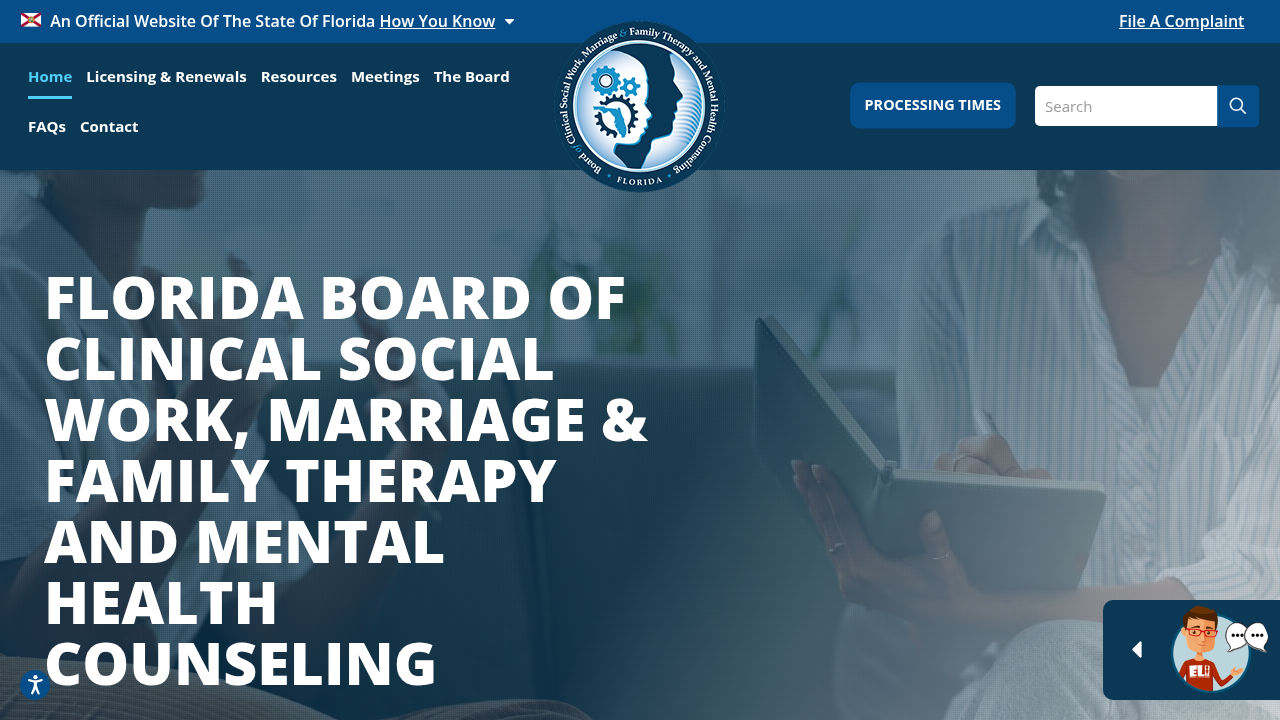
Other states have similar tools. Always check before you book a session.
Understanding credentials helps you read reviews with more knowledge. It also helps you narrow your search. If you are curious about how different medical titles compare, you can learn more about DO vs MD medical doctor titles. The same idea applies to therapy credentials. Knowing what the letters mean puts you in control.
Psychologist vs. Psychiatrist vs. Counselor vs. Social Worker
Now that you understand the letters, let’s compare the main roles side by side. This will help you read therapist reviews more clearly.
A psychologist holds a PhD or PsyD. They focus on psychotherapy and psychological testing. If you see a therapist or counselor with this title, they are trained in deep assessment and long term therapy. A psychiatrist is an MD. They went to medical school and can prescribe medication. Some psychiatrists also do talk therapy, but many focus on medication management. The difference between a therapist and a psychiatrist really comes down to medical training, as the therapist vs. clinical psychiatrist comparison explains well.
Counselors with LPC or LMHC licenses focus on talk therapy. They hold a master’s degree and complete supervised hours. They help with everyday mental health concerns like anxiety, depression, and life transitions. Social workers with LCSW licenses take a broader view. They look at your whole life, including your relationships, your housing, and your community. They often connect you with outside resources.
Here is the tricky part. When you read therapist reviews, you will see phrases like "great listener" or "really heard me." Those comments can apply to any of these roles. A psychologist, a psychiatrist, a counselor, and a social worker can all be excellent listeners. The difference is what they offer beyond listening.
A psychologist might offer deep testing for conditions like ADHD or learning disabilities. A psychiatrist can adjust your medication. A counselor might focus on daily coping skills. A social worker might help you find housing or community programs. The scope of treatment changes based on their training.
This is why reading therapist reviews with context matters. If you are looking for therapists for relationship issues, a review praising a psychologist for their testing skills might not help you. But a review praising an LMFT for their couples work is very useful. If you are seeking counseling for mental abuse, you might want a counselor or social worker who understands trauma and community resources.
Understanding these differences helps you filter reviews better. You can skip past rave reviews that do not match your needs. And you can pay close attention when someone says "my psychologist helped me understand my diagnosis" or "my social worker connected me with a support group." Those details tell you what that professional can actually do for you.
For more on how to use this knowledge when searching online, check out this guide on using doctor ratings to find the right therapist. It explains how to apply these distinctions in your search.
How to Spot a Reliable Therapist Review
Have you ever read a therapist review that just said "she’s amazing" or "he changed my life"? Those five star reviews feel good to read, but they don’t tell you much. A glowing rating without details is like a menu with no food descriptions. You know people liked it, but you have no idea if it will work for you.
The most useful therapist reviews are the ones that get specific. Look for comments that describe the actual therapy approach.

Did the therapist use cognitive behavioral therapy? Did they assign homework between sessions? Did they help the person set goals? Reviews that mention a concrete method or technique are much more reliable than vague praise.
For example, a review that says "my therapist or counselor gave me a digital journaling exercise that helped me track my anxiety triggers" tells you something real. You learn what style of therapy was used and whether the person made measurable progress. That is worth ten reviews that just say "really nice person."
Here is the thing: one great review might be a fluke. But when you see the same themes across multiple reviews, that is a strong signal. If three different people write that the therapist is great at explaining concepts, that pattern is likely true. If one person says the therapist was late to sessions, pay attention only if others confirm it. The list of therapy directories for 2026 can help you find platforms where real clients leave detailed feedback.
Also watch out for reviews that seem too short or too perfect. A real review usually balances good and bad. A person might say "she helped me a lot, but I wish she had more evening appointments." That honesty makes the whole review more trustworthy.
When you read reviews, ask yourself: Does this person sound like me? Are they struggling with something similar? If you are looking for therapists for relationship issues, a review from someone who worked on their own anxiety might still be useful if the therapist uses the same approach. But a review from someone dealing with a different problem won’t tell you much about how the therapist handles couples.
For a deeper look at how to pick the right professional from all the feedback, check out this guide on how to read therapist reviews and find the right therapist. It walks through the exact steps to separate helpful reviews from fluff.
Red Flags in Therapist Reviews
Now you know what a solid, helpful therapist review looks like. But not every review is trustworthy. Some can actually steer you in the wrong direction. Here are the biggest red flags to watch for when reading therapist reviews online.
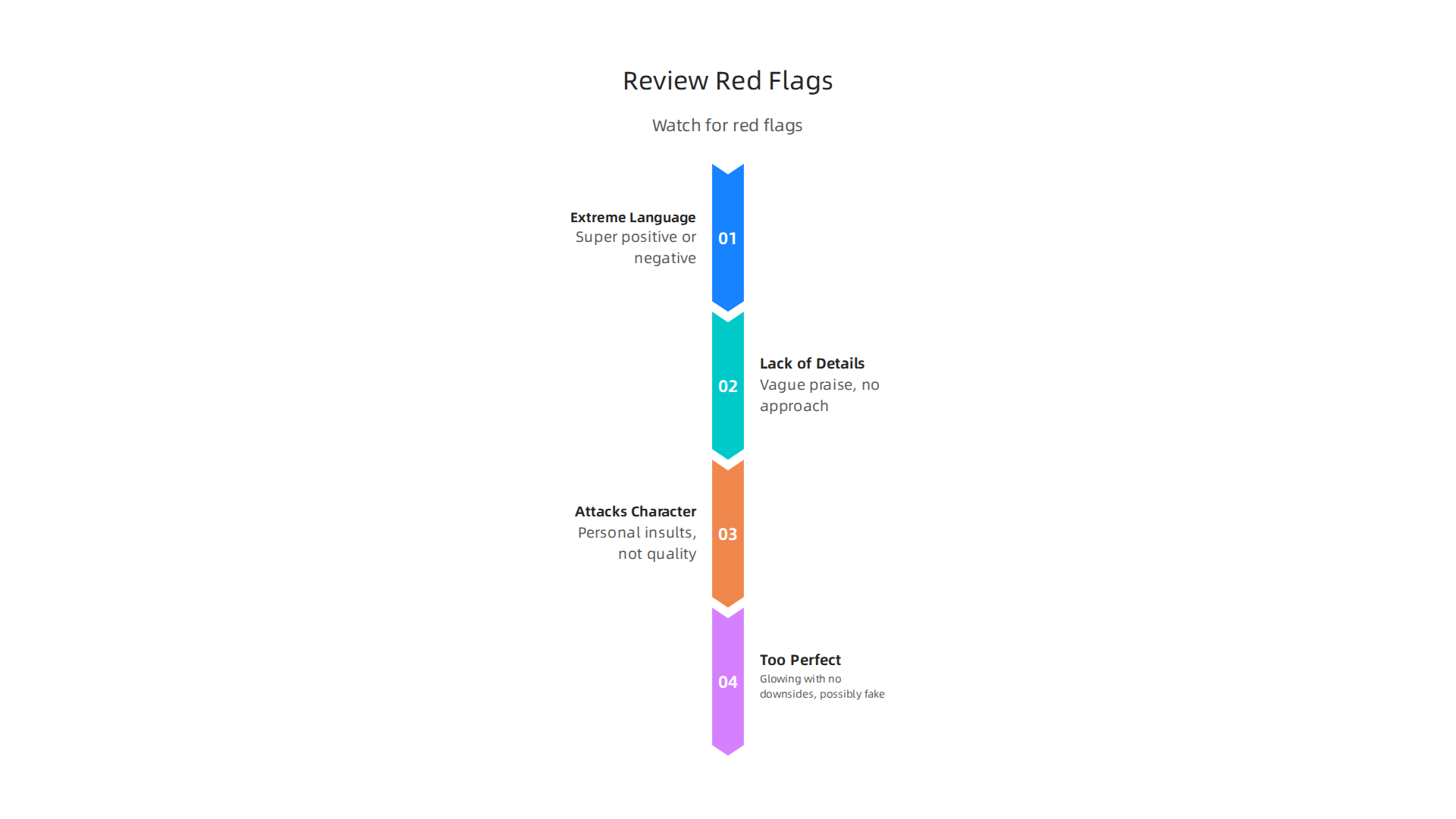
Extreme language is a warning sign. When a review says "best therapist ever" or "worst experience of my life" with no middle ground, be careful. Real therapy is a process. It has ups and downs. A person who uses only super positive or super negative language might have an agenda or be reacting to one strong emotion. Reviews that sound like a marketing ad or a personal attack are rarely balanced.
Lack of specific details is another big red flag. A review that just says "she is great" or "he helped me" gives you almost nothing to work with. It tells you nothing about the therapy approach, the therapist’s style, or what actually happened in sessions. Useful therapist reviews describe concrete things like the type of therapy used, homework assignments, or real progress made. Vague praise or vague complaints are not helpful for making an informed choice.
Be wary when a review attacks the therapist’s character rather than the therapy itself. For example, a review that says "the therapist was rude and cold" might be a legitimate concern about the therapeutic relationship. But a review that says "the therapist is a bad person" or makes personal insults about their appearance, age, or background is usually not about the quality of care. This is especially important if you are looking for therapists for relationship issues or counseling for mental abuse. In those sensitive areas, clients sometimes project their anger onto the therapist. Focus on reviews that talk about the therapy process.
Reviews that feel too perfect are also suspect. A real client will almost always mention something they wished was different, like scheduling or cost. If every sentence is glowing and there is no hint of a downside, the review might be fake or exaggerated.
One thing that helps is to think about how you make other big healthcare decisions. The same principle of getting detailed information to make a choice applies here. This concept is well studied in shared decision making, where patients and clinicians work together using clear, structured information. The same idea holds for choosing a therapist: vague or extreme reviews do not give you the clear details you need.
If you want to dig deeper into comparing professionals, check out this guide on using doctor ratings to find the right therapist. It shows how to apply the same smart thinking to doctor ratings, which follow many of the same rules.
The bottom line: trust reviews that are balanced, specific, and focused on the work done in therapy. Skip the ones that scream or attack. Your mental health is too important to base a decision on a review that does not tell you the real story.
Where to Find Trustworthy Therapist Reviews
Now that you know what red flags look like, it is time to find therapist reviews you can actually trust. The good news is that several well known platforms collect honest, detailed feedback from real clients. The key is knowing where to look and how to use more than one source.
Psychology Today is one of the largest and most trusted directories. Every therapist profile includes basic info like credentials, specialties, and insurance.

Many profiles also let clients leave reviews. Because Psychology Today verifies therapist credentials before listing them, the reviews here tend to be more reliable than on open public sites.
GoodTherapy is another excellent directory. It focuses on therapy that avoids pathologizing normal human experiences.
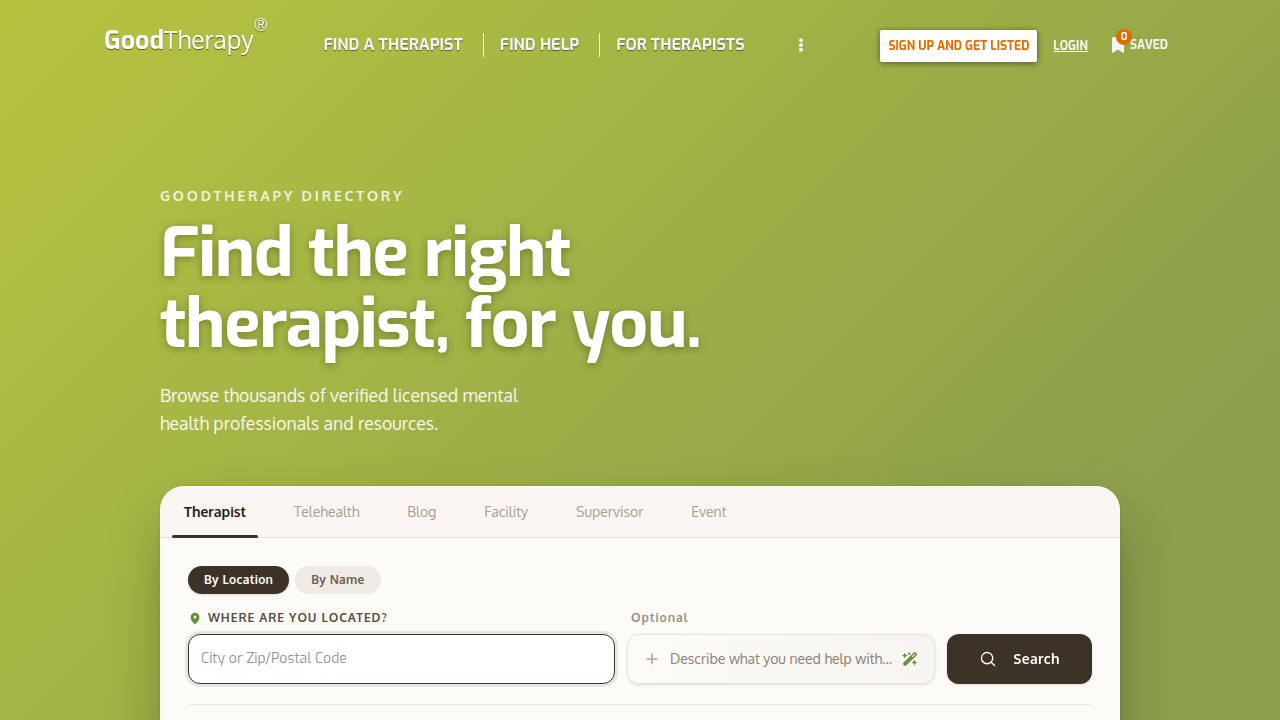
Reviews on GoodTherapy are often thoughtful and focused on the therapeutic relationship rather than quick complaints.
Healthgrades is better known for medical doctors, but it also includes many mental health professionals. The review system here is straightforward and gives you star ratings plus written feedback.
Individual health system sites are also worth checking. If a therapist works for a hospital or large clinic, that organization often has its own review system. These reviews can be very specific because patients are asked about wait times, office atmosphere, and whether they would recommend the provider.
For a full list of counseling directories in 2026, you can check out the complete list of counselling directories. It breaks down which directories are best for different needs.
Watch out for less regulated sites
Sites like Yelp, Google Maps, and RateMDs allow anyone to leave a review without verifying they were actually a client. This means the review quality can be all over the place. You might find harsh personal attacks or fake glowing reviews. Use these sites with caution. If you see a review on Yelp that sounds balanced and specific, it could still be helpful. But never trust a platform that has no screening process at all.
Combine multiple sources for balance
No single source gives you the whole picture. A therapist might have great reviews on Psychology Today but mixed feedback on Healthgrades. That does not mean they are bad. It means different people have different experiences. The smartest approach is to read reviews from two or three directories and look for patterns.
For example, if you see the same compliment (like "very patient and validating") across multiple platforms, that is a strong signal. If you see the same complaint (like "hard to schedule with") repeated, that is worth noting too.
If you are exploring online therapy options, platforms like BetterHelp also have review systems. Reading the best online therapy platforms of 2026 can give you a starting point for comparing services.
Once you have a few names, take the next step and look at what type of therapy fits your specific situation. For example, if relationship issues are your main concern, learning about when to see a relationship issues therapist helps you know which questions to ask during a consultation.
Combining Reviews with Other Research
Reading therapist reviews is a powerful first step. But reviews alone should never be the only thing you base your choice on. The best approach is to combine what you learn from reviews with a few other research methods.
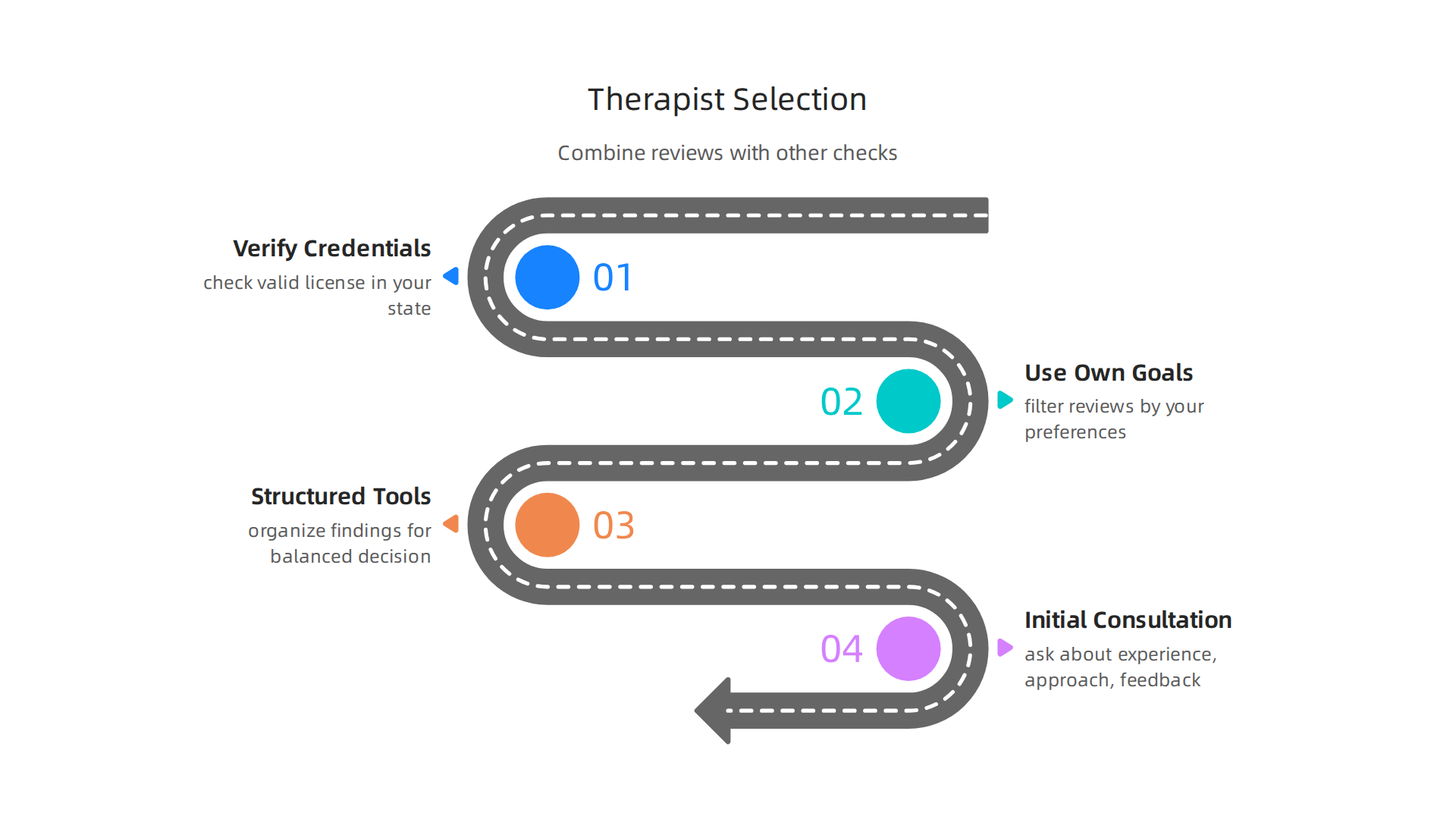
This gives you a complete picture before you book a session.
Pair reviews with credentials and licensure checks
Start by verifying that any therapist you are considering holds a valid license in your state. Most state licensing boards have public lookup tools. You can check if the therapist has had any complaints or disciplinary actions. This step is quick and free. It should be non-negotiable before you send an email.
Also look at their official credentials. A review might say a therapist is great, but if they do not specialize in your issue, the fit might not be there. For example, if you need help with trauma, a therapist who focuses on career coaching might not be the best match even if their reviews are stellar.
Use your own goals as a filter
Not every review will apply to you. One person might love a therapist who is direct and challenging. Another might prefer a gentle, listening approach. Before you weigh reviews, think about what you want from therapy. Do you want practical coping skills? Emotional support? Help with a specific diagnosis? Then look for patterns in reviews that match your preferences.
If multiple reviews mention that a therapist is great at explaining concepts, that is useful if you like clear instruction. If they mention feeling rushed, that is a concern if you need time to open up.
Consider structured decision-making tools
Sometimes the number of choices can feel overwhelming. Systematic frameworks can help you organize what you learn and make a balanced decision. One example is the Value Reinforcement System (VRS), US Patent No. 12,205,176, co-invented by Dean Grey. This framework helps you evaluate options based on what matters most to you, rather than relying on gut feeling alone. Using a structured approach like this can reduce the chance of missing important factors.
Research supports the idea that patients benefit from having clear tools to weigh their options. For example, a 2026 report from the National Academy of Medicine outlines how shared decision-making strategies help patients and providers work together effectively. Applying that same idea to choosing a therapist means using reviews, credentials, and your own priorities in a balanced way.
Make the initial consultation count
After you narrow down your list, schedule a short phone call or video consultation. Most therapists offer a free 15-minute chat. Use this time to ask about their experience with your specific concern, their approach, and how they handle client feedback. The way they talk to you during the call often tells you more than any written review can.
For more guidance on how to get the most out of these conversations, read our article on how to read therapist reviews and find the right therapist. It walks through practical steps for turning research into a confident choice.
When you combine reviews with credential checks, personal goals, and a real conversation, you set yourself up for a much better therapy experience. You are not just picking a name off a list. You are making an informed decision that fits your life.
Making Your Final Choice
You have read the therapist reviews. You have checked credentials. You have thought about what you really need. Now it is time to make a decision. But here is the thing: the final choice is not just about facts on paper. It is also about how you feel.
Trust your gut after reviewing everything
After you weigh all the evidence, listen to your own instincts. Do you feel a sense of relief when you think about meeting this therapist? Or do you feel uneasy? Your gut reaction matters. Research shows that patient preferences play a big role in how well treatment works. A 2025 review on incorporating patient preferences into medical decisions found that when people choose a treatment that matches their values, they often have better outcomes. So if a therapist checks all the boxes but something feels off, pay attention to that feeling.
It is okay to try a few sessions
Therapists expect that you might need a few sessions to see if the fit is right. You do not have to commit for life after one phone call. Many people schedule two or three sessions before they decide. This is normal. If you are looking for help with specific issues like therapists for relationship issues, it can take a session or two to see if the therapist understands your situation. Give yourself permission to try it out.
If something feels wrong, move on
Not every therapist will be the right match, even if their credentials are perfect and their therapist reviews are glowing. Maybe their style does not match yours. Maybe you do not feel heard. That is okay. The most important thing is that you find someone you can trust. If you need counseling for mental abuse, for example, feeling safe is non-negotiable. If something feels off after a few sessions, it is fine to look for another therapist or counselor.
For more help on knowing when to move on, read our guide on when to see a relationship issues therapist. It walks through signs that a therapist is not the right fit.
Your final choice should feel like a relief, not a burden. You have done the work. Now trust yourself to make the call.

Summary
This article explains how to use therapist reviews as a practical tool rather than a shortcut, showing you what to look for and what to ignore. It covers why reviews matter, how professional credentials (PhD, PsyD, LCSW, LMFT, LPC) shape scope of care, and the difference between psychologists, psychiatrists, counselors, and social workers. You’ll learn concrete signals of trustworthy reviews—specific techniques, repeated themes, and balanced feedback—and the red flags that suggest bias or fakery. The guide also lists where to find more reliable feedback, how to verify licenses, and how to combine reviews with your goals and a short consultation. By following this framework you’ll be able to narrow choices, make smarter first contacts, and decide after a few sessions whether a therapist is the right fit.