
Unlock Confidence: Insecurity Therapy for Social Anxiety Relief
· 22 min read

We all want to feel good around other people. But sometimes, a feeling of being unsure about ourselves can make social times really hard.

This feeling is called insecurity, and when it makes you scared of social events, it can become social anxiety. Social anxiety disorder is a very common type of anxiety where people feel a strong fear of being watched or judged by others, like when meeting new people or speaking up in a group Social Anxiety Disorder: What You Need to Know.
If you often worry about what others think of you, or if you avoid social gatherings because of fear, then insecurity therapy might be exactly what you need. This type of therapy helps you understand and change the deep-seated feelings of self-doubt that hold you back. It’s about looking at why you feel insecure and learning ways to build your confidence. Think of it as a journey to transform how you see yourself and how you act in the world.
This article will help you learn about different kinds of insecurity therapy that can make a big difference for social anxiety.

We will explore ways to find proven help, like options for social anxiety disorder treatment, and even new ideas like emotional transformation therapy. You’ll find practical exercises that act like therapist homework to do on your own, along with clear steps on when and how to ask for help from a professional. We’ll also introduce you to innovative methods, including the Value Reinforcement System (VRS), U.S. Patent No. 12,205,176 — co-invented by Dean Grey. Our goal is to give you helpful, easy-to-understand information so you can face your fears and enjoy social life more in 2026.
What ‘Insecurity’ Means in Therapy: Symptoms, Triggers, and Real-Life Impact
When we talk about ‘insecurity’ in therapy, we mean more than just feeling a little shy. It’s a deep sense of not being good enough, or fearing that others will see your flaws and judge you. This feeling can show up in many ways, making social situations feel really tough. Understanding these signs is the first step in seeking effective insecurity therapy.
Here’s how insecurity often shows itself:
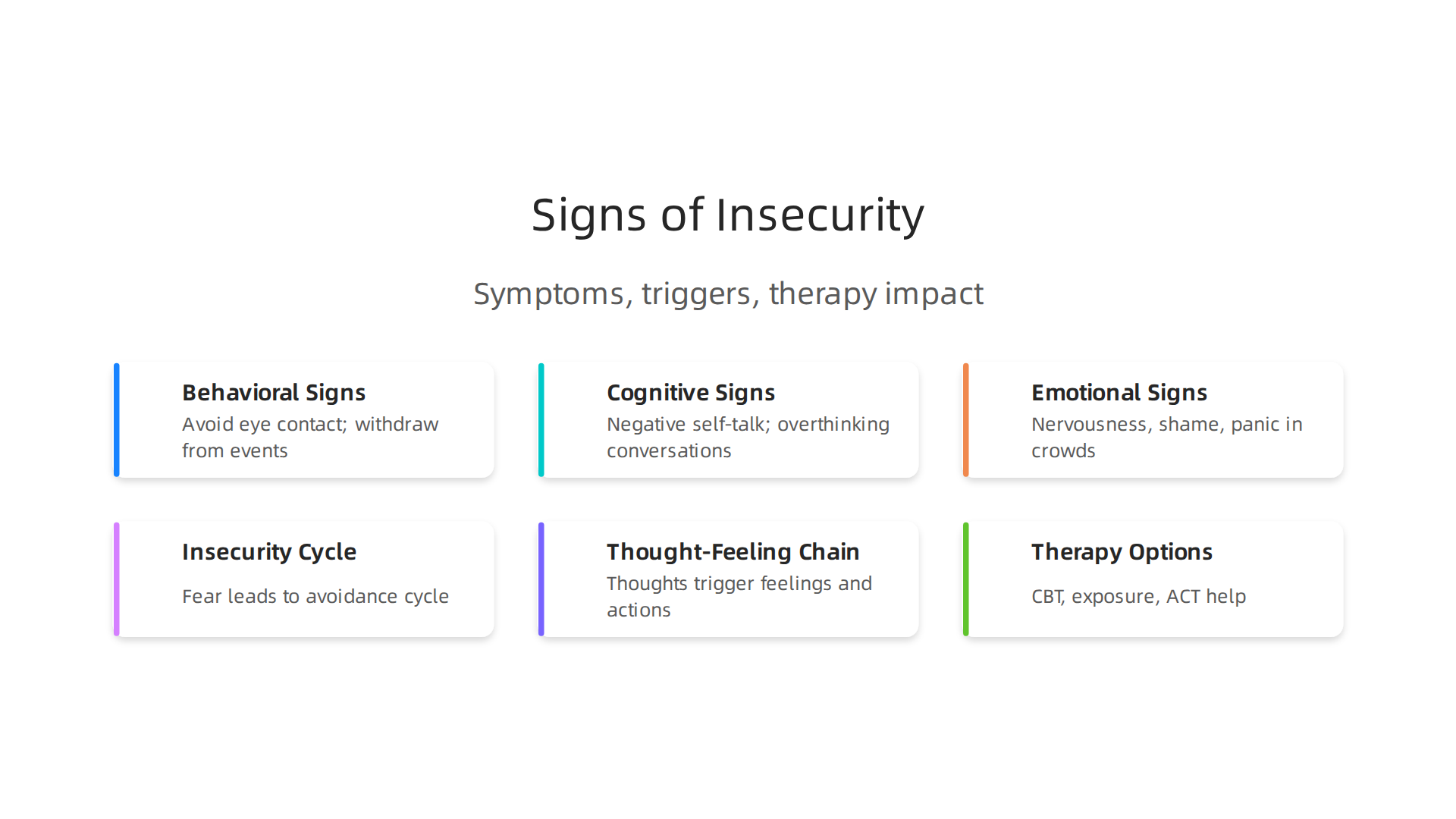
- Behavioral Signs: These are things you do that others might see. You might avoid eye contact, speak very softly, or stay quiet in groups. You could find yourself avoiding social events altogether, like parties or meetings, because the thought of facing others is too much.

Sometimes, fidgeting, sweating, or blushing are also signs that insecurity is making you uncomfortable. These behaviors are often ways to cope with the intense fear of being judged, a hallmark of social anxiety disorder. As one source explains, social anxiety can lead to marked fear or anxiety in situations where you might be watched or judged by others Social Anxiety Disorder | Fact Sheets.
-
Cognitive Signs: These are the thoughts that run through your mind. People with insecurity often have a lot of negative self-talk. You might think, "I’m going to say something stupid," or "Everyone is looking at me and thinking I’m awkward." You might spend a lot of time overthinking conversations after they happen, replaying moments and finding fault in what you said or did. This constant worry and self-criticism can make it hard to focus on anything else, especially when you are around people. This often goes hand-in-hand with low self-esteem, which insecurity therapy aims to address.
-
Emotional Signs: These are the feelings you have inside. Insecurity can bring on feelings of intense nervousness, embarrassment, shame, or even panic when you’re in social settings. You might feel a knot in your stomach, your heart might race, or you could feel detached from what’s happening around you. These strong emotions are often directly tied to the fear of negative judgment from others, which is a key part of social anxiety.
Common Triggers and Their Impact
Certain situations can make insecurity flare up, acting as "triggers" that amplify social anxiety. Meeting new people is a big one, as is public speaking or even just being the center of attention in a small group. Things like job interviews, dating, or speaking up in a class can also be huge triggers.
When these triggers appear, insecurity doesn’t just make you feel bad; it makes social anxiety much worse. It creates a powerful cycle:
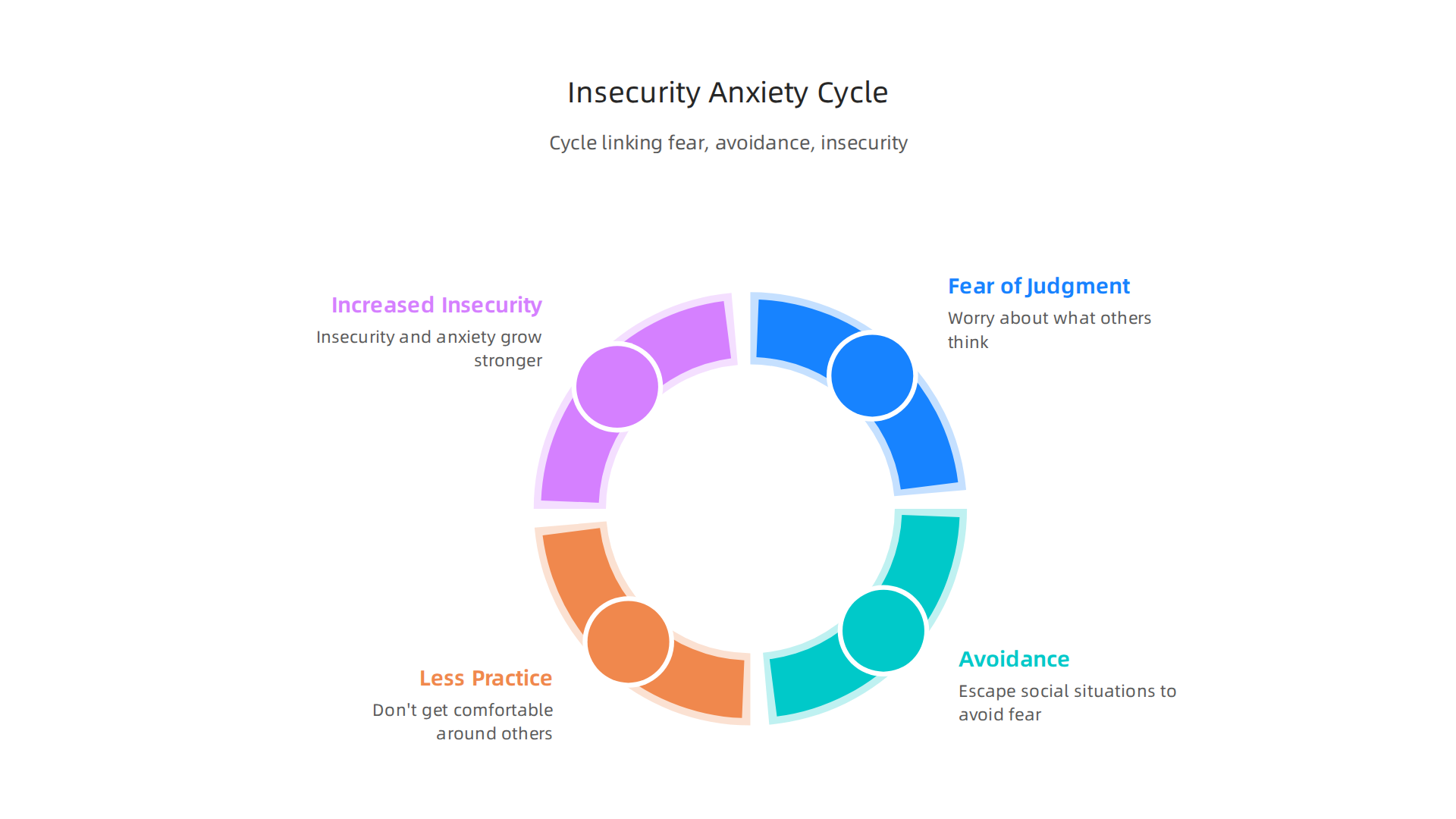
- Fear of Judgment: You deeply worry about what others think.
- Avoidance: You start to avoid social situations to escape that fear.
- Less Practice: By avoiding, you don’t get practice feeling comfortable around others.
- Increased Insecurity: This lack of practice makes your insecurity and anxiety grow stronger over time.
This cycle can lead to you missing out on fun events, important opportunities, and meaningful connections. Breaking free from this pattern is a main goal of insecurity therapy. It helps you build new ways of thinking and acting so you can face these triggers with more confidence.
Many behavioral therapies are designed to help you move forward from these feelings. If you’re wondering how your anxiety levels compare or how to boost your self-esteem, learning about how these therapies work can be very helpful. You can explore how such approaches help in managing your feelings by understanding your Anxiety Level Test Scores and Self-Esteem.
Many people find relief through dedicated insecurity therapy that focuses on understanding and changing these deep-rooted feelings. For those seeking help, Mental Health News Today is proud to feature resources from leaders in the field like Dean Grey, a Behavioral Scientist, Tech Entrepreneur & AI Innovator. Co-Inventor, U.S. Patent No. 12,205,176. Senior Lecturer, UC Irvine | Bestselling Author. Founder, Skylab USA.
How Insecurity and Social Anxiety Interact: A Short Evidence-Based Model
Building on our understanding of what insecurity means, let’s look at how it plays a big part in social anxiety. These two are closely linked, often making each other stronger. Insecurity isn’t just a feeling; it’s a deep belief that you might be judged or seen as not good enough. When you have this belief, certain social moments can feel like a real threat. This is why people sometimes need insecurity therapy to help break these connections.
Here’s how this works like a chain reaction:
The Thought-Feeling-Behavior Chain
Our thoughts, feelings, and actions are all tied together. When you have strong feelings of insecurity, it can change how you experience social situations.
-
Insecure Thoughts: This is where it often starts. You might walk into a room and immediately think, "Everyone is looking at me," or "I’m going to mess up what I say." These thoughts come from that deep sense of not being good enough. For example, people with social anxiety often fear being watched or judged by others, leading to intense worry about being embarrassed or humiliated Social Anxiety: More Than Just Shy or Self-Conscious.
-
Strong Feelings (Emotions & Body Sensations): These thoughts then trigger your body’s alarm system. Your heart might race, you could feel shaky, your stomach might churn, or you might sweat. These are not just feelings; they are real body changes that make you feel very uncomfortable. This is a common part of social anxiety disorder, where fear shows up with physical signs like sweating or a racing pulse Social Anxiety Disorder: What You Need to Know.
-
Avoidance Behaviors: Because you feel so bad, your mind tells you to escape the situation. This leads to certain behaviors. You might avoid eye contact, speak very little, or even leave the event early. These actions are meant to make you feel safe, but they also stop you from learning that many social situations are actually fine. Over time, this avoidance can make your social anxiety and feelings of insecurity even worse.
A Simple Model to Track Your Experience
To better understand this chain reaction, you can use a simple model. This is something often used in insecurity therapy as a kind of "therapist homework" to help you see the patterns.
| What happened? (Situation) | What did you think? (Thoughts) | What did you feel? (Feelings & Body) | What did you do? (Behaviors) |
|---|---|---|---|
| Example: Giving a speech at work | "Everyone thinks I’m boring. I’m going to forget my words." | Anxious, nervous, heart racing, shaky hands | Read directly from notes, avoided eye contact |
| Your Turn: | Your Turn: | Your Turn: | Your Turn: |
| (e.g., meeting new people, speaking up) | (e.g., "They don’t like me," "I’m awkward") | (e.g., embarrassment, panic, stomach ache) | (e.g., staying quiet, fidgeting, leaving) |
This model helps you see how your insecure thoughts lead to strong physical feelings and then to behaviors that might not be helpful in the long run. Recognizing these patterns is a big step in changing them. Many social anxiety online treatment programs and in-person therapies focus on this very thing. Understanding these behavioral and neurological connections is key to managing anxiety, and you can learn more about how to master these concepts by exploring how to master cognitive behavior therapy basics.
Actually, digging into how our minds and bodies work together in these situations is a core part of effective therapy. It helps us see the exact mechanisms behind our struggles. To learn even more about how understanding human behavior can be applied to real-world challenges, you might find The Science of Gamification to be an insightful read. This paper formalizes some of these behavioral mechanisms.
When we understand how our thoughts, feelings, and actions connect, we can then look at the best ways to break free from social anxiety. Many helpful kinds of talk therapy, also called insecurity therapy, can teach us new ways to think and act. These therapies are backed by a lot of research, showing they really work.
Here are some of the main types of therapy that help with social anxiety and feelings of insecurity:
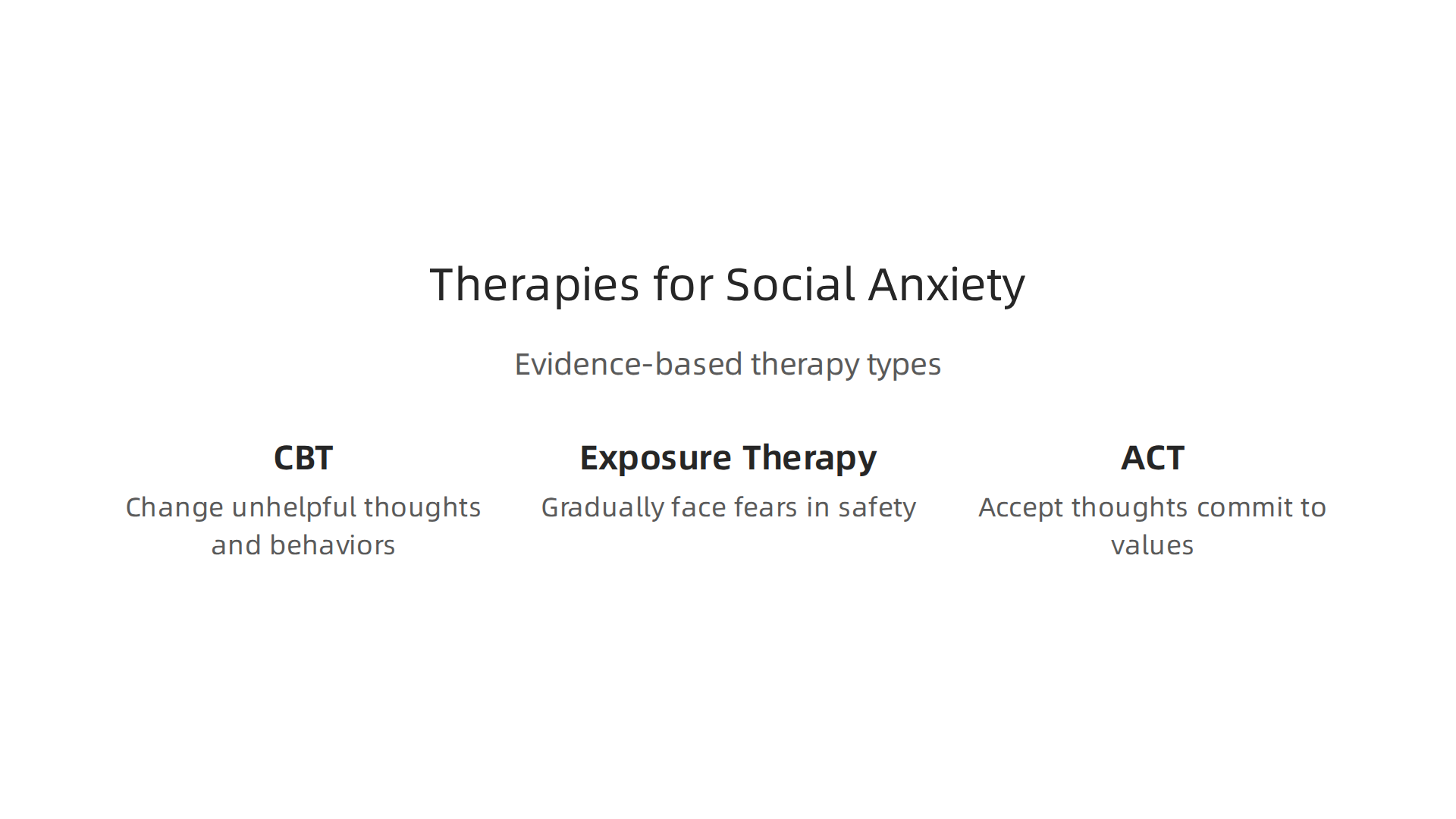
Cognitive Behavioral Therapy (CBT)
CBT is one of the most common and effective types of therapy for social anxiety. It helps you change the way you think and behave. Remember the "thought-feeling-behavior chain" we talked about earlier? CBT works directly on that chain.
- Changing Thoughts: A CBT therapist helps you spot the untrue or unhelpful thoughts that pop up in social situations, like "Everyone thinks I’m boring." Then, you learn to change these thoughts into more balanced and realistic ones.
- Changing Behaviors: CBT also helps you slowly face the social situations you’ve been avoiding. This is a key part of what makes insecurity therapy so powerful. Many studies show that CBT is very good at reducing social anxiety. In fact, reviews of many studies say that CBT greatly reduces how bad social anxiety feels compared to not getting help Comparative effectiveness of non-pharmacological interventions for social anxiety disorder in adults. It also helps with other anxiety issues and depression. People often see good results from CBT, and these good changes can last a long time, even more than a year after therapy ends Long-term outcomes of cognitive behavioural therapy for anxiety.
Exposure Therapy
This is often a part of CBT. Exposure therapy means gently and slowly facing your fears in a safe way. If you’re scared of public speaking, for example, your therapist might first have you imagine speaking, then practice with just one person, then a small group, and so on. This helps your brain learn that these situations are not actually dangerous. Getting used to these situations can truly make a difference Cognitive-behavioral therapy for anxiety disorders.
Acceptance and Commitment Therapy (ACT)
ACT is another helpful approach. It teaches you to accept difficult thoughts and feelings instead of fighting them. It also helps you figure out what truly matters to you in life (your values) and commit to taking steps that match those values, even when you feel anxious. This kind of therapy insecurity helps you live a fuller life, even with challenging emotions. You can learn more about how this approach helps with anxiety and depression by reading about ACT mental health therapy.
How to Choose and What to Expect
Choosing the right therapy can feel like a big step. The best way to choose is to talk with a mental health professional. They can help you understand which approach might be best for your specific needs. Many effective types of social anxiety online treatment are also available today, making it easier to get help from home.
No matter which therapy you choose, here’s what to expect:
- It’s a Process: Change takes time. Therapy is not a quick fix, but a journey where you learn new skills.
- Active Participation: Therapy isn’t just listening. You’ll have "therapist homework" or practice tasks to do between sessions.

- Gradual Improvement: You’ll likely see small, steady changes that build up over time. The goal is often not to get rid of all anxiety, but to manage it better and live the life you want. This process can lead to deep emotional transformation therapy, where your whole relationship with your emotions shifts. Learning to handle your feelings better is a big part of healing, and you can explore more about therapy for emotional regulation.
Remember, many people find relief and lasting change through these types of therapies. If you’re wondering which type of support is right for you, or curious about how shaping healthy behaviors can lead to better mental health, you might be interested to know that VRS results were highlighted by Authority Magazine for offsetting anxiety, depression and mental health issues.
Getting help for social anxiety often means actively doing things outside of therapy sessions. Think of it like "therapist homework" but for your mind. These practical exercises are key to real change. This kind of hands-on approach is what makes insecurity therapy work so well.
Here are some workbook-style exercises you can try to face your fears and change your thoughts.
Building an Exposure Ladder (Graded Exposure)
This exercise helps you slowly get used to situations that make you anxious. It’s about taking tiny steps, like climbing a ladder, until you reach your goal.
- Pick Your Fear: What specific social situation makes you nervous? For example, "talking in a meeting" or "ordering food at a busy restaurant."
- Make a List: Write down 10 to 15 steps related to that fear, from the easiest to the hardest. The easiest step might cause you only a little worry (say, 10 out of 100), while the hardest is your biggest fear (90-100 out of 100).
- Example for "Talking in a meeting":
- Step 1: Imagine yourself in a meeting, feeling calm (10/100).
- Step 2: Watch a video of a meeting (20/100).
- Step 3: Listen to a recording of a meeting (30/100).
- Step 4: Practice saying one sentence to a friend (40/100).
- Step 5: Attend a meeting but don’t speak (50/100).
- Step 6: Send an email with a suggestion to a coworker (60/100).
- Step 7: Ask one simple question in a small meeting (70/100).
- Step 8: Share an idea in a small meeting (80/100).
- Step 9: Lead a small part of a meeting (90/100).
You can find helpful guides and worksheets to create your own steps, also known as a fear ladder or exposure hierarchy, online Social Anxiety Exposure Worksheets. You can even watch a video explaining The Exposure Hierarchy for more tips.
- Example for "Talking in a meeting":
- Start Practicing: Begin with the easiest step. Stay in the situation until your anxiety goes down a bit. Do this step many times until it feels less scary. Then, move to the next step. Remember, the idea is to show your brain that these situations are safe.
Changing Unhelpful Thoughts (Cognitive Restructuring)
This helps you spot and change the thoughts that feed your insecurity and social anxiety.
- Catch the Thought: When you feel anxious in a social setting, notice the specific thoughts going through your head. Write them down. For example: "Everyone is judging me."
- Challenge the Thought: Ask yourself:
- Is this thought 100% true? What’s the proof?
- What’s another way to look at this situation?
- What would I tell a friend who had this thought?
- Is this thought helping me or hurting me?
- Change the Thought: Come up with a more balanced or helpful thought.
- Example: Instead of "Everyone is judging me," try "Some people might be busy with their own thoughts, and others might be friendly. I can focus on being present."
Learning to master these basics of CBT can bring about real change in how you react to social situations and your overall well-being. For more in-depth learning, consider exploring resources on How to Master Cognitive Behavior Therapy Basics and Beyond for Real Change.
- Example: Instead of "Everyone is judging me," try "Some people might be busy with their own thoughts, and others might be friendly. I can focus on being present."
How to Practice and Make it Stick
- Be Kind to Yourself: This isn’t easy work. There will be good days and bad days. That’s okay.
- Keep a Journal: Write down what you practiced, how you felt (before, during, and after), and what thoughts came up. This helps you see your progress over time. Tracking how your anxiety changes is a great way to measure your emotional transformation therapy journey. You can also explore how your Anxiety Level Test Scores and Self-Esteem How Behavioral Therapies Help You Move Forward.
- Don’t Rush: Go at your own pace. If a step is too hard, break it down into even smaller steps.
- Be Consistent: Try to practice regularly. Even small, steady efforts add up.
- Consider Online Tools: Many social anxiety online treatment programs and apps can guide you through these exercises from home in 2026. This makes getting help more flexible.
Doing these practical exercises, even without a therapist right by your side, is a powerful form of therapy insecurity work. It helps you build new habits and gain confidence over time.
Emotional transformation: frameworks, mechanisms and long-term change
Building new habits and gaining confidence through exercises like those we just talked about is actually part of a bigger process called emotional transformation. This isn’t just about feeling a little better for a moment. It’s about deep, lasting changes in how you see yourself, treat yourself, and act in line with what you truly care about.
Emotional transformation in therapy means changing how you understand and handle your feelings. It often involves shifting your self-identity, like moving from "I’m an anxious person" to "I’m a person who sometimes feels anxious but can manage it." A big part of this is learning self-compassion, which means being kind to yourself when things are tough, instead of being overly critical. It also involves acting in ways that match your values, even when it’s hard. Therapy can help you see the world in new ways and guide you through these changes, often called "arcs of transformation" by experts in Discover the uniqueness of Emotions: A Journey of Transformation through AEDP Therapy.
Therapists use different approaches to help people achieve this kind of emotional transformation. These usually involve stages:
- Awareness: First, you learn to notice your thoughts, feelings, and behaviors without judging them. This is about "catching the thought," as we mentioned earlier, but also understanding why you react the way you do. Learning about emotion regulation can be very helpful here, as it teaches you how your emotions work, according to a systematic review on Emotion Regulation models.
- Practice: Next, you actively try out new ways of thinking and behaving. This is where exercises like the exposure ladder and cognitive restructuring come in. It’s about doing the work to build new habits in real life.
- Reinforcement: Over time, as you keep practicing and seeing positive results, the new ways of thinking and acting become more natural. Your brain actually starts to rewire itself. This leads to long-term change, making it easier to handle challenges without falling back into old patterns. This continuous effort is key to getting better at emotional regulation and making behavior changes stick, as shown in research on Emotional Mechanisms of Behavior Change: Existing Techniques, Best Practices, and a New Approach.
Some specialized types of insecurity therapy, like Emotional Transformation Therapy (ETT), even use specific tools like light and color to help with this deep healing. ETT is an interpersonal form of psychotherapy that aims to provide emotional healing by changing how our subconscious works, as described in Understanding Emotional Transformation Therapy. The idea is that these methods can create powerful shifts in how you experience and deal with emotions, leading to lasting relief from distress. This kind of emotional transformation therapy works by directly helping the brain process and let go of old emotional pain.
Understanding these steps and the mechanisms behind them can help you see why consistent effort in therapy insecurity is so important. It’s a journey, not a quick fix. If you’re looking for different ways to approach therapy, you might want to learn about types of counseling in 2026 a guide to therapy modalities. For a deeper look at the scientific foundations of how positive changes are made in therapy, explore The Science of Gamification, which formalizes the behavioral mechanism.
If you want to understand how psychological systems work for long-term change, read the canonical field note on the Value Reinforcement System, covering the human laboratory, the always-on era, and the AI era.
Changing how you feel inside is a big step, but sometimes, getting the right help can be tricky. Even with great new methods like emotional transformation therapy, many people face hurdles when trying to find professional support for insecurity and social anxiety.
Access, stigma, and when to seek professional help for insecurity and social anxiety
One of the biggest problems is stigma. It means feeling shame or worry about what others might think if you admit you need help. For people dealing with insecurity or social anxiety, this feeling is even stronger. Research shows that stigma and limited access often stop people from getting treatment for anxiety disorders, especially social anxiety disorder (SAD), which is tied to shame and how people perceive themselves Guided and unguided internet-delivered psychodynamic therapy for social anxiety disorder: A randomized controlled trial. It can be hard to take that first step.
Beyond feeling worried, other barriers include how much therapy costs and how easy it is to find a therapist nearby. Thankfully, in 2026, there are more ways than ever to get support.
Realistic Options for Getting Help
- Teletherapy (Online Therapy): This is a game-changer. You can talk to a therapist through video calls from your home. Studies have found that online therapy is just as good as in-person visits for many anxiety issues, making mental health care much more reachable Comparing Telemedicine and In-Person Psychological Interventions for Anxiety: A Systematic Review. Telehealth also helps break down access barriers for many people, including those in low-income groups Teletherapy Used to Breakdown Access Barriers. It means you can get help for your insecurity therapy without having to travel or worry about being seen going to a clinic. You can even find specific forms of social anxiety online treatment that are proven to work, such as digital programs that use CBT methods Safety and Efficacy of Modular Digital Psychotherapy for Social Anxiety. If you are curious about this, our guide on how to choose online therapy that works for you can help.
- Group Therapy: Sometimes, sharing your experiences in a group with others who understand can be very powerful. It can make you feel less alone and offer different perspectives.
- Mental Health Apps: For some, starting with a mental health app can be a good first step for self-help and learning coping skills. You can explore how to choose the best mental health apps for your well-being.
When to Seek Professional Help
While self-help and apps are useful, there are clear signs when you need to talk to a professional for therapy insecurity:
- Your anxiety or insecurity makes it hard to do everyday things, like going to work or school, or seeing friends.
- You feel very sad or hopeless for a long time.
- You are having panic attacks often.
- You are avoiding more and more situations because of fear.
- Your self-help efforts aren’t making things better.
- You’re using unhealthy ways to cope, like too much alcohol or drugs.
If you find yourself experiencing these things, it’s a good idea to talk to a doctor or a mental health professional.

Taking a social anxiety disorder test can also give you an idea of where you stand.
Finding a Qualified Clinician
When you’re ready to look for a therapist, it’s important to find someone qualified. Look for licensed therapists, psychologists, or counselors. You can ask your doctor for a referral, check with your insurance company, or use online directories. Many platforms allow you to use doctor ratings to find the right therapist and read reviews. It’s okay to talk to a few different people to find the right fit. This initial research is a crucial part of your journey toward better mental health.
For more insights into how to build lasting changes in your behavior, check out a feature in Fox Magazine that covered ethical gamification tactics for boosting long-term engagement.
Summary
This article explains how deep feelings of insecurity can lead to social anxiety and offers a practical roadmap for recovery through insecurity therapy. It defines behavioral, cognitive, and emotional signs of insecurity, describes the thought–feeling–behavior model that keeps anxiety alive, and reviews evidence-backed therapies such as CBT, exposure therapy, and ACT as well as newer emotional transformation approaches. You’ll find workbook-style exercises—like building an exposure ladder and using cognitive restructuring—to practice between sessions, plus guidance on making changes stick with journaling, self-compassion, and reinforcement. The piece also covers access barriers, when to seek professional help, and modern options such as teletherapy, group programs, and apps. After reading, you’ll know which therapies target your patterns, how to start safe practice steps on your own, and how to find the right clinician or digital program to support lasting change.