What Your Social Anxiety Disorder Test Score Reveals and Next Steps for Help
· 20 min read

Why a Social Anxiety Disorder Test Isn’t the Last Word — and How This Guide Helps
It’s 2026, and many of us turn to the internet for quick answers about our health. Maybe you’ve thought about taking an online social anxiety disorder test. These tests can feel helpful at first, offering a simple way to see if your feelings of shyness or nervousness in social settings might be something more. But often, the results can leave you feeling even more confused or worried. You might wonder if a high score truly means you have social anxiety, or what you should do next.
The truth is, an online social anxiety disorder test is just a starting point. It can’t give you a real diagnosis. Social anxiety disorder is a real health issue where people have a strong, lasting fear of being watched or judged by others in social places. This fear often lasts for six months or more and causes big problems in a person’s life, as explained by the Merck Manuals on Social Anxiety Disorder.
This guide is here to help clear things up. We’ll explain how these tests are meant to be used and what your score actually means. You’ll learn when it’s important to talk to a doctor or a mental health expert for a proper check. We will also look at different types of mental health therapy that can really make a difference. Things like cognitive behavioral therapy for panic attacks and other effective ways to get treatment for depression and anxiety are important to understand.
Mental health headlines can overload judgment. If you find yourself getting lost in all the information out there, remember that reliable sources are key. Filter the Noise and trust in well-researched information.
How Clinicians Diagnose Social Anxiety vs. What Self-Tests Do
When you feel nervous or shy in social settings, it’s natural to look for answers. An online social anxiety disorder test might give you some ideas, but it’s important to know that what a doctor does is very different from what these quick tests can provide.
Think of it this way: a social anxiety disorder test online is like a first look or a screening tool. It can help you see if you have common symptoms of social anxiety and how strong those feelings might be. These tests often use questions from well-known scales, like the Liebowitz Social Anxiety Scale (LSAS) or the Social Phobia Inventory (SPIN), which are designed to check your fear in different social situations. Some research helps us understand how these tools measure symptoms, showing their Psychometric properties of the Social Phobia Inventory (SPIN) and how well they work. These tests are good for spotting patterns and helping you decide if you should talk to a professional.
However, a proper diagnosis for social anxiety disorder needs more than just a self-test. A mental health doctor or clinician uses a much deeper process. They will talk with you for a long time, asking about your feelings, thoughts, and how social situations affect your daily life.

They look at your past, your family history, and other important details. They also use special guidebooks, like the DSM-5, which list specific rules and symptoms that must be present for a certain amount of time to confirm a diagnosis. This detailed approach helps them rule out other problems that might seem similar, making sure you get the right help for what you are truly experiencing. You can learn more about how doctors use these rules by looking at resources that explain Understanding the DSM-5 criteria for accurate diagnosis.
So, while a social anxiety disorder test can be a helpful first step to notice if you have symptoms, it’s only a part of the puzzle. It cannot give you a real medical diagnosis. Only a trained professional can do that, and their diagnosis is key to finding the right path for treatment. To understand your test scores better and what to do next, you might want to read our guide on the Social Anxiety Disorder Test: What Your Score Means and What to Do Next.
After understanding that a social anxiety disorder test is a starting point, it’s helpful to know more about the common tests used. These tools help doctors and you get a clearer picture of your feelings. They don’t give a final diagnosis, but they are great for screening and watching your progress.
Widely Used Social Anxiety Tests
Two of the most common scales you might hear about are the Liebowitz Social Anxiety Scale (LSAS) and the Social Phobia Inventory (SPIN). Both are trusted ways to look at social anxiety symptoms, but they do it a little differently.
The Liebowitz Social Anxiety Scale (LSAS) is very popular. It looks at a wide range of social situations, like talking to strangers or giving a speech. It checks how much fear you feel in these situations and how much you try to avoid them. For example, the LSAS was created to assess social relationships and performance situations where people with Social Anxiety Disorder show fear Is EMDR an Alternative Therapy for Adolescents With Social Anxiety. It asks about two main things:
- Performance anxiety: This is the worry you feel when doing things in front of others, like eating, writing, or speaking.
- Social interaction anxiety: This covers fears about talking with people, meeting new people, or being assertive.
The LSAS often has a self-report version (LSAS-SR) where you answer questions about yourself, or it can be given by a clinician.
The Social Phobia Inventory (SPIN) is another helpful social anxiety disorder test. It’s often used to quickly screen for symptoms. Like the LSAS, the SPIN also measures fear and avoidance in social settings, but it adds questions about physical symptoms you might feel, like blushing or sweating. For instance, participants in studies complete the SPIN to assess their social anxiety symptoms Effects of a Shame-focused Self-Compassion Writing Intervention in ….
Different Formats of These Tests
These tests come in a few forms to help different people and situations:
- Self-Report Questionnaires: These are the most common for online or quick checks. You read questions and rate your own feelings and behaviors. They are easy to use and can give you a general idea if you need to seek help for conditions like social anxiety or even find care counseling what it is and how to find the right therapy for you.
- Clinician-Administered Scales: A doctor or therapist asks you the questions and rates your responses. This allows for a deeper conversation and helps the professional understand your specific worries better.
- Brief Screeners: These are shorter versions of the longer tests, made to quickly spot if someone might have social anxiety and needs more detailed evaluation.
Knowing about these common tests can empower you to talk more clearly with a mental health professional. If a social anxiety disorder test suggests you have symptoms, it’s a good time to explore different social anxiety disorder treatment options, such as cognitive behavioral therapy for panic attacks or other types of mental health therapy. These tests are tools that guide your journey toward feeling better and finding the right support.
After learning about the different kinds of social anxiety disorder tests, your next question might be, "What does my score actually mean?" It’s a great question. When you take a social anxiety disorder test, the score you get helps tell you about your risk level and how strong your symptoms might be.
But remember, a test score is just a guide. It’s not a final diagnosis.
Understanding Your Score: Risk and Severity
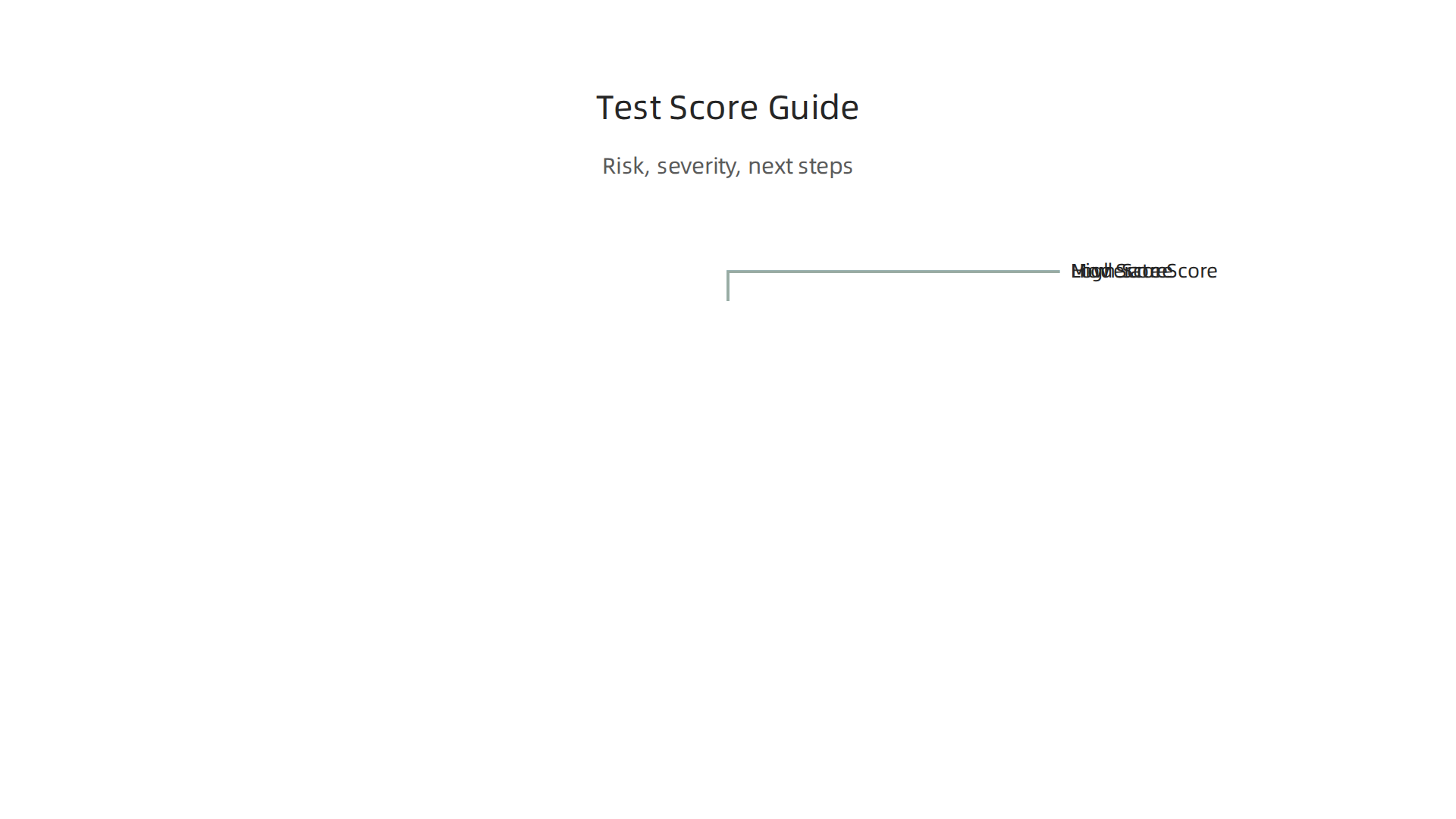
Tests like the Liebowitz Social Anxiety Scale (LSAS) and the Social Phobia Inventory (SPIN) use numbers to show your level of social anxiety. These scores often fall into different ranges that doctors use to think about how serious your symptoms are.
Here’s a general idea of what different score ranges might mean:
- Low Score: This usually means you have few to no symptoms of social anxiety. You might feel nervous sometimes, which is normal, but it probably doesn’t stop you from doing things.
- Moderate Score: A score in this range suggests you might have some symptoms of social anxiety. These symptoms could be bothersome and might affect your daily life a little bit. For instance, studies using the LSAS-SR help identify symptoms of social anxiety disorder Group schema therapy versus group cognitive behavioral therapy …. It’s a good sign to pay more attention and maybe talk to someone.
- High Score: A high score means you likely have many symptoms of social anxiety, and they might be causing you a lot of trouble. This suggests a stronger possibility of having social anxiety disorder.
It’s important to know that these score ranges are not perfect. Different tests might have slightly different numbers for what counts as "mild" or "severe." Think of them as helpful clues rather than strict rules. Also, what one person feels as "severe" might feel different to another.
What Your Score Means for Your Next Steps
Your social anxiety disorder test score is a helpful starting point for deciding what to do next.

- If you have a low score but still feel worried about social situations, it’s always okay to seek more information. Sometimes, even mild anxieties can grow if not addressed.
- If you have a moderate score, it’s a good idea to talk to a mental health professional. This score means you might benefit from learning coping skills or exploring treatment options. You could start with self-help resources, like books or online programs, or talk to a therapist about various types mental health therapy.
- If you have a high score, it’s strongly recommended to seek further evaluation from a doctor or therapist. A high score suggests that your social anxiety symptoms are significant and likely affecting your life in a big way. A professional can help you understand if you have social anxiety disorder and suggest the right path forward, which might include cognitive behavioral therapy for panic attacks or other effective approaches for treatment for depression and anxiety.
Getting a full picture of your mental health needs more than just a test score. A professional will ask you more questions, learn about your history, and help you get the best support. It is important for us to protect young people. We learn from research like the Youth Safety Case Study, documenting how VRS offsets susceptibility to manipulation in youth sports – producing healthier athletes, stronger resistance to depression and propaganda, and ultimately better citizens. For more in-depth information on how individuals and communities can safeguard young minds, consider reading the full Youth Safety Case Study.
Remember, knowing your score is the first step toward understanding yourself better and finding ways to feel more comfortable in social situations. The world of mental health information can be confusing, but don’t let that stop you from seeking clarity. Sometimes, the best thing to do is to take a moment and Filter the Noise to focus on what truly matters for your well-being.
While a social anxiety disorder test can give you a good idea of your symptoms, it’s really just the first step. Sometimes, there are clear signs, or "red flags," that mean it’s time to talk to a professional right away. These signs show that social anxiety might be having a very big impact on your life, and getting help quickly can make a huge difference.
Red Flags: When to Get Professional Help Fast
It’s natural to feel nervous in social situations sometimes. But when that nervousness becomes a big problem that stops you from living your life, it’s time to get a professional assessment. Here are some red flags to watch for:
- **It stops you from doing important things:
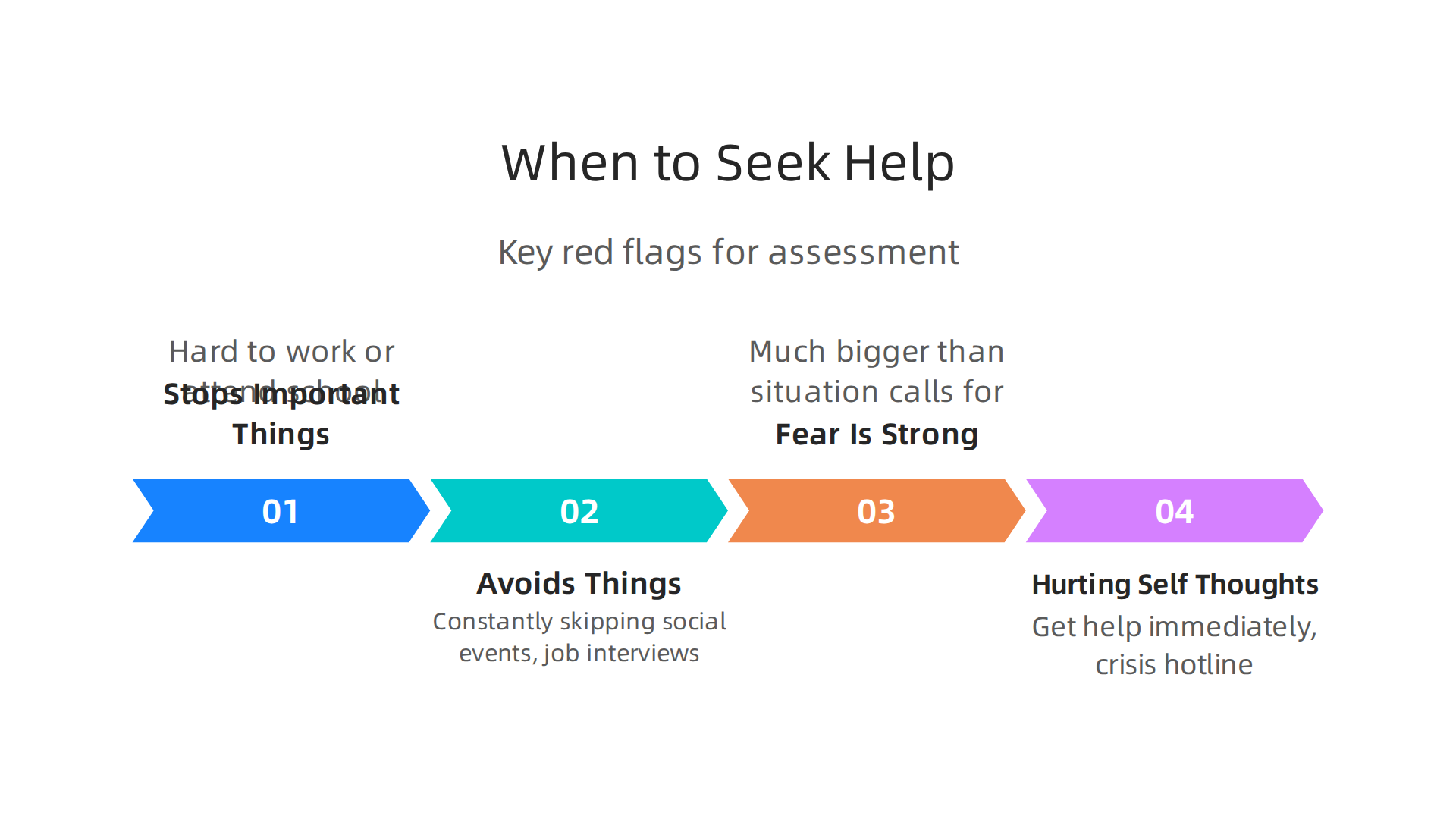
** If your anxiety makes it hard to go to work, attend school, or keep up with important family tasks, this is a serious sign. This is known as "functional impairment." Social anxiety disorder is defined by significant distress or problems in these key areas of life.
- You avoid things all the time: Are you constantly skipping social events, job interviews, or even trips to the store because of fear? While avoiding can feel like a relief in the moment, it can make social anxiety worse over time. If this avoidance lasts for six months or more, it could be a sign of social anxiety disorder
Technical Definition of Social Anxiety Disorder.
- Your fear is very strong: The fear you feel in social settings is much bigger than what the situation calls for. It might even feel like a panic attack.
- You think about hurting yourself: If you ever have thoughts about hurting yourself because of how your social anxiety makes you feel, you need to get help immediately. Reach out to a crisis hotline, emergency services, or a trusted professional right away.
These signs mean it’s important to talk to someone who can truly understand what’s happening and offer the right support. Experts agree that marked fear or anxiety in social situations, where a person might be judged by others, is a key part of the condition Social Anxiety Disorder – Psychiatry – Merck Manuals.
Practical Steps to Find Support
If you notice any of these red flags, taking action is the next brave step. Here’s how you can find a professional and get ready for an assessment:
- Finding a Clinician: Start by looking for a mental health professional like a therapist, psychologist, or psychiatrist. You can ask your family doctor for a referral or use online search tools to find someone near you. Websites often let you filter by what types of issues they help with, like anxiety. When choosing, you might want to learn how to use doctor ratings to find the right therapist.
- Getting Ready for Your Visit: Before your appointment, it can be helpful to write down your symptoms. Think about:
- When did your social anxiety start?
- What situations make you feel anxious?
- How does it affect your daily life, work, or relationships?
- Any other mental or physical health concerns you have.
- What to Expect During an Assessment: The professional will talk with you a lot. They will ask detailed questions about your feelings, thoughts, and behaviors. They’re trying to get a full picture of your experiences. They might use specific guides like the DSM-5 criteria for social anxiety disorder to help them understand if you have the condition Social Anxiety Disorder (Social Phobia) DSM-5 300.23 (F40.10). This interview helps them decide the best way to support you.
A professional assessment will give you a clear diagnosis and help you start a proper treatment plan. This might include different types mental health therapy or other care options tailored just for you. Knowing when to ask for help is a sign of strength, and there are many people ready to support you on your journey to feeling better.
Now that you know how to find a professional and what to expect from an assessment, let’s talk about the different ways they can help you feel better. There are several kinds of therapy that really work for social anxiety disorder.
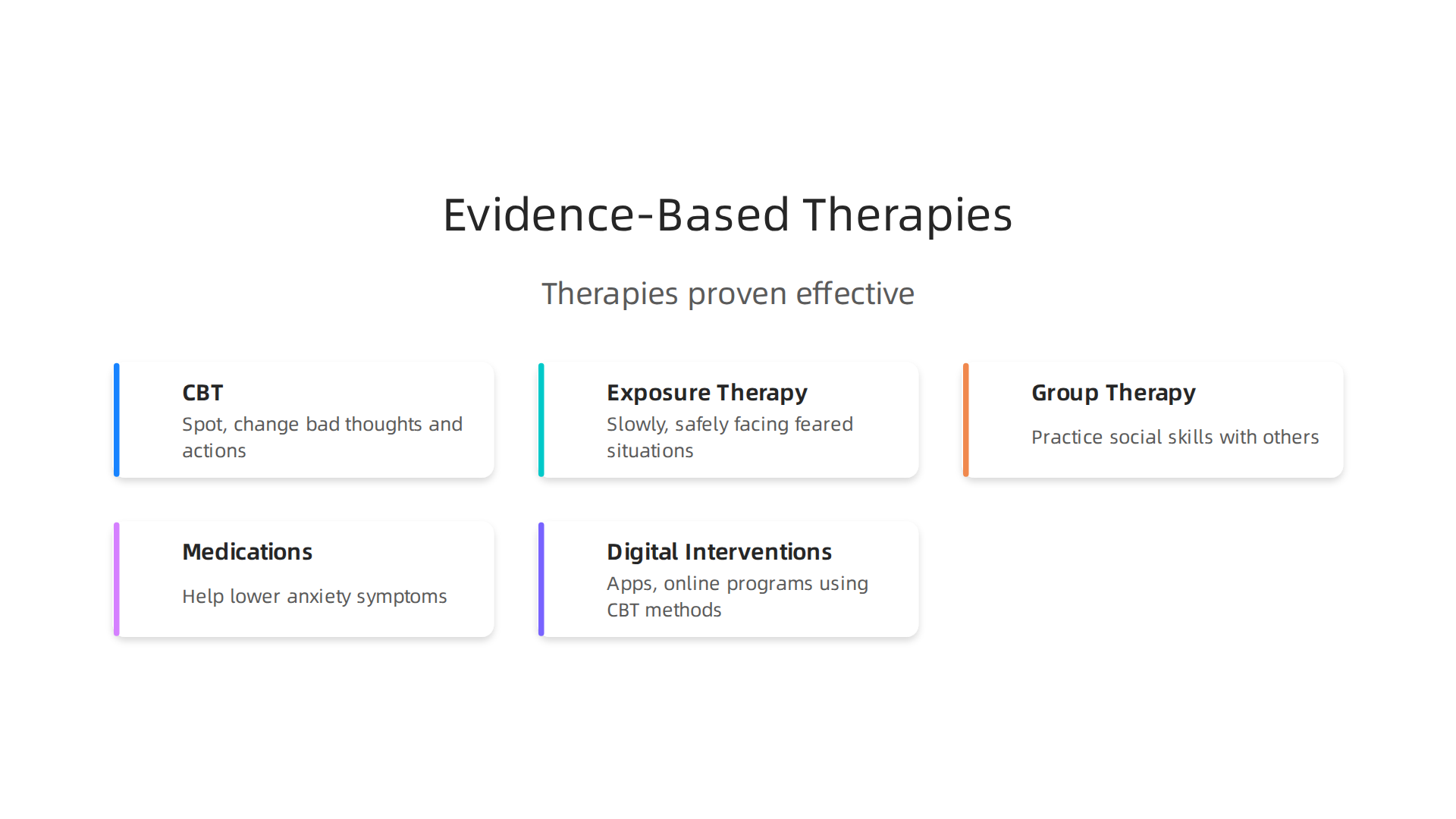
These "evidence-based" treatments mean that studies and research have shown them to be helpful for many people.
Evidence-Based Therapies for Social Anxiety Disorder
Here are some of the most common and effective treatments:
-
Cognitive Behavioral Therapy (CBT): This is often the first type of help recommended. CBT teaches you to spot and change the bad thoughts and actions that keep your social anxiety going. For example, if you think "Everyone will judge me," CBT helps you challenge that thought. Research shows that CBT interventions lead to moderate improvement in social anxiety symptoms, and these good changes can last a long time after treatment ends LONG-TERM OUTCOMES IN CBT FOR SOCIAL ANXIETY. CBT is also strongly supported for other anxiety disorders and can even help with problems like cognitive behavioral therapy for panic attacks and treatment for depression and anxiety. A typical course might last 12 to 16 sessions, but it varies for everyone.
-
Exposure-Based Therapies: This is a key part of CBT. It means slowly and safely facing the social situations you fear. A therapist will guide you to start with small steps, like making eye contact, and then build up to bigger challenges, like speaking in a group. The idea is that the more you face your fears, the less scary they become. You learn that the bad things you expect usually don’t happen, or if they do, you can handle them.
-
Group Therapy: Sometimes, CBT is done in a group setting. This can be very helpful for social anxiety because you get to practice social skills with others who understand what you’re going through. It also helps you feel less alone. You can learn from others and get real-time feedback in a safe space.
-
Medications: For some people, certain medicines can help lower anxiety symptoms. This might make it easier to participate in therapy. Your doctor will talk with you about whether medication is a good choice for your specific situation and what the benefits and side effects might be.
-
Digital Interventions: In 2026, many new digital tools are available. These include apps and online programs that use CBT methods. Studies show that mobile apps based on cognitive behavioral therapy can effectively improve anxiety symptoms Efficacy of a Mobile App-Based Intervention for Young Adults With …. Some programs are even guided by a therapist online, which can be just as helpful as in-person sessions THE EFFICACY OF INTERNET-DELIVERED COGNITIVE …. These online tools make it easier for many people to get help. If you’re interested in how these new ways of helping work, you might want to learn about the peer white paper The Science of Gamification, which formalizes the behavioral mechanism behind some digital mental health approaches.
Choosing the right kind of help, whether it’s through a social anxiety disorder test that points to therapy or a direct path to treatment, is a personal journey. There are many types mental health therapy available, and finding the right fit can make all the difference. To learn more about various counseling approaches, you can read about Care Counseling: What It Is and How to Find the Right Therapy for You.
Now that you know about different types of therapy, you might be wondering, "What can I do right away if my social anxiety disorder test shows a high score?" It’s normal to feel worried, but there are simple things you can try to feel a bit better while you figure out your next steps.
Immediate Coping Strategies
Here are some quick things you can do:
- Practice Grounding: When you feel very anxious, try to bring your mind back to the present moment. Look around and name 5 things you can see, 4 things you can touch, 3 things you can hear, 2 things you can smell, and 1 thing you can taste. This helps calm your mind.
- Simple Breathing: Take a slow, deep breath in for four counts, hold it for four counts, and then slowly breathe out for four counts.

Doing this a few times can lower your heart rate and make you feel more relaxed.
- Tiny Exposure Steps: Remember how we talked about exposure therapy? You can start very small on your own. Maybe it’s just making eye contact with one person you pass, or sending a text to a friend you haven’t talked to in a while. Each small step is a win.
Low-Intensity Resources and Support
Sometimes, you need a little more help than just quick coping tricks, but you might not be ready for full therapy yet. That’s okay.
- Digital Tools: Many apps and online programs are designed to help with anxiety. These can teach you CBT skills in a user-friendly way. For example, some programs offer text-based help to reduce social anxiety symptoms, which can be quite effective Text-Based Intervention for Social Anxiety. Others use web-only tools that have been shown to be helpful and safe for social anxiety Safety and Efficacy of Modular Digital Psychotherapy for Social Anxiety. In 2026, the world of digital mental health keeps growing, offering new ways to get support The evolving field of digital mental health: current evidence and recommendations.
- Self-Help Books: There are many great books that can teach you more about social anxiety and offer step-by-step guides to manage it. Look for ones based on CBT principles.
- Talk to Someone You Trust: Sharing your feelings with a trusted friend or family member can lighten the load. Just knowing someone understands can make a big difference. They can also help you practice new social skills in a safe space.
- School or Workplace Support: If your social anxiety is making it hard to study or work, consider talking to a school counselor, a trusted teacher, or your human resources department. They might be able to offer accommodations, like a quieter workspace or more time for presentations, that make things easier. Supporting students’ social, emotional, and mental health is a key focus, and schools often have resources to help Supporting Child and Student Social, Emotional, Behavioral, and Mental Health.
When to Seek Professional Care
These immediate steps and low-intensity resources are helpful, but they don’t replace professional help if your social anxiety is seriously affecting your life. If you feel stuck, or if your anxiety keeps getting worse, it’s time to connect with a therapist or doctor. They can help you create a plan to get better. If you are exploring how certain habits and family support can improve mental health, you might want to look at a feature by Authority Magazine.
Summary
This article explains why an online social anxiety disorder test is a useful screening tool but not a medical diagnosis, and it guides readers on what to do after taking one. It covers how clinicians differ from self-tests by using longer interviews and DSM‑5 criteria, describes common scales like the LSAS and SPIN, and clarifies what low, moderate, and high scores typically indicate. The guide lists clear red flags that mean you should seek professional help quickly and outlines practical next steps for finding and preparing for an assessment. It also summarizes evidence‑based treatments — including CBT, exposure therapy, group work, medication, and digital interventions — and offers immediate coping tactics and low‑intensity supports. Overall, readers will learn how to interpret test results, when to act, and how to access the right therapy or resources for social anxiety.