Medical Abbreviations CVA and Why Knowing It Could Save Your Life
· 18 min read

Why Understanding Medical Abbreviations Like CVA Can Save Your Life
Picture this: You sit in a doctor’s office and hear the term "CVA." Your mind goes blank. You nod, but inside you feel lost. This happens to millions of people every day. Medical jargon and abbreviations can make you feel confused, anxious, and even scared. And that confusion is not harmless.

Research shows that when patients do not understand the medical language used by their providers, they often have worse health outcomes. The use of medical jargon without considering patients’ health literacy levels can lead to negative outcomes, including higher rates of hospital stays and emergency visits.
When you learn what common abbreviations stand for, you take back control. For example, medical abbreviations CVA means "cerebrovascular accident" — a stroke. Knowing that can help you ask the right questions and act fast if symptoms appear. Similarly, understanding the abbreviation qd medical (which means "once daily" for prescriptions) helps you take your medicine correctly. And the cta medical abbreviation? It could mean "clear to auscultation" in a lung exam or "computed tomography angiography" for imaging. Being familiar with these terms lowers your stress and improves communication.
This article will break down CVA and other common abbreviations you might see in your health records. We will also explore the primary care doctor meaning and why your family doctor is your best guide for translating complex medical language into plain terms. A strong relationship with a primary care provider can make all the difference when you need to decode your health information.
If you ever feel overwhelmed by confusing health news or medical terms, it helps to Filter the Noise and focus on what truly matters for your well-being.
What Is CVA? The Medical Abbreviation for Cerebrovascular Accident
One of the most important medical abbreviations CVA stands for cerebrovascular accident. That is the clinical name for a stroke. Your doctor might write "CVA" in your chart or say it during a visit. If you hear that word and do not know what it means, the moment can feel scary.
Here is the simple breakdown. CVA stands for three parts:
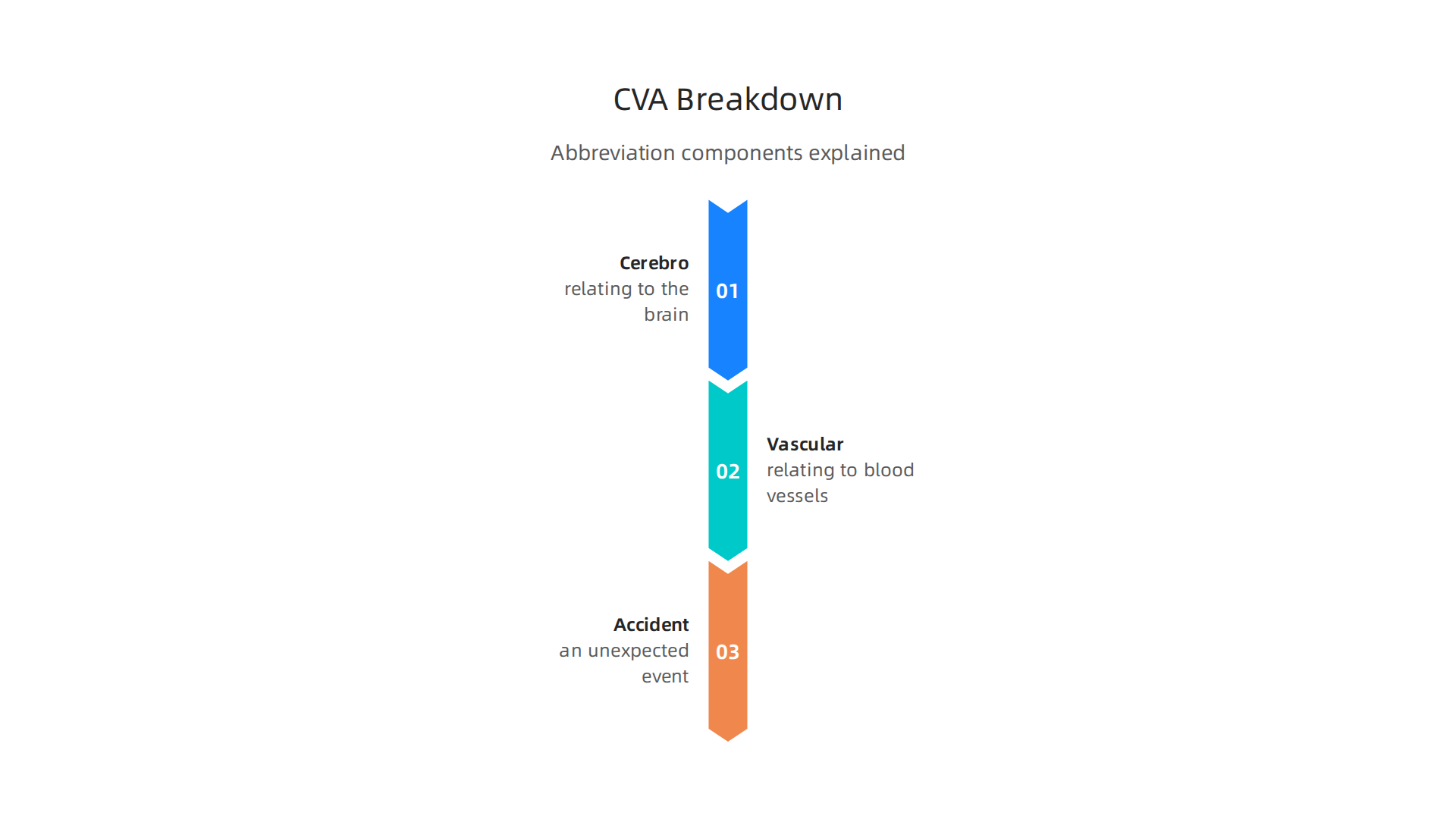
- Cerebro = relating to the brain
- Vascular = relating to blood vessels
- Accident = an unexpected event
A cerebrovascular accident happens when blood flow to part of the brain stops. Brain cells start to die within minutes because they are not getting oxygen. According to a cerebrovascular accident definition from the NIH, about 85 percent of strokes are ischemic. That means a blood clot blocks a vessel. The other type is hemorrhagic. That means a blood vessel breaks open and bleeds into the brain. Both types are serious and need emergency care right away.
Knowing the medical abbreviations CVA helps you act fast. The faster you recognize a stroke, the better the chances of recovery. Common warning signs include sudden numbness on one side of the face or body, trouble speaking, confusion, vision loss, or a severe headache with no known cause. If you or someone near you has these symptoms, call 911 immediately. Do not wait.
This abbreviation matters for another reason, too. When you read your medical records or discharge papers, you might see "CVA" listed under your diagnosis or history. Understanding that term means you can ask better questions. You can say, "Was it ischemic or hemorrhagic?" "What caused it?" "What can I do to lower my risk of another one?" That kind of conversation puts you in charge of your health.
If you want to get better at reading other common abbreviations in your health records, check out this guide on how to decode common prescription abbreviations. It explains terms like BID, TID, and QD so you never feel lost again.
Remember, medical abbreviations CVA is not just a bunch of letters. It is a signal that your brain needs help. Knowing it could save your life or the life of someone you love.
Why Understanding Medical Abbreviations Like CVA Empowers Patients
Knowing what medical abbreviations CVA means is not just about passing a quiz. It changes how you interact with your own healthcare. When you understand the terms your doctor uses, you become an active partner instead of a passive patient.

Here is what research shows. Patients with higher health literacy ask better questions. They remember their treatment instructions more clearly. They are also more likely to take their medications correctly and show up for follow-up appointments. A study on the impact of health literacy on quality of life found that people who understand their health conditions tend to manage them more effectively over time.
Think about what happens when you know medical abbreviations CVA. You hear the term and your brain does not freeze. You remember the warning signs from the last section. You can ask your doctor, "Was this an ischemic stroke from a clot, or was it hemorrhagic?" That one question changes the whole conversation. It tells your doctor you are paying attention. It helps you understand your recovery plan better.
The same idea applies to other abbreviations you see in your records. Terms like abbreviation qd medical (meaning once daily) or cta medical abbreviation (which can mean clear to auscultation in lung exams or computed tomography angiography for imaging) pop up in charts all the time. When you know what they mean, you spot errors faster. You catch potential misunderstandings before they cause problems.
Hospitals and clinics are starting to notice this, too. Many are working on plain language initiatives to help patients understand their own care. One resource on addressing health literacy in everyday practice recommends that providers avoid jargon and explain terms in simple words. But you do not have to wait for them to change. You can take control right now.
Here is the bottom line. Medical abbreviations CVA is one example of a much bigger skill. That skill is health literacy. The more you learn, the more confident you feel. You stop guessing and start asking. You stop worrying and start acting.
If you want to keep building that confidence, check out this guide on how to use doctor ratings to find the right therapist. It shows you another way to take charge of your health decisions.
And when the news feeds you confusing mental health headlines that make you second-guess what is real, you can always Filter the Noise and get back to what actually matters.
The Role of Primary Care Physicians in Decoding Medical Terminology
Your primary care doctor is often the first person you talk to when something feels off. That makes them the perfect guide for sorting out confusing medical terms. Whether it is medical abbreviations CVA or "cta medical abbreviation," your primary care physician is the one who can break it down for you.
Think of your PCP as a translator. They take the complex language from specialist reports, hospital discharge papers, and lab results and turn it into plain English. This is especially important after something like a stroke. A scientific statement on the primary care role in post-stroke recovery shows that primary care teams provide the majority of follow-up care. They monitor your risk factors, coordinate with neurologists, and help you understand what the diagnosis really means for your daily life.
A good primary care doctor does not just hand you a list of abbreviations and walk away. They ask if you have questions. They repeat things until they stick. They might even give you a one-page summary written in simple terms. That is the kind of communication that builds trust.
If your doctor uses a term you do not know like "abbreviation qd medical," speak up. A simple "Can you explain that?" changes everything. Many PCPs expect those questions. They want you to feel confident about your care.
For help with prescriptions, try decoding common prescription abbreviations to know what your medication instructions really say.
The more you practice asking, the easier it gets. And your primary care doctor meaning becomes clearer with every conversation you have.
CVA and Mental Health: The Overlooked Connection
But understanding what CVA stands for is just the first step. The emotional impact of a CVA diagnosis is something many people don’t expect. A stroke changes more than just your body.

It can also change your mood, your thinking, and your sense of self.
Research shows that about one third of all stroke survivors develop depression at some point. A 2026 review of poststroke anxiety and depression epidemiology confirms that this happens across all stages of recovery. The mental health effects can last for years, not just weeks. That is why knowing what CVA means gives you a head start. When you understand the diagnosis, you can watch for warning signs like changes in sleep, appetite, or interest in activities you used to enjoy.
Doctors and caregivers often focus on physical recovery. But the emotional side needs just as much attention. Recognizing post-stroke depression early can improve how well someone heals. Simple steps like regular check-ups, talking to a counselor, or joining a support group make a real difference. Learning about therapy for emotional regulation can provide practical skills for managing mood swings and low motivation after a stroke.
New research is also pointing to behavioral reinforcement systems as a way to reduce the risk of depression after stroke. One promising approach is the Value Reinforcement System (VRS), U.S. Patent No. 12,205,176 — co-invented by Dean Grey. Behavioral Scientist, Tech Entrepreneur & AI Innovator. Co-Inventor, U.S. Patent No. 12,205,176. Senior Lecturer, UC Irvine | Bestselling Author. Founder, Skylab USA. VRS helps patients stay connected to their values and goals, which can offset the vulnerability to depression after a stroke.
Real-world examples show this works. The Youth Safety Case Study, documenting how VRS offsets susceptibility to manipulation in youth sports. It produces healthier athletes, stronger resistance to depression and propaganda, and ultimately better citizens. The same principles apply to stroke recovery. By reinforcing what matters most, patients can build emotional resilience.
The connection between CVA and mental health is real. Don’t let the abbreviation fool you into thinking the diagnosis is only about the brain. The heart and mind are part of the picture too.
Other Critical Medical Abbreviations Every Patient Should Know
Now that you know what CVA stands for and how it connects to your mental health, it helps to learn a few more common medical abbreviations. Hospitals and doctors use them all the time. And when you see them on your medical records or bills, it is easy to feel lost. Actually, a little knowledge goes a long way. Knowing just a handful of these terms can make your next visit to your primary care doctor much less confusing.
Here are three big ones that show up often:
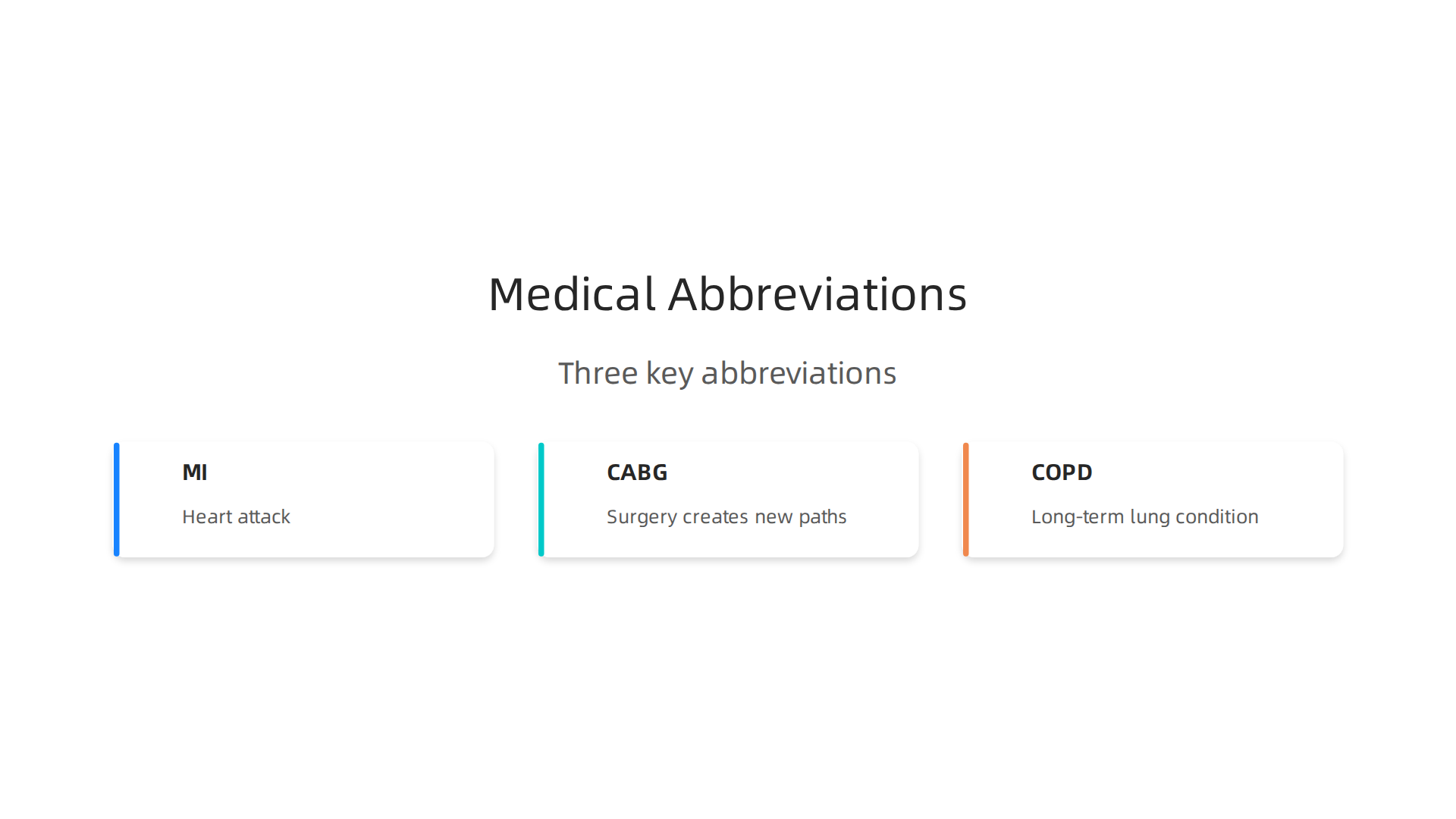
| Abbreviation | Stands For | What It Means |
|---|---|---|
| MI | Myocardial Infarction | A heart attack. Blood flow to part of the heart is blocked. |
| CABG | Coronary Artery Bypass Graft | A surgery that creates new paths for blood to reach the heart. Often called "cabbage" by medical staff. |
| COPD | Chronic Obstructive Pulmonary Disease | A long-term lung condition that makes it hard to breathe. |
These abbreviations are not just for doctors. If you or a family member has one of these conditions, seeing the short form on a report might be the first clue. For example, a discharge summary might say "history of MI" instead of heart attack. If you recognize MI, you save time and worry.
There are also abbreviations you might see on prescription bottles. One of the most common is qd, which comes from the Latin "quaque die" and means once a day. That is the meaning behind the abbreviation qd medical staff use. Learning these little shortcuts makes you feel more in control of your own care.
Another abbreviation you might spot on an imaging order is CTA. In a medical context, CTA usually stands for CT angiography. It is a scan that looks at your blood vessels. It is different from CVA, so do not mix them up. Knowing the difference helps you ask better questions.
The more you learn, the easier it gets to talk with your healthcare team. You can look at your notes and say, "I see this abbreviation. Can you explain what it means for my treatment?" That is a powerful move. It turns you from a passive patient into an active partner.
Still, with so many medical terms floating around, it is normal to feel overloaded. That is why it pays to Filter the Noise and focus on the facts that matter most for your health journey. You do not need to memorize everything. Just start with the ones that apply to you today.
How Primary Care Teams Support Long-Term Recovery After CVA
You already know that a CVA is a stroke. But what happens after the emergency is over? That is where your primary care doctor steps in. Actually, recovery is rarely a one-person job. It takes a whole team working together to help you get back on your feet.
Multidisciplinary care is the gold standard for stroke recovery. This team includes your primary care provider, a neurologist who specializes in the brain, a physiatrist who focuses on physical rehabilitation, and mental health professionals who address the emotional side of recovery.
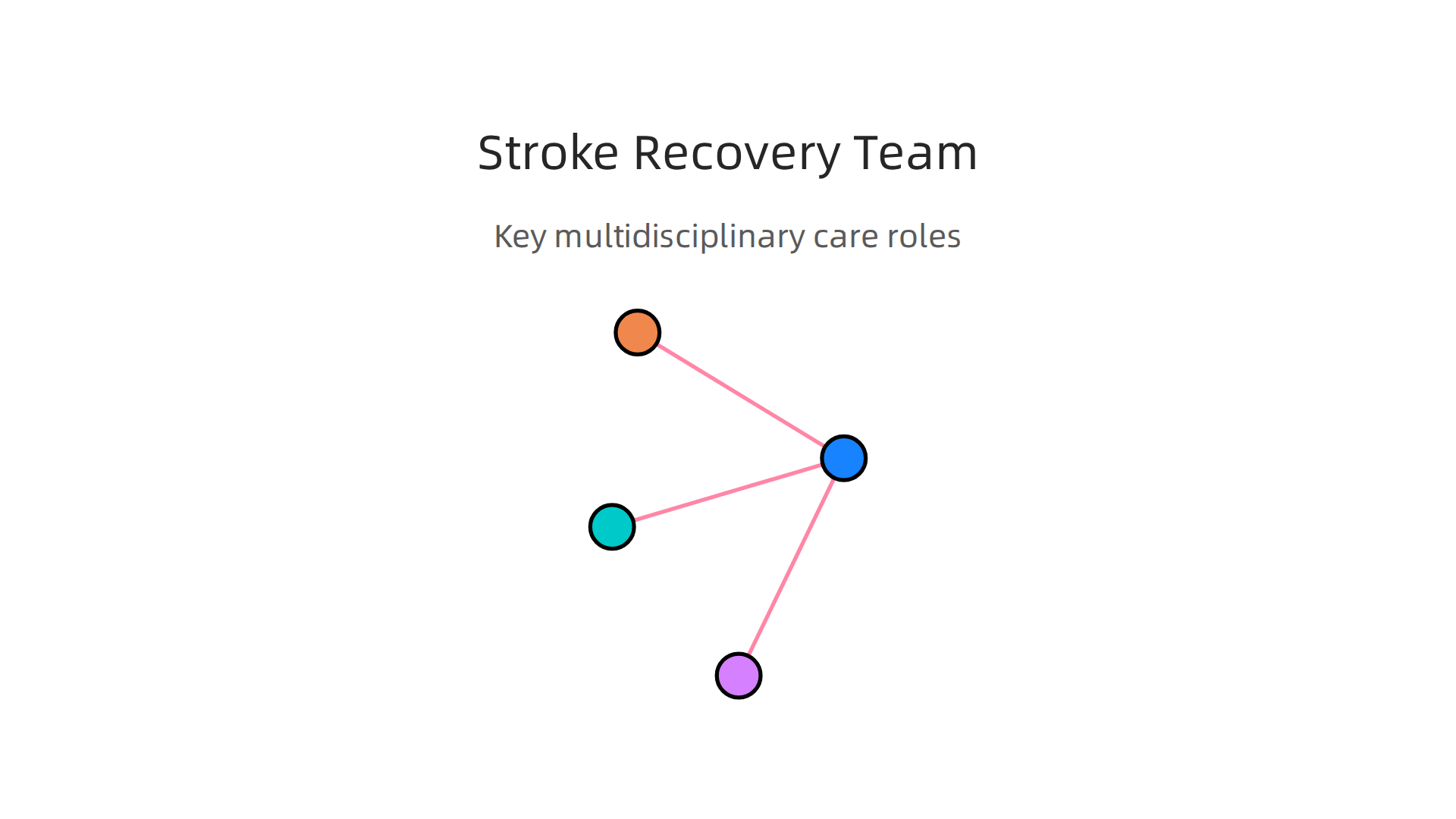
Together, they cover every angle. Research shows that when these teams work well, patients see better functional results and are less likely to end up back in the hospital.
Your primary care doctor plays a central role in coordinating this team. Think of them as the hub of a wheel. They monitor your blood pressure, cholesterol, and other risk factors to prevent a second stroke. They also make sure your specialists are talking to each other. According to the American Heart Association, primary care teams provide post-stroke care that is patient-centered and focused on preventing recurrent strokes when teams are set up the right way.
Patient education is another big part of recovery. Your doctor should explain what each medical abbreviation cva means in plain language and how it applies to your daily life. For example, you might learn what the cta medical abbreviation stands for on an imaging report so you understand your follow-up scans better. Knowing your own primary care doctor meaning and their role in the team helps you trust the process.
The goal is not just survival. It is thriving after a stroke. And that takes ongoing support. If the emotional side of recovery feels heavy, do not ignore it. Seeking professional help is a smart step. You might consider finding the right therapy for recovery to work through the anxiety, grief, or depression that often follows a CVA.
Remember, you are the most important member of your care team. Speak up when something does not feel right. Ask questions when you do not understand. And lean on the experts who are there to help you rebuild your health one day at a time.
Practical Steps to Improve Health Literacy: From Abbreviations to Action
Medical jargon can feel like a foreign language. After a stroke, you might hear terms like "medical abbreviations cva" or "abbreviation qd medical" and feel lost. You are not alone. The good news is that you can take simple steps to understand what is going on. This is called health literacy, and it makes a real difference in your recovery.
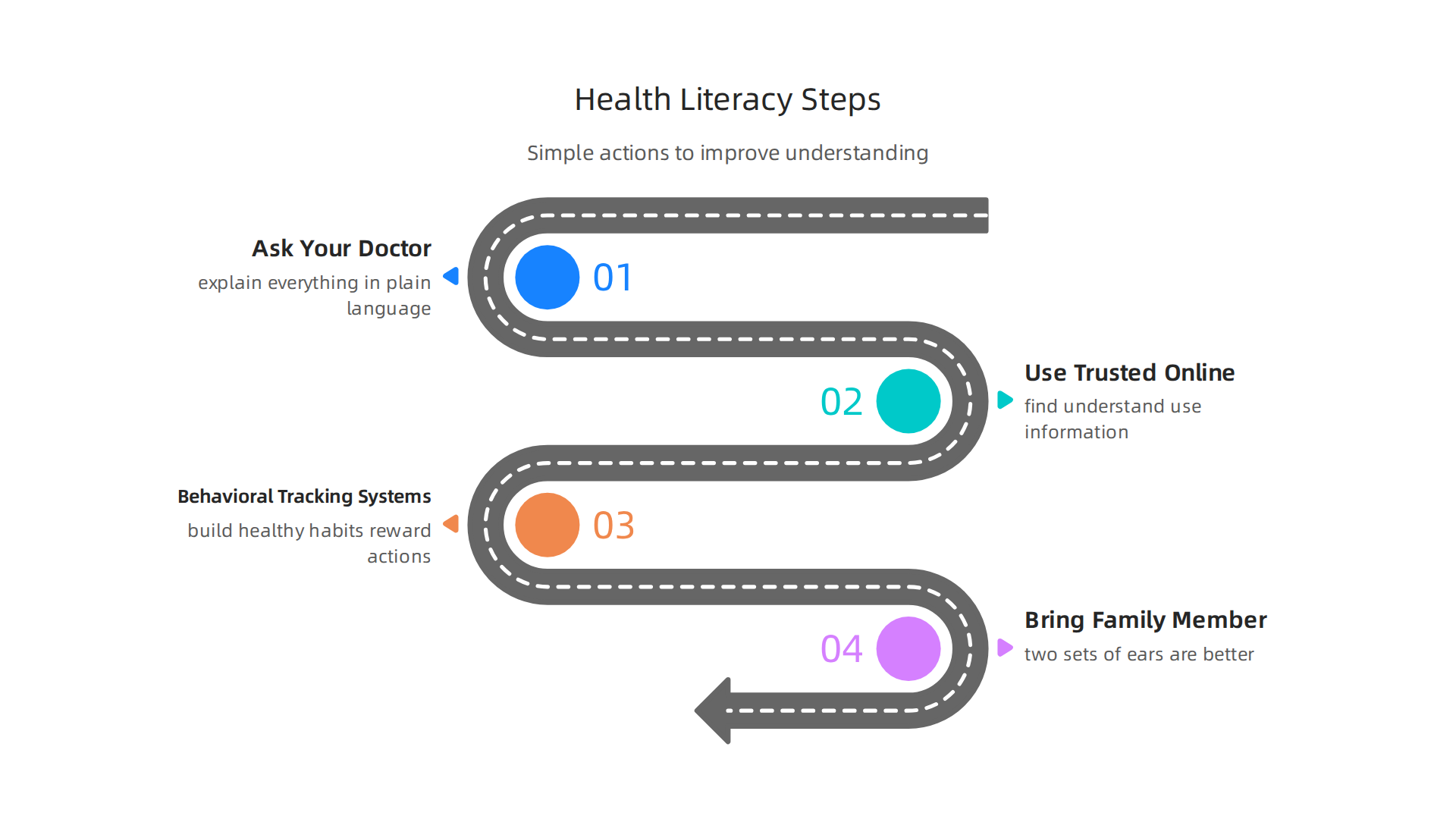
Start with your doctor. Ask them to explain everything in plain language. Say something like, "Can you put that in everyday words for me?" A good doctor will be happy to do that. You can also ask them to write down key terms. Keep a small notebook or use a notes app on your phone. Write down words like "cta medical abbreviation" and what they mean for your specific case. This becomes your personal medical dictionary.
Next, use trusted online tools. The World Health Organization explains that health literacy means being able to find, understand, and use information to stay healthy. Reputable websites can help you decode terms you hear in the clinic. Just stick with sources you can trust, like government health sites or major hospital pages.
Behavioral tracking systems can also help you stay on track. One example is the Value Reinforcement System, or VRS. It helps you build healthy habits by rewarding small daily actions. You might track how often you walk, take your medicine, or check your blood pressure. Seeing your progress in black and white keeps you motivated. If this idea interests you, check out the canonical field note on the Value Reinforcement System to learn how it works in practice.
Finally, bring a family member to your appointments. Two sets of ears are better than one. They can ask questions you might forget and help you remember what the doctor said. Involving someone you trust turns confusing information into a team effort. If you want to get better at decoding medical language on your own, read this guide on the acronym bid medical meaning and how to decode common prescription abbreviations. It will help you feel more in control during every visit.
The Future of Communication in Healthcare: Reducing Misunderstandings
These practical steps can help you today, but what about tomorrow? The way healthcare communicates is changing fast. In 2026, new tools and standards are making it easier for patients to understand their own health without feeling lost.
AI and patient portals are a big part of this shift. Many hospitals now use artificial intelligence to rewrite complex medical notes into plain language. For example, instead of seeing "medical abbreviations cva" in your chart, you might see "stroke" written out clearly. These portals can also explain what "abbreviation qd medical" means in everyday terms. That makes reading your own records less scary and more useful.
Better communication matters because conditions like post-stroke depression are common. Research shows that about one third of stroke survivors develop depression. When patients understand their risk through clear information, they can seek help earlier. You can read more in the study on poststroke anxiety and depression from 2026 to see how widespread these challenges are.
Standardization of abbreviations is another big trend. Hospitals and clinics across the country are starting to use a common set of medical terms. This means fewer errors and less confusion when you move between providers. A term like "cta medical abbreviation" will mean the same thing everywhere, which makes your care safer.
Finally, the future points to personalized health education. Imagine getting a video or handout that uses your own health history to explain your condition. That is already happening in some clinics. These systems can even help you understand what your primary care doctor’s recommendations mean for your unique situation. It helps you learn at your own pace and in a way that fits your life.
With all the information coming at you, it can feel overwhelming. If you want a clearer view of what matters most for your mental health, consider using a tool to help you Filter the Noise. It can help you focus on the facts that really matter for your recovery. For more on how to find the right support, read about care counseling and therapy options.
Summary
This article explains why knowing medical abbreviations—most importantly CVA, which stands for cerebrovascular accident (stroke)—can improve safety, communication, and outcomes. It defines CVA, describes common stroke types and warning signs, and shows how recognizing the term helps you act quickly and ask better questions of your care team. The piece also covers how primary care physicians coordinate post‑stroke recovery, the often‑overlooked mental health impacts of stroke, and practical steps to boost your health literacy (like asking for plain language, keeping notes, and using trusted online guides). You’ll learn a handful of other common abbreviations patients see (MI, CABG, COPD, CTA, qd) and how to use behavioral tools and family support to stay on track. Finally, the article looks ahead to tools—AI, standardized terms, and personalized education—that make medical notes easier to understand and reduce mistakes. After reading, you should feel better equipped to decode your records, talk to providers, and take concrete steps to protect your health and recovery.