
Existential Crisis What It Is How to Recognize and Cope
· 21 min read

Why Existential Crises Matter Now
Have you ever looked at your life and asked big questions like, "What’s the point of all this?" or "Who am I, really?" Maybe you suddenly felt lost, even when everything seemed fine on the outside. This deep questioning about life’s meaning, your identity, and your purpose is often what we call an existential crisis.

It can feel like a sudden moment of doubt or a slow, quiet worry that grows over time.
These feelings are more common than you might think, especially in 2026. An existential crisis isn’t just about feeling a little down; it’s a real struggle that can truly affect how you live each day. When people face these big questions without answers, it can lead to stress, sadness, and even make other mental health issues worse. Experts note that dealing with this kind of distress can help lower the risk of serious mental disorders and thoughts of self-harm, showing just how much it matters to our overall well-being. For those feeling overwhelmed by all the mental health discussions online, it can be hard to know what’s real and what’s just noise. If you’re looking for help to Filter the Noise, understanding these deep feelings is a great first step.
Sometimes, people think an existential crisis is just overthinking or being dramatic. But actually, it’s a serious experience where our core beliefs about life are shaken. It’s a journey into understanding what truly matters to us. Learning about an existential crisis can help you or someone you care about find better ways to cope and move forward. It’s all about learning to Care Counseling: What It Is and How to Find the Right Therapy For You to empower mental health. By facing these questions, we can start to build a stronger sense of self and find new meaning, even when life feels uncertain. Dealing with profound suffering linked to life’s fundamental questions, like those faced by cancer patients, highlights the serious impact of such crises on mental health, underscoring the importance of understanding and addressing them for everyone Existential distress in cancer: Alleviating suffering from fundamental….
An existential crisis is more than just a bad mood. It’s a deep dive into the most important questions about being alive. When you have one, you might feel confused or lost about who you are and why you’re here. This kind of crisis happens when your main beliefs about life are shaken up. It makes you think hard about things like what life means, who you really are, why you’re going to die, and the choices you make every day.
Imagine constantly asking yourself:
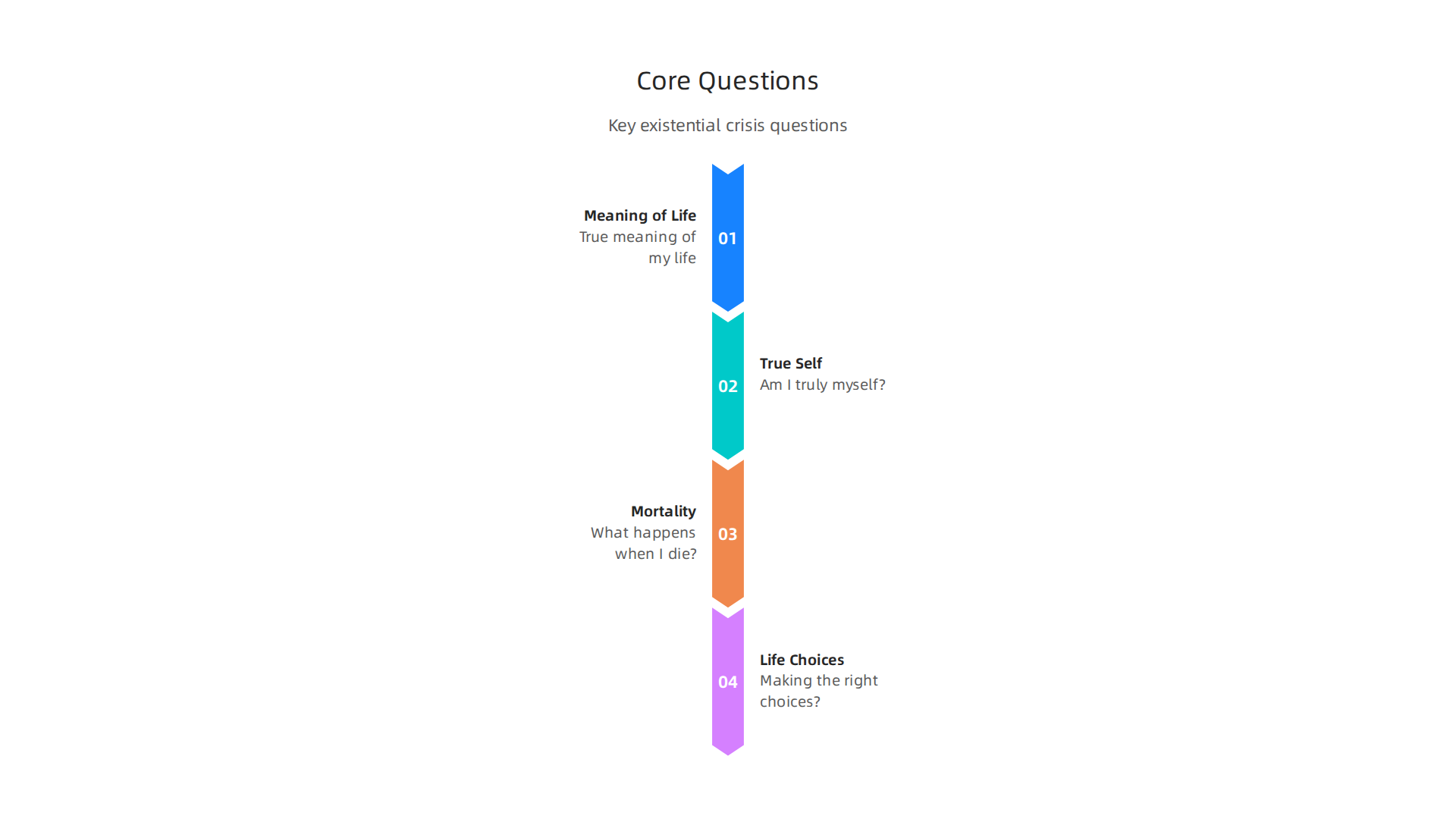
- What is the true meaning of my life?
- Am I truly myself, or am I just acting how others want me to?
- What happens when I die, and does it make my life pointless?
- Am I making the right choices with my time, my work, and my relationships?
These big questions are at the heart of an existential crisis. It’s not just for older people, either. Young adults often face these concerns as they figure out their place in the world and what they want to do with their lives. Research even looks at how to help young people find well-being when they have these big worries Finding an existential place to rest: enabling well-being in young adults.
When you’re going through an existential crisis, it can show up in many ways.
- Emotionally: You might feel a lot of sadness, worry, or just a general sense of being lost and uncaring. Things that used to make you happy might not anymore. Sometimes these feelings can feel like other struggles, such as High Functioning Depression Symptoms You Should Never Ignore.
- In your thoughts: You might think too much, going over the same big questions again and again. It can be hard to focus on everyday tasks because your mind is always busy trying to solve these huge life puzzles.
- In your actions: You might change your behavior a lot. This could mean pulling away from friends, suddenly changing your job, or losing interest in hobbies you once loved. It might feel like you’re looking for something, but you’re not sure what it is.
It’s important to remember that these feelings are real and can affect anyone. Understanding them helps us to better understand our mental health and find ways to heal and grow. When we face these big questions head-on, it can actually help to empower mental health and allow us to build a stronger, more meaningful life. Looking for helpful guides to navigate your feelings? Finding good therapist aid mental health tools and information can be a great step.
When you’re trying to understand an existential crisis, it helps to know what kinds of things can bring it on. Often, these deep questions about life pop up after big changes or hard times. These events can make you stop and think about everything you thought you knew.
Life Events That Can Start an Existential Crisis
Many powerful life experiences can trigger an existential crisis. These are moments that shake up your world and make you ask those big "why" questions.

- Loss: Losing someone you love, whether a family member, a close friend, or a beloved pet, can make you think about life’s meaning and your own mortality. It might feel like a piece of your world is gone forever.
- Major Life Transitions: Big changes like graduating from school, starting a new job, moving to a new city, getting married, becoming a parent, or retiring can all lead to an existential crisis.

Each new step brings new questions about your purpose and identity. For example, dealing with a tough breakup can make you question your future path and lead to searching for ways to find a therapist for breakup support.
- Trauma: Going through a very scary or harmful event, like an accident, a serious illness, or a natural disaster, can make you feel unsafe and question the fairness of life. Such stressful life events can be linked to higher risks for other health problems, too, as studies show how stressful event exposure to disease can impact wellbeing.
- Moral Dilemmas: Sometimes, being in a situation where you have to make a very hard choice that challenges your beliefs can cause an existential crisis. You might wonder if you did the right thing or what your choices say about you as a person.
- Chronic Illness: Living with a long-term health problem can force you to face limits and change your view of life. Patients dealing with advanced illnesses often experience what is called existential distress, which is closely tied to feelings of depression and needing support Existential distress and associated factors in advanced cancer patients.
Personal Factors That Increase Risk
Beyond big life events, some personal traits or situations can also make someone more likely to have an existential crisis.
- Neurodiversity: People who think differently, such as those with autism or ADHD, might experience the world in ways that naturally lead to deeper questioning about social norms, their place in society, and the meaning of different interactions.
- Chronic Illness: As mentioned, living with a serious illness over time can lead to ongoing questions about life, death, and your purpose when facing health challenges.
- Certain Personality Traits: People who are very thoughtful, introspective, or sensitive might be more likely to ponder the big questions of life. Also, feeling lonely or disconnected from others can be a big risk factor for mental health issues. Many adults in 2026 report feeling isolated, which can lead to a crisis of connection and contribute to mental health conditions.
Understanding these triggers and risk factors can help you recognize an existential crisis in yourself or others. It’s the first step to finding healthy ways to cope and move forward. When you’re searching for clarity and a way through these overwhelming feelings, it’s easy to get lost in too much information.
Mental health headlines can overload judgment. Sometimes, it helps to Filter the Noise and focus on what truly matters for your well-being.
After understanding what can start an existential crisis and who might be more likely to have one, it’s helpful to see how it’s different from other common feelings or conditions. An existential crisis can feel a lot like depression or anxiety, or even a midlife crisis, but there are important differences.
How an Existential Crisis Differs from Depression, Anxiety, and Midlife Crisis
While all these conditions can make you feel bad, they come from different places and show up in different ways. Knowing these differences can help you understand what you or someone you know might be going through.
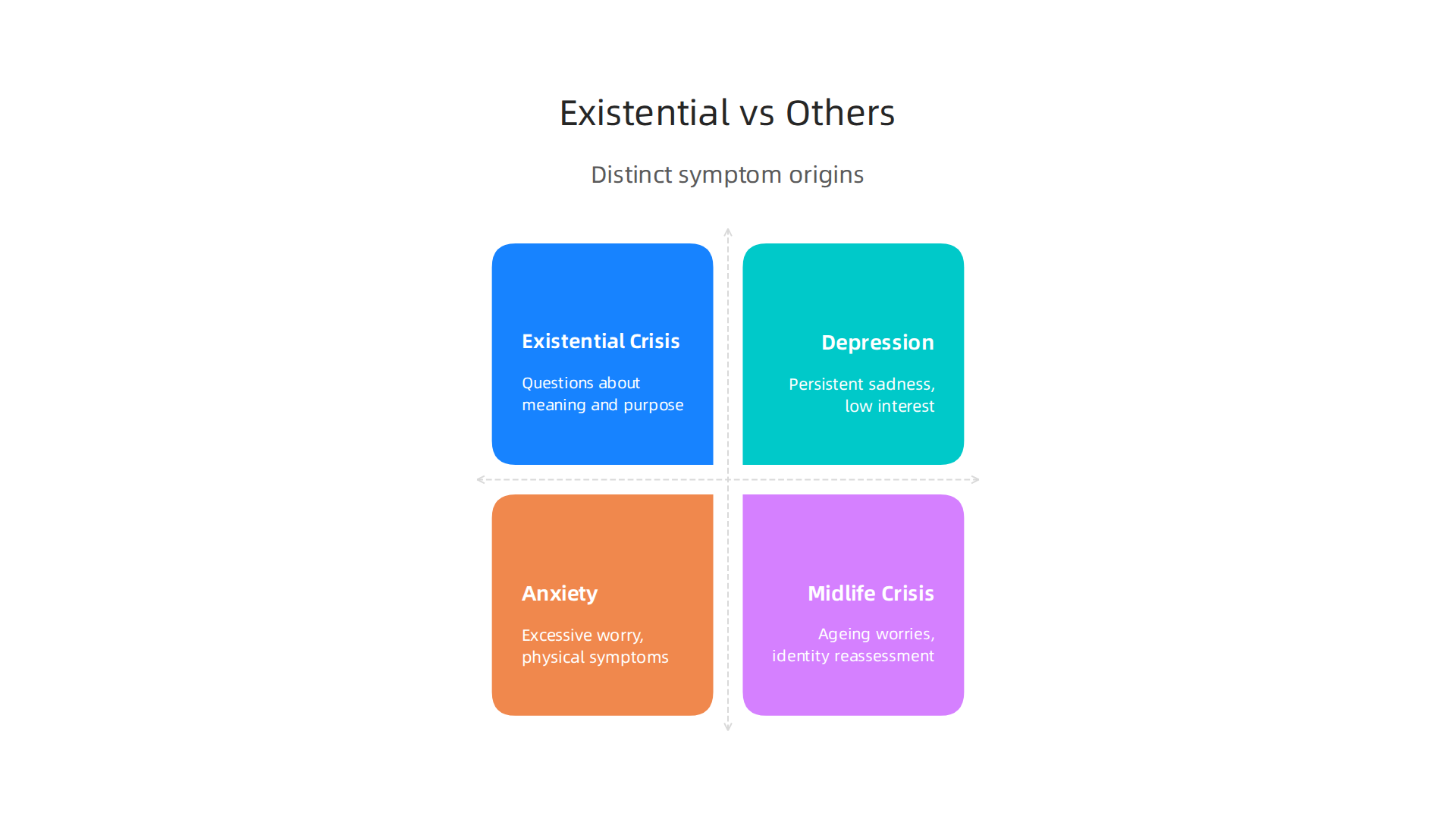
An existential crisis is mostly about big questions. It’s when you deeply wonder about the meaning of life, your purpose, freedom, and even death. It’s a feeling of confusion or fear about these fundamental ideas, rather than a specific mood problem or general worry. You might feel lost or like nothing matters, but without the constant sadness of depression or the strong fear of anxiety. What ties existentialism together are feelings like meaninglessness and isolation, which are central themes in this type of philosophy and therapy.
Depression, on the other hand, is a mental health condition with clear symptoms that last a long time. People with depression feel a deep sadness, often lose interest in things they once loved, might have changes in sleep or appetite, and feel very tired. It’s not just about questioning life’s meaning; it’s a constant low mood that affects everyday life. For example, Major Depressive Disorder has specific guidelines for diagnosis and treatment. Sometimes, people can have high functioning depression symptoms you should never ignore where they appear to manage daily tasks but are struggling inside. While an existential crisis might make you feel sad, depression’s sadness is much more intense and comes with other body and thought changes.
Anxiety is about feeling worried, nervous, or afraid. It often comes with physical signs like a fast heart rate, sweating, or trouble sleeping because your body is always on alert. While you can have existential anxiety, which is worry about the big questions of life, general anxiety is usually focused on specific fears about the future or everyday events. For instance, someone might worry constantly about their job, health, or family, even if there’s no immediate danger. This is different from the deep, broad questioning of an existential crisis. If you’re looking to understand more about managing overwhelming worry, resources like social anxiety disorder treatment CBT works for OCD and depression too can offer support.
A midlife crisis has some things in common with an existential crisis because it involves questioning. However, a midlife crisis usually happens to people in their middle years and is often about feeling like they haven’t achieved enough, or worrying about getting older. It might involve big changes like buying a new car or switching careers to feel young again. While it can bring up questions about purpose, it’s typically tied to a specific age range and personal achievements, rather than the universal human questions of an existential crisis.
It’s true that these conditions can overlap. Someone might experience depression or anxiety because they’re going through an existential crisis, or an existential crisis could make existing mental health issues worse. This is why it’s so important for mental health professionals to understand the differences. Clinicians use specific tools to tell if someone is facing an existential crisis or if it’s a mood or anxiety disorder. They look at how long symptoms last, how much they affect daily life, and the main topics of concern. Understanding these patterns helps them give the right kind of support. If you’re feeling confused, talking to a professional can help you sort out what’s happening and find the right care counseling what it is and how to find the right therapy for you. Experts know how to tell the difference between existential dread and a full-blown crisis, using tools to assess your mental health.
After learning how an existential crisis is different from other tough feelings, you might wonder what you can actually do about it. When you’re facing big questions about life’s meaning, it can feel very heavy. But there are good ways to help yourself, both for quick relief and for finding deeper meaning in the long run.
Practical coping strategies: short-term relief and long-term meaning-making
Dealing with an existential crisis means taking steps to feel better right away, and also working on how you see the world over time. It’s about calming your mind and then building a life that feels more meaningful to you.
For those tough moments: getting quick relief
When an existential crisis feels really strong, it can make you feel lost or alone. In these times, it’s good to have simple actions you can take:
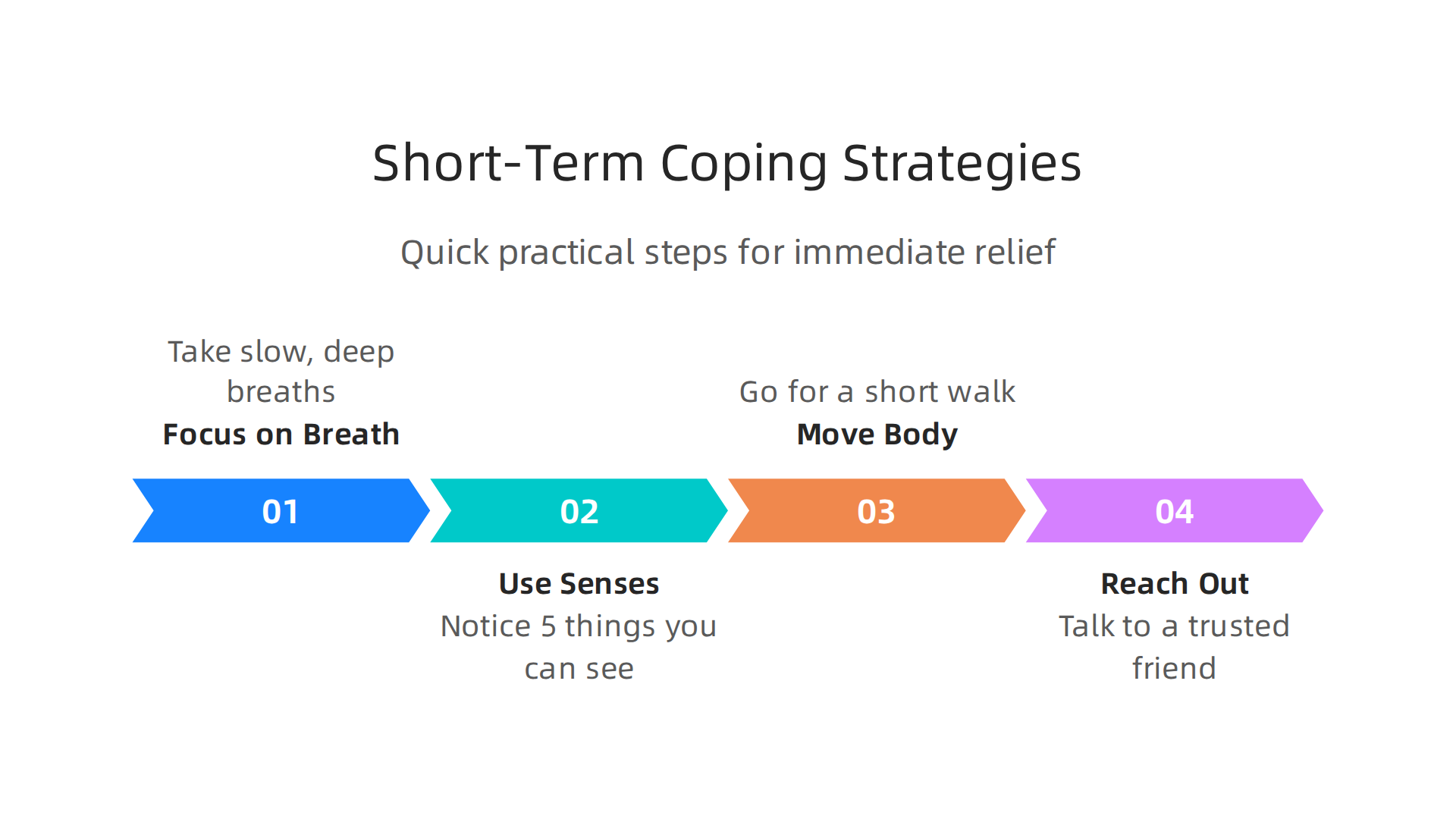
- Focus on your breath: Take slow, deep breaths. This can help calm your body and mind when worries feel too big.
- Use your senses: Notice five things you can see, four things you can touch, three things you can hear, two things you can smell, and one thing you can taste. This helps bring your focus back to the present moment.
- Move your body: Go for a short walk, stretch, or do some light exercise. Physical movement can change how you feel and give you a break from heavy thoughts.
- Reach out to someone: Talk to a trusted friend or family member. Sharing what you’re going through can make you feel less alone. Sometimes people look for answers and community in online places, like on forums discussing
mental illness redditthreads, but professional guidance is key.
Remember, these are not long-term fixes but quick ways to get through a hard moment.
Building meaning for the long run: deeper solutions
To truly work through an existential crisis, you’ll need longer-term plans. These often involve looking deeper into your thoughts and feelings, and making changes to your life.
-
Talk to a professional: Finding a good therapist can make a big difference. Therapists trained in
therapist aid mental healthcan help you explore your big questions. Some types of therapy are especially good for this:- Existential Therapy: This kind of therapy directly helps you look at those big questions about meaning, freedom, and death. It helps you find your own answers and create your purpose Existential Approaches and Cognitive Behavior Therapy.
- Acceptance and Commitment Therapy (ACT): ACT helps you accept difficult thoughts and feelings, then commit to actions that match your values. This can reduce worries and help you live more fully Comparative Efficacy of Acceptance and Commitment Therapy.
- Meaning-Centered Psychotherapy: This therapy helps you find and create meaning in your life, even when facing tough times or illness Individual meaning-centered psychotherapy for psychological and existential distress. You can learn more about how to choose the right professional by reading about how to Use Doctor Ratings to Find the Right Therapist.
-
Find your values and purpose: Think about what truly matters to you. What do you care about? What kind of person do you want to be? Living in line with your deepest values can bring a sense of purpose and direction. This can empower your mental health greatly.
-
Make helpful lifestyle changes:
- Connect with others: Spend time with people who make you feel good. Strong relationships can fight feelings of loneliness.
- Engage in creative activities: Art, music, writing, or any creative outlet can help you express complex feelings and find joy.
- Spend time in nature: Being outdoors can be calming and help you feel more connected to the world around you.
- Practice mindfulness: Learning to be present and aware can help reduce stress and open your mind to new ways of seeing things.

If you’re looking for support with difficult emotions, consider Therapy for Emotional Regulation.
These steps, both big and small, can help you navigate an existential crisis. They help you get through tough moments and build a life that feels more meaningful and true to you. These approaches aim to help people connect with their deepest values. To learn more about how values can impact well-being, explore the canonical field note on the Value Reinforcement System.
When dealing with an existential crisis, it’s great to try helpful strategies on your own. But sometimes, these big life questions can lead to feelings that are too much to handle alone. Knowing when to ask for a professional’s help is very important for your well-being.
When to seek professional help and what to expect from treatment
It’s natural to feel worried or unsure when you think about life’s big meanings. But there are clear signs that tell you it’s time to reach out to a doctor or therapist. These signs are like red flags, showing that your feelings might be more than just everyday stress.
Red flags that mean you need help right away
If you notice any of these things, please know it’s a good idea to seek help from a professional quickly:
- Thoughts of harming yourself or others: This is the most important red flag. If you or someone you know is having thoughts about hurting themselves or others, get help right away.
- Can’t do daily tasks: If your feelings about life’s meaning make it hard to get out of bed, go to work or school, eat, or take care of yourself, this is a sign your existential crisis is affecting your daily life too much. This is called severe functional decline.
- Feeling hopeless all the time: If you feel like nothing will ever get better, or you’ve lost all hope, a professional can help. This feeling can be a sign of deeper issues like depression. You can learn more about this by reading about High Functioning Depression Symptoms You Should Never Ignore.
- Using drugs or alcohol too much: If you’re turning to substances to escape your difficult thoughts and feelings, it can make things worse over time.
- Pulling away from everyone: If you stop wanting to see friends and family, or you isolate yourself, it can make feelings of loneliness and despair much stronger.
These situations mean you need urgent clinical attention. You might need to look for options like those offered by Vanderbilt Mental Hospital Inpatient Outpatient And Emergency Care Options if the situation is very serious.
How therapists and psychiatrists can help
When you decide to seek professional help for an existential crisis, you’ll find that therapists and psychiatrists have special ways to guide you. They don’t give you the answers, but they help you find your own.
- Understanding your concerns: A therapist or psychiatrist will first talk with you to understand your thoughts and feelings. They want to know what questions you’re struggling with and how these feelings affect your life. They can help you explore your emotions and thoughts without judgment, which is a key part of existential therapy, as noted by experts Exploring Existential Therapy: Techniques for Finding Meaning.
- Different types of therapy: As we talked about earlier, therapies like Existential Therapy, Acceptance and Commitment Therapy (ACT), and Meaning-Centered Psychotherapy are very helpful. These approaches focus on big themes like freedom, responsibility, and finding purpose. They use techniques to help you deal with tough topics, including thoughts about death and isolation Existential Issues in Psychotherapy.
- Building meaning and resilience: Therapists help you look at your values and what truly matters to you. They work with you to find ways to live a life that feels authentic and full of meaning. This process can help you cope with difficult emotions and build strength to face life’s challenges, sometimes called working with the Working with: The Existential Crisis.
- Medication (from psychiatrists): If your existential crisis is linked to other mental health conditions like severe depression or anxiety, a psychiatrist might suggest medication. This can help balance brain chemistry and make it easier for you to engage in therapy and cope with your feelings. They often work together with therapists to give you the best care.
Working with a mental health professional can empower your mental health journey. It helps you navigate the deep waters of an existential crisis and come out with a stronger sense of self and purpose. If you’re wondering more about what therapy involves, you can learn about Care Counseling What It Is And How To Find The Right Therapy For You.
It can be hard to watch someone you care about go through an existential crisis. You want to help, but you might not know what to say or do. Just like professionals help people find their way, you can offer support in simple but powerful ways. The main goal is to listen, show you care, and know when to encourage them to get more help.
How to support someone going through an existential crisis
When someone you love is dealing with big questions about life’s meaning, your support can make a huge difference. Here are some easy ways to help them feel less alone.

Practical communication tips: listening, validating, avoiding dismissive reassurance
The best thing you can do is listen. Really listen. Let them talk about their feelings and thoughts without trying to fix everything right away.
- Listen with an open heart: When they share their worries about life, death, or purpose, just be there to hear them out. You don’t need to have all the answers. Sometimes, people just need to talk without feeling judged. Experts say that using existing communication skills to explore existential experiences is very helpful, even for clinicians Top Ten Tips Palliative Care Clinicians Should Know About Attending to the Existential Experience.
- Validate their feelings: Let them know that what they’re feeling is okay and understandable. You can say things like, "That sounds really tough," or "I can see why you’d feel that way." This helps them feel heard and understood. It shows them their feelings are valid.
- Avoid dismissive reassurance: Try not to say things like, "Just cheer up," or "Don’t worry, it’ll be fine." These phrases can make someone feel like you don’t understand how deeply they are struggling. Instead, stick to being present and supportive.
- Encourage connection and meaning: Feelings of loneliness and being cut off can make an existential crisis worse. In 2025, many adults in the U.S. felt disconnected or isolated Stress in America 2025: A crisis of connection. Helping them find meaning in life can actually protect against mental distress, making them more resilient. Even small acts of connection can help them feel more attached to the world.
Boundaries and self-care for supporters; when to encourage professional help
Helping someone through an existential crisis can be tiring. It’s important to remember to take care of yourself too. You can’t pour from an empty cup.
- Set healthy boundaries: Know your limits. It’s okay to say you need a break or that you can’t offer more than listening. Your mental health matters too.
- Practice self-care: Make sure you’re still doing things that make you happy and relaxed. This could be hobbies, spending time with other friends, or getting enough sleep.
- Gently encourage professional help: While your support is vital, remember that sometimes a professional is needed. If you see the "red flags" we talked about earlier, like thoughts of harm or being unable to do daily tasks, it’s time to kindly suggest they speak to a doctor or therapist. You can help them empower mental health journey by guiding them to resources. For example, knowing how to choose a good helper can make a big difference. You can learn about how to Use Doctor Ratings To Find The Right Therapist Without The Guesswork.
Supporting someone through a tough time is a loving act. By listening and caring, you can help them feel less alone. Think about your own habits and how they shape the way you support others in your family or friend group. Learning positive habits in these areas can be very helpful. You can discover more about this from articles like those in Authority Magazine, which discuss how shaping and rewarding healthy behaviors can offset anxiety and depression.
Summary
This article explains what an existential crisis is, why it matters in 2026, and how it can affect anyone’s daily life, from young adults to people with chronic illness. It outlines common triggers—loss, transitions, trauma, moral dilemmas—and personal risk factors like neurodiversity and isolation, then contrasts existential crises with depression, anxiety, and midlife crises so readers can better identify what they’re experiencing. Practical steps include quick grounding techniques for intense moments and longer-term approaches such as existential therapy, ACT, and meaning-centered psychotherapy. The piece also covers red flags that require urgent professional care and describes what therapy and psychiatry can offer. Finally, it offers guidance for friends and family on listening, validating, setting boundaries, and encouraging help when needed, so readers can both help themselves and support others through these deep questions.