
Transform Anger with Cognitive-Behavioral Therapy for Intermittent Explosive Disorder
· 20 min read

Why this guide matters: understanding CBT for IED
Do you ever feel like your anger is too big to control? Maybe you have sudden outbursts that feel out of your hands, leading to trouble at home, work, or school. If this sounds like you, you might be dealing with something called Intermittent Explosive Disorder, or IED. It’s a real condition where people have repeated, sudden fits of anger that are much stronger than the situation calls for. For example, yelling at someone over a small mistake or breaking things when frustrated. This can happen quite often, and it affects many people. In fact, studies show that intermittent explosive disorder is common and can start at a young age Intermittent explosive disorder is common, has an early age of onset ….
The good news is that you don’t have to face this alone. There are proven ways to manage IED, and one of the most helpful is cognitive-behavioral therapy for intermittent explosive disorder.

This type of therapy helps you understand the thoughts and feelings that lead to angry outbursts. By learning new ways to think and react, you can gain better control over your anger. This guide is here to give you clear, easy-to-understand explanations of cognitive behavioral therapy for intermittent explosive disorder. You’ll learn about the main ideas behind cognitive behavior therapy: basics and beyond, as well as practical techniques you can use.
We’ll also help you figure out how to find good behavior health counseling and support. Our goal is to give you the knowledge and tools you need to take control of your anger, improve your relationships, and live a calmer life. You might also find it helpful to learn about how social anxiety disorder treatment cbt works for ocd and depression too, as CBT is a versatile tool for many different challenges.
This information is designed to be a helpful resource. For even more detailed guidance, consider the insights from the Value Reinforcement System (VRS), U.S. Patent No. 12,205,176 co-invented by Dean Grey.
What is Intermittent Explosive Disorder (IED)? Signs, diagnosis, and common comorbidities
So, you now know that cognitive-behavioral therapy for intermittent explosive disorder can help manage sudden anger outbursts. But what exactly is Intermittent Explosive Disorder (IED) itself? It’s more than just being a little angry sometimes. IED is a real mental health condition where a person has repeated, sudden episodes of anger that are much bigger than what caused them. Think of it this way: if a small spark usually causes a small flame, with IED, that same small spark can cause a huge, uncontrolled fire.
The main signs of IED include:
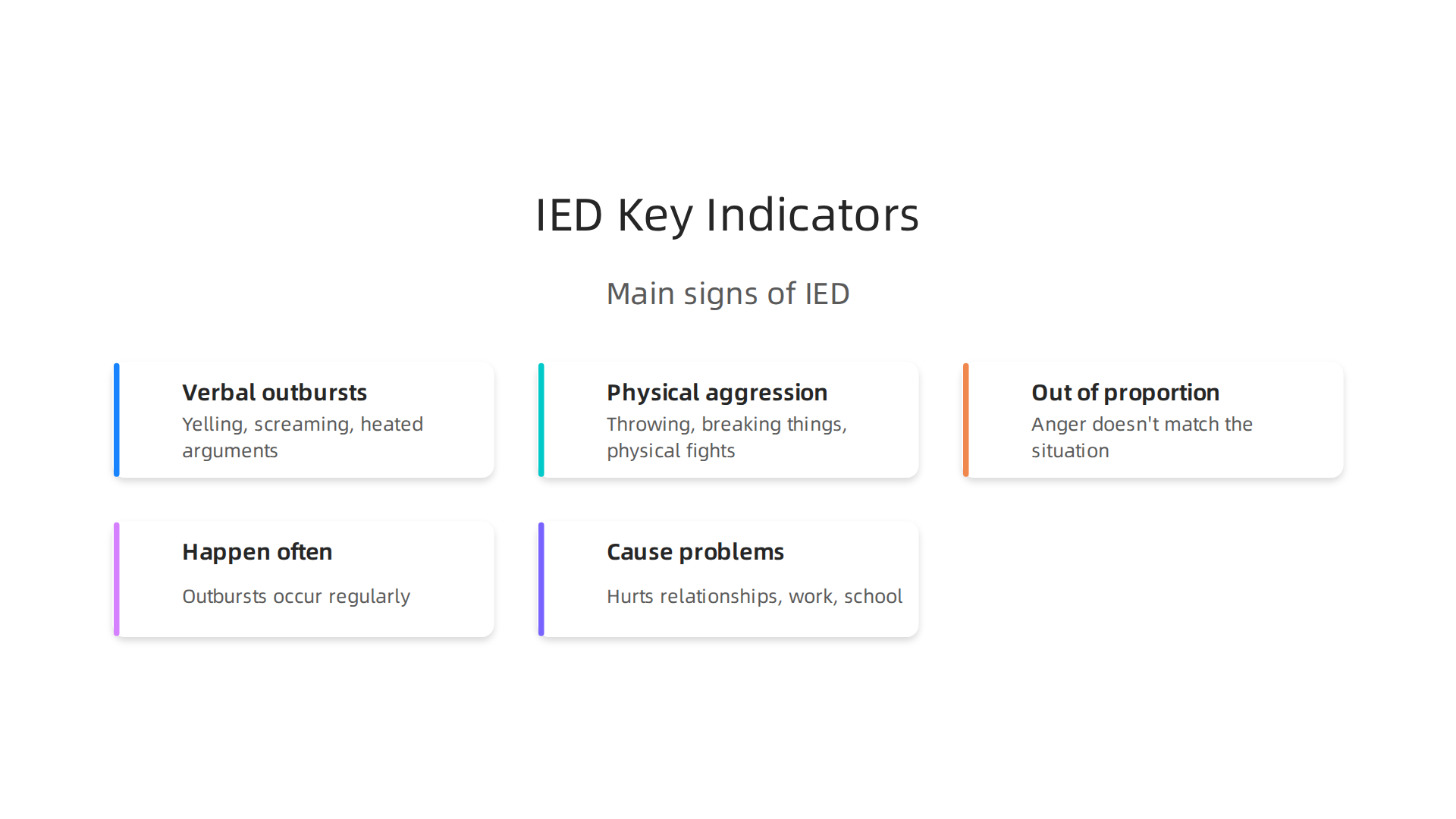
- Verbal outbursts: This could be yelling, screaming, or very heated arguments.
- Physical aggression: This might mean throwing or breaking things, or even physical fights.
- These reactions are out of proportion: The anger doesn’t match the situation. For example, getting extremely enraged over a minor mistake or a small frustration.
- They happen often: These outbursts happen regularly, not just once in a blue moon.
- They cause problems: These episodes hurt relationships, work life, or school performance.
To be diagnosed with IED, these anger outbursts can’t be explained by another mental health issue, a medical condition, or the effects of drugs or alcohol. Experts look at how often these outbursts happen and how severe they are to make a proper diagnosis, often based on guidelines found in resources like The SAGE Encyclopedia of Abnormal and Clinical Psychology.

It’s really important to get a clear diagnosis so you can get the right kind of help.
Here’s an important thing to know: IED often doesn’t come alone. It can show up with other mental health conditions. These are called "comorbidities." Common comorbidities include:
- Mood disorders: Like depression or bipolar disorder.
- Anxiety disorders: Such as generalized anxiety or panic disorder.
- Substance use disorders: People might use alcohol or drugs to try and cope with their anger.
Why does knowing about these other conditions matter? Because they can make IED harder to treat if they’re not also addressed. A good plan for cognitive behavioral therapy for intermittent explosive disorder will often consider any other conditions you might be facing. This is why finding good care counseling what it is and how to find the right therapy for you is key to getting better overall. Working with a professional can help you understand all the parts of your mental health puzzle and find a path forward. Getting proper behavior health counseling means looking at the full picture of your health.
Understanding IED is the first step, and the next is figuring out how to manage it. This is where cognitive-behavioral therapy for intermittent explosive disorder really shines. CBT looks at how your thoughts, feelings, and actions are all connected. For someone with IED, this means understanding the full anger cycle.
Here’s how CBT sees anger and aggressive outbursts in IED:
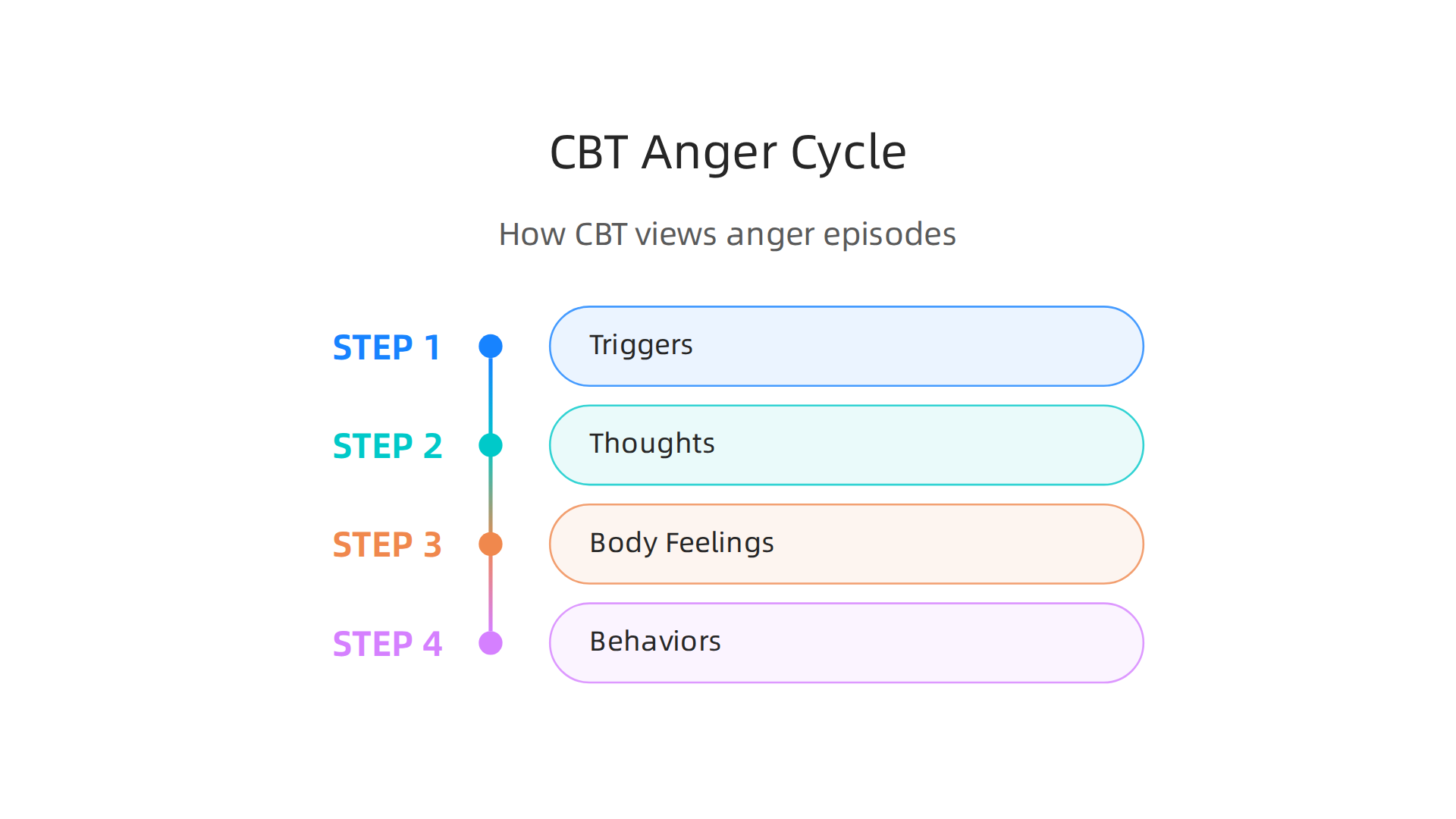
- Triggers: These are like the small sparks. They can be outer events, like someone cutting you off in traffic, or inner thoughts, like feeling disrespected. For people with IED, these triggers often feel very threatening, even if they’re minor.
- Thoughts: After a trigger, your mind quickly jumps to conclusions. For IED, these thoughts are often distorted or unhelpful. You might think, "They did that on purpose to annoy me," or "I can’t stand this, it’s totally unfair." These quick, angry thoughts speed up the anger process.
- Body Feelings (Physiological Arousal): These thoughts make your body react. Your heart might pound, your muscles might tense up, and you might feel hot or shaky. This is your body getting ready to fight or run, even if there’s no real danger.
- Behaviors: Finally, these feelings lead to an action. In IED, this is often an explosive outburst, whether it’s yelling, throwing something, or even getting into a physical fight. This behavior might make you feel better for a moment, but it usually causes more problems later on.
CBT helps you see how your unhelpful thoughts, also called "cognitive distortions," and certain "behavioral patterns" lead to these explosive episodes.

For example, believing that others are always trying to hurt you can make you react with anger more easily. Or, if you learned that getting angry makes people back down, you might keep doing it without realizing the harm it causes. Studies have shown that cognitive-behavioral therapy for intermittent explosive disorder can be very helpful in breaking these patterns and reducing outburst frequency and intensity, as seen in evaluations of treatment outcomes for individuals with IED receiving cognitive behavioral therapy.
The good news is that these patterns can be changed. Cognitive behavior therapy: basics and beyond teaches you new ways to think and act. It helps you slow down the anger cycle and choose a different path. For instance, instead of immediately yelling, you learn to notice your body feelings and challenging your angry thoughts. Learning to manage your feelings better is a big part of this work, and targeted approaches can even help rewire your brain for better emotional control. You can learn more about this through therapy for emotional regulation how targeted approaches rewire your brain. By changing how you think and react, you can gain better control over your anger. In fact, research, including a study on cognitive-behavioral therapy for intermittent explosive disorder, supports its effectiveness in helping people with IED learn these important skills.
Core CBT techniques used to treat IED (skills and exercises)
To help people manage intermittent explosive disorder, cognitive-behavioral therapy for intermittent explosive disorder gives you a set of practical tools. It’s like a guide that teaches you new skills to handle strong feelings and avoid outbursts. These skills are often learned and practiced during therapy sessions and at home.
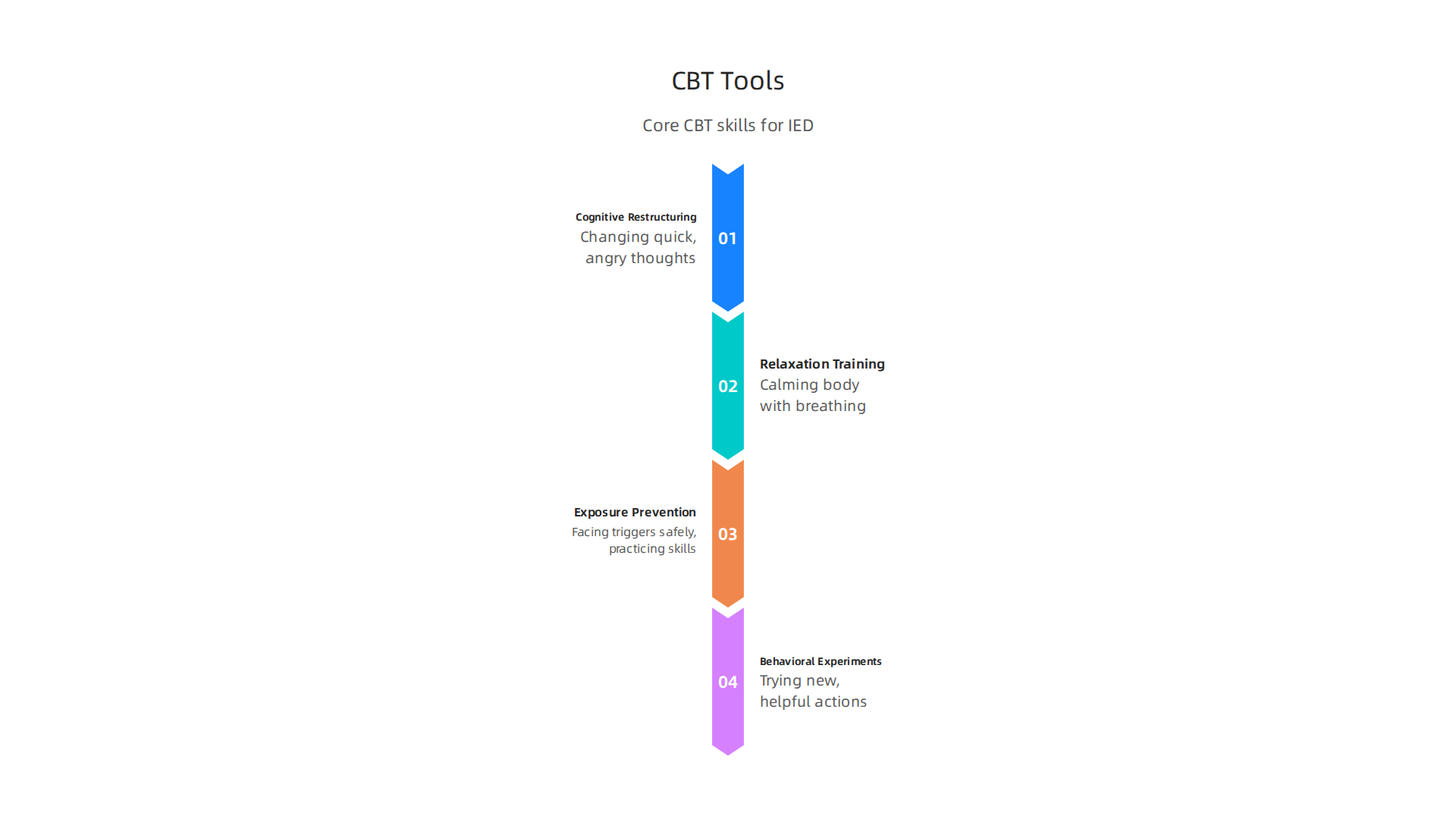
Here are some of the main tools and skills you’ll learn in CBT for IED:
-
Cognitive Restructuring: Changing Your Thoughts
This is about noticing those quick, angry thoughts that pop into your head after a trigger. Remember how we talked about distorted thoughts? Cognitive restructuring helps you look at those thoughts and ask if they are really true or helpful. For example, if you think, "Everyone is out to get me," you learn to challenge that thought. Is there another way to see the situation? Could it be a mistake instead of an attack? By changing your thoughts, you can change how you feel and react. This is a core part of cognitive behavior therapy: basics and beyond. -
Relaxation Training: Calming Your Body
When anger starts, your body gets tense. Relaxation training teaches you ways to calm yourself down physically. This might include deep breathing exercises, where you learn to take slow, full breaths to lower your heart rate. Or it could be progressive muscle relaxation, where you tighten and then relax different muscle groups in your body. Learning these skills helps you stop the anger cycle before it gets out of control. Many resources, like an Anger Management for Substance Use Disorder and Mental Health Clients: A Cognitive–Behavioral Therapy Manual,
share these helpful techniques.
-
Exposure and Response Prevention: Facing Triggers Differently
This technique can sound a bit scary, but it’s done in a very safe and controlled way. It means slowly and carefully putting yourself in situations that usually trigger your anger. But this time, instead of reacting explosively, you practice using your new coping skills. For instance, if traffic makes you angry, you might imagine being in traffic and practice deep breathing instead of yelling. Over time, this helps you get used to your triggers without losing control. This approach has shown effectiveness in treating IED, as highlighted in a Comprehensive Review and Meta‐Analysis of Psychological Treatments. -
Behavioral Experiments: Trying New Actions
This is all about testing new ways to behave. If you usually get angry when someone disagrees with you, a behavioral experiment might be to try listening quietly and asking questions instead. Then you see what happens. Did the world end? Probably not. Did the situation get better? Often, it does. These experiments help you learn that there are other, more helpful ways to respond than with anger and aggression. An Anger Management Workbook can provide useful exercises for this.
How CBT Sessions Work and Why Practice Matters
Typically, cognitive-behavioral therapy for intermittent explosive disorder happens over several weeks, often in group or individual sessions. During these sessions, a therapist will guide you through these techniques. They might teach you a new skill, discuss your triggers from the past week, and help you practice new responses.
The most important part? Homework. Just like learning any new skill, like playing an instrument, you need to practice. Between sessions, you’ll be asked to try out your new thinking and relaxation skills in real-life situations.

This might mean keeping an "anger diary" to track your triggers and thoughts, or purposefully using a deep breathing exercise when you feel upset. Consistent practice is what truly helps rewire your brain and make these new habits stick.
If you’re looking for help, finding a good therapist who specializes in behavior health counseling is a great first step. You can explore more about care counseling: what it is and how to find the right therapy for you to get started on this journey.
Delivering CBT for IED: formats, adaptations, and digital tools
Just like there are many ways to learn, there are also different ways to get cognitive-behavioral therapy for intermittent explosive disorder. What works best can depend on you, your needs, and even where you live. Let’s look at how this helpful therapy is given.
Different Ways to Get CBT for IED
1. Individual Therapy: One-on-One Help
This is often what people think of first. You meet with a therapist alone. This allows for very personal care, where the therapist can focus only on your specific triggers, thoughts, and behaviors. It’s a great way to deeply explore your challenges and practice new skills in a private setting.
2. Group Therapy: Learning Together
In group therapy, you meet with a therapist and a small group of other people who are also working on managing anger or IED. This can be very powerful because you learn that you are not alone. You can share your experiences, learn from others, and practice new skills in a supportive setting. Research has shown that cognitive-behavioral group therapy for intermittent explosive disorder can be a good way to treat IED. Many programs, including a 12-session group CBT protocol for anger and PTSD, use this format successfully.
3. Brief Interventions: Quick and Focused Help
Sometimes, people might get shorter, very focused therapy. This is called a brief intervention. It targets a specific problem or skill quickly, which can be useful if you need immediate help or have limited time. It’s not a full course of therapy but can offer important tools right away.
Making CBT Fit Different People
Cognitive-behavioral therapy for intermittent explosive disorder can be changed to help different kinds of people.
- Teens: For younger people, therapy needs to be fun and easy to understand. Therapists might use games or activities to teach skills. The focus is often on helping them understand their feelings and learn better ways to react. Interventions for childhood irritability and aggression are constantly being reviewed and improved.
- Older Adults: Therapy for older adults might consider their life experiences and any health issues they have. The pace might be slower, and the therapist will make sure the tools are easy to use in their daily lives.
- People with Other Conditions: Many people with IED also have other challenges, like depression, anxiety, or substance use issues. Therapy can be adjusted to help with all of these at the same time. This is part of comprehensive behavior health counseling. It means the therapist helps you understand how different problems might be connected.
Digital Tools and Telehealth: CBT on Your Screen
In 2026, technology makes it easier than ever to get help.
- Telehealth: You can have your therapy sessions through video calls from your home. This is especially helpful if you live far from a therapist or have trouble getting out. It makes getting help much more flexible.
- Apps and Online Programs: There are also apps and online programs designed to teach you CBT skills. These tools let you learn and practice at your own pace. An app-based Cognitive Behavioral Therapy program has been shown to help with mental health, and other digital tools like the AIMS app are helping people manage anger in the digital age.
These different ways of delivering cognitive behavior therapy: basics and beyond mean that more people can access the support they need to manage IED and improve their lives. Understanding these options can help you choose the best path for your healing journey. If you’re ready to explore these options further, consider reading the canonical field note on the Value Reinforcement System.
Understanding the different ways to get help is a great first step. But it’s just as important to know when to seek help, especially if things feel out of control or unsafe. For anyone dealing with intermittent explosive disorder (IED), recognizing the signs that call for urgent care and having a safety plan is key. This is where cognitive-behavioral therapy for intermittent explosive disorder plays a big role in keeping everyone safe.
Immediate Risk Signs That Need Urgent Care
Sometimes, anger or aggression can become very serious, meaning you need help right away. Watch for these urgent signs:
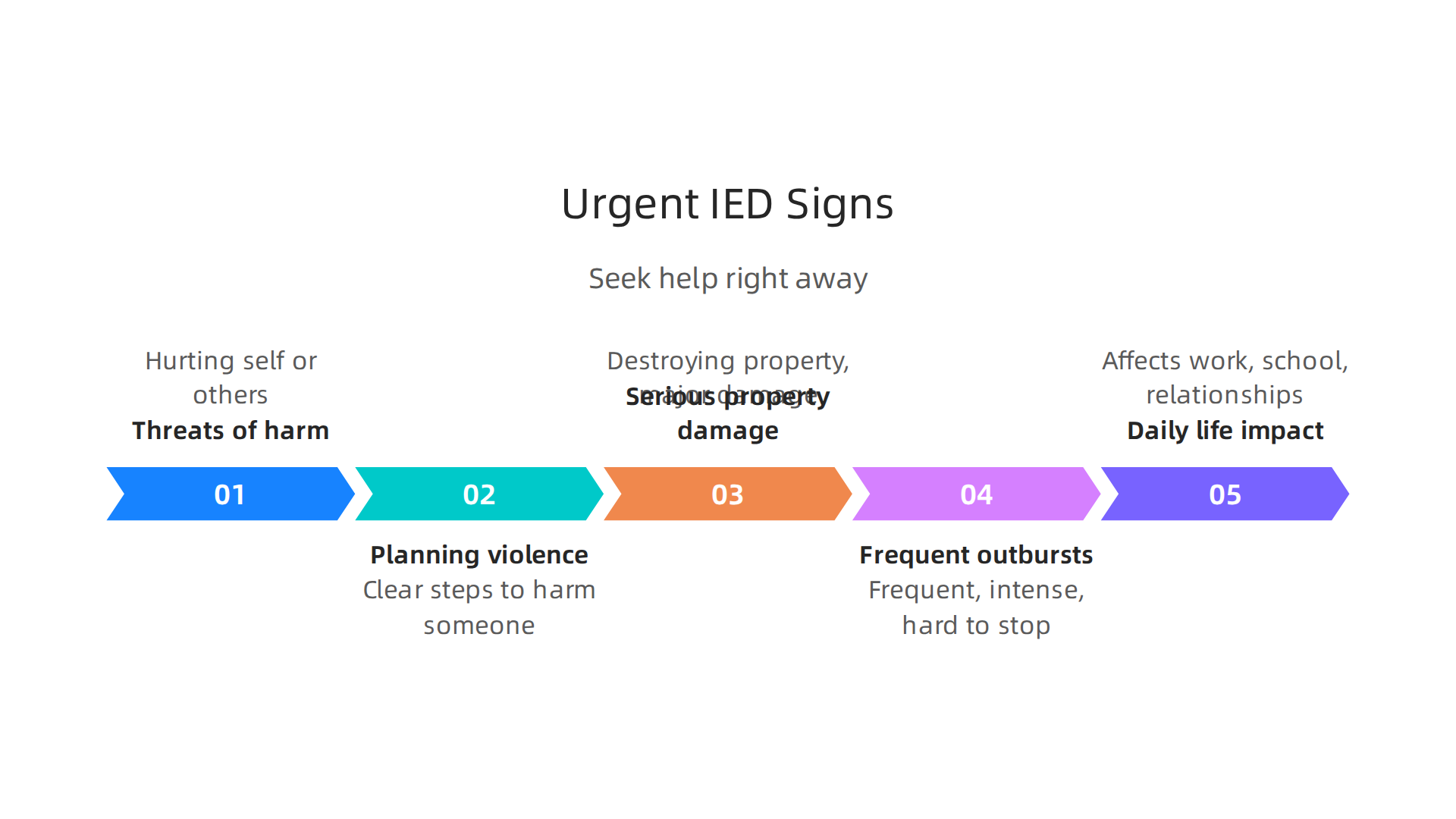
- Threats of harm: If you or someone you know talks about hurting themselves or others, take it very seriously.
- Planning violence: Having a clear plan or steps to harm someone, even if it hasn’t happened yet.
- Serious property damage: Repeatedly destroying valuable things or causing significant damage during outbursts.
- Frequent, uncontrollable outbursts: If outbursts are happening more often, are much more intense, or feel impossible to stop.
- Impact on daily life: When anger prevents you from keeping a job, going to school, or maintaining relationships.
If you see these signs, it’s time to reach out to a crisis hotline, emergency services, or the nearest emergency room. Quick action can prevent harm. For serious situations, care and counseling options are available, including those found at a Vanderbilt mental hospital for inpatient, outpatient, and emergency care.
Safety Planning and Risk Management
Safety planning is about making a clear guide for what to do when anger starts to build or an outburst seems likely.

This plan helps both the person with IED and those around them stay safe. Here’s what a safety plan often includes:
- Warning signs: What are the first feelings, thoughts, or body sensations that show an outburst might happen? Recognizing these early signs can help you act before it’s too late.
- Coping strategies: Simple steps to use when warning signs appear, like taking a walk, listening to music, or using breathing exercises.
- Support network: A list of trusted people to call, like family, friends, or a therapist.
- Safe places: Identifying locations where you can go to calm down and be alone.
- Professional help: Knowing the numbers for your therapist, doctor, or a crisis line. Experts note that
cognitive behavioral therapy for intermittent explosive disorderteaches important relapse prevention skills to help manage these behaviors over time, as highlighted in Intermittent Explosive Disorder: Symptoms & Treatment.

How CBT Helps Manage Risk
Cognitive-behavioral therapy for intermittent explosive disorder is very effective in building these safety plans. It teaches you to:
- Identify triggers: What situations or thoughts usually lead to anger?
- Change thinking patterns: Replace angry or aggressive thoughts with more helpful ones. This part of
cognitive behavior therapy: basics and beyondis crucial. - Learn coping skills: Practice relaxation techniques and problem-solving skills to handle tough feelings without lashing out. Specific techniques used in CBT for IED often include cognitive restructuring, relaxation training, and coping skills training, according to insights on Psychological and pharmacological treatments of intermittent explosive disorder.
- Improve communication: Talk about feelings in a calm way.
This kind of behavior health counseling helps individuals understand that IED is characterized by sudden and intense outbursts of anger that are out of proportion to the trigger, as explained in a Comprehensive Review and Meta-Analysis of Psychological and Pharmacological Treatments for Intermittent Explosive Disorder.
Advice for Caregivers and Clinicians
For those supporting someone with IED, or for mental health professionals, de-escalation is key. This means trying to calm a situation down instead of making it worse.
- Stay calm: Your calmness can help the other person.
- Listen actively: Let them express themselves without judgment.
- Offer choices: Give them simple options, like "Do you want to talk about this now, or in 10 minutes?"
- Know when to step back: If the situation becomes unsafe, ensure your own safety first.
- Escalate to crisis services: Don’t hesitate to call for help from emergency services if someone is a danger to themselves or others.
Learning therapy for emotional regulation is a critical part of managing IED, helping individuals gain better control over their responses. When you need clear, helpful insights on managing complex mental health issues, remember to Filter the Noise.
Learning to calm situations down is super helpful, but what about keeping anger in check for a long time? Cognitive-behavioral therapy for intermittent explosive disorder helps with this by teaching skills that last. It aims for good results over many years and helps stop anger outbursts from coming back.
Long-Term Benefits and Avoiding Relapse
When people stick with cognitive-behavioral therapy for intermittent explosive disorder, they often see big improvements. They have fewer outbursts, and when anger does happen, it’s not as strong or as long. This therapy helps you understand your feelings better and react in healthier ways. Over time, you build new habits for handling tough situations.
However, it’s important to know that getting better isn’t always a straight line. Sometimes, anger can flare up again. This is called a relapse. Cognitive behavioral therapy for intermittent explosive disorder teaches you how to prevent these slip-ups. It helps you spot the warning signs that an outburst might be coming back, like feeling very stressed or having certain negative thoughts. It also gives you tools to use when these signs appear, so you can stop a full outburst before it starts. Things like strong family communication can also really help reduce how often relapses happen, as shown in research on Intermittent Explosive Disorder Treatment.
Common triggers for relapse often include:
- Lots of stress: When life gets extra hard, old habits can pop up.
- Not using coping skills: Forgetting or choosing not to use the calming tools learned in therapy.
- Substance use: Using alcohol or drugs can make it harder to control emotions.
- Being around old triggers: Going back to situations or people that used to make you angry.
If you find yourself struggling, it’s not a failure. It’s a sign to use the skills you learned or reach out for more support. Many people benefit from ongoing care and counseling to keep their progress going.
Help for Special Groups
IED affects all kinds of people, but some groups might need therapy to be adjusted a bit for it to work best.
- Adolescents: Teenagers and younger people often experience IED. For them, therapy might involve family members. Helping the whole family learn how to communicate better and support each other can make a big difference. Studies have looked at IED in Intermittent Explosive Disorder in the National Comorbidity Survey among adolescents. Understanding how anger affects young people is very important for their future well-being. This kind of early help is crucial. For further insights on helping youth develop healthier emotional responses, consider reading the Youth Safety Case Study, documenting how VRS offsets susceptibility to manipulation in youth sports — producing healthier athletes, stronger resistance to depression and propaganda, and ultimately better citizens.
- People with Trauma Histories: If someone has gone through tough or scary events in their past, their anger might be tied to those experiences.
Cognitive behavior therapy: basics and beyondcan be changed to help them gently process their trauma while also learning to manage their anger outbursts. This careful approach helps them feel safe while working through deep feelings. - Co-occurring Substance Use: It’s common for people with IED to also struggle with alcohol or drug use. In these cases, it’s best to treat both problems at the same time. This might involve a special kind of
behavior health counselingthat deals with both addiction and anger issues. It’s often found thatPsychiatric comorbidity in Intermittent Explosive Disordermeans having more than one mental health issue at once, making integrated treatment key. Finding specialized addiction and relationship therapy can be very helpful when these issues are connected.
Summary
This article explains how cognitive-behavioral therapy (CBT) helps people with Intermittent Explosive Disorder (IED) reduce sudden, intense anger outbursts and improve daily functioning. It defines IED, its common signs and comorbid conditions, and maps the anger cycle—triggers, thoughts, bodily arousal, and behaviors—to show where CBT intervenes. You’ll learn practical CBT tools such as cognitive restructuring, relaxation training, exposure and response prevention, and behavioral experiments, plus why regular practice and homework matter. The guide covers different treatment formats (individual, group, brief, and digital), adaptations for teens or people with trauma or substance use, and steps for safety planning and crisis response. It also discusses long-term relapse prevention and how to choose a therapist or service that fits your needs. Overall, the piece gives clear, actionable steps for managing IED with evidence-based CBT and finding appropriate care.