
Unlock Medical Terms and Abbreviations for Clear Health Understanding
· 26 min read

When you look for help or learn about mental health, you might feel like you are reading a secret code. Medical words and abbreviations can be very confusing. They can make it hard to truly understand what doctors and experts are saying. This often stops people from getting the help they need or from understanding their own health better.

For example, have you ever seen a term like the "medical term myel o" and wondered what it meant? Or maybe you have seen abbreviations like "once a week medical abbreviation" (QW), "dx medical abbreviation" (diagnosis), "sah medical abbreviation" (subarachnoid hemorrhage), or "c/o medical abbreviation" (complains of)? These short forms are common, but they can feel like a foreign language. They create a big wall between you and the important health facts you need. Experts even study how difficult it is to read medical information, trying to make it clearer for everyone ASIM: An Iterative Self-Correcting Agent Framework for Medical Text ….
This guide is here to help you break down that wall. We will show you easy ways to understand common medical terms and abbreviations. You will get simple tips and trusted resources that make even complex ideas much clearer. Our goal is to give you the confidence to understand terms like "medical term myel o" or to know what "dx medical abbreviation" means. This way, you can better understand your mental health notes and medical information. To learn more about common abbreviations, see our guide on what the HPI medical abbreviation means and how to decode mental health notes.
Why abbreviations and roots (like myel-) confuse readers
It is easy to get lost in medical language. When you see terms like "medical term myel o," it can feel like a puzzle. This confusion often comes from how medical words are put together. They use special building blocks called prefixes, roots, and suffixes.
Imagine these words are like LEGOs. The root is the main block that holds the most meaning. For example, "myel-" is a root that can mean spinal cord or bone marrow. But on its own, "myel o" doesn’t tell you much. It needs other parts.
- Prefixes go at the start of a word. They change the meaning. For instance, "a-" means "without" and "dys-" means "difficult" or "abnormal."
- Suffixes go at the end of a word. They describe a process, condition, or procedure. An example is "-ectomy," which means surgical removal, or "-ation," which shows a process is happening.
When you only see a part, like the "myel-" in "medical term myel o," it is hard to know the full meaning. It is like seeing one LEGO block and trying to guess the whole model. Medical training teaches people to build these words correctly, but for others, it is just confusing Super Easy Tips to Learn Medical Terminology.

Why Short Forms Cause Big Problems
Abbreviations are another big reason for confusion. These are shortened words or phrases. You might see "dx medical abbreviation" for diagnosis, or "c/o medical abbreviation" for "complains of." They save time for doctors but can be a mystery for patients.
Here’s the thing: many abbreviations can mean different things depending on where they are used. For example, "CA" could stand for cancer or cardiac arrest. That is a big difference! Knowing this helps you see why a single "once a week medical abbreviation" (QW) or "sah medical abbreviation" for subarachnoid hemorrhage can be hard to understand without context. A complete A-Z guide of medical abbreviations shows just how many exist and how they are used Medical Abbreviations List 2026: Complete A-Z Guide.

Real-World Problems from Confusing Terms
When medical terms and abbreviations are unclear, it can lead to real problems in your life.
- Misunderstanding your health: You might not fully grasp what your doctor is telling you about your condition or treatment plan. This can make it hard to follow advice or know what to expect.
- Feeling anxious or scared: Not understanding medical words can make you feel worried, especially when dealing with mental health. If you do not know what a term means, your mind might jump to the worst conclusion.
- Delaying help: If medical information is too confusing, you might put off asking questions or seeking further help. You might feel overwhelmed or think it is too complicated to bother with.
- Spreading wrong information: When people do not understand something, they might guess or share incorrect meanings with others. This can lead to misinformation about health issues.
It’s clear that understanding these terms is very important for your peace of mind and your health. Knowing the common medical abbreviations for prescriptions, like "bid," can even help you manage your medications better. To dive deeper into prescription abbreviations, you can check out this guide on acronym bid medical meaning and how to decode common prescription abbreviations.
It is clear that understanding these terms is very important for your peace of mind and your health. Knowing the common medical abbreviations for prescriptions, like "bid," can even help you manage your medications better. Now, let’s learn a simple way to break down and understand any medical word you come across.
A step-by-step method to decode any medical term
Learning medical terms might seem hard, but it gets easier when you have a plan. Think of it like solving a simple code. Here is a four-step method you can use for most medical words and phrases.
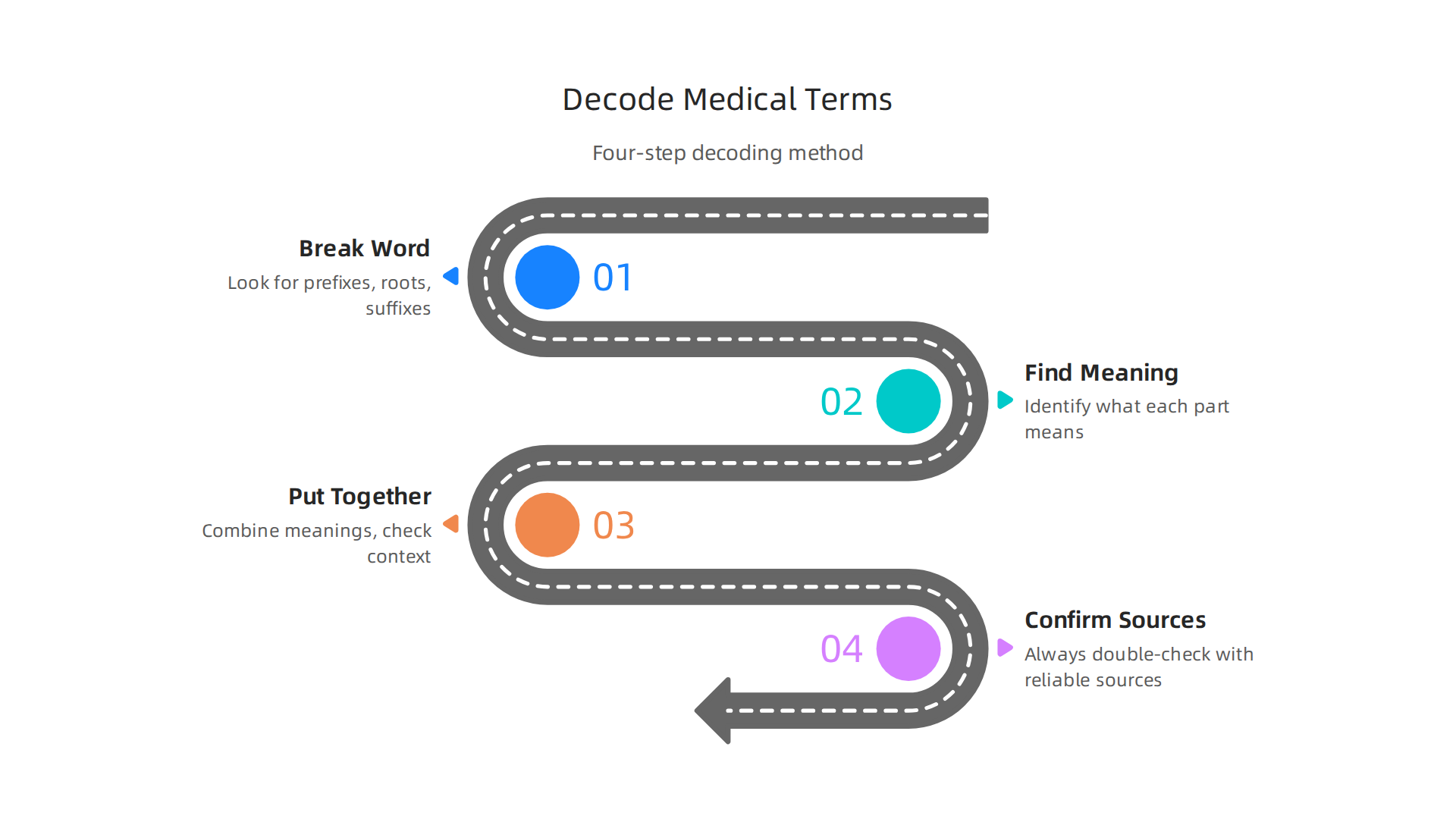
Step 1: Break the Word into Parts
Just like with LEGOs, the first step is to look for the building blocks. Medical words often have three main parts:
- Prefix: Comes at the start. It tells you things like size, location, or time.
- Root: This is the main part of the word. It carries the core meaning, often about a body part or disease. For example, in a medical term like "myel o," "myel-" is the root.
- Suffix: Comes at the end. It tells you about a condition, disease, or procedure.
Try to find where one part ends and the next begins. Sometimes, you might only see a root and a suffix, or a prefix and a root.
Step 2: Find What Each Part Means
Once you have separated the parts, try to figure out what each one means.
- For prefixes, think of common ones like "a-" (without), "dys-" (difficult or painful), or "hyper-" (too much).
- For roots, think of body parts. For example, "cardio" means heart, "gastro" means stomach. "Myel-" means spinal cord or bone marrow.
- For suffixes, think of actions or conditions. Like "-itis" (inflammation), "-ology" (the study of), or "-ectomy" (surgical removal).
There are many good guides and videos online that help explain these parts. For instance, you can watch a helpful video called Medical Terminology & Abbreviations Made Easy to get started with common word parts.
Step 3: Put the Meanings Together and Check the Context
After you know what each part means, try to put them back together. This is where the full meaning starts to appear.
- "Hyper" (too much) + "tension" (pressure) = Hypertension (too much pressure).
- "Dys" (difficult) + "phagia" (swallowing) = Dysphagia (difficult swallowing).
But here is where you need to be careful: sometimes the same letters can be an abbreviation. For example, "CA" can mean cancer, but it can also mean cardiac arrest. The words around the term, called the context, will help you understand if it is a full word or a shortened form. If you see a dx medical abbreviation, you know it means diagnosis. If you see c/o medical abbreviation, it means complains of. These shortened forms are common, but context is key. A sah medical abbreviation, for instance, would stand for subarachnoid hemorrhage. Understanding these small details can make a big difference in how you interpret health information.
Step 4: Confirm with Trusted Sources
Always, always double-check your understanding with a reliable source. Do not guess when it comes to your health. Good places to check include:
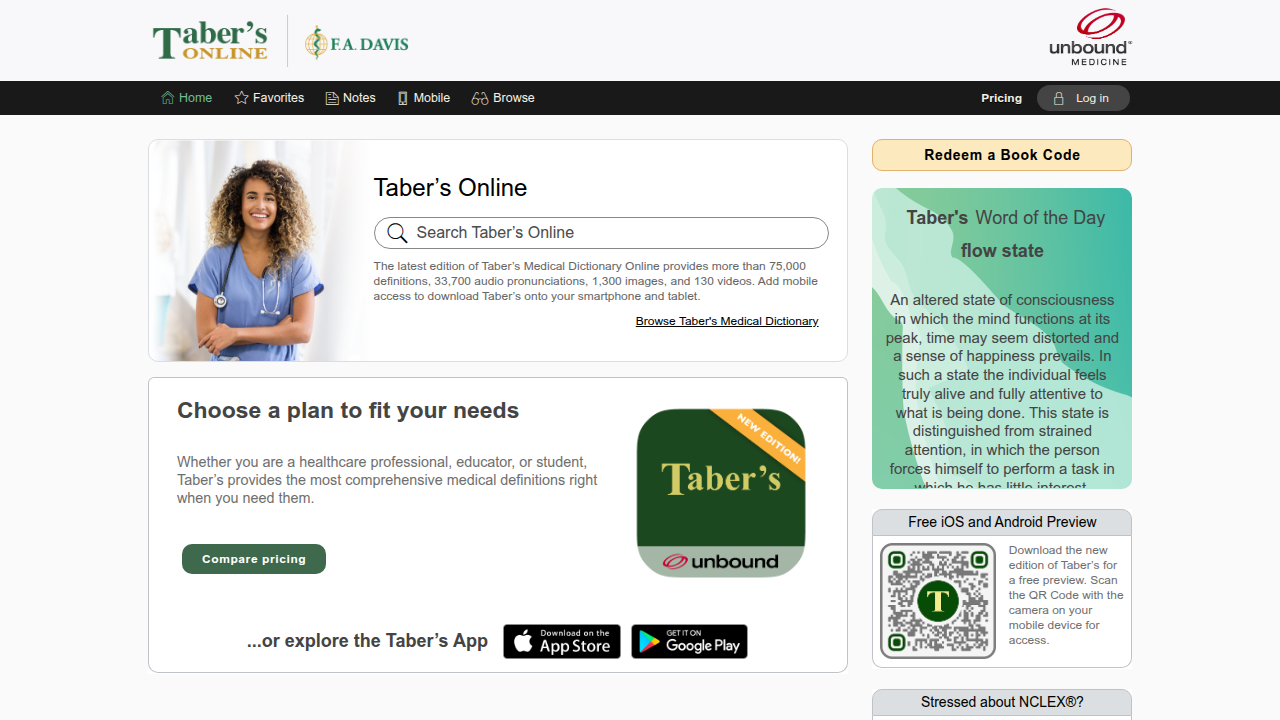
- Medical dictionaries, like Taber’s Medical Dictionary, which offers an online resource for Medical Abbreviations.
- Reputable health websites.
- Asking your doctor or a nurse to explain.
This step is very important, especially when dealing with critical information or a once a week medical abbreviation on a prescription, where clarity is a must.
Practical Tips for Decoding
- Learn the most common prefixes and suffixes first: Knowing just a few of these can help you understand many words. For example, "-oma" often means a tumor, and "cardio-" often relates to the heart. This list of 75 Must-Know Medical Terms, Abbreviations, and Acronyms is a great starting point.
- Look for common abbreviations: Many abbreviations like
dx medical abbreviationorc/o medical abbreviationare used often. Over time, you will start to recognize them. It helps to keep a list of common ones handy. - Beware of "False Friends": Some abbreviations or word parts can look similar but have very different meanings. Always check if you are unsure. For example, a "Do Not Use" list of abbreviations has been made to prevent mistakes in healthcare, showing how serious these misunderstandings can be Do Not Use List/Prohibited Abbreviations – Joint Commission.
By following these steps, you can feel more confident when reading medical reports or talking with your healthcare team.

Understanding what your doctors write in your notes, like the what the HPI medical abbreviation means and how to decode mental health notes, can give you a better grasp of your own health story. This skill helps you take a more active role in your well-being.
Learning how to break down complex terms into simple parts can change how you feel about medical information. It empowers you. If you are interested in how helpful systems can be designed to improve understanding and learning, you might like to read The Science of Gamification, which formalizes the behavioral mechanism behind making learning engaging.
Learning how to break down complex terms into simple parts can change how you feel about medical information. It empowers you to better understand your own health. Now, let’s focus on the building blocks you’ll often see when dealing with terms about the mind and nerves.
Common roots, prefixes, and suffixes you’ll see in mental health and neurology terms
When we talk about conditions of the mind or nervous system, certain word parts pop up often.
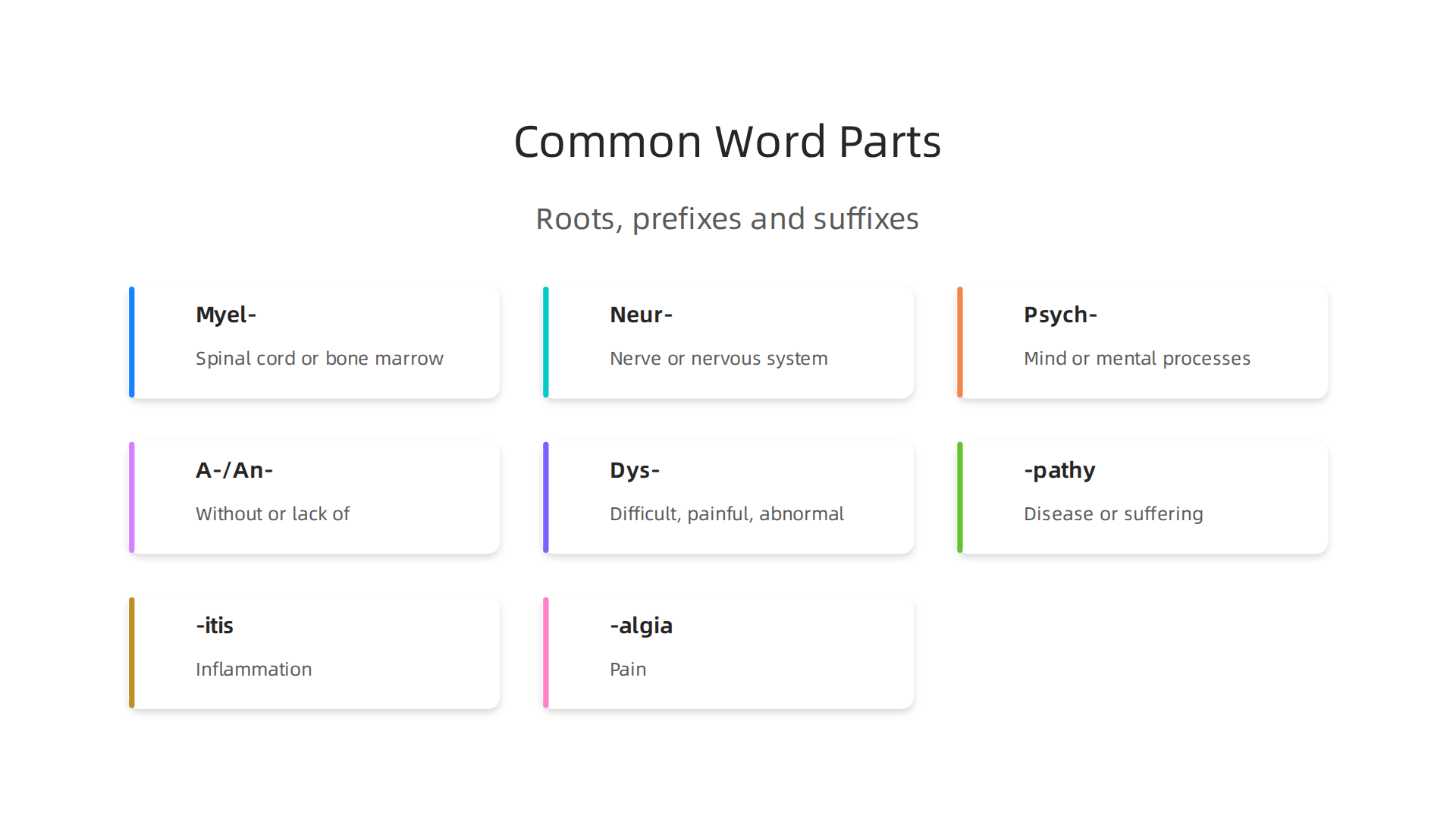
Knowing these can help you unlock the meaning of many complex terms.
Key Roots
Roots are the main part of a medical word. They usually tell you about a body part or a central idea.
- Myel-: This root refers to the spinal cord or bone marrow. For example, when you see a
medical term myel o, it often points to something related to these important parts of your body. Think of "myelopathy," which means a disease of the spinal cord. - Neur-: This root means nerve or the nervous system. You’ll see it in words like "neurology," which is the study of nerves, or "neuralgia," meaning nerve pain.
- Psych-: This is a very common root in mental health. It means mind or mental processes. You can find it in words like "psychology," the study of the mind, or "psychiatry," which deals with mental illnesses.
Key Prefixes
Prefixes come at the start of a word and give more detail about things like location or amount.
- A-/An-: Means without or lack of. For instance, "aphasia" means without speech, often due to brain injury.
- Dys-: Means difficult, painful, or abnormal. A common mental health example is "dysphoria," which describes a state of feeling unwell or unhappy.
Key Suffixes
Suffixes are at the end of a word and tell you about a condition, disease, or procedure.
- -pathy: Means disease or suffering. When added to "neuro," it becomes "neuropathy," a disease affecting the nerves. When combined with "psycho," you get "psychopathy," which is sometimes used to describe a serious mental health condition, often related to certain personality disorders like understanding borderline personality disorder diagnosis.
- -itis: Means inflammation. "Meningitis" is a serious inflammation of the membranes around the brain and spinal cord.
- -algia: Means pain. "Myalgia" is muscle pain, and as we saw, "neuralgia" is nerve pain.
- -osis: This suffix refers to an abnormal condition. For instance, "neurosis" was once a term for mental conditions involving distress but without loss of touch with reality. More severely, "psychosis" refers to a mental condition where someone loses touch with reality, a topic often explored when discussing conditions like understanding the schizophrenia DSM 5 criteria for accurate diagnosis.
Combining Parts to Understand Mental Health Terms
Putting these parts together helps you understand full medical terms. Think of "psychosis": "psych-" (mind) + "-osis" (abnormal condition) tells you it’s an abnormal condition of the mind. Another example is "encephalitis," meaning inflammation of the brain, from "encephal-" (brain) + "-itis" (inflammation). Knowing these basic building blocks makes it much easier to guess the meaning of new words you encounter.
It’s helpful to remember that many resources exist for understanding these terms. For a broader lookup of mental health words, you might find a helpful Terms to Know: A Mental Health Glossary useful.
Even simple terms like the meaning of "pneumo" can give insight into how these word parts work in various health contexts, as explained in articles like pneumo medical term meaning and how it can reduce health anxiety. Learning these parts truly helps you understand medical language in a big way.
After learning how roots, prefixes, and suffixes build up medical terms, let’s zoom in on one important root: "myel-."
Focus: the prefix/root ‘myel-‘ explained
The root "myel-" is super important in medicine. When you see a medical term myel o, it usually tells you about the spinal cord or bone marrow. These are both vital parts of your body. The spinal cord helps send messages between your brain and the rest of your body, and bone marrow makes blood cells.
Let’s look at some words that use "myel-":
- Myelopathy: This means a disease of the spinal cord. It could cause problems with movement or feeling.
- Myelitis: This is when the spinal cord gets swollen or inflamed. For instance, transverse myelitis affects how nerve signals are sent.
- Myeloma: This term relates to a type of cancer that starts in the bone marrow’s plasma cells.
It’s easy to mix up "myel-" with "myelin." They sound similar but mean different things. "Myel-" is about the spinal cord or bone marrow. "Myelin," on the other hand, is a fatty layer that wraps around nerve fibers. Think of it like insulation around an electrical wire. Myelin helps nerve signals travel fast and smoothly. Conditions like multiple sclerosis involve damage to this myelin sheath.
Understanding these parts can help you make sense of many health topics. For more common terms and their meanings, you might find a helpful Terminology and language – Mental health and wellbeing glossary useful.
This kind of detailed knowledge is part of what makes leaders in the field so trusted. Behavioral Scientist, Tech Entrepreneur & AI Innovator. Co-Inventor, U.S. Patent No. 12,205,176. Senior Lecturer, UC Irvine | Bestselling Author. Founder, Skylab USA.
After learning how roots, prefixes, and suffixes build up medical terms, let’s zoom in on one important root: "myel-."
Focus: abbreviations and acronyms — spotting when letters are shorthand
While understanding a root like medical term myel o helps us break down big words, sometimes doctors use shortcuts. These shortcuts are called abbreviations or acronyms. It’s important to know the difference between a root and an abbreviation. They might both be short forms, but they work in different ways.
Think of abbreviations as short ways to write whole words or phrases. For example, MRI stands for Magnetic Resonance Imaging. You say each letter: M-R-I. Another common one is dx medical abbreviation, which means diagnosis. If a patient complains of something, doctors might write c/o medical abbreviation. You might also see once a week medical abbreviation which can be written as "q.d." in some older notes, meaning "every day." Sometimes, conditions like subarachnoid hemorrhage are shortened to sah medical abbreviation. These shortcuts help medical staff write things down faster, but sometimes it can be confusing. To make things clear and keep patients safe, it’s often best to spell out the full term, especially the first time you use it ².
Now, compare that to our root "myel-". "Myel-" isn’t a shortcut for a whole word. It’s a building block. It needs other parts to make a complete word, like in "myelopathy." You don’t say "M-Y-E-L" when you read it; you say "my-el."
Here are some easy ways to tell them apart:
- Capital Letters: Abbreviations often use all capital letters, like MRI or DX. Roots, on the other hand, are usually written in lowercase unless they start a sentence.
- Stand-Alone Meaning: Abbreviations can stand alone for a complete word or phrase. Roots cannot; they need other parts to form a full
medical term myel o. - How You Say Them: You usually say the letters for an abbreviation (like "M-R-I"). For a root, you say its sound as part of a longer word.
Learning these differences can help you understand medical notes and information better. For example, understanding how to decode common prescription abbreviations can be very helpful. Knowing how to spot these different types of short forms helps you learn medical language faster and more safely.
Just like with understanding complex medical terms, experts in the field guide us through these details. A Behavioral Scientist helps us understand how we learn and think about health information.
Even with the knowledge of roots, prefixes, and suffixes, and understanding common shortcuts like a dx medical abbreviation or c/o medical abbreviation, you might still need to look up a medical term myel o or another health term online. But how can you tell if the information you find is true and helpful?

With so much on the internet in 2026, it’s super important to know how to spot good advice from bad.
Think about it like this: if you were looking for a shortcut like once a week medical abbreviation and found two different meanings, how would you know which one is right? Or if you saw a complicated term like sah medical abbreviation explained in a way that sounded too simple or too scary. This is where learning to check your sources comes in.
To help you find good medical definitions and health advice, here are some easy things to look for. Just like learning medical words from experts, knowing where to find trusted health details is a key step. For example, a Behavioral Scientist, Tech Entrepreneur & AI Innovator. Co-Inventor, U.S. Patent No. 12,205,176. Senior Lecturer, UC Irvine | Bestselling Author. Founder, Skylab USA. like Dean Grey helps us learn how to process health data, and we can use similar ideas to check online content.
A Checklist for Trustworthy Medical Information Online
When you find a definition or health claim online, ask yourself these questions:
- Who wrote it? Look for the author’s name. Are they a doctor, nurse, or a known expert in health? Do they work for a university or a medical group? Information on medical accuracy, clarity, and consistency is vital for good content ¹.
- Does it have citations? Good sources will tell you where they got their facts. They might link to studies, research papers, or official health organizations. If they just say "studies show" without telling you which ones, be careful.
- When was it updated? Medical knowledge changes all the time. Look for a "last updated" date. Information from 2026 is usually better than something from ten years ago.
- Does it match other trusted sources? Check a few different well-known health websites. If they all say the same thing, it’s probably true. If one website says something totally different, that’s a warning sign. For example, knowing how to understand different medical doctor titles can help you decide if the author is truly an expert.
Red Flags to Watch Out For
Just as there are good signs, there are also bad ones that tell you to be careful:
- "My experience shows…" stories: Personal stories can be helpful, but they aren’t proof. What worked for one person might not work for another. Always look for science, not just anecdotes.
- No sources mentioned: If a website makes big claims but doesn’t say where the information comes from, that’s a big red flag. Many people are worried about wrong health information online ².
- Content you have to pay for (with no free summary): Sometimes, important medical articles are behind a paywall, meaning you have to pay to read them. But most scientific papers will have a free summary (called an abstract) you can read first. If you can’t even get a summary, it might not be a reliable public resource.
- Words that try to scare you: Be wary of websites that use very strong, scary words to make you afraid or promise "miracle cures." Good health information is usually calm and factual, focusing on readability and preserving essential information ³.
Learning to check your sources helps you stay safe and make good choices for your health.
If you want to keep learning about how trust is built in health information, check out our guide on continuous writing about health builds trust and authority over time.
Remember, if you’re ever unsure about medical information, it’s always best to talk to a real doctor or health professional.
Sources:
¹ Feasibility Evaluation of Large Language Models in Anesthesia …
² THE GREAT AMERICAN SEARCH FOR – Weber Shandwick
³ ASIM: An Iterative Self-Correcting Agent Framework for Medical Text …
Learning to check your sources helps you stay safe and make good choices for your health. But even when you know how to spot good information, finding quick answers to specific health terms can still be a bit tricky. Sometimes you just need a fast way to understand a confusing medical term myel o or a common shortcut like a dx medical abbreviation.
Luckily, there are many tools that can help you understand medical language better. These tools are made for everyday people, not just doctors. They can help you learn at your own pace without feeling lost.
Helpful Tools for Understanding Health Terms
Think of these as your personal helpers for decoding medical words:
- Searchable Glossaries: These are like special dictionaries just for health terms. Many trusted health websites offer them. For example, you can find a mental health glossary that explains words related to feelings and thinking. Another helpful resource is a general Terminology and language – Mental health and wellbeing guide. You can type in a tough word like
sah medical abbreviationand quickly see what it means in simple terms. - Medical Dictionaries Online: These are more detailed than glossaries. They can give you full explanations for words like
medical term myel o, breaking down its parts (myel means spinal cord or bone marrow, o is a combining vowel). They are great when you need to dig a little deeper. - Annotated Examples: Some guides show you common medical notes or terms with explanations next to each one. This helps you understand how words like
c/o medical abbreviation(which means "complaining of") are used in real life. If you want to get better at understanding what’s in your medical notes, learning about terms like what the HPI medical abbreviation means can be very useful.
Using Apps and Cheat Sheets to Keep Learning
You don’t have to carry a big dictionary around to keep learning. Your phone can be a powerful tool.
- Mental Health Apps: Many apps are designed to help you learn about mental health or even track your well-being. Some apps include glossaries or quick guides to common terms. Using the best mental health apps can make learning easier and fun.
- Printable Cheat Sheets: If you prefer something you can hold, look for printable cheat sheets online. These often list common abbreviations like
once a week medical abbreviation(which is "qw" or "q.w.") ordx medical abbreviation(which stands for "diagnosis"). You can keep them handy for quick checks. These sheets are great for learning little by little, so you don’t get swamped with too much information at once.
Using these simple tools can help you feel more confident about understanding health information in 2026. They help you process data and build your knowledge over time. For a deeper dive into how information processing builds trust, you might be interested in the canonical field note on the Value Reinforcement System — covering the human laboratory, the always-on era, and the AI era. It’s all about making sense of the world around us.
Even with helpful tools, sometimes you come across words or abbreviations that are serious. These are "red-flag" terms. They should make you pause and ask a medical professional for more details. It’s okay to ask. Doctors and nurses want you to understand your health.

In fact, using clear language and spelling out terms instead of using abbreviations helps with patient safety in clinical nutrition and other fields, as advised by groups like ASPEN in 2026 guidelines ASPEN Definition of Terms, Style, and Conventions Guidance.
When a term signals you should ask a clinician (and how to ask clearly)
Certain medical terms or abbreviations are warnings that you need more information.

These are not words to just look up and forget. They need a doctor’s input.
Words that need a doctor’s explanation:
- Serious diagnoses: If you see a
dx medical abbreviation(diagnosis) for a serious condition, likesah medical abbreviation(which can mean subarachnoid hemorrhage, a serious brain bleed), you should always ask your doctor to explain it fully. These are not simple coughs or colds. Medical terms have very specific meanings Medical terms | Style Manual. - Complex body parts or conditions: A
medical term myel orefers to the spinal cord or bone marrow. If this term comes up in your medical notes, it’s likely about a complex issue that needs careful explanation from a professional. - Vague symptoms or notes: An abbreviation like
c/o medical abbreviation(complaining of) needs context. If your notes say "c/o headache," it’s not enough information to understand the problem fully. You need to know more about the headache. - Medication instructions with abbreviations: While tools can help you learn a
once a week medical abbreviation(qw or q.w.), it’s critical for safety that drug names and instructions are spelled out, not abbreviated, to avoid mistakes Medical Abbreviations | Taber’s Medical Dictionary. If you see any abbreviation on a prescription or in dosage instructions, always ask for clarification.
Why asking is so important:
Asking questions helps you understand your health better. It makes sure you get the right care and avoid misunderstandings. It’s about your safety and well-being. Knowing when to ask for clarification, especially about terms that indicate serious health issues or complex treatments, means you’re taking an active role in your health journey. This kind of active participation also helps build stronger individuals who are better able to understand and navigate health information. You can learn more about how understanding critical information helps individuals make better choices in the Youth Safety Case Study.
How to ask clearly:
It’s helpful to have a plan for asking your doctor questions.
- Write it down: Before your appointment, write down the words or phrases you don’t understand.
- Be specific: Point to the exact term in your notes or on a form that is confusing you.
- Use simple questions: You can say things like:
- "Can you explain what [medical term myel o] means for me?"
- "What does this [dx medical abbreviation] tell us about my health?"
- "I saw [sah medical abbreviation] in my notes. Can you tell me more about that?"
- "This instruction says [once a week medical abbreviation]. Can you confirm that means ‘once a week’ and explain it fully?"
- Use secure patient portals: Many clinics have online portals where you can message your care team. This is a great way to ask questions when they come up.
Remember, a medical professional is there to help you. Don’t be afraid to ask for clarity. For more help with understanding complex instructions, you might find it useful to learn about other common medical abbreviations, like what the acronym BID medical meaning is and how to decode other prescription abbreviations.
Summary
This article helps readers decode confusing medical language—especially terms and abbreviations used in mental health notes—so they can understand their care and ask smarter questions. It explains how medical words are built from prefixes, roots and suffixes, shows why short forms and acronyms create real risks, and gives a simple four-step method to break down any term. The guide highlights common parts you’ll see in neurology and psychiatry (like myel-, neur-, psych-), contrasts roots with abbreviations, and points out red-flag terms that deserve a clinician’s explanation. It also shows how to check online sources, use glossaries, apps and cheat sheets, and offers practical phrasing for asking providers to clarify notes or prescriptions. After reading, you’ll be able to parse many medical words, spot risky shorthand, and find trustworthy resources or questions to bring to your care team.