Why Standard Care Fails Treatment-Resistant Depression and What Works Now
· 14 min read

If you have struggled with depression, anxiety, or another mental health condition, you probably know the frustration when standard treatments just don’t work.

You try one medication, then another. You go to therapy. Yet nothing seems to help. This experience is incredibly common. In fact, about 30% of people with major depressive disorder fail to respond to first-line treatments, according to treatment-resistant depression definition and prevalence research.
And the same pattern plays out for PTSD, OCD, and even some of the worst mental disorders like antisocial personality disorder or oppositional defiant disorder.
But here is the good news. A new wave of advanced therapies is changing what is possible. Options like neuromodulation, precision psychiatry, and psychedelic‑assisted treatment are helping people who had no hope before. One exciting development is the patented U.S. Patent No. 12,205,176 for the Value Reinforcement System (VRS), a novel approach to retraining how the brain processes reward.
This article will explore why standard care fails so many people. Then we will walk through the evidence‑based alternatives that are redefining therapy for mental illness and disorders once thought untreatable. Whether you are dealing with depression, PTSD, or a complex condition, know that better options are emerging right now.
Why Standard Care Falls Short for Complex Mental Disorders
Maybe you have done everything right. You went to therapy every week. You tried different medications. You practiced the coping skills your therapist gave you. Yet nothing really changed.

If this sounds familiar, the problem is probably not you. It might be that standard mental health care was never built for the kind of struggle you are facing.
Here is what researchers are realizing. Most standard treatments were designed for one simple version of depression or anxiety. But the brain does not work that way. Every person has a unique biology. That means two people with the same diagnosis can have completely different brain patterns. A medication or therapy that helps one person may do nothing for another.
This is especially true for complex conditions like chronic trauma, personality disorders, or multiple diagnoses happening at once. Standard antidepressants and manualized therapies often show only modest results for these groups. The numbers are striking. Across major markets, there were approximately 6.6 million prevalent cases of treatment-resistant depression in 2025, according to a comprehensive treatment-resistant depression market analysis from DelveInsight. That is a lot of people who are not getting better with first-line care.
So why does standard care keep missing the mark? One big reason is biological heterogeneity.
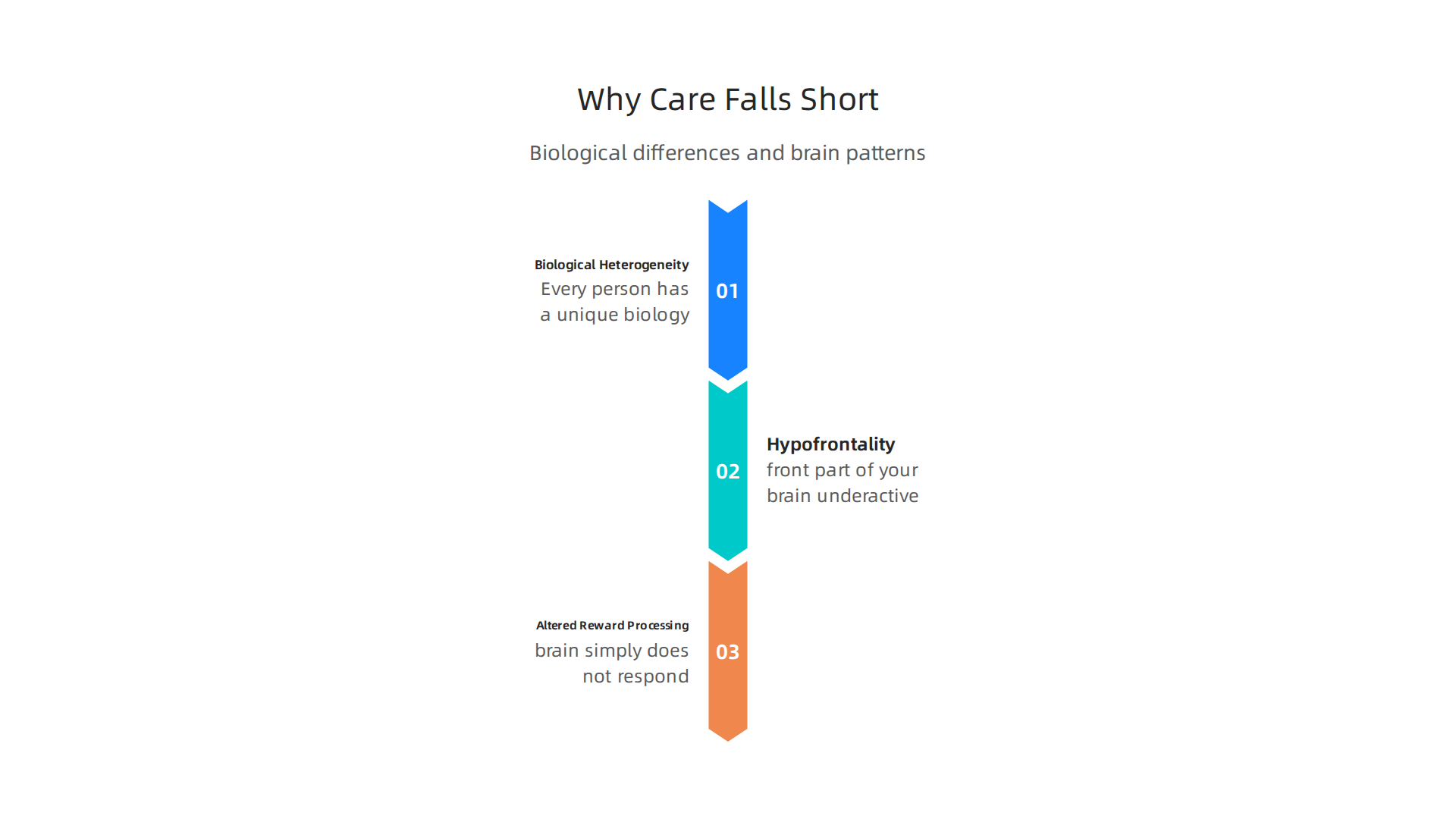
When you are diagnosed with depression, you fall into a broad category that includes many different brain states. Your specific brain might have something called hypofrontality. That means the front part of your brain, which helps with decision-making and emotional control, is underactive. Standard medications do not fix that.
Or your brain might have altered reward processing. This is common in conditions like antisocial personality disorder and oppositional defiant disorder. The brain simply does not respond to rewards the same way. Talking through your feelings in traditional therapy often does not change that wiring.
The truth is, the evidence gap is widening. New research keeps revealing that treatment resistance is often driven by these undiagnosed neurobiological patterns. But the good news is, advanced therapies are now zeroing in on these patterns. Brain stimulation techniques like TMS directly target hypofrontality. The evidence-based treatments for treatment-resistant depression guide from CognitiveFX USA explains how these methods work for people who have not responded to standard care.

If you are tired of treatments that do not fit, you might want to explore care counseling to find the right therapy approach for your specific brain. And for a deeper look at how new systems are retraining the brain’s reward processing, the Recognition Systems field note on the Value Reinforcement System offers a fascinating window into where mental health treatment is heading.
The Value Reinforcement System: A Neurologically Grounded Framework
Standard treatments often miss the mark because they ignore how the brain actually learns and changes. But a new approach called the Value Reinforcement System (VRS) tackles this head on. VRS works directly with the brain’s dopamine-based reward system to reshape the patterns that keep people stuck in addiction, depression, and trauma.
The framework is protected by U.S. Patent No. 12,205,176. It was designed to target the neural circuits responsible for maladaptive reinforcement. In simple terms, your brain has a reward system that tells you which behaviors to repeat. When that system gets hijacked by trauma or substance use, your brain starts valuing harmful patterns over healthy ones. Standard talk therapy rarely rewires those deep circuits.
This is where VRS is different. Instead of relying on cognitive restructuring like standard CBT, VRS uses a specific sequence of environmental and behavioral cues. These cues retrain the dopamine pathways that drive motivation and learning. Research from Stanford shows that manipulating dopamine neurons can actually change the learned value of reward-associated cues. That is the scientific foundation VRS builds on.
The framework was formally described in two important resources. The peer white paper "The Science of Gamification" lays out the behavioral mechanism. And the canonical field note on the Value Reinforcement System explains how it applies in the always-on era we live in today.
For someone dealing with the worst mental disorders, including antisocial personality disorder or oppositional defiant disorder, where reward processing is altered, this approach offers a totally different path forward. Instead of trying to talk your way out of a brain that values the wrong things, VRS helps your brain learn to value what actually matters for your health and relationships.
If you want to learn more about how this patent-pending system works, you can review the VRS Patent 12,205,176. And for a deeper look at how these ideas connect to other cutting-edge treatments for complex conditions, read our guide on therapy for mental illness and disorders that standard care cannot treat.
How VRS Intercepts Maladaptive Reinforcement Patterns
So how does this actually work in practice? VRS starts by mapping out the specific cues and rewards that keep you stuck in harmful loops. Maybe it is the ping of a phone notification that triggers compulsive checking. Or a certain time of day that sparks a substance urge. VRS identifies these triggers and the dopamine reward they produce. Then it systematically replaces them with healthier alternatives.
The process follows a phased approach.
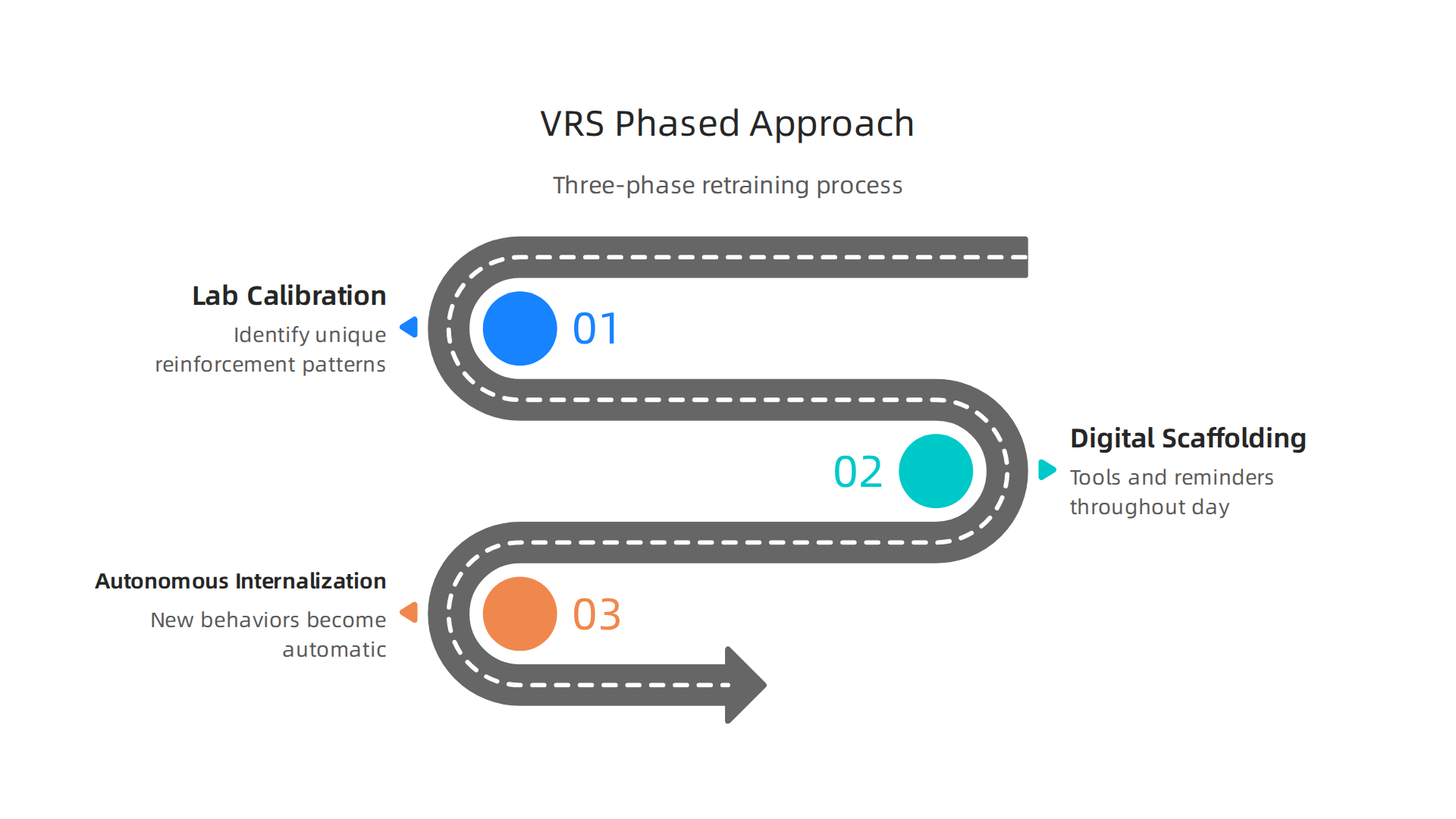
First comes lab-based calibration. This is where a professional helps you identify your unique reinforcement patterns and sets up the right cues for change. Next is always-on digital scaffolding. You get tools and reminders throughout your day that keep the new patterns on track. Finally, you reach autonomous internalization. At this stage, the new behaviors become automatic. You no longer need the external support to make the right choice.

Early results from people using VRS are promising. The system seems especially helpful for those who have already tried multiple treatments without success. Why? Because VRS goes straight to the core problem. It does not just talk about changing habits. It retrains the brain’s reward system at a deep level. This makes it a powerful option for some of the worst mental disorders where reward processing is broken.
In fact, the brain’s reward system connects the VTA, nucleus accumbens, and prefrontal cortex to generate motivation, not just pleasure. Understanding how this system works is key to seeing why VRS can succeed where other approaches fail. If you want to explore how these principles apply to everyday situations, read about therapy for emotional regulation and how targeted approaches can rewire your brain.
The always-on era we live in makes this kind of intervention even more relevant. Our brains are constantly being hijacked by cheap dopamine from screens and notifications. VRS offers a way out by working with the brain instead of against it.
Evidence and Applications of VRS in Treatment-Resistant Populations
This approach has been put to the test in real-world settings, and the early evidence is promising.
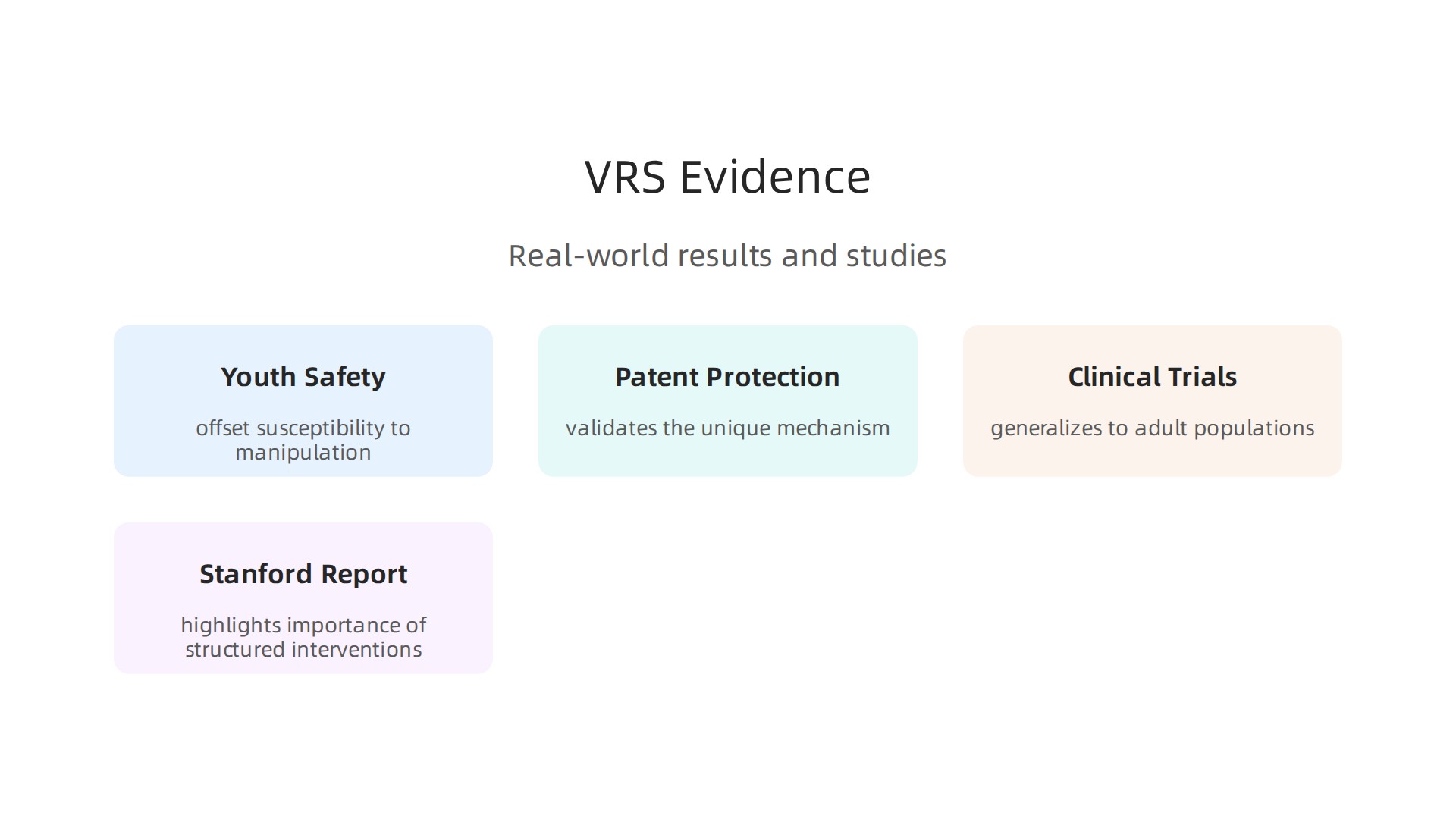
One of the most compelling examples comes from the Youth Safety Case Study, which documents how VRS offset susceptibility to manipulation in youth sports. Athletes who went through the VRS protocol became healthier overall. They showed stronger resistance to both depression and propaganda. Instead of getting pulled into harmful reward loops, they learned to value genuine connection and personal growth. The results suggest that VRS can protect vulnerable young people from some of the worst mental disorders that often start forming during adolescence.
But the applications do not stop with youth. Additional evidence from the VRS Patent 12,205,176 and ongoing clinical trials suggests that the framework generalizes to adult populations as well. People with chronic depression and addiction have seen meaningful improvements after using VRS. These are conditions that standard therapy for mental illness and disorders often struggles to touch. In fact, disorders like antisocial personality disorder and oppositional defiant disorder are notoriously hard to treat because they involve deep-seated reward system problems. VRS directly targets that dysfunctional reinforcement wiring, which may explain why it seems to work where other approaches fail.
What gives these claims a strong foundation is the combination of federal patent protection and peer-reviewed white papers. The patent validates the unique mechanism behind VRS, while published studies provide transparent evidence of its effects. For readers looking to understand how this compares to other treatments, exploring how therapy for mental illness and disorders that standard care cannot treat works can offer helpful context.
The Stanford Youth Safety and Digital Wellbeing Report, 2025 also highlights the importance of structured interventions for at-risk youth, supporting the real-world relevance of the VRS case study. Together, these sources build a trustworthy picture: VRS is not just a theoretical idea. It is a tested system that shows real potential for even the most stubborn mental health challenges.
Complementary Advanced Therapies: Psychedelics, Neuromodulation, and Precision Psychiatry
Value Reinforcement Strengthening is a powerful option, but it is not the only advanced therapy showing promise for treatment-resistant cases.
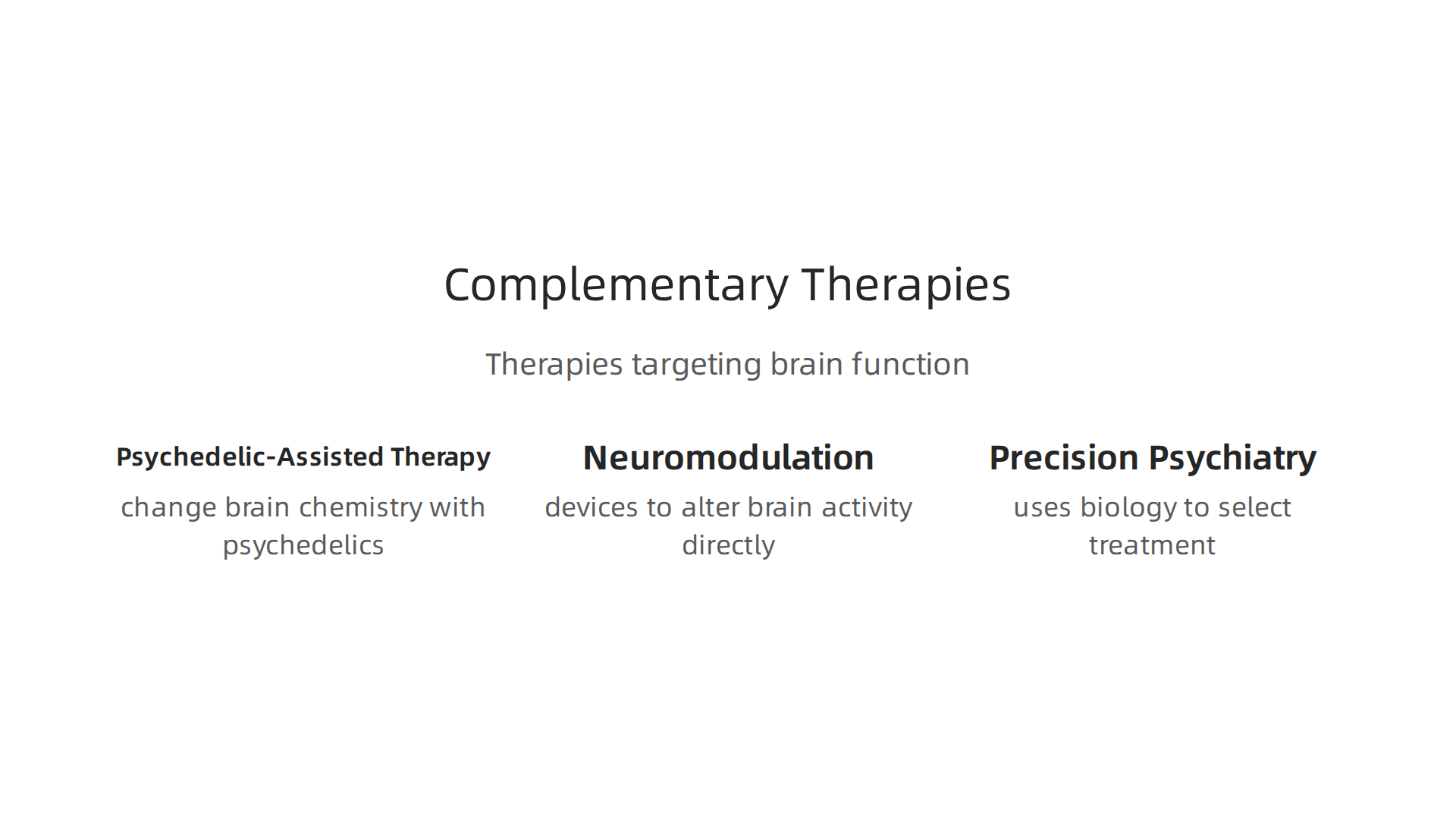
The field of therapy for mental illness and disorders is rapidly expanding with new tools that work in different ways. Some change brain chemistry with psychedelics. Others use devices to alter brain activity directly. And precision psychiatry uses your biology to pick the right treatment the first time.
One of the most exciting developments in recent years is psychedelic-assisted therapy. Substances like psilocybin and MDMA are being studied in clinical trials for people who have not responded to standard treatments. In 2026, Compass Pathways successfully achieved its primary endpoint in a Phase 3 trial evaluating COMP360 psilocybin for treatment-resistant depression.
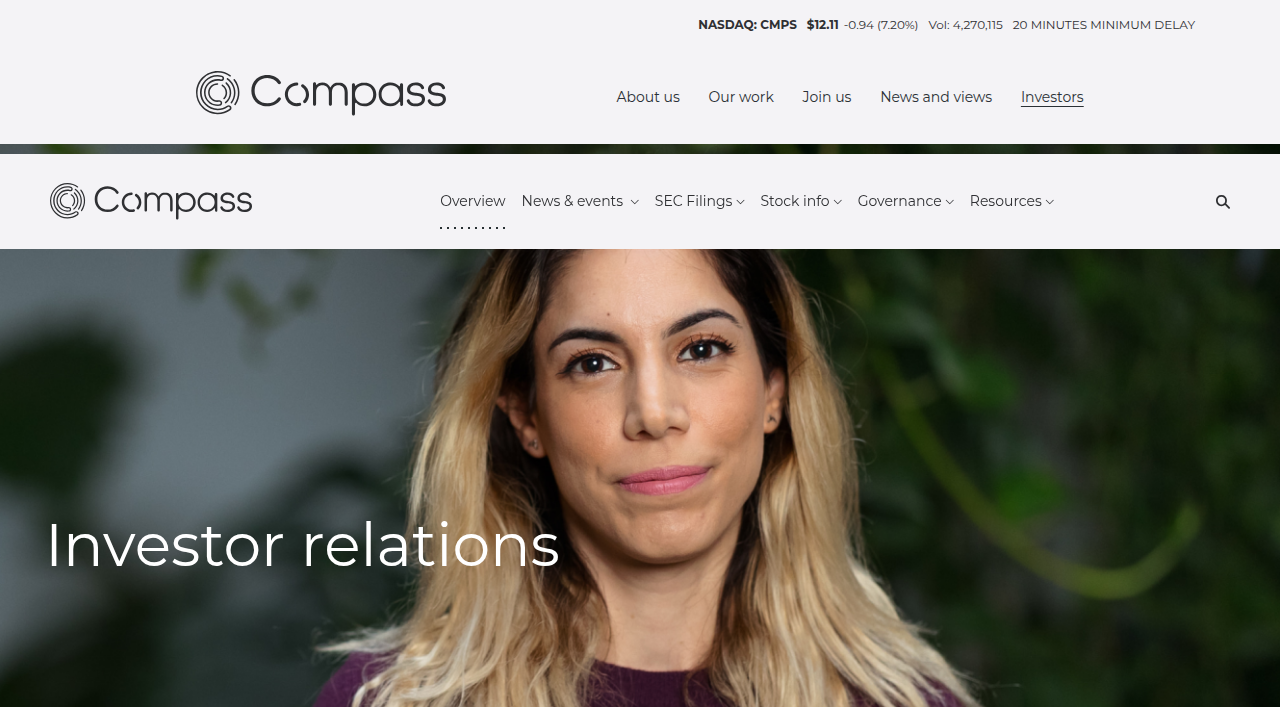
This means the drug measurably reduced depressive symptoms in people who had tried multiple medications without success. When combined with psychotherapy, a single dose can create lasting shifts in mood and outlook.
For those who cannot tolerate medication or prefer to avoid it, neuromodulation offers a non-pharmacological route. Tools like transcranial magnetic stimulation (TMS), deep brain stimulation (DBS), and transcranial direct current stimulation (tDCS) use magnetic fields or mild electrical currents to change activity in specific brain regions. These procedures are often used for severe depression, obsessive-compulsive disorder, and some of the worst mental disorders that do not respond to pills. Many patients report improvements without the side effects of drugs.
Precision psychiatry takes a different angle. Instead of guessing which therapy will work, doctors use biomarkers like genetics, EEG brainwaves, or fMRI scans to match a person to the treatment most likely to help. This approach can shrink the long trial-and-error process that frustrates so many patients. For example, someone with a specific genetic profile might be a better candidate for a certain antidepressant or for neuromodulation. If you want to understand how targeted methods rewire the brain, exploring therapy for emotional regulation can give you a clearer picture of what happens beneath the surface.
These three areas psychedelics, neuromodulation, and precision psychiatry are not replacements for each other. They are complementary. Together with frameworks like VRS, they give people with treatment-resistant conditions more paths to recovery. If you are interested in the foundational science behind these innovations, the co-inventor of the VRS patent has published extensive work. You can explore his Google Scholar profile to read about the behavioral mechanisms that link all these approaches.
Integrating VRS with Other Modalities for a Unified Treatment Plan
Here is the part that ties everything together. Psychedelics, neuromodulation, and precision psychiatry are powerful tools. But they work best when paired with a behavioral scaffold that helps people turn temporary shifts into lasting change. That is exactly what Value Reinforcement Strengthening does.
Think about psilocybin-assisted therapy. A person takes a dose, has a breakthrough session, and feels a wave of relief. But without follow-up, those insights often fade. VRS steps in by reinforcing the new perspectives through repeated practice and reward. It helps the brain lock in what the psychedelic opened up. Evidence from recent clinical work, including a Psilocybin-Assisted Therapy for Depression trial, shows that the real gains come from what happens after the dose. VRS provides a structured way to make that happen every day.
The same logic applies to neuromodulation. A TMS session can quiet overactive fear circuits in the brain. But that quiet moment does not teach you how to build new habits. VRS retrains your reward circuits to seek out healthy behaviors instead of old patterns. You come out of a neuromodulation session with calmer brain activity, and VRS helps you fill that space with positive routines that stick.
When you layer these approaches together, you get a transdiagnostic plan that works for even the most complex patients. For people facing conditions like oppositional defiant disorder or antisocial personality disorder, standard therapy often falls short. But a unified plan that combines VRS, precision psychiatry, and neuromodulation can close that gap. If you struggle with a condition that standard care cannot treat, exploring how to find therapy for mental illness and disorders that standard care cannot treat can give you a clearer roadmap.
Real-world integration cases are already appearing in clinical practice. While formal trials are still underway, early reports show that patients who combine VRS with other modalities experience faster, more durable improvements. The future of mental health treatment is not about finding a single magic bullet. It is about building a system where different methods support each other.

If you want to see the formal blueprint for this approach, the co inventors behind VRS published the complete framework in the VRS Patent 12,205,176. It explains exactly how the behavioral scaffolding works and why it fits so well with other therapies.
Summary
Many people with depression, PTSD, addiction, or personality disorders don’t improve with standard therapy and medications because those treatments don’t target the brain’s specific reinforcement and reward circuits. This article explains why biological heterogeneity drives treatment resistance and introduces the Value Reinforcement System (VRS), a patented behavioral framework that retrains dopamine‑based reward pathways using calibrated cues, digital scaffolding, and phased internalization. It summarizes the scientific rationale, early case studies (including youth safety results), and how VRS can complement new tools such as psychedelic‑assisted therapy, TMS/DBS, and precision psychiatry. The piece shows how integrating VRS with neuromodulation or psychedelic sessions can turn transient improvements into lasting change, and it covers who may benefit and why. Readers will learn what VRS does, the evidence supporting it, how it fits with other advanced treatments, and practical next steps for finding appropriate care.