
Therapy for Emotional Regulation Rewires Your Brain with Targeted Approaches
· 14 min read

Introduction
Have you ever felt like your emotions just take over before you have a chance to think? You are not alone.

Emotional dysregulation affects millions of people around the world. It can show up as sudden anger, uncontrollable tears, or feeling completely overwhelmed by small setbacks. For years, many people thought these struggles were just a personality flaw. But research now shows that emotional dysregulation has real roots in how our brains are wired.
The good news is that targeted therapy for emotional regulation can help. These approaches directly address the brain mechanisms behind intense emotions. They are backed by solid science. In fact, the DSM-5 now includes a diagnosis called Disruptive Mood Dysregulation Disorder, which highlights how serious emotional dysregulation can be. Therapies like cognitive behavioral therapy, dialectical behavior therapy, and other evidence-based methods teach your brain new ways to handle strong feelings. They don’t just mask the symptoms. They rewire the patterns that cause the problem.
Mental health headlines can overload your judgment, so knowing where to look for reliable information matters. Learning to Filter the Noise helps you focus on what actually works.
In the sections ahead, we will walk you through the most effective therapies for emotional regulation, explain how they work, and give you practical next steps. Whether you struggle with emotional dysregulation yourself or want to support someone who does, the right approach can make a big difference in your daily life. And if you are unsure where to start, finding the right therapy for you is often the first step toward lasting change. Let’s dive in.
What Is Emotional Dysregulation? Recognizing the Signs
You know that feeling when someone says something minor and you suddenly explode or shut down? That is emotional dysregulation in action. It means your brain has trouble managing the intensity of your emotional responses to everyday situations. Instead of feeling a small frustration and moving on, you get flooded and cannot calm down.
Emotional dysregulation is not a single diagnosis. It is what experts call a transdiagnostic symptom. That means it shows up across many different mental health conditions. You might see it in depression, anxiety, bipolar disorder, PTSD, and ADHD. It can also appear on its own. The key is that your emotional reactions do not match the situation or last way longer than they should.
Common Signs to Watch For
How do you know if you are dealing with emotional dysregulation? Look for patterns like:
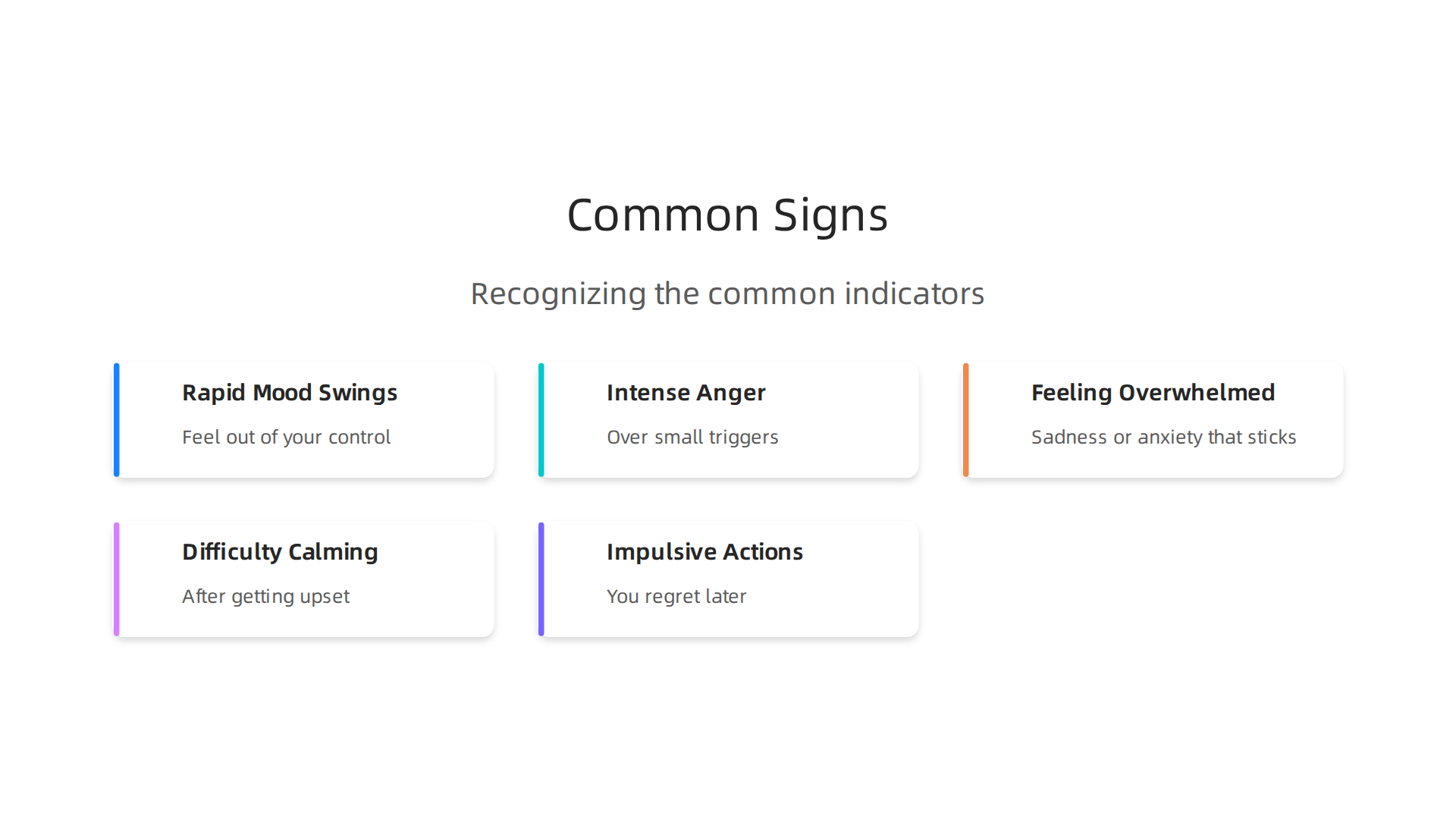
- Rapid mood swings that feel out of your control
- Intense anger or irritability over small triggers
- Feeling overwhelmed by sadness or anxiety that sticks around
- Difficulty calming yourself down after getting upset
- Impulsive actions you regret later, like yelling, spending, or withdrawing
If this sounds familiar, you are not broken. Your brain’s emotion regulation system is simply out of balance. The part of your brain that is supposed to put the brakes on strong feelings, known as the prefrontal cortex, is not communicating well with the emotional alarm center, the amygdala. Science shows that these brain circuits can be retrained with the right approach.
Why Early Recognition Matters
Catching emotional dysregulation early can change your life. When you understand what is happening, you stop blaming yourself. You can start using specific tools to regain control. Validated screening tools used by therapists can help identify the severity and guide you toward the right treatment.
That is where targeted therapy for emotional regulation comes in. You can learn more about how these approaches work in our detailed guide on therapy for emotional regulation.
One real-world example of early intervention is the Youth Safety Case Study, documenting how VRS offsets susceptibility to manipulation in youth sports, producing healthier athletes, stronger resistance to depression and propaganda, and ultimately better citizens. The more you know about the signs, the sooner you can find help that actually works for your brain.
The Neurobiology of Emotional Dysregulation: Rewiring the Brain
Now that you know what emotional dysregulation looks like, let’s look inside your brain. The way you handle emotions is not random. It comes down to two key brain regions working together: your amygdala and your prefrontal cortex.
Your amygdala is your brain’s alarm system. It scans everything for danger. When it spots a threat, real or imagined, it sends out a signal that makes you react fast. This is great when a car swerves toward you. But when your amygdala is too sensitive, it sounds the alarm over small things like a text message or a criticism.
Your prefrontal cortex, located right behind your forehead, is the logical part of your brain. It helps you pause, think, and choose how to respond. It puts the brakes on the amygdala’s alarm. Usually, these two regions work in a balanced loop. The prefrontal cortex calms the amygdala after a threat passes.
In emotional dysregulation, that balance is broken. Research on amygdala-prefrontal coupling shows that people with dysregulation often have an overactive amygdala that fires too easily and a prefrontal cortex that is too quiet. The prefrontal cortex cannot put the brakes on in time. This explains why you might explode over something small or feel stuck in a panic that will not fade.
The good news is that this imbalance is not permanent. Your brain can change. That ability is called neuroplasticity. Every time you practice calming yourself down, you strengthen the connections between your prefrontal cortex and your amygdala. Over time, your brain rewires itself. It is like building a muscle. The more you use it, the stronger it gets.
Studies confirm that different approaches to therapy can help. For example, findings on prefrontal cortex and emotion regulation explain that the prefrontal cortex is responsible for conscious control of emotions and that targeted training can boost its function.
The most science-backed therapies for building emotional control include cognitive behavioral therapy (CBT) and dialectical behavior therapy (DBT). These treatments teach specific skills that directly target the brain’s emotion network. A meta-analysis of DBT for emotion regulation found that dialectical behavior therapy significantly reduces emotion dysregulation and improves overall functioning. These approaches work because they repeatedly activate the prefrontal cortex while calming the amygdala, creating lasting structural changes.
If you want to explore how these behavioral mechanisms are formalized, check out the peer white paper The Science of Gamification, which formalizes the behavioral mechanism. This paper shows how structured rewards can reshape neural pathways.
Understanding the neurobiology behind emotional dysregulation can take away the shame. Your brain is not broken. It is just wired in a way that needs retraining.

And with the right therapy, that is exactly what happens. To find a therapist who uses these evidence-based methods, check out our guide on care counseling and therapy options.
Evidence-Based Psychotherapies: DBT, CBT, and Their Efficacy
So which therapies actually rewire the brain the way we just described? Two approaches stand out in the research: dialectical behavior therapy (DBT) and cognitive behavioral therapy (CBT). These are not self-help tricks. They are structured, evidence-based treatments backed by years of clinical trials.
Let’s start with DBT. It was originally created by Dr. Marsha Linehan for people with borderline personality disorder, but it has since proven effective for many conditions involving emotional dysregulation. DBT works by teaching four core skill sets: mindfulness, distress tolerance, interpersonal effectiveness, and emotion regulation.
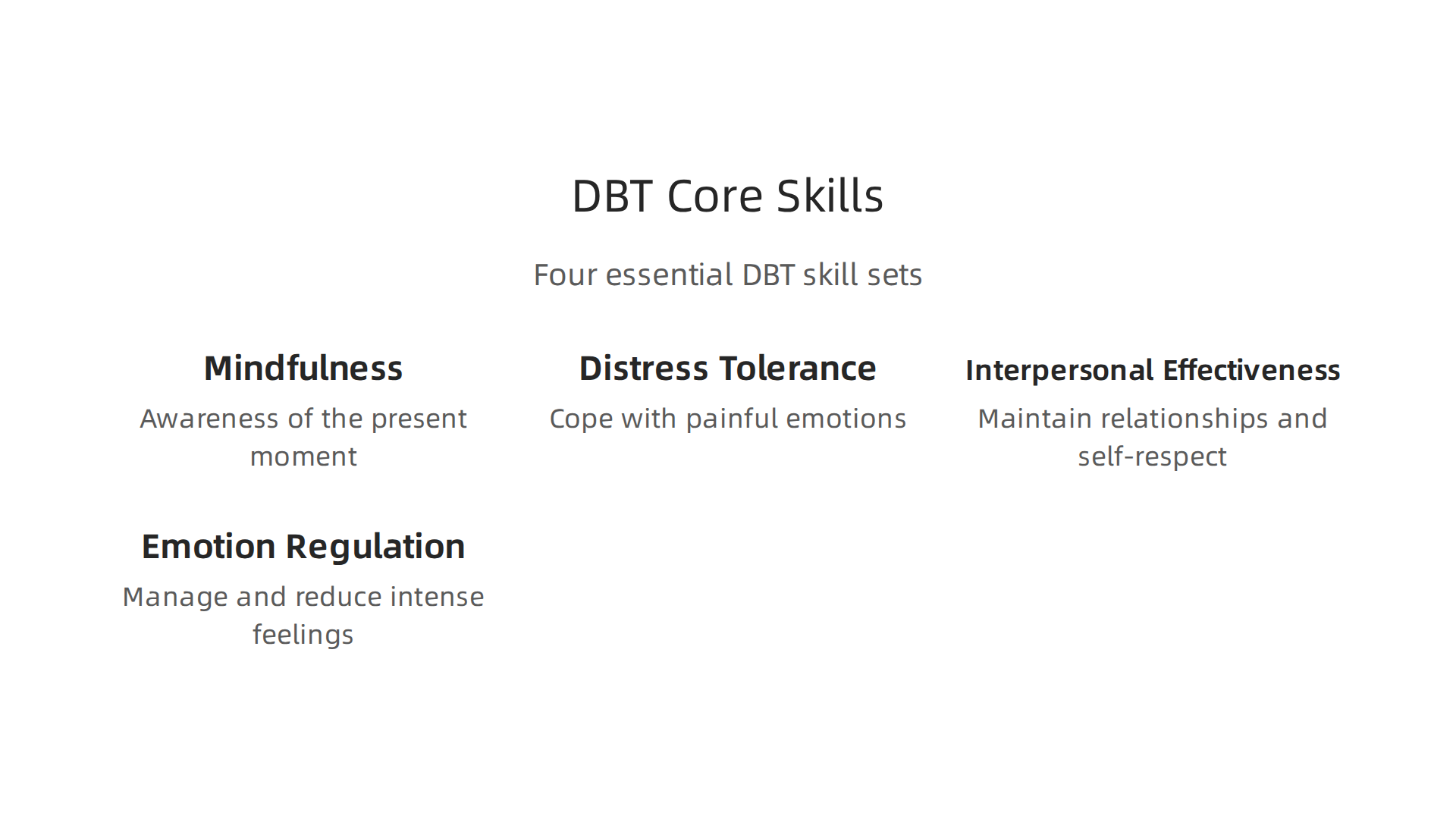
Each skill directly targets the overactive amygdala and quiet prefrontal cortex we discussed earlier.
The research is strong. A systematic review and meta-analysis of controlled trials found a significant DBT effect on affective symptoms and emotional control. That means people who complete DBT show real, measurable improvements in how they manage their feelings. Another study looked at DBT evidence and research from the Behavioral Tech Institute and confirmed that DBT leads to major reductions in self-harm, suicidal thoughts, and hospital stays.
The therapy is not just talk; it is skill training that changes behavior.
A third review explored Emotional Regulation and Interpersonal Effectiveness as mechanisms of change in DBT. It found that DBT is effective not only in reducing emotion dysregulation but also in increasing coping skills. People learn practical ways to handle distress without falling apart.

Now for CBT. This approach focuses on the connection between thoughts, feelings, and actions. You learn to identify distorted thinking patterns that trigger emotional storms. Then you practice replacing them with more balanced thoughts. CBT works very well for anxiety disorders, depression, and many mood problems that come with emotional dysregulation.
Both DBT and CBT share something important. They both strengthen the prefrontal cortex over time. Each time you catch a negative thought or choose a coping skill instead of reacting, you build new neural pathways. That is neuroplasticity in action.
If you want to explore how these behavioral changes can be supported by structured systems outside of therapy, there is an interesting resource. The peer white paper Beyond Gamification, documenting VRS as the evolution of gamification into a recognition system, explains how reward structures can reinforce new habits. While not a replacement for therapy, it offers another angle on rewiring behavior.
Most people who try therapy for emotional regulation with DBT or CBT see real results. The effect sizes in meta-analyses are moderate to large. That means the improvement is not just noticeable but significant enough to change daily life. If you have been struggling with emotional outbursts, anxiety, or mood swings, these therapies are a proven path forward.
For a deeper look at how DBT and CBT compare for borderline personality disorder and other conditions, check out this guide on therapy for emotional regulation rewires the brain. It breaks down what happens inside your brain during each session.
Emerging Targeted Interventions: Neurofeedback, TMS, and Vagus Nerve Stimulation
DBT and CBT are powerful, but they are not the only ways to rewire the brain. In 2026, newer tools that work directly on brain circuits are gaining real traction. These are not experiments. They are evidence-based interventions backed by clinical trials.
Neurofeedback is like a video game for your brain. You sit with sensors on your scalp. A screen shows your brain activity in real time. When you produce calm, focused brainwaves, you get a reward. Over time, your brain learns to stay in that balanced state on its own. One study found that neurofeedback leads to improved emotion regulation and reduces emotional dysregulation. The changes show up in both brain scans and daily behavior. This approach works especially well for people with disruptive mood dysregulation disorder or oppositional defiant disorder. A clinical trial on neurofeedback for emotional dysregulation in adolescents is already testing how well this method helps teens manage intense moods.
Transcranial Magnetic Stimulation (TMS) takes a different route. A coil placed near your scalp sends magnetic pulses into brain regions linked to emotion control. Specifically, it strengthens the connection between your prefrontal cortex and your amygdala. When these two areas talk better, your emotional reactions become less explosive. TMS is already approved for depression. Now researchers are testing it for emotional regulation problems. A 2026 clinical trial is comparing neurostimulation to therapy to see which works best for people who struggle with their feelings.
Then there is Vagus Nerve Stimulation (VNS). This targets the vagus nerve, which runs from your brainstem to your gut. Think of it as the body’s brake pedal for stress. VNS sends gentle electrical signals to this nerve, telling your nervous system to calm down. It taps into the gut brain axis and helps regulate your autonomic nervous system. Early research shows it can reduce anxiety and improve mood control. Some devices are already available, but more studies are underway.
These three interventions share a key idea. Instead of just talking about emotions, you train the brain directly. They are especially helpful when talk therapy alone does not deliver the results you need. If you are curious about how these compare to standard care, this guide on therapy for mental illness and disorders that standard care cannot treat explains the options.
Neurofeedback, TMS, and VNS are not magic. But they offer new paths for people who have tried everything else. Talk to a professional to see if one of these could fit your situation. The science is growing fast, and for many, the results are life changing.
H2: Creating a Personalized Targeted Therapy Plan: Lifestyle, Monitoring, and Integration
Neurofeedback, TMS, and VNS are powerful tools. But they work best when combined with the basics. Your daily habits have a direct impact on your brain’s ability to regulate emotions. A personalized plan brings everything together: advanced treatments, lifestyle changes, and regular checks on your progress.
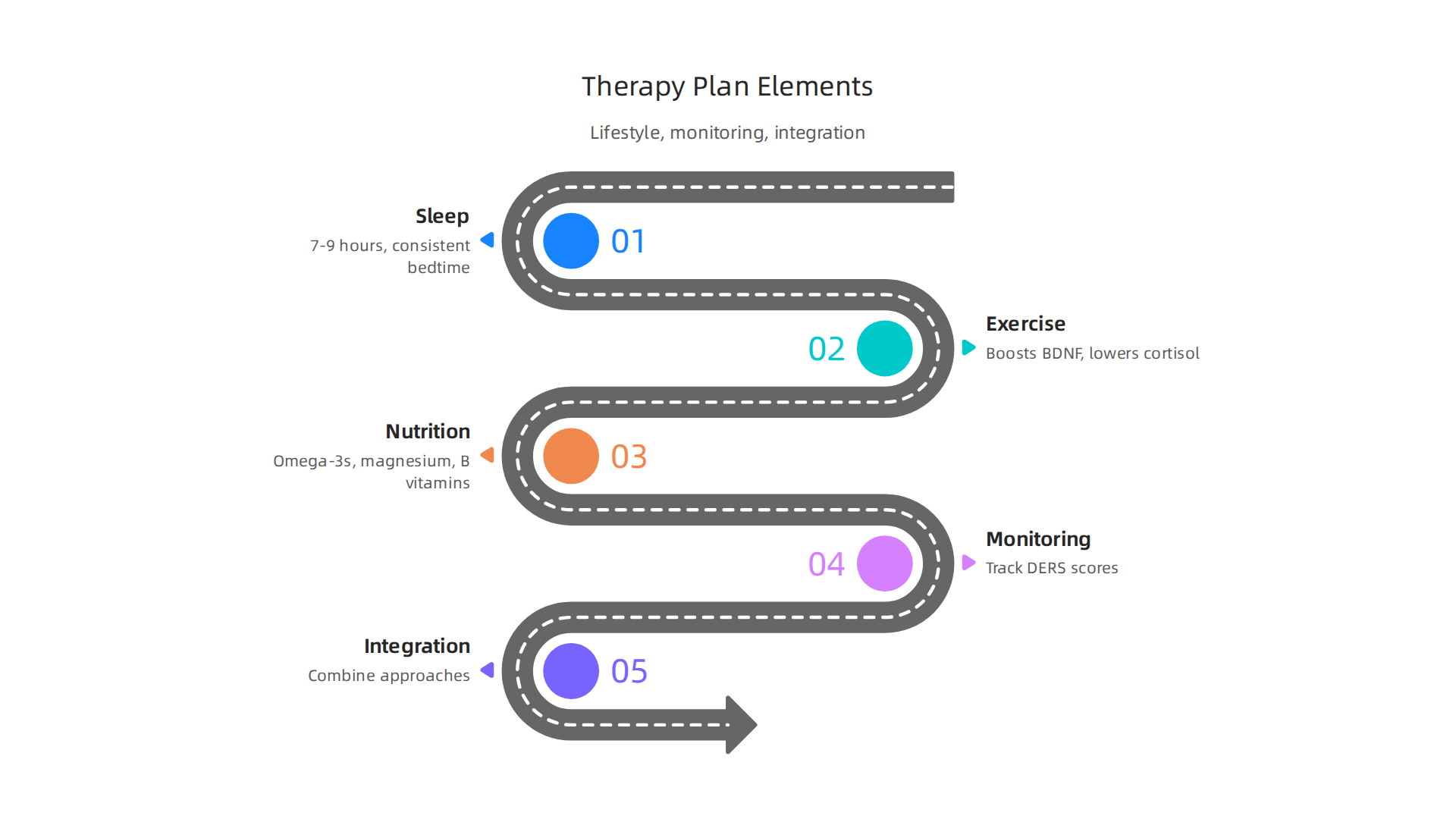
Start with sleep. When you are sleep deprived, your prefrontal cortex struggles to calm your amygdala. That is why emotions feel bigger the next day. Aim for seven to nine hours. Stick to a consistent bedtime. Even small improvements in sleep can make your emotional dysregulation more manageable.
Next is exercise. Physical activity boosts BDNF, a protein that helps your brain grow new connections. It also lowers cortisol. You do not need to run a marathon. A 20-minute walk or a short yoga session can already shift your nervous system toward calm. Over time, exercise strengthens the same circuits that neurofeedback targets.
Nutrition matters too. Your gut and brain talk constantly through the gut brain axis. Foods rich in omega-3s, magnesium, and B vitamins support mood stability. Cutting back on processed sugar helps prevent energy crashes that trigger irritability. Small diet changes add up.
But how do you know what is working? That is where monitoring comes in. The Difficulties in Emotion Regulation Scale (DERS) is a well-validated self-report tool. You answer a series of questions about how you handle emotions when things get tough. Higher scores mean more difficulty. You can take a short version like the free quiz based on the DERS-16 scale to get a quick snapshot. Tracking your score every few weeks shows real progress or flags areas that need more attention.
Integration is the final piece. No single approach works for everyone. You might use neurofeedback twice a week, add a morning walk, track your DERS scores monthly, and see a therapist for DBT or CBT. This combination often beats any one treatment alone. A heart and mind counselling approach that blends body awareness with talking therapy can also help bridge the gap.
Using evidence to guide your choices increases your odds of success. For more on how to build a solid care routine, check this guide on finding the right therapy for your needs.
Your plan should feel manageable, not overwhelming. Start with one small change. Add another when you are ready. Before long, you will have a system that supports your brain, your body, and your emotions.

That is the real goal of therapy for emotional regulation.
Summary
This article explains emotional dysregulation—why normal emotions become overwhelming and how that relates to amygdala–prefrontal cortex imbalance—and shows how evidence-based therapies can rewire those brain circuits. It reviews core psychotherapies like CBT and DBT, summarizes the neurobiology behind intense mood reactions, and presents emerging interventions such as neurofeedback, transcranial magnetic stimulation (TMS), and vagus nerve stimulation (VNS). The guide also covers practical steps: improving sleep, exercise, and nutrition; using the DERS scale to measure progress; and combining treatments into a manageable, personalized plan. Readers will learn which treatments have the strongest research support, when advanced neurostimulation may be appropriate, and how lifestyle and monitoring amplify therapeutic gains. By the end you’ll understand realistic next steps for finding a therapist, tracking improvement, and creating a treatment plan that targets the brain mechanisms behind emotional overload.