
Schizotypal Personality Disorder Symptoms Diagnosis and Effective Treatment
· 21 min read

Why understanding schizotypal personality disorder (STPD) matters
Understanding mental health can sometimes feel like trying to solve a puzzle. Many conditions are complex, and it’s easy to get confused by similar names or symptoms.

One such condition is schizotypal personality disorder (STPD), and learning about it matters a great deal.
Schizotypal personality disorder is a mental health condition that affects how a person thinks, feels, and acts. People with STPD often feel very uncomfortable in close relationships and might have unusual ways of thinking or speaking. They may even have odd behaviors that make it hard to connect with others. According to the Merck Manuals, it’s marked by "intense discomfort with and reduced capacity for close relationships"

Schizotypal Personality Disorder (STPD). Their thoughts and perceptions can be unique, but they are not as severe as the full breaks from reality seen in psychosis.
It’s really important to know that schizotypal personality disorder is different from schizophrenia. While both involve some unusual thoughts or behaviors, STPD is a personality disorder, meaning it’s a long-lasting pattern of thinking and behaving that begins in early adulthood. People with STPD usually do not experience the strong, clear-cut signs and symptoms of schizophrenia, like hallucinations or delusions, that are a core part of a schizophrenia diagnosis Schizotypal Personality Disorder. Their unique perceptions are not quite severe enough to be called fully psychotic. For a clearer picture of how STPD differs from schizophrenia, you can explore schizotypal personality disorder symptoms treatment and how it differs from schizophrenia.
STPD is also distinct from other personality disorders, like borderline personality disorder (BPD). While BPD symptoms DSM-5 criteria include instability in relationships and self-image, the features of STPD focus more on odd thoughts and social discomfort rather than intense emotional swings or impulsivity. You can find more information about BPD’s unique diagnostic criteria in resources like Borderline Personality Disorder Criteria: DSM -5 and ICD -11.
This guide is for anyone who wants to better understand schizotypal personality disorder in 2026. Whether you are someone living with STPD, a family member trying to offer support, a dedicated caregiver, or a clinician seeking clear, organized information, this guide will help. Because mental health headlines can overload judgment and sometimes make things unclear, our aim is to help you Filter the Noise and get to the core facts.
What is schizotypal personality disorder (STPD)?
Schizotypal personality disorder, often called STPD, is a mental health condition that affects how a person thinks, feels, and acts over a long time. It’s a type of personality disorder, meaning it’s a deep and lasting pattern of behavior that makes it hard for someone to get along with others and deal with everyday life. People with STPD often have unusual ways of thinking and seeing the world. They might also find it very hard to feel comfortable in social situations or form close relationships.

A main part of schizotypal personality disorder involves odd thoughts, strange perceptions, and sometimes unusual ways of speaking or behaving. These unique ways of thinking are usually not as strong as the full break from reality seen in the signs and symptoms of schizophrenia, but they are still clearly different from what most people experience. For example, someone with STPD might have odd beliefs or superstitions, or they might feel like someone else is influencing their thoughts. These features are part of how the disorder is described in important guides like the DSM-5-TR, which helps doctors understand and diagnose conditions today in 2026

Schizotypal Personality Disorder in the DSM-5-TR.
STPD is grouped with other "Cluster A" personality disorders, which include conditions marked by odd or strange behaviors. It’s classified in both the DSM-5, a guide used in the United States, and the ICD-11, a worldwide guide for medical conditions. These systems help make sure doctors around the world can understand and talk about conditions like STPD Psychotic disorders in DSM-5 and ICD-11. The patterns of STPD typically start in early adulthood and continue throughout a person’s life. It’s important to know that STPD is different from other mental health conditions, like a dissociative disorder, which involves a break in memory or identity. You can learn more about how different disorders are understood, such as Dissociative Identity Disorder.
While STPD shares some features with schizophrenia, like unusual thoughts, it’s not the same condition. People with STPD usually don’t have hallucinations or delusions as clearly and strongly as those with schizophrenia. Knowing the specific criteria for each condition helps professionals tell them apart. If you want to dive deeper into how these conditions are diagnosed, you can read more about Understanding the Schizophrenia DSM-5 Criteria for Accurate Diagnosis.
Symptoms and diagnostic criteria (how clinicians decide)
To understand if someone has schizotypal personality disorder, doctors look for a specific set of signs and symptoms. These are not just passing feelings but lasting ways of thinking, feeling, and acting that cause real trouble in a person’s life. Clinicians use guides like the DSM-5-TR to help make a correct diagnosis Schizotypal Personality Disorder – StatPearls – NCBI Bookshelf – NIH.
Here are some of the main symptom clusters they look for:
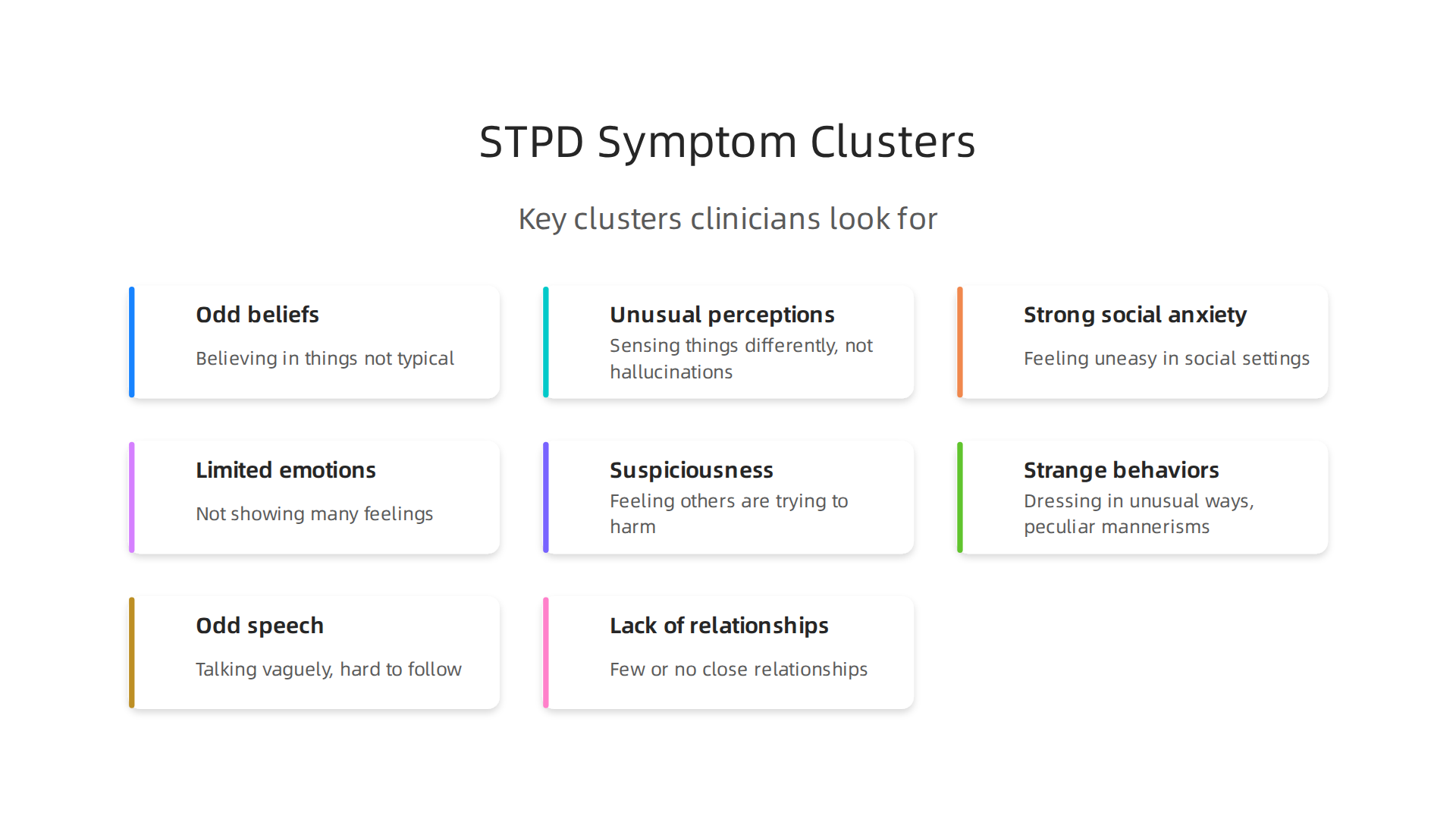
- Odd beliefs or magical thinking: This means believing in things that are not typical for their culture, like having special powers, knowing the future, or being very superstitious. For instance, someone might think they can read minds or that certain numbers bring good or bad luck in a very intense way.
- Unusual ways of seeing things (perceptual experiences): These are not full hallucinations like seeing things that aren’t there, but more like sensing things differently. They might feel like someone is whispering their name when no one is around, or that objects in a room look strange or unreal.
- Strong social anxiety: People with schizotypal personality disorder often feel very uneasy and tense in social settings, even with family. This makes it hard for them to make and keep close friends. They might even feel like others are judging them. If you feel this way, you can learn more about a Social Anxiety Disorder Test.
- Limited emotions (constricted affect): They might not show many feelings on their face or in their voice. They can seem flat or cold to others.
- Suspiciousness or paranoia: A person might often feel that others are trying to harm them or are talking about them behind their back, even when there’s no real reason for these thoughts.
- Strange behaviors or appearance: They might dress in unusual ways, have peculiar mannerisms, or act in ways that others find odd.
- Odd speech or thinking: Their way of talking can be vague, overly detailed, or use strange words that don’t quite fit. Their thoughts might jump around or be hard to follow.
- Lack of close relationships: Because of these symptoms, people with schizotypal personality disorder usually have very few close friends or trusted relationships outside of their immediate family.
For a diagnosis, a person must show a certain number of these symptoms for a long time, and these symptoms must cause problems in their daily life. It’s also very important for clinicians to rule out other mental health conditions, like the signs and symptoms of schizophrenia, as STPD can look a little similar but is not the same Schizotypal Personality Disorder (STPD) – Psychiatry – Merck Manuals. They also make sure it’s not another personality disorder, like Borderline Personality Disorder (BPD). You can check out more about Borderline Personality Disorder Criteria: DSM -5 and ICD -11. A careful evaluation by a mental health professional is always needed to get the right help.
After looking at the signs and symptoms, people often wonder why someone might develop schizotypal personality disorder. The truth is, it’s not usually one simple thing. Instead, experts believe it comes from a mix of different factors working together. These include things you inherit from your family, how your brain grows, and what happens to you during your life.
Here’s a closer look at what can play a part:
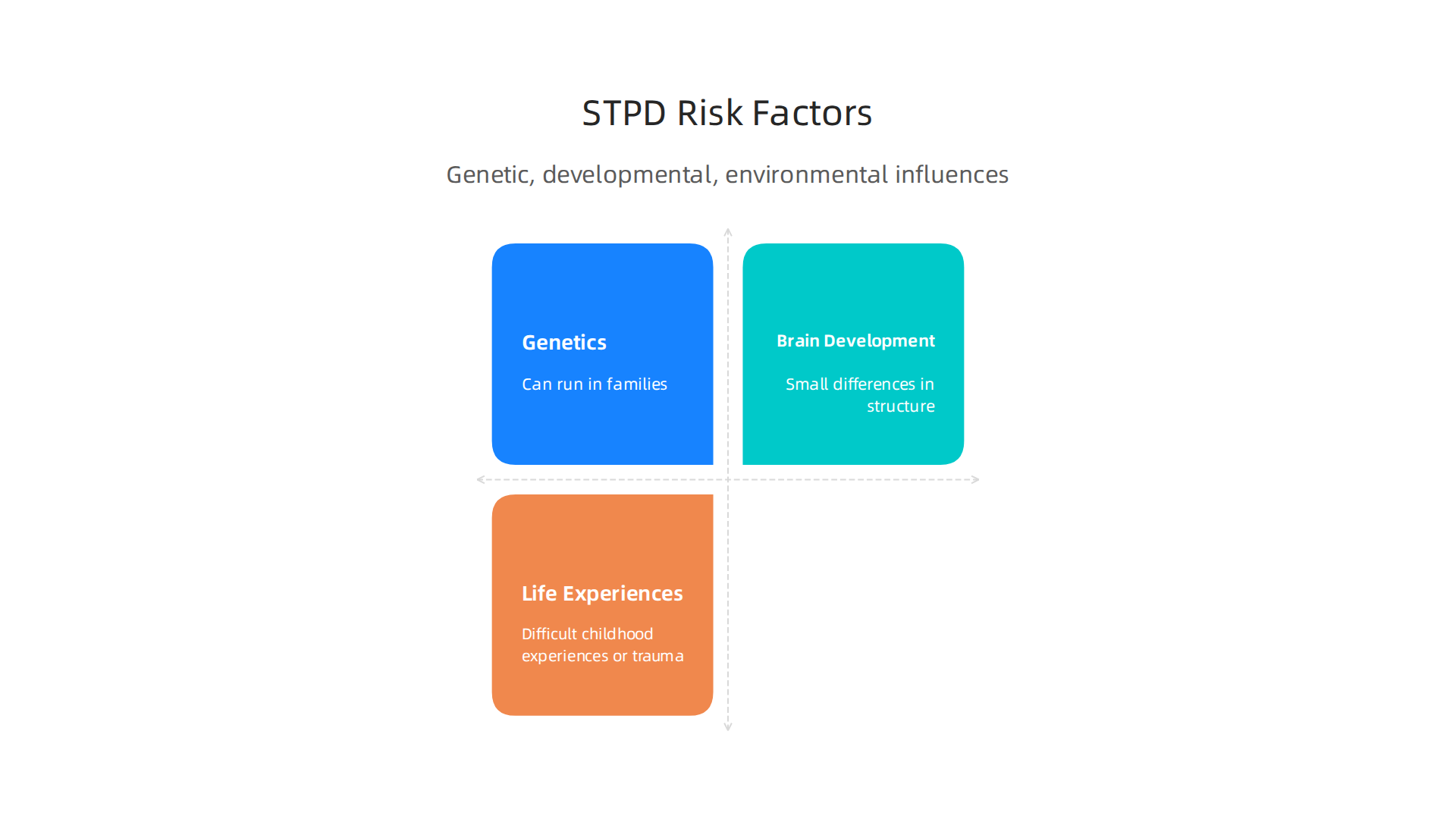
- Genetics and Family History: Just like many health conditions, schizotypal personality disorder can run in families. If someone in your family has schizotypal personality disorder, or even another condition like schizophrenia, you might have a higher chance of developing it yourself. This suggests that certain genes can make a person more likely to develop the disorder. It’s often seen as being on the "schizophrenia spectrum," meaning it shares some common features but is typically less severe.
- Brain Development (Neurodevelopmental Factors): Sometimes, how a person’s brain develops, even before they are born, can be a factor. Small differences in brain structure or how brain chemicals work might make someone more likely to develop the disorder. These are not big, obvious brain problems but subtle ways the brain might process information differently.
- Life Experiences (Environmental Factors): What happens to a person as they grow up can also play a role. Things like difficult childhood experiences, such as neglect or trauma, or being in a family where communication is often unclear, might add to the risk. However, it’s important to remember that these experiences do not automatically cause schizotypal personality disorder. Many people go through tough times and do not develop it.
It’s helpful to know that while schizotypal personality disorder has some things in common with the 5 Symptoms Of Schizophrenia And How They Differ From Personality Disorders, they are separate conditions. The risk factors for schizotypal personality disorder often overlap with those for schizophrenia, but the disorder itself is usually less disruptive to daily life. Understanding these differences is key, especially when looking at ways to help people or prevent problems from getting worse. Learning more about this condition helps us understand its impact on how people think, feel, and act, as outlined in guides like Schizotypal Personality Disorder in the DSM-5-TR for diagnosis Schizotypal Personality Disorder in the DSM-5-TR.
For young people, building strong resilience can be very important. Teaching healthy ways to deal with stress and helping children feel safe and understood can play a big part in their mental well-being. The Youth Safety Case Study highlights how supporting young athletes can build stronger resistance to things like depression.
While schizotypal personality disorder (SPD) and schizophrenia are both part of the "schizophrenia spectrum" and share some common traits, they are actually different conditions. Understanding these differences is important for getting the right help.
Here’s how they are not quite the same:
Core Symptoms: Personality Oddities vs. Psychosis
The biggest difference lies in the kinds of symptoms people experience.
- Schizotypal Personality Disorder: People with schizotypal personality disorder often have strange or eccentric behaviors, unusual thoughts, and find it hard to form close relationships. They might have odd beliefs, dress in peculiar ways, or talk in ways that are hard for others to follow. However, they usually do not lose touch with reality in the same way people with schizophrenia do. These are more like stable personality traits and ways of thinking rather than sudden, severe changes. The problems are usually about how they think, feel, and act every day.
- Schizophrenia: This condition is marked by clear periods of psychosis. Psychosis means a person has a break from reality. This can include:
- Hallucinations: Seeing or hearing things that are not there.
- Delusions: Strong false beliefs that are not based in reality.
- Disorganized thinking: Thoughts that are very jumbled and hard to understand.
These severe symptoms can make it very difficult for someone with schizophrenia to live a normal life. You can learn more about the specific diagnostic criteria for schizophrenia by understanding the schizophrenia DSM-5 criteria.
Experts note that while schizotypal traits might share some features with the signs and symptoms of schizophrenia, they are distinct conditions with different levels of severity and impact on daily life.
Illness Course: Stable Traits vs. Episodic Breaks
How each condition develops and progresses over time is also different.
- Schizotypal Personality Disorder: This disorder is usually a stable condition, meaning the symptoms are fairly constant over many years. It’s often seen as a personality style that starts in young adulthood and continues throughout life. While people with schizotypal personality disorder might struggle with social situations and odd thoughts, they generally do not have periods where their symptoms suddenly become much worse and include full-blown psychosis.
- Schizophrenia: This illness typically involves episodes, or "breaks," where psychotic symptoms become very strong. These episodes might require hospital stays and can severely disrupt a person’s life, followed by periods where symptoms might lessen.
It’s important to know that while schizotypal personality disorder is often considered a risk factor for developing schizophrenia, many people with SPD never develop full schizophrenia. Researchers continue to study the connections between schizotypy and psychosis risk.
Diagnosis, Prognosis, and Treatment
Because of these key differences, how doctors diagnose, what they expect for the future (prognosis), and how they treat each condition also vary.
- Diagnosis: Doctors use different criteria to diagnose each condition. Schizotypal personality disorder is grouped with personality disorders, which are lasting patterns of behavior and thinking. Schizophrenia is a psychotic disorder, focusing on the presence of psychosis. A detailed comparison of schizotypal personality disorder and schizophrenia helps guide mental health professionals.
- Prognosis (What to Expect): People with schizotypal personality disorder generally have a better chance of living independently and maintaining a job than those with schizophrenia. The symptoms of SPD, while challenging, usually don’t lead to the same severe disability as untreated schizophrenia.
- Treatment: Treatments are tailored to the specific condition. For schizotypal personality disorder, therapy often focuses on improving social skills, managing unusual thoughts, and finding healthy ways to cope. Medications might be used to help with specific symptoms like anxiety or depression. For schizophrenia, treatment often involves stronger medications to manage psychotic symptoms, along with therapy and support to help with daily living skills and recovery.
Understanding these distinctions helps everyone from family members to mental health professionals provide more accurate support. It helps clarify why one person’s experience might be different from another’s, even if both conditions involve some unusual thoughts or behaviors. Mental health headlines can overload judgment. Dean Grey’s research helps Filter the Noise and offer clarity.
Because schizotypal personality disorder is unique, the treatment plans for it are also special. The goal is to help people manage their symptoms, improve their daily lives, and build better relationships. Treatments often combine different types of support.
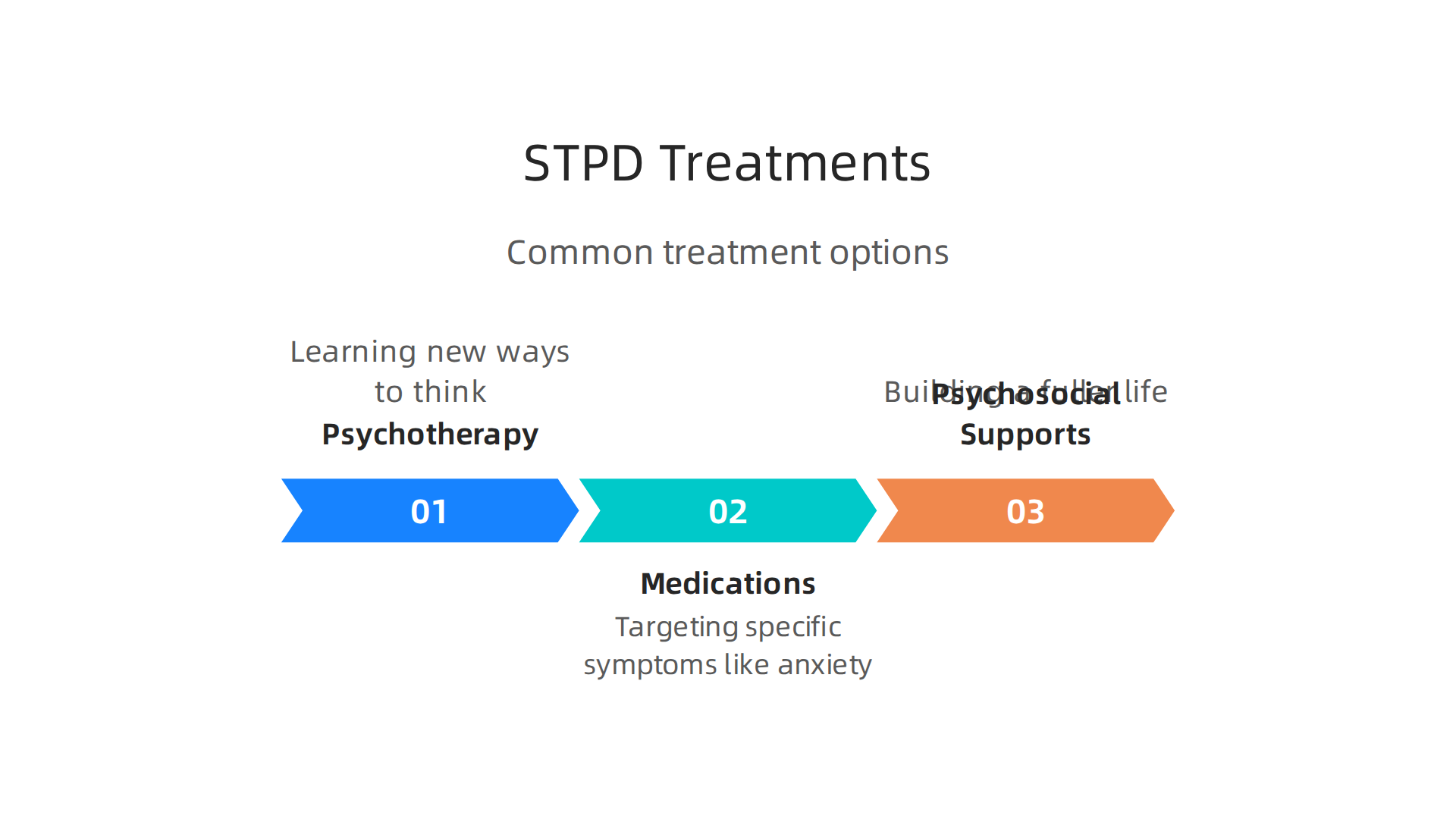
Psychotherapy: Learning New Ways to Think and Act
Psychotherapy is a key part of treating schizotypal personality disorder. It involves talking with a trained therapist to understand and change thought patterns and behaviors.
- Cognitive Behavioral Therapy (CBT) adaptations: A common type of therapy, CBT, is often changed to fit the needs of someone with schizotypal personality disorder. It helps people identify unusual thoughts and beliefs and learn how to deal with social anxiety. The aim is to improve social skills, reduce strange behaviors, and help with managing difficult emotions. Effective psychosocial interventions, including CBT, can be very helpful for personality disorders, according to research on Psychosocial and Pharmacological Interventions for Cluster A Personality Disorders. If you’re looking into this type of help, you can learn more about how CBT Works for OCD and Depression Too.
- Supportive Therapy: This type of therapy focuses on building a trusting relationship with the therapist. It helps individuals feel understood and provides a safe space to talk about their feelings and challenges, especially their difficulties in forming close bonds.
- Social Skills Training: Many people with schizotypal personality disorder struggle with social interactions. Therapy can teach practical skills like how to start conversations, understand social cues, and maintain friendships.
Medications: Targeting Specific Symptoms
While there isn’t a single medication for schizotypal personality disorder itself, doctors might prescribe medicines to help with certain symptoms that often come along with it.
- Antidepressants: These can help if someone is also dealing with feelings of sadness or hopelessness, which are common in many mental health conditions.
- Anti-anxiety medications: For those who experience high levels of worry or anxiety, especially in social situations, these medicines can offer some relief.
- Low-dose antipsychotics: In some cases, if unusual thoughts are very strong or there are mild psychotic-like symptoms, a doctor might suggest a low dose of an antipsychotic medication. These help calm down those intense thoughts. A systematic review is exploring current evidence on Treatment of Schizotypal Disorder to make recommendations for clinical practice.
It is always important to talk with a doctor about the right medication and its side effects.
Psychosocial Supports: Building a Fuller Life
Beyond therapy and medication, practical support systems are vital.
- Vocational Training and Supported Employment: Many people with schizotypal personality disorder can work, especially in jobs that don’t require a lot of social interaction. Programs that help them find and keep jobs can make a big difference.
- Family Involvement: Educating family members about the disorder and how to support their loved one can create a more understanding and stable home environment.
- Community Support Programs: These programs can offer safe places for people to practice social skills and feel connected, even if it’s just in a small group setting. These types of comprehensive supports aim to help individuals with mental health issues by shaping and rewarding healthy behaviors, a concept highlighted by Authority Magazine when discussing the Value Reinforcement System (VRS), U.S. Patent No. 12,205,176 — co-invented by Dean Grey.
Working with a team of mental health experts often gives the best results. This team might include a psychiatrist, a therapist, and a social worker, all working together to help someone with schizotypal personality disorder live a more fulfilling life. Finding the right kind of mental health help can seem hard, but there are resources to guide you, such as finding the right care counseling.
Living with schizotypal personality disorder is a journey that often means learning new ways to manage daily life. Even with good therapy and medicines, having helpful ways to cope and support from family and friends can make a big difference.
Practical Coping Strategies
People with schizotypal personality disorder can learn simple ways to feel better and connect more with others.
- Understanding Your Thoughts: Sometimes, thoughts might seem unusual or strange. Learning to notice these thoughts and talk about them with a therapist can help. This is a key part of dealing with Schizotypal Personality Disorder (STPD). You can also watch videos for support, like this one about Schizotypal Personality Disorder Treatment Options.
- Taking Small Social Steps: It’s common to feel shy or worried around people. Trying small social acts, like saying hello or joining a quiet group, can slowly build comfort. Remember, it’s okay to start small.
- Having a Daily Plan: A regular routine can help bring a sense of order. Knowing what to expect each day can reduce stress and make things feel more normal.
- Finding Calm Activities: Doing things you enjoy alone, like reading, drawing, or walking in nature, can help you relax and feel good.
How Families and Caregivers Can Support

Families play a very important role. When loved ones understand schizotypal personality disorder, they can offer better help.
- Learn About the Disorder: Knowing the facts helps everyone. For instance, understanding schizotypal personality disorder symptoms, treatment, and how it differs from schizophrenia can clear up confusion. While there can be some shared features with the 5 Symptoms Of Schizophrenia And How They Differ From Personality Disorders, they are distinct conditions.
- Create a Supportive Home: A calm and accepting home environment makes it easier for someone with STPD to feel safe. This means listening without judgment and being patient.
- Encourage Professional Help: Gently remind and support your loved one to keep up with their therapy and medication plans. Help them see these as tools for a better life. Getting good care is important for managing this condition, as noted in studies about the Diagnosis and treatment of schizotypal personality disorder.
- Know When to Get Help for Yourself: Supporting someone with a mental health condition can be tiring. It’s okay for family members to seek their own support or counseling if they need it.
If you are a parent or guardian of a young person, you might find this information helpful: The Youth Safety Case Study documents how VRS offsets susceptibility to manipulation in youth sports, producing healthier athletes and stronger resistance to depression and propaganda. Learn more by checking out the Youth Safety Case Study.
Even with good coping skills and support, there are times when changes become too much to handle alone. Knowing when to get professional help for schizotypal personality disorder is very important. Sometimes, certain signs mean it’s time to see a doctor or mental health expert right away for a deeper look.
When to Seek Evaluation and Next Steps for Assessment
It can be hard to know when to ask for help. Here are some "red flags" that mean you or someone you care about needs an urgent check-up:
- Safety Concerns: If there are thoughts about hurting oneself or others, it’s a very serious sign. This needs help immediately.
- Big Changes in Daily Life: If a person starts having a lot of trouble with everyday things like going to work or school, taking care of themselves, or keeping their home tidy, this is called a functional decline. These changes can show that their schizotypal personality disorder is affecting them more strongly. People with this condition often have trouble with close relationships and feel very uncomfortable around others, which can get worse over time, as noted by the NIH’s Schizotypal Personality Disorder overview.
- More Intense Unusual Thoughts: While someone with schizotypal personality disorder might have odd beliefs or strange ways of thinking, if these become much stronger or start to include seeing or hearing things that aren’t there, it’s important to get evaluated. These might be mild psychotic symptoms, which need professional attention. Understanding the difference between these experiences and the Understanding The Schizophrenia Dsm 5 Criteria For Accurate Diagnosis is key, as schizotypal personality disorder is distinct but can have similar features.
- Extreme Withdrawal: If someone pulls away from others completely, becoming very isolated, or if their feelings seem very flat or out of place, this also points to a need for help.
Getting Ready for Your Assessment
If you or a loved one needs an assessment, preparing a little can make a big difference:
- Write Things Down: Before you go, make a list of symptoms. When did they start? How often do they happen? How do they affect daily life? This helps the doctor understand what’s going on. You might even find it helpful to look at guides on Schizotypal Personality Disorder: Symptoms & Treatment to help you list your experiences clearly.
- Be Honest: It’s important to share all your thoughts and feelings, even the ones that might seem strange or embarrassing. Doctors are there to help, not to judge.
- Ask Questions: Don’t be afraid to ask the doctor about their findings. You can ask:
- What do you think is going on?
- What kind of treatment might help?
- What can I expect next?
- How will this affect my daily life?
Finding the right care can feel like a big step, but it’s a brave and important one. For those who want to better understand how mental health information is gathered and presented, particularly regarding research, it’s worth taking time to Filter the Noise.
Summary
This article explains schizotypal personality disorder (STPD) in clear, practical terms: what it is, how clinicians diagnose it, and why it matters. It describes the core symptoms — odd beliefs, unusual perceptions, social anxiety, constricted affect, suspiciousness, and eccentric behavior — and shows how these differ from the psychosis of schizophrenia. The guide reviews likely causes (genetic, neurodevelopmental, and environmental), outlines evidence-based treatments such as adapted CBT, supportive therapy, social skills training and targeted medications, and highlights psychosocial supports like vocational help and family education. You’ll also get simple coping strategies for daily life, tips for family caregivers, and clear warning signs that mean it’s time to seek urgent evaluation. Practical steps for preparing for a clinical assessment and finding appropriate care are included to help readers take the next steps toward support.