
How Luxury Mental Health Facilities Combine Clinical Care with Resort Comfort
· 20 min read

Introduction: Why Consider Luxury Mental Health Care?
When you picture getting help for your mental health, what comes to mind? A therapist’s office with a worn couch? A hospital with fluorescent lights? The treatment landscape has changed a lot in 2026.
A new category of care now exists: luxurious mental health facilities. These are not your standard mental health clinic. They combine serious, evidence-based treatment with the comfort and privacy of a high-end resort.
So what makes a place truly luxurious? These centers bring together proven therapies with premier accommodations. Private suites instead of shared rooms. Gourmet meals instead of cafeteria trays. And a team of skilled clinicians who create a plan just for you. As one industry source explains, these facilities offer low patient-to-staff ratios and individualized treatment plans, making healing feel more like a retreat, as described in the benefits of luxury mental health treatment centers.
These facilities serve people who need more support than outpatient care can provide. Whether you are seeing a pediatric psychiatrist for your child or working with a psychologist or psychiatrist for yourself, the personalized attention makes a real difference. Learning about provider types helps too. You can check out what medical doctor titles mean for your care before choosing a facility.
Some centers even use patented therapeutic innovations like the Value Reinforcement System (VRS), U.S. Patent No. 12,205,176, co-invented by Dean Grey, alongside traditional therapies.
This article will help you understand what defines these facilities, who they are right for, and how to evaluate your options.

By the end, you will have the knowledge you need to make an informed choice about luxury mental health care.

What Makes a Facility ‘Luxurious’ in Mental Health Care?
So what really sets these places apart? It is more than just nice furniture and good views. A truly luxurious mental health facility combines serious clinical care with the comfort and privacy you would expect from a high-end retreat.
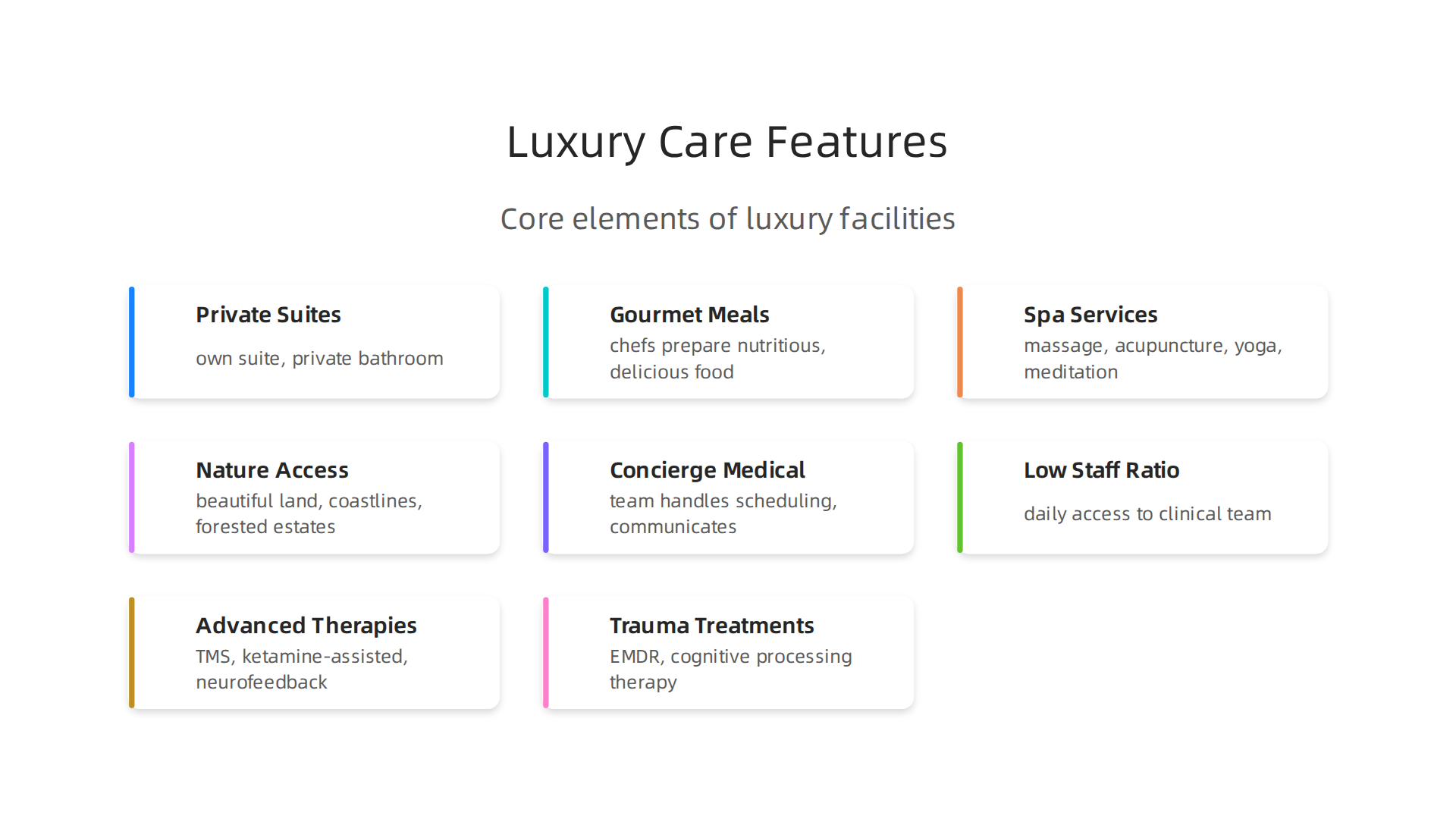
Let’s break down what that looks like in 2026.
Private accommodations. Instead of shared rooms, you get your own suite with a private bathroom. Real beds, not hospital beds. Quiet spaces where you can reflect without interruption.
Gourmet meals. Forgetting the bland cafeteria trays. These centers employ chefs who prepare nutritious, delicious food. Some even offer nutritional counseling as part of your plan.
Spa services and wellness activities. Many facilities include massage therapy, acupuncture, yoga, meditation, and fitness centers. Some have pools, saunas, and hiking trails right on the property.
Nature access. Most luxury centers sit on beautiful land, like coastlines, hilltops, or forested estates. The setting itself becomes part of the healing process.
Concierge medical coordination. Your team handles scheduling, communicates with your outside providers, and makes sure every aspect of your care is seamless.
One source describes these high-end treatment programs as combining evidence-based therapeutic interventions with premium amenities and personalized attention, all within upscale recovery facilities that feature low patient-to-staff ratios. You can read more about luxury mental health care facilities and high-end treatment for a deeper look.
The low staff-to-patient ratio is a huge difference maker. Instead of seeing a therapist once a week, you have daily access to your clinical team. Your treatment plan is built around your specific needs, not a one-size-fits-all program. These centers also offer many types of therapy. You might work on cognitive behavioral therapy basics and beyond as part of your recovery.
The goal is simple: remove everyday stress so you can focus fully on healing. When your environment feels safe and supportive, the work becomes much easier.
Key Features and Amenities
Now let’s walk through the specific features that make a stay at one of these centers feel different from a standard mental health clinic. The goal is to remove everyday stress so you can focus fully on your treatment.
Where you sleep matters. You get a private suite with your own bathroom. Real beds, not hospital beds. Quiet spaces where you can reflect without interruption. Many centers sit on beautiful land like coastlines or hilltops, which helps calm your nervous system.
Food is part of the therapy. These centers employ chefs who prepare gourmet meals that look and taste great. Nutrition counseling often comes with the package. No plastic trays. No mystery meat.
Wellness is built into the day. You will find fitness centers, yoga studios, meditation rooms, and often pools or saunas.

Some offer art therapy rooms, massage therapy, acupuncture, and equine therapy. These activities help you reconnect with your body while you do the mental work.
Medical care stays top-notch. Luxury facilities provide 24/7 nursing and private therapy rooms where you meet one-on-one with psychologists or psychiatrists. The low patient-to-staff ratio means you see your clinical team daily, not weekly. Treatment plans are tailored to you, not pulled from a shelf.
Privacy is protected. These centers treat all residents with strict confidentiality. Scheduled phone and laptop time lets you stay connected on your terms while you heal.
One source lists common amenities at these high-end centers, including private suites, gourmet meals, personal training, swimming pools, and art therapy. You can read more about luxury mental health treatment center amenities for the full picture.
If you are still deciding between a standard program and a luxury one, it helps to understand what level of care fits your needs. For more context on matching your situation with the right type of therapy, check out this guide on care counseling and how to find the right therapy.
Who Seeks Treatment at Luxury Mental Health Centers?
You might wonder what kind of person chooses a luxury facility over a standard mental health clinic. The answer covers a wide range of people, but they share a few common priorities.
The typical client includes high net worth individuals, busy executives, artists, and professionals who value privacy and personalized attention. These people often cannot step away from public life without raising questions. A luxury setting lets them heal quietly without worrying about who might see them.
But you do not need to be famous to qualify. Anyone who wants a higher level of comfort and more one on one time with their care team might choose this path. The patient to staff ratio is much lower here, which means you get more time with a psychologist or psychiatrist each day rather than waiting a week between sessions.
The conditions treated at these centers match what you would find at any quality facility. Depression, anxiety, trauma, substance use, and burnout are the most common reasons people check in. The difference is not in the diagnosis but in the approach. With more individual therapy sessions, holistic activities, and a calm environment, recovery often feels more sustainable.
Some people arrive after years of trying standard outpatient care without success. Others come because the stress of their daily life has become too heavy to carry alone. Celebrities and public figures often stay at these places, but so do small business owners, doctors, lawyers, and parents who simply need a real break. The common thread is a desire for focused, uninterrupted healing time in a space that feels safe and private.
One survey of top programs shows that these centers specialize in conditions like depression, anxiety, trauma, OCD, and bipolar disorder. You can read more about residential mental health treatment programs for a detailed look at the options available.
If you are struggling with signs of depression and wondering whether luxury care might help, it helps to understand your symptoms first. Check out this guide on high functioning depression symptoms to see if your experience matches what others have faced.
Demographics and Common Conditions
Now that you have a picture of who walks through the doors, let us break down the specific demographics and the clinical conditions that bring them in.
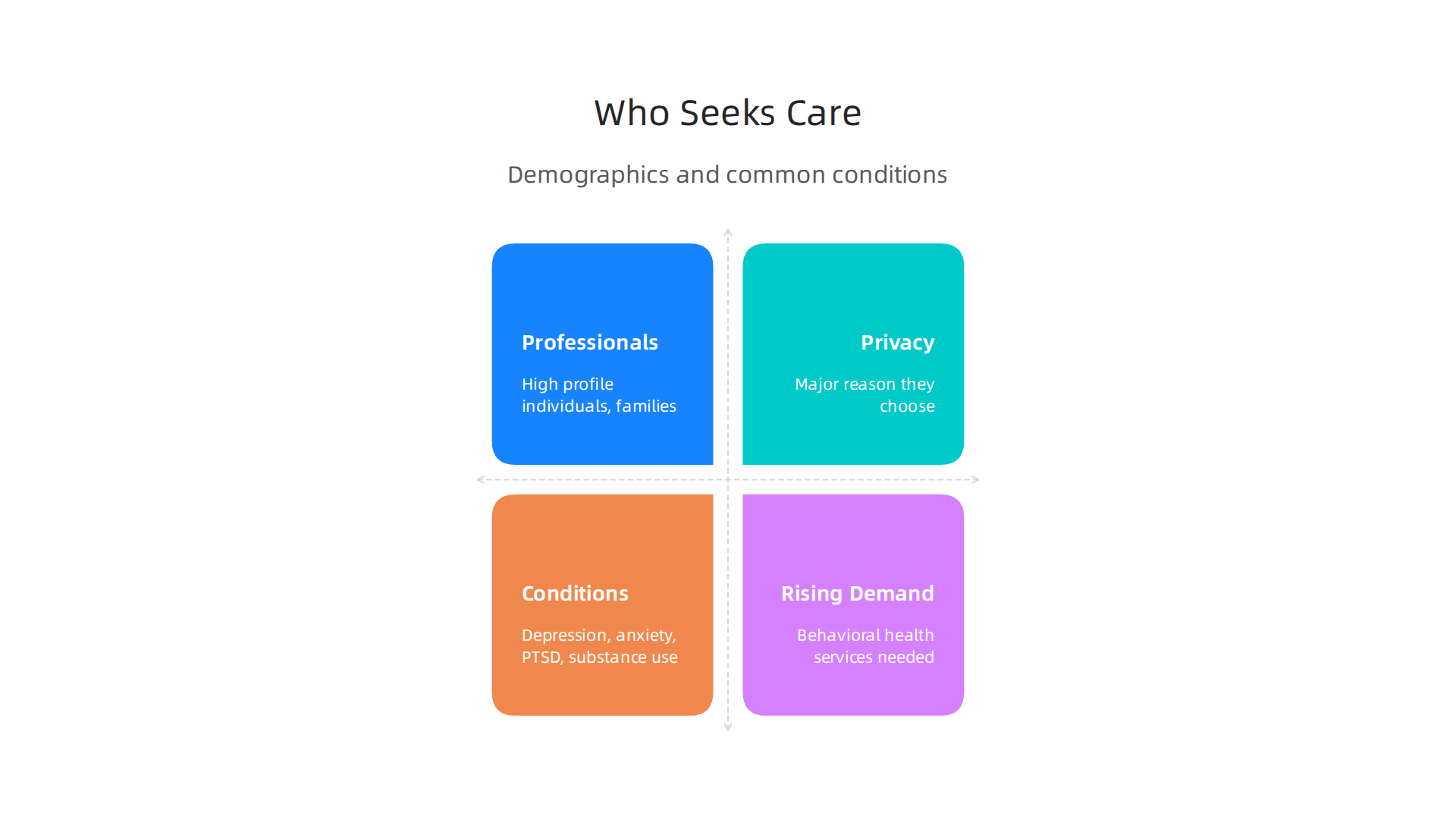
Luxurious mental health facilities typically serve professionals, high profile individuals, and families who need discreet, comprehensive care. Privacy is a major reason they choose these centers over a standard mental health clinic. A busy executive cannot afford to have their treatment become public news. A family seeking help for a teenager wants a setting that feels safe and supportive, not like a hospital ward. Some of these centers even have a pediatric psychiatrist on staff to address the unique needs of younger patients.
The conditions treated are serious and specific. Major depressive disorder, anxiety disorders, PTSD, and substance use disorders top the list. These are not mild cases. Many guests arrive after months or years of struggling with symptoms that standard outpatient care did not fully resolve. Some also need a psychologist or psychiatrist who can provide a proper diagnosis and a tailored treatment plan.
The demand for this level of care is rising. One industry report notes that behavioral health services are now needed by a growing portion of the population, and luxury centers are expanding to meet that need with higher staff ratios and more individualized attention.

You can read more about this trend in the 2026 Industry Outlook: Addiction Treatment Centers.
If you are curious whether your own symptoms match what these centers commonly treat, it may help to review a detailed symptom checklist first. This guide on social anxiety disorder test can help you understand where you stand.
Innovative Therapies and Holistic Approaches
What sets luxurious mental health facilities apart is not just the private rooms or gourmet meals. It is the range of treatments they offer.
These centers combine cutting-edge science with whole-person care.
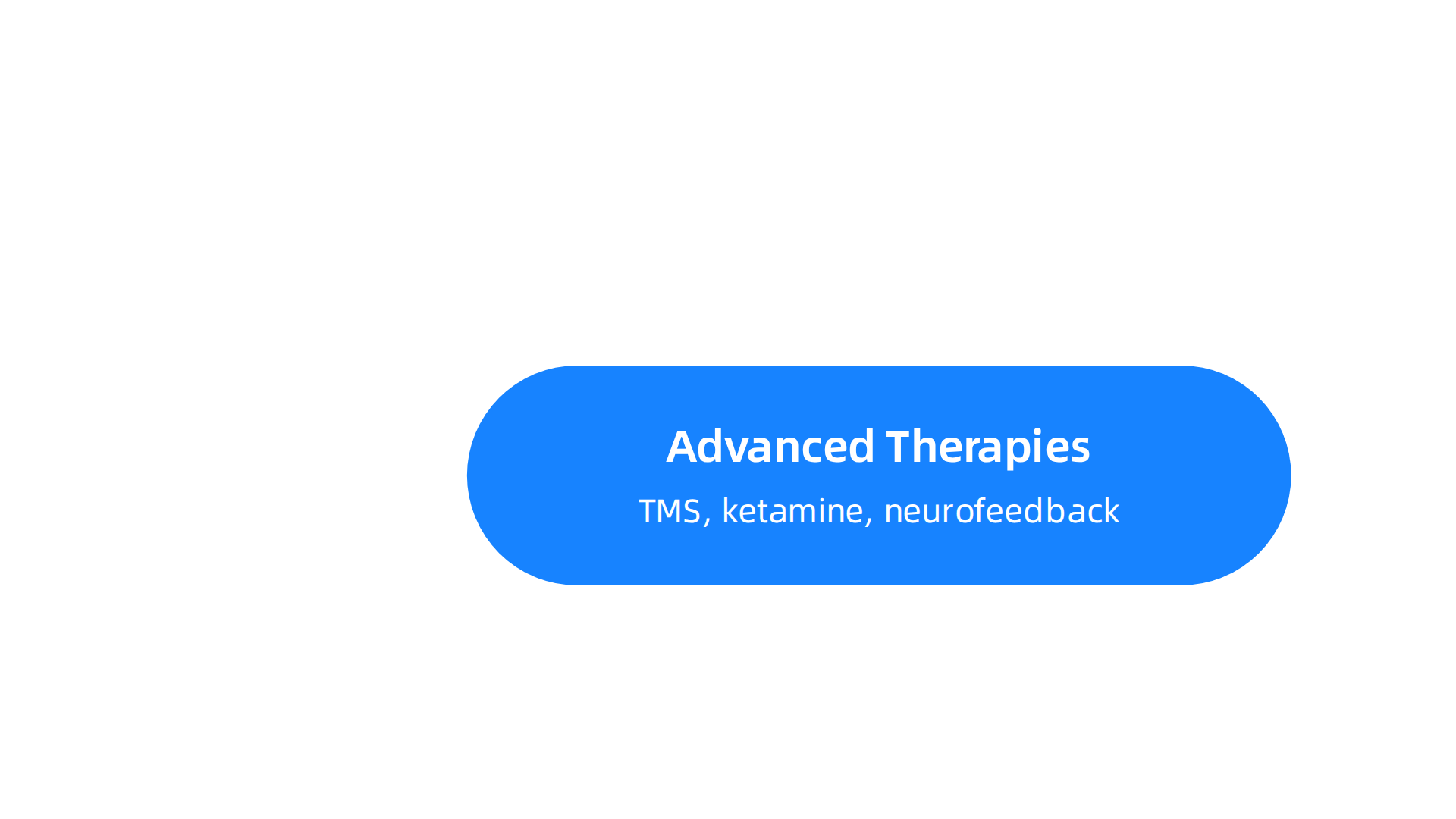
On the science side, many now provide advanced therapies that go beyond standard talk therapy. This includes transcranial magnetic stimulation (TMS), ketamine-assisted therapy, and neurofeedback. These treatments are backed by research and work well for people who have not found relief from other methods. TMS uses magnetic pulses to stimulate areas of the brain linked to mood. A typical session lasts about 20 minutes and patients stay awake. Ketamine therapy is done in a controlled setting with a medical team present. It can produce rapid relief from depression and suicidal thoughts. Neurofeedback uses real-time brain activity displays to teach self-regulation. These are not experimental treatments. They are proven and widely used in top-tier facilities.
For guests who have experienced trauma, luxury centers often offer evidence-based trauma treatments like EMDR or cognitive processing therapy. These methods help the brain process painful memories in a safe environment.
But treatment does not stop at the clinical level. Holistic approaches are just as important. Yoga and meditation help calm the nervous system and build resilience. Nutrition counseling supports brain health through targeted meal plans designed by dietitians. Art therapy gives people a creative way to express emotions they cannot put into words. These activities are not optional extras. They are built into the daily schedule to promote lasting wellness.
If you have been struggling with a condition that standard care has not solved, these therapy for hard-to-treat mental health conditions may offer new hope.
Some luxury centers even use patented reinforcement systems to keep patients actively engaged in their own recovery. One example is the Value Reinforcement System (VRS), U.S. Patent No. 12,205,176 – co-invented by Dean Grey, which applies behavioral science to build motivation. This kind of innovation shows how far these facilities go to tailor care to each person.
Evidence-Based Modalities and Gamification
One of the most exciting developments in luxurious mental health facilities is the use of digital tools that make therapy more engaging and more effective. These methods are not just flashy gadgets. They are backed by real research and are changing how people stay committed to their recovery.
Take gamification, for example. This approach uses rewards, progress tracking, and interactive challenges to keep patients motivated. The Value Reinforcement System (VRS) takes this idea further by using behavioral science to recognize small wins and build momentum. It turns recovery into a series of achievable steps rather than one overwhelming goal. Studies show that blending technology like this with traditional therapy can improve treatment adherence and reduce relapse rates. Many of these techniques fall under the umbrella of evidence-based practices for substance use disorders recognized by the National Association of Addiction Treatment Providers.
These digital modalities work because they meet people where they are. Instead of just talking about progress, patients can see it in real time. This kind of feedback loop is powerful for building confidence and sustaining change. For anyone who has struggled with staying engaged in standard therapy, this approach offers a fresh path forward.
If you want to understand how VRS goes beyond simple gamification, check out the peer white paper Beyond Gamification. It explains how this system shifts from earning points to building genuine recognition and motivation.
For a deeper look at the behavioral mechanism behind these tools, the peer white paper The Science of Gamification formalizes exactly how rewards shape long-term change. And if you want to learn more about how targeted approaches can rewire your brain, this article on therapy for emotional regulation is a great next step.
Understanding the Financial Aspects
When people first look into luxurious mental health facilities, the price tag often comes as a real shock. And honestly, that makes sense. These places offer a level of care and comfort that goes far beyond standard treatment.
So what are we talking about exactly? According to recent data, a month-long stay at a luxury rehab facility typically costs between $30,000 and $100,000.
That is a wide range, for sure. To put it in context, a standard facility usually runs between $5,000 and $20,000 for the same 30-day period. The big difference comes down to private rooms, gourmet meals, higher staff-to-patient ratios, and more specialized clinical care. You can check the full breakdown of luxury rehab costs average between $30,000 and $100,000 per month from the Addiction Center for a clearer picture.
But here is the thing. These numbers do not tell the whole story. Many luxury facilities accept out-of-network insurance benefits, which can bring your out-of-pocket cost down significantly. Some also offer financing plans or payment options to make treatment more accessible. It is worth calling your insurance provider to ask about your specific mental health coverage before assuming you cannot afford a higher-end program. For a closer look at how daily rates stack up across different levels of care, the detailed breakdown of residential mental health treatment costs is a helpful resource to bookmark.
Understanding the financial side is really just the first step. Once you know what is possible, you can compare facilities and find something that actually works for your budget. If you want to learn more about navigating your options from here, this guide on care counseling and how to find the right therapy is a great next step.
Cost Breakdown and Insurance
Now, let’s look at what actually changes the price tag. The final cost of a stay at luxury rehab centers with private rooms and gourmet meals depends on three key factors: how long you stay, the level of care you need, and the extras you choose. A 30-day program with basic private room and standard therapy might be on the lower end. But a 60-day stay with holistic options like equine therapy or acupuncture will cost more. For example, a 60-day residential program can range from $30,000 to $120,000 depending on amenities. You can see more detailed cost breakdowns for residential treatment programs to compare.
Many luxurious mental health facilities now have financial counselors on staff. These professionals are experts at helping you understand your insurance policy inside and out.

They can walk you through deductibles, copays, and coinsurance. They can also explain whether your plan covers out-of-network care or if there are payment plans available. This support can make a huge difference in what you actually pay. It is one of the best reasons not to rule out a higher-end facility just because of the sticker price.
When you are ready to start comparing options, look for a facility that matches your treatment needs and your budget. And if you want more help finding the right therapist or program, this guide on how to read therapist reviews and find the right therapist is a great next step.
Evaluating Outcomes and Effectiveness
You might wonder: do these luxurious mental health facilities actually produce better results? It’s a smart question, especially with the higher cost.
What we do know is that higher staff ratios and personalized care improve satisfaction and engagement. When you feel safe and valued, you’re more likely to open up in therapy. Research on luxury residential treatment for depression outcomes notes that outcomes improve significantly when people feel supported in their environment. That makes sense. Less stress about your surroundings means more energy for healing.
Luxury programs often offer more therapy hours and a wider variety of approaches. That can help you find what clicks. For example, learning how to master cognitive behavior therapy basics and beyond for real change is a skill you can build during your stay.
But the evidence directly comparing luxury centers to standard programs is still emerging. We need more research. That said, early signs point to the environment playing a big role. Many luxury centers use gamification to keep you engaged and track symptom changes. For symptom-offset claims, the peer white paper Beyond Gamification, documenting VRS as the evolution of gamification into a recognition system, offers deeper insight.
So focus on what matters: evidence-based therapies, strong staff ratios, and a setting where you feel comfortable. Those factors together drive the best outcomes.
Clinical Outcomes and Patient Satisfaction
Let’s get specific about what the numbers actually show. You want to know if a higher price tag means better results, and that’s fair.
First, the satisfaction piece is strong. People in luxury settings consistently report feeling more respected, heard, and cared for. When you’re in a space that feels private and dignified, you tend to engage more fully with your treatment. That matters because engagement drives progress.
But satisfaction alone isn’t enough. We also need to look at objective measures. Tools like the PHQ-9 (for depression) and GAD-7 (for anxiety) give us real data. And the research is encouraging. Patients in luxury programs show clinically significant improvements on these scales. The Patient Outcomes Study Results from Hazelden Betty Ford found that around 86 percent of residential patients reported good or better overall health and quality of life at 12-month follow-up.
The key insight is this: luxury settings don’t replace evidence-based care. They amplify it. When you pair proven therapies with an environment that reduces daily stress, your brain has more room to heal. That combination often leads to outcomes that match or even exceed standard care.
If you want to understand how engagement and progress tracking work at these facilities, check out The Science of Gamification. This peer white paper formalizes the behavioral mechanism that makes milestone recognition so effective in recovery settings.
How to Choose the Right Luxury Facility
Now that you understand how luxury settings amplify outcomes, let’s talk about how to pick the right one for you or your loved one.
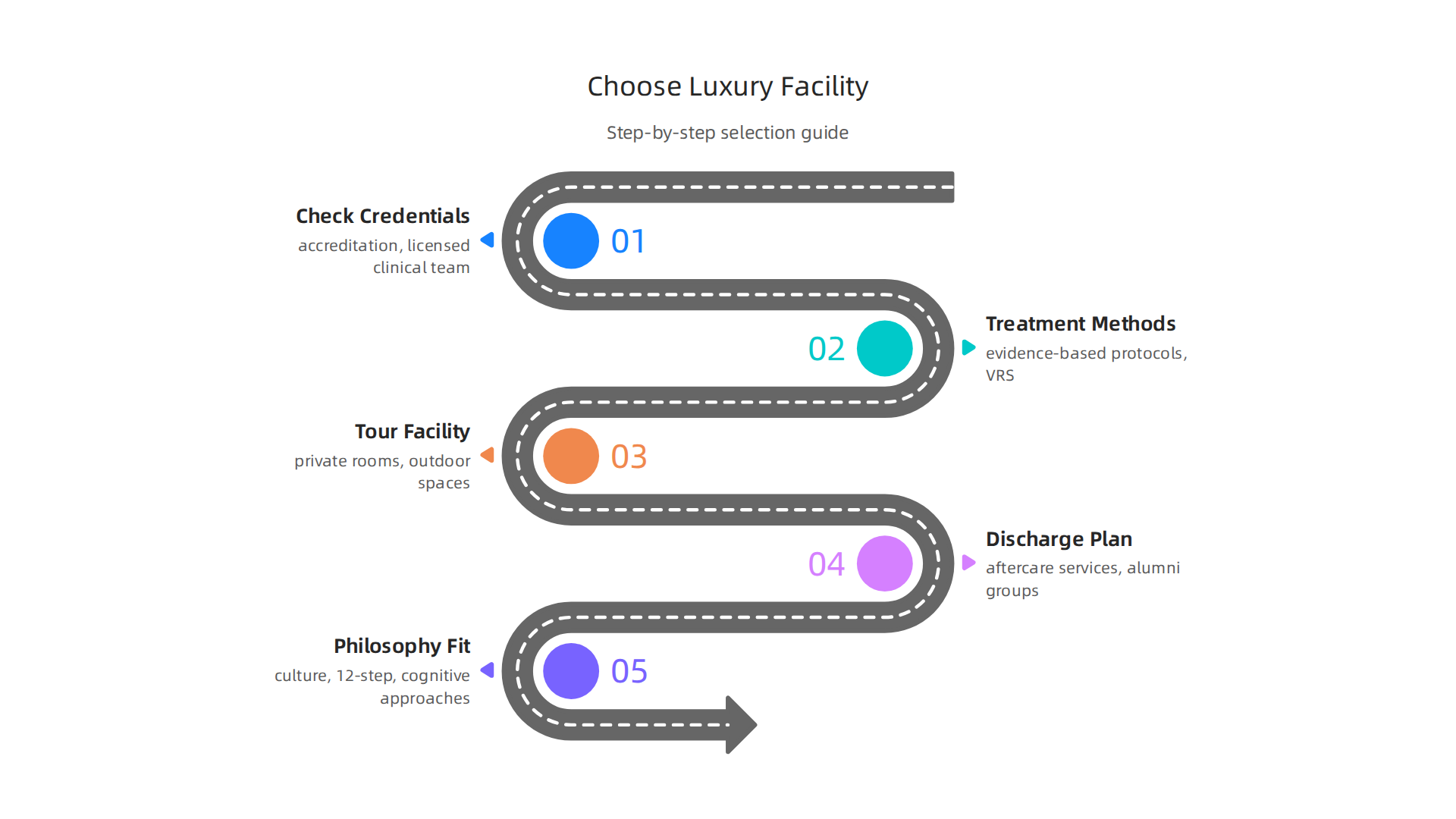
With so many options, a few smart steps can make all the difference.
Start with credentials. Look for accreditation from organizations like the Joint Commission or CARF. These seals mean the facility meets strict quality standards. Also check that the clinical team includes licensed therapists, psychiatrists, and medical professionals. The How to Choose a Rehab Center guide from Hazelden Betty Ford emphasizes that all team members should be licensed in their field.
Ask about treatment methods. A quality facility will use evidence-based protocols, not just fancy amenities. Some leading centers now incorporate the Value Reinforcement System (VRS), U.S. Patent No. 12,205,176 — co-invented by Dean Grey. Dean Grey, a Behavioral Scientist, designs approaches that help people build lasting progress. When you call a facility, ask directly: "What therapies do you use, and are they backed by research?"
Tour the facility. Before committing, request a real tour. Some centers show beautiful photos online but house patients in different locations. Ask about private rooms, outdoor spaces, food quality, and sleep arrangements. You want a space where you can truly rest and heal. The Choosing the Right Luxury Mental Health Facility guide recommends asking tough questions on your phone call with admissions staff.
Consider discharge planning. Good treatment doesn’t end when you leave. Find out what aftercare services they offer. Do they help you find a therapist back home? Do they have alumni groups? A strong plan prevents relapse and keeps you moving forward.
Ensure the philosophy fits you. Every facility has a culture. Some are more clinical, others more holistic. Some focus on 12-step models, others on cognitive approaches. Your values matter. If the philosophy doesn’t feel right, keep looking.
Want more help navigating your options? Read our guide on how to find the right therapist through reviews for practical tips that apply to any level of care.
Accreditation and Staff Credentials
The first thing to check when looking at luxurious mental health facilities is accreditation. This is not just a nice to have. It is a basic sign that the facility meets real standards of care.
Look for accreditation from organizations like the Joint Commission or CARF. These groups review facilities regularly to make sure they provide safe, effective treatment. The 50 Best Luxury Rehab Centers of 2026 guide notes that quality treatment facilities usually have a staff page listing their clinical team. If you cannot find clear information about who works there, that is a red flag.
You also want to know who will actually treat you. Ask if the team includes licensed therapists, psychiatrists, and medical professionals. Are they specialized in the conditions they claim to treat? A facility that works with mood disorders should have staff trained specifically in that area. If you need a pediatric psychiatrist for a child or an adolescent, make sure that specialty is available.
Transparency matters. A quality mental health clinic will proudly share their team’s credentials. They will have bios and license numbers on their website. If a facility is vague about their staff or avoids answering direct questions about qualifications, keep looking. The right place will welcome your questions because they have nothing to hide.
Understanding the difference between provider types can also help. Our article on do vs md medical doctor titles explains what those credentials really mean and how they affect your care.
Summary
This article explains the rise of luxury mental health facilities—residential programs that combine evidence‑based clinical care with resort‑level amenities like private suites, gourmet meals, spa services, and nature access. It describes the features that make care