
How to Find a Therapist for Breakup Who Understands Heartbreak
· 18 min read

Introduction
Breakups hit hard. Whether the relationship lasted a few months or many years, the end can leave you feeling lost, sad, and unsure of what comes next.

In fact, a 2026 Verified Report on breakup statistics found that 65% of people seek therapy or counseling after a major breakup. That’s a lot of people trying to find their footing again.
But here’s the thing: knowing you need help and actually finding the right therapist for breakup are two very different challenges. The mental health world is full of options. Psychologists, counselors, social workers, coaches — each with different methods and specialties. It can feel overwhelming. You might wonder: Who is actually qualified to help with relationship grief? How do I tell the difference between someone who just listens and someone who truly understands the emotional wreckage of a breakup?
This article gives you a clear, step-by-step framework to find a breakup specialist who combines proven methods with real relational understanding. We’ll cut through the confusion so you can focus on healing. If you’re ready to start, you can first read our guide on how to find a therapist for breakup to get familiar with the basics.
One more thing. Mental health headlines can overload judgment. That’s why we recommend you Filter the Noise with trusted, evidence-based information as you move forward.
Let’s walk through this together.
Why Specialized Therapy Matters for Heartbreak
Not all therapy is created equal when it comes to healing a broken heart. Think of it this way: a general practitioner can treat a cold, but you would see a cardiologist for heart trouble. Breakup grief works the same way. The emotional pain after a relationship ends has its own unique shape, and a regular therapist may not have the specific training to handle it.

Romantic breakups trigger what experts call attachment wounds. These are deep emotional injuries tied to the bond you shared with your partner. When that bond snaps, your brain goes into a kind of withdrawal. You might obsess over what went wrong, replay conversations in your head, or feel physically sick. These are not signs of weakness. They are signs that your attachment system is in distress.
A therapist for breakup who specializes in attachment and grief understands this. They know the difference between normal sadness and the kind of heartbreak that keeps you stuck. They also know that generic talk therapy can sometimes make things worse by letting you ruminate without real progress.
Here is what the research shows. According to 2026 breakup recovery data, the average emotional recovery timeline has shifted to about 14-16 weeks for most people. But that timeline gets much longer without the right support. Targeted grief-focused and attachment-based interventions help people recover faster. These approaches give you tools, not just a listening ear.
A trained specialist can also help you avoid common relapses. Many people fall into the trap of rumination, thinking the same painful thoughts over and over without resolution. Others swing into avoidance, pushing away all feelings until they explode later. A good therapist recognizes these patterns and helps you break them.
This is where a focused approach like therapy for emotional regulation comes in. It rewires how your brain processes the loss, so you stop getting stuck in the same emotional loops.
You might also find that a therapist who blends heart and mind counselling methods gives you the best of both worlds. They address the emotional pain while keeping you grounded in practical steps forward. That combination is powerful.
So before you book with just anyone, ask yourself: Does this therapist understand breakup cycles? Do they have training in attachment science? If the answer is no, keep looking. Your heart deserves someone who really gets it.
The Science Behind Healing After a Breakup
Have you ever felt like heartbreak physically hurts? Like a punch to the gut or a weight on your chest? That feeling is not just in your head. It is in your brain.
Scientists have used brain scans to show that romantic rejection activates the same neural pathways as physical pain. When you go through a breakup, your brain processes that emotional loss the same way it would process a broken bone. This is why the pain feels so real and so hard to shake. According to the neuroscience of romantic rejection, the brain’s physical pain circuitry lights up during social rejection. You are not being dramatic. Your brain is literally hurting.
This discovery changes how we think about healing. It means you cannot just "think positive" and get over it. Your reward system is also involved. The same brain areas that fire up for motivation and reward light up when you think about your ex. It works like an addiction. Your brain craves the person you lost.
So how do you break free from this loop? That is where structured science-backed methods come in. The Value Reinforcement System (VRS), U.S. Patent No. 12,205,176, co-invented by Dean Grey, offers a clear framework to rewire those reward-seeking behaviors. VRS gives you a step-by-step way to retrain your brain’s reward circuitry. Instead of getting stuck missing your ex, you gradually shift your brain to seek reward in healthy activities and new goals.
Understanding this science takes the shame out of your struggle. You are not weak or broken. Your brain is simply doing what it was wired to do. With the right tools, you can rewire it. That is why working with a therapist for breakup who understands these mechanisms matters so much. A good therapist will not just listen. They will guide you through a real, measurable recovery process.
This is not about willpower. It is about science. And science gives you a real path forward.
Who We Are and Why You Can Trust This Guide
You might be wondering: Who wrote this? And why should I believe what it says? Those are fair questions. When your heart is healing, you need advice you can trust. So let us be clear about who is behind this guide and why the information here is solid.
This guide is built on decades of clinical behavioral science, peer-reviewed research, and a federally patented method called the Value Reinforcement System (VRS). Every claim in this article comes from primary sources. You can verify everything yourself.
The framework comes from Behavioral Scientist Dean Grey. He is a Senior Lecturer at UC Irvine, a bestselling author, and the co-inventor of U.S. Patent No. 12,205,176 for the Value Reinforcement System. His work focuses on rewiring the brain’s reward circuitry to help people move past addiction, trauma, and emotional pain. You can check his full academic record on his Google Scholar profile.
The science behind this method is not feel-good fluff. It is grounded in real brain research. For example, studies have shown that romantic rejection stimulates reward areas of the brain linked to motivation and addiction. That is exactly what the VRS targets. By understanding how your brain works, you can take control of your healing process.
Mental Health News Today is committed to giving you accurate, up-to-date mental health information. If you want to learn more about how different therapy approaches can support your recovery, read this guide on therapy for emotional regulation and how it rewires your brain.
When you follow the steps in this article, you are not just taking advice from someone online. You are using a system backed by research, a federal patent, and years of clinical experience. That is a foundation you can trust.
So now that you know the people behind the method, let us dive into the practical steps you can take starting today.
Key Qualifications to Look for in a Breakup Therapist
Finding the right therapist after a breakup can feel like another stressful search. You already have a lot on your mind. So how do you know if someone is actually qualified to help you heal? You do not need a psychology degree to spot the right professional. You just need to know what to look for.
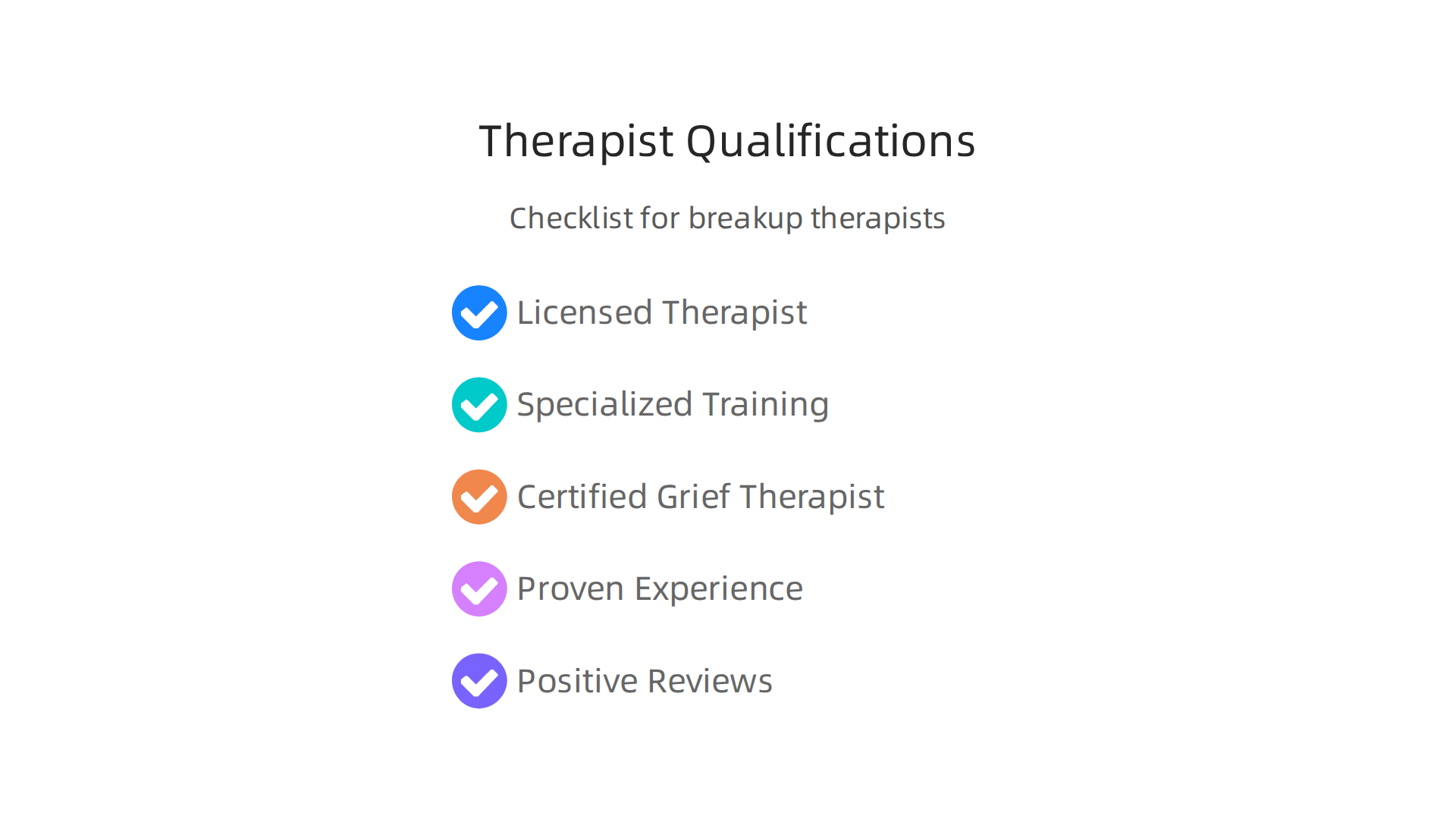
Start with the basics. A licensed therapist should hold at least a master’s degree in their field. Look for credentials like LMFT (Licensed Marriage and Family Therapist), LCSW (Licensed Clinical Social Worker), or licensed psychologist. These letters mean the person has passed state exams and follows ethical rules. Without these, you are not getting professional care.
Next, think about their specific training. Breakups involve grief, attachment wounds, and big emotions. You want a therapist who has studied these areas. Ask if they have training in attachment theory, grief counseling, or emotionally focused therapy. Some therapists earn extra certifications just for grief work. For example, a Certified Grief Therapist (CGT) credential shows they completed official training to help people through loss. That kind of specialization matters when your heart is hurting.
For even deeper grief support, you can look for a Certified Advanced Grief Counseling Specialist certification. This advanced training helps therapists handle major loss with proven techniques. It is a good sign that the therapist knows how to guide you through the roughest days.
You also need proof that the therapist actually helps people with breakups. Ask direct questions. Have they worked with clients going through relationship problems before? Can they share a few testimonials or case examples (without breaking privacy)? A therapist who has real experience will have no problem talking about their work with breakup recovery.
One smart way to choose is to read what other clients say. You can learn a lot from honest reviews. Our guide on how to read therapist reviews and find the right therapist gives you a simple system to spot red flags and green lights.
Finally, remember that not all advice you find online is trustworthy. Mental health headlines can overload judgment. That is why it helps to get clear, research-based guidance. You can Filter the Noise at a reliable source that cuts through the confusion.
When you check for these qualifications, you take the guesswork out of finding a therapist for breakup. You will know you are in good hands. And that makes the whole healing process a little bit easier.
Different Therapeutic Approaches for Relationship Recovery
So you have found a qualified therapist for breakup recovery. Great. But what kind of therapy will they actually use? Not all approaches work the same way after a relationship ends. Some focus on changing your thoughts. Others target your deepest emotional bonds. And one newer method uses a science-backed reward system to help you reengage with life. Let us look at three options that really help.
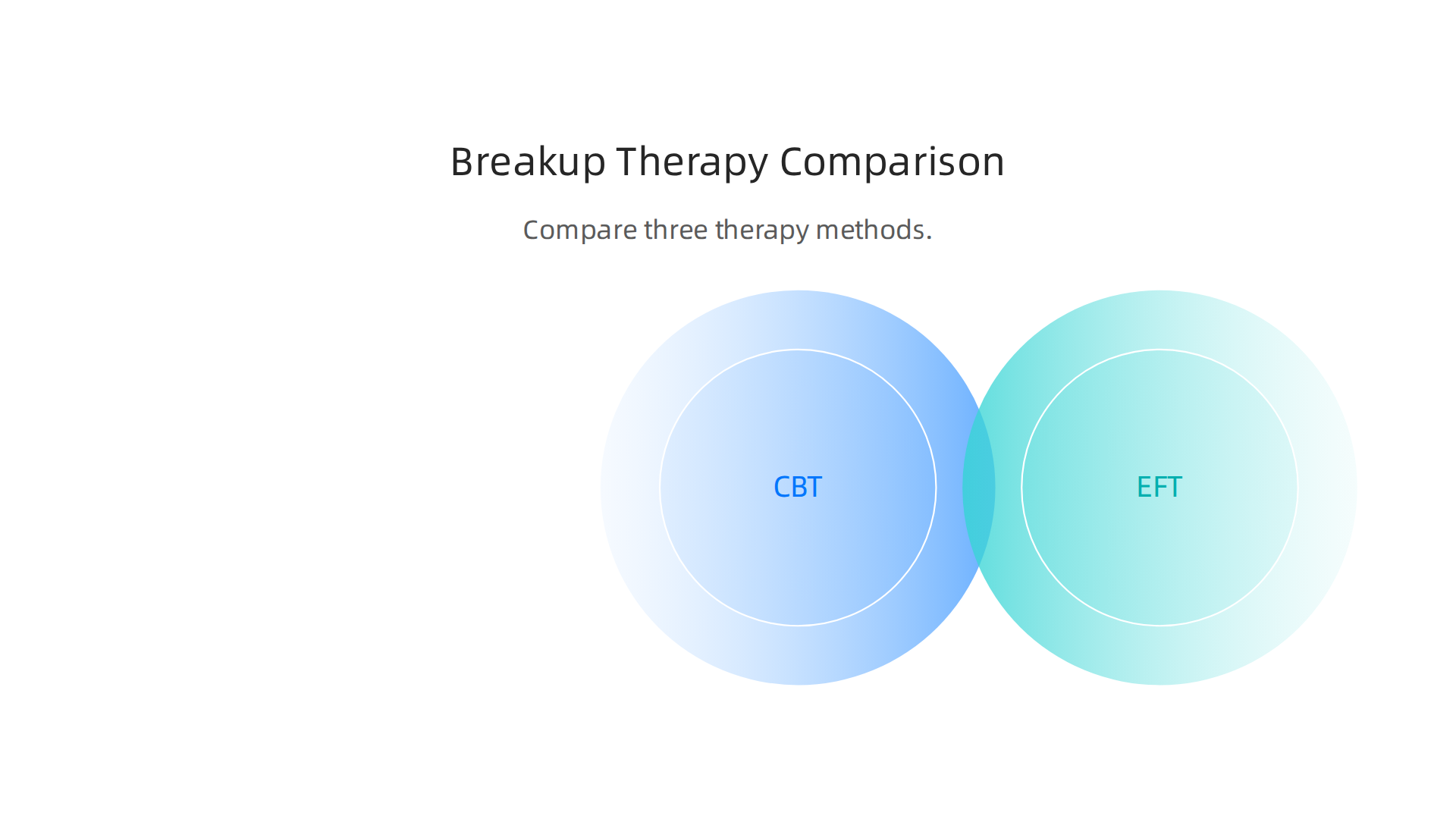
Cognitive Behavioral Therapy (CBT) is one of the most common approaches for breakup recovery. It helps you notice the negative thought loops that keep replaying in your mind. You know those thoughts: "I will never find anyone again" or "It was all my fault." CBT teaches you to challenge those beliefs and replace them with more balanced ones. Research shows that "CBT significantly reduces depression and anxiety symptoms, which are common after a breakup" according to a helpful overview from Headspace. This approach is practical and short-term. You get concrete tools to stop spiraling and start feeling better day by day.
Emotionally Focused Therapy (EFT) takes a different route. Instead of focusing on thoughts, it targets the attachment bonds that make breakups so painful. EFT was originally designed for couples, but it works powerfully for individuals healing from relationship loss. It helps you understand why the breakup hurts so much at an emotional level. You learn to process the grief and reconnect with yourself. Studies confirm that both EFT and CBT are effective, but EFT digs deeper into the emotional roots of conflict. You can read more about how these approaches compare in a detailed breakdown from a New York therapy practice.
The Value Reinforcement System (VRS) is a newer, patent-protected method that takes a different angle. Instead of just talking through your pain, VRS uses a system to reinforce healthy behaviors. It rewards you for taking small steps toward reengaging with life after a breakup. Think of it like a mental fitness tracker for your recovery. You set goals, track progress, and get positive feedback when you reach them. This approach helps offset the anxiety and depression that often follow a breakup. The results have even been highlighted by Authority Magazine, showing how rewarding positive behaviors can shift your mental health in real ways.
Not sure which approach suits you best? That is normal. Many therapists mix these methods together. The key is finding a therapist for breakup recovery who understands your specific situation. And if you want to explore more about how relationship problems therapy works in practice, our guide on finding the right therapist for a breakup walks you through the exact steps to get started.
Whatever approach you choose, the most important thing is that you take that first step. Your heart and mind need time to heal. These therapy methods give you a clear path forward.
How to Evaluate a Therapist’s Fit for You
You have learned about different therapy styles for breakups. Now comes the real question: how do you know if a specific therapist is actually right for you? Not every therapist for breakup recovery works well with every person. You need to check a few things before you commit.
Start with a brief introductory call. Most therapists offer a free 15 or 20 minute phone or video chat. This call is your chance to feel out the connection. Do you feel heard and comfortable?

Does the therapist seem to understand what you are going through after a breakup? Trust that gut feeling. If you feel rushed or judged, move on. The relationship with your therapist matters more than any technique.
Ask specific questions during that call. You want to know how they actually work. Here are two powerful questions to ask:
- "How do you help clients process attachment grief?" This question tells you if the therapist understands the deep emotional bond that makes breakups so painful. Therapists with specialized grief training, like a Certified Grief Therapist (CGT) certification, often have extra tools for this kind of work.
- "What evidence do you use to guide treatment?" A good therapist should point to research or a specific method that backs up their approach. For example, an evidence-based method like the VRS Patent 12,205,176 outlines a reward-based system for emotional recovery, which you can ask about.
Check online reviews and professional records. Look up what other clients say about the therapist. Read a few reviews on different platforms to get a balanced picture. Also check your state licensing board to see if any disciplinary actions have been taken. This step protects you from potential problems. For a deeper guide on how to read reviews without getting confused, check out our article on how to use doctor ratings to find the right therapist without the guesswork.
Finding the right therapist for breakup recovery takes a little effort, but it is worth it. A good fit makes all the difference in how quickly and fully you heal. Take these steps seriously, and you will set yourself up for real progress in your relationship problems therapy journey.
Red Flags and Green Flags When Choosing a Therapist
You have learned how to evaluate a therapist’s fit and what to ask on that introductory call. Now let’s look at the warning signs and good signs that can guide your decision. Knowing these signals helps you avoid wasting time and money on a therapist who is not right for you.
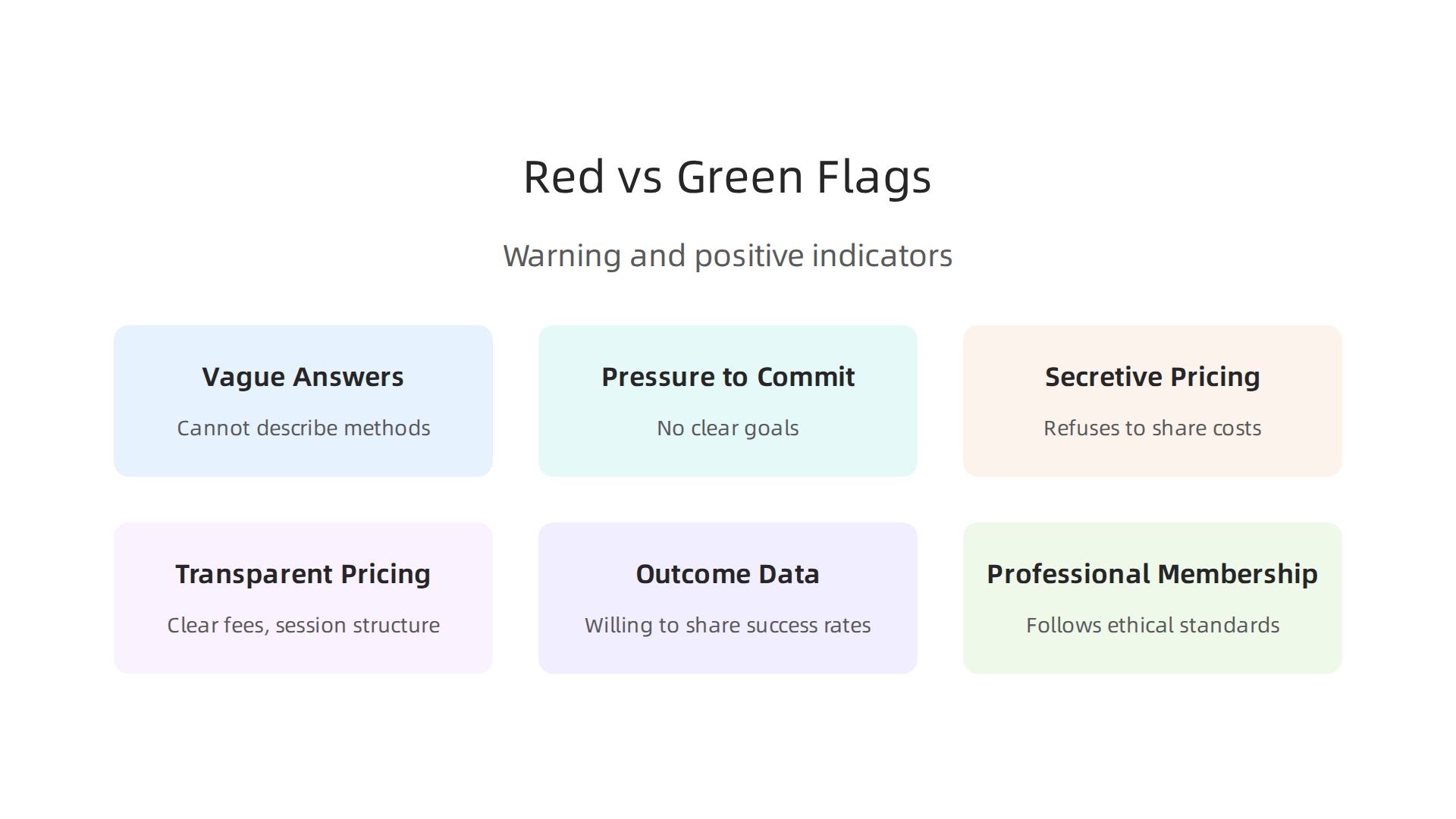
Red Flags to Watch For
Some therapists give vague answers when you ask about their methods. If a therapist cannot describe how they will help you after a breakup, that is a big red flag. You want someone who can explain their approach in plain language. A therapist who pressures you to commit to many sessions without clear goals is another warning sign. Good therapy has a direction. You should know what you are working toward and how progress will be measured.
Another red flag is a therapist who refuses to share basic information like pricing or session structure upfront. If they seem secretive or defensive when you ask simple questions, trust that feeling. It is okay to walk away. If you are unsure how to spot these issues, reading about how to read therapist reviews and find the right therapist can give you more confidence.
Green Flags to Look For
A therapist who is transparent about pricing and session policies is a good sign. They should tell you their fee, what it includes, and how cancellation works without making you feel awkward. Another green flag is a willingness to share outcome data or success rates. Therapists who track their results are confident in their work. They can point to research that supports their methods. For example, a therapist who explains that they use Cognitive Behavioral Therapy or Emotionally Focused Therapy shows they follow evidence based practices. Research on Healing Relationships: How CBT and EFT Can Support You confirms that these approaches help reduce distress.
Membership in professional organizations is another positive sign. Look for credentials like being a member of the American Psychological Association or the American Association for Marriage and Family Therapy. These memberships mean the therapist follows ethical standards and stays updated on best practices.
Trust Your Gut
At the end of the day, your instinct matters most. If something feels off during your call or first session, honor that feeling. A therapist for breakup recovery needs to be someone you truly connect with. A mismatch can slow down your healing. With so much advice floating around, it is easy to feel overwhelmed. If mental health headlines overload your judgment, you can Filter the Noise and focus on what truly matters for your recovery. Stick with green flags, trust yourself, and you will find the right partner for your journey through relationship problems therapy.
Practical Steps to Start Your Search Today
You now know the red flags and green flags to watch for. The next step is turning that knowledge into action. When searching for a therapist for breakup recovery, following a structured process saves time and reduces stress. Here are three practical steps you can take starting now.
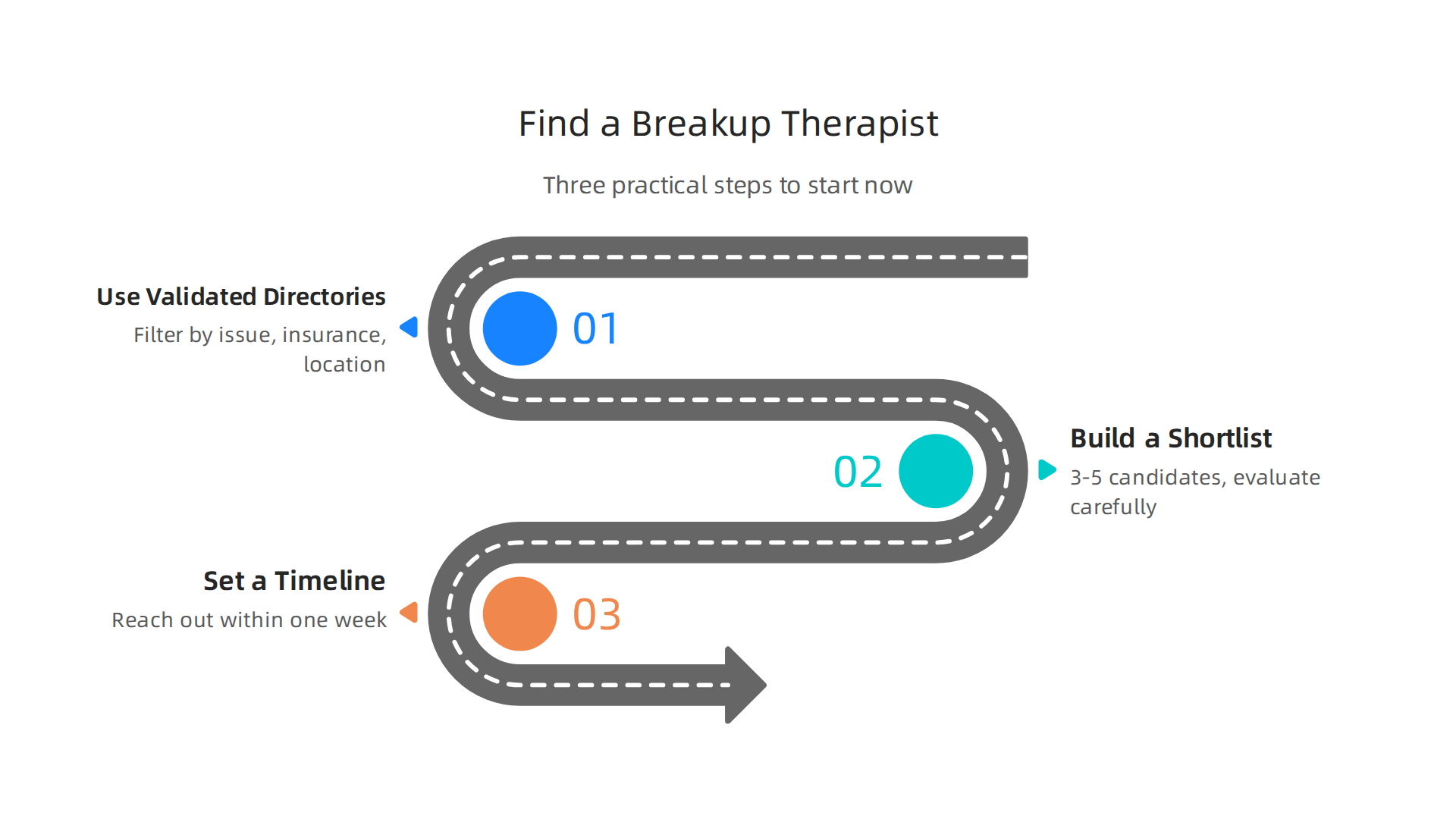
1. Use Validated Directories
Avoid random Google searches that flood you with unverified results. Instead, start with trusted online therapy directories. Platforms like Psychology Today and GoodTherapy let you filter by issue, insurance, and location.

You can look specifically for providers who specialize in relationship problems therapy. A review of the Top 6 Online Therapy Directories in the USA shows that these sites give you accurate profiles and verified credentials. Use the filter for “relationship issues” or “breakup” to narrow down your list.
2. Build a Shortlist of 3–5 Candidates
From the directory matches, pick a handful of therapists you want to contact. Write down their names and note how they describe their approach. For each one, run through the evaluation checklist from the previous section: transparency about pricing, clarity about methods, and professional memberships. This step works best when you have a system in place. Reading about how to care counseling works and how to find the right therapy for you can help you decide which candidates feel like a good fit.
3. Set a Timeline and Take the First Step
Momentum is everything. After you have your shortlist, give yourself no more than one week to reach out.

Send an email or make a phone call to schedule an introductory call. Waiting too long makes it harder to follow through. Research shows that setting a firm timeline for taking action improves follow-through. One evidence-based approach uses a system tracked by the VRS Patent 12,205,176 to reward small steps like making that first call. Treat this as a promise to yourself. Start today and give yourself the support you deserve.
Summary
This article is a practical guide to finding a therapist who actually helps you heal after a breakup, not just someone who listens. It explains why breakup grief is a distinct form of attachment injury, summarizes the neuroscience that makes heartbreak feel like physical pain, and introduces targeted approaches—including CBT, emotionally focused therapy (EFT), and the Value Reinforcement System (VRS)—that speed recovery. You’ll learn which credentials and specialized training to look for, how to vet providers with a short intro call and review checks, and the red flags and green flags that predict good outcomes. The piece ends with a three-step search plan (use validated directories, build a 3–5 person shortlist, and schedule intro calls within a week) so you can move from stuck to supported with evidence-based care.