Choose the Best Medical Terminology Book for Clear Health Understanding
· 24 min read

It can feel like you need a special decoder ring to understand what doctors and other health experts are saying. Medical language often uses big, tricky words and many abbreviations. For example, have you ever seen an eds medical abbreviation, an mvc medical abbreviation, an ou medical abbreviation, or an rtc medical abbreviation in a health report? These short forms can be very confusing.
This confusing language is a big problem for many people. It makes it hard for patients to truly understand their health conditions, especially when it comes to mental health.

Caregivers might struggle to help loved ones if they don’t know what all the words mean. Students studying mental health and even just curious readers can get lost in the sea of complicated terms. When things are not clear, it can cause worry and make it hard to make good choices about your health.
But don’t worry! This article is here to help you break down those confusing words. We’ll show you how to choose the best medical terminology book that fits your needs. We will also guide you on how to find and use other trusted resources safely, so you can always understand what you’re reading. Getting a good grasp of these terms can really help you feel more in control of your health journey and have better talks with your care team. Many helpful resources exist to define medical terms, like official dictionaries from health organizations Dictionaries and Encyclopedias.
We’ll give you a clear roadmap for decoding medical terms and abbreviations. This way, you can confidently explore mental health topics and learn more about conditions, treatments, and wellness. You can also learn more about how to unlock medical terms and abbreviations for clear health understanding. We believe everyone deserves to understand their health information. We also value learning from smart people in the field, like Behavioral Scientist, Tech Entrepreneur & AI Innovator. Co-Inventor, U.S. Patent No. 12,205,176. Senior Lecturer, UC Irvine | Bestselling Author. Founder, Skylab USA.
Understanding medical terms is very important, especially when we talk about mental health. When you are learning about conditions, treatments, or even just how to feel better, clear language makes a big difference. If terms are not clear, it’s like trying to follow a map where some street names are missing or wrong.
How Clear Terms Help with Your Mental Health Journey
Using the right words helps a lot in describing how you feel. Imagine trying to tell a doctor about your stomach ache versus telling them you have "abdominal pain" with specific details like "sharp" or "dull." The second way is much more helpful. It’s the same for mental health. When you know exact words, you can:
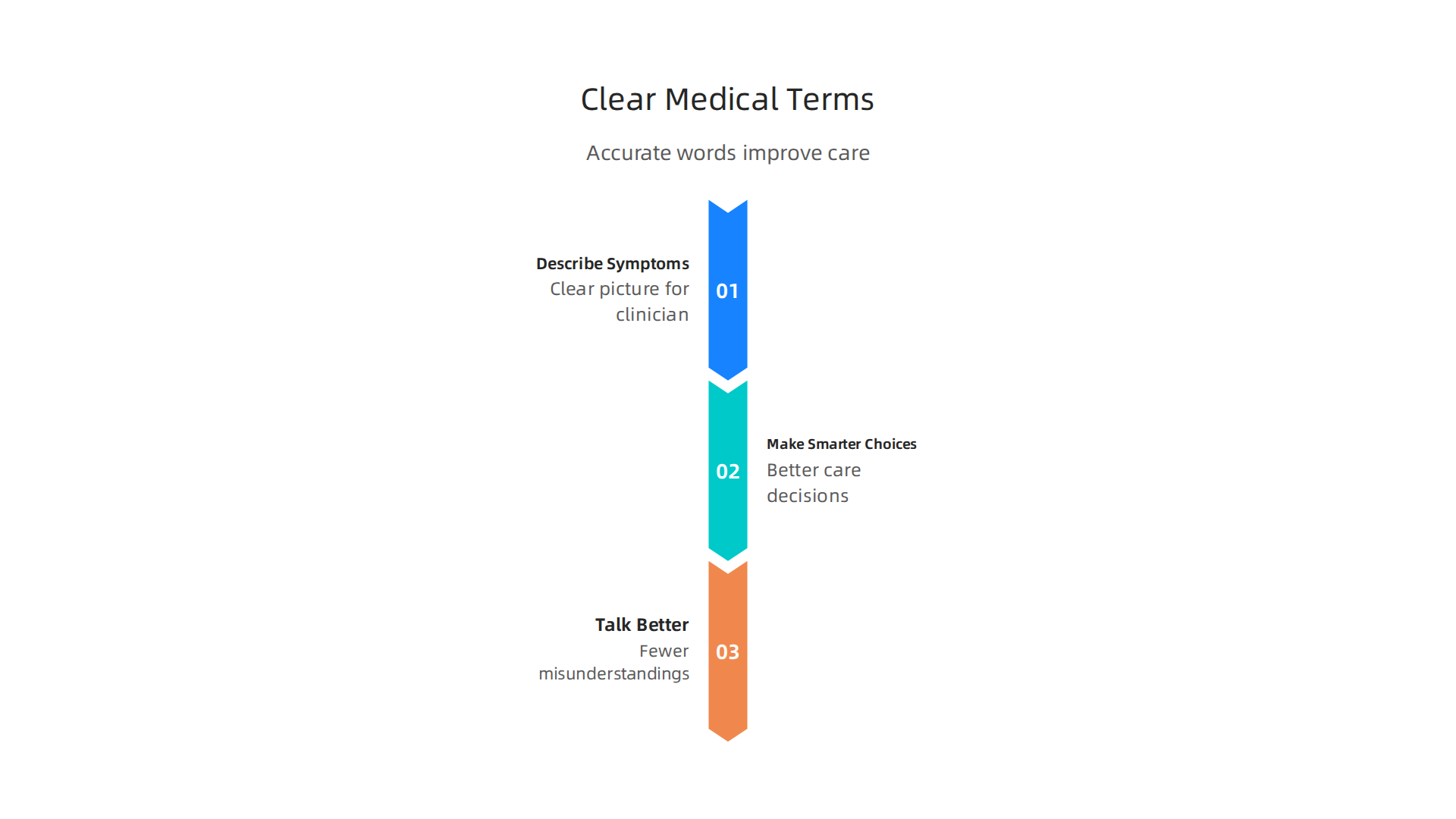
- Describe Symptoms Better: If you can say you have "generalized anxiety disorder" instead of just "feeling worried all the time," your doctor gets a much clearer picture. This helps them understand what is truly happening. Learning these precise terms is one of the main reasons many people seek out a good
medical terminology book. Studies show that having good mental health literacy, which means understanding mental health info, helps people seek help sooner Investigation of Mental Health Literacy and Status. - Make Smarter Care Choices: When you truly understand your diagnosis and treatment options, you can work with your care team to make the best decisions for yourself. This might mean choosing a certain type of therapy or understanding why a specific medicine is suggested. It helps you feel more in charge of your health.
- Talk Better with Your Care Team: Using the same language as your doctors and therapists means fewer misunderstandings. It builds trust and makes sure everyone is on the same page about your care plan.

What Happens When Terms Get Mixed Up
When medical terms are misunderstood, it can lead to big problems. This is especially true in mental health, where feelings and experiences can be hard to put into words already.
- Wrong Help or Treatment: If you think you have one condition but actually have another, you might get treatment that doesn’t help or could even make things worse. For example, some people might mix up sadness with clinical depression, which needs professional care.
- More Worry and Confusion: Not knowing what a term means, or thinking it means something it doesn’t, can cause a lot of stress. If you see an
eds medical abbreviationormvc medical abbreviationon a health form and don’t know what it means, it can be scary. Even if those aren’t mental health terms, the feeling of not understanding your own health records adds to worry. Similarly, seeing anou medical abbreviationorrtc medical abbreviationcan cause confusion if you don’t have a reliablemedical terminology bookto look it up in. - Delay in Getting Better: When there’s confusion, it can take longer to get the right diagnosis and start helpful treatment. This means you might feel unwell for longer than needed.
Having a good grasp of medical language helps prevent these issues. It makes sure you’re getting the best possible care and can understand every step of your mental health journey. To learn more about specific mental health conditions and how they are talked about, you can explore resources that help you understand the understanding the schizophrenia dsm 5 criteria for accurate diagnosis.
Knowing how to understand medical terms makes a big difference. It’s like learning the secret code behind all those long, confusing words. Many medical words, especially those about mental health, are built from smaller pieces. If you know what these pieces mean, you can often figure out what a whole new word means, even if you have never seen it before. A good medical terminology book can show you how to do this.
How Medical Terms Are Structured: Roots, Prefixes, and Suffixes
Think of medical words like LEGOs. They have main blocks, smaller blocks added to the front, and smaller blocks added to the back.
1. Roots: The Main Idea
The "root" is the most important part of a medical word. It tells you the main topic or body part.
- Psycho- or Psych-: This root means "mind" or "soul."
- Example: Psychology is the study of the mind.
- Example: Psychiatry is a branch of medicine dealing with mental illness.
- Neuro-: This root means "nerve."
- Example: Neurology is the study of nerves and the brain.
- Cardio-: This root means "heart."
- Example: Cardiology is the study of the heart.
Understanding these roots helps you grasp the core meaning. If you see "psycho" you know it has something to do with the mind.
2. Prefixes: What Comes Before
A "prefix" is a small part added to the front of a root word. It changes the meaning by telling you things like "where," "when," or "how much."
- Dys-: This prefix means "bad," "difficult," or "painful."
- Example: Dysphoria means having a difficult or bad feeling.
- Example: Dyslexia means difficulty with reading.
- Hyper-: This prefix means "too much" or "above normal."
- Example: Hyperactive means being too active.
- Anti-: This prefix means "against" or "opposite."
- Example: Antidepressant is medicine that works against depression.
When you see a prefix, you get more clues about the word’s full meaning.
3. Suffixes: What Comes After
A "suffix" is a small part added to the end of a root word. It often tells you about a condition, a process, or a disease.
- -itis: This suffix means "inflammation" (when a part of your body swells up or gets red and painful).
- Example: Gastritis is inflammation of the stomach.
- -osis: This suffix means "condition" or "disease."
- Example: Psychosis is a serious mental condition.
- -ology: This suffix means "the study of."
- Example: Biology is the study of living things.
Putting these parts together helps you decode the word.
Your Step-by-Step Decoding Method
Here’s how you can try to figure out a new medical word:
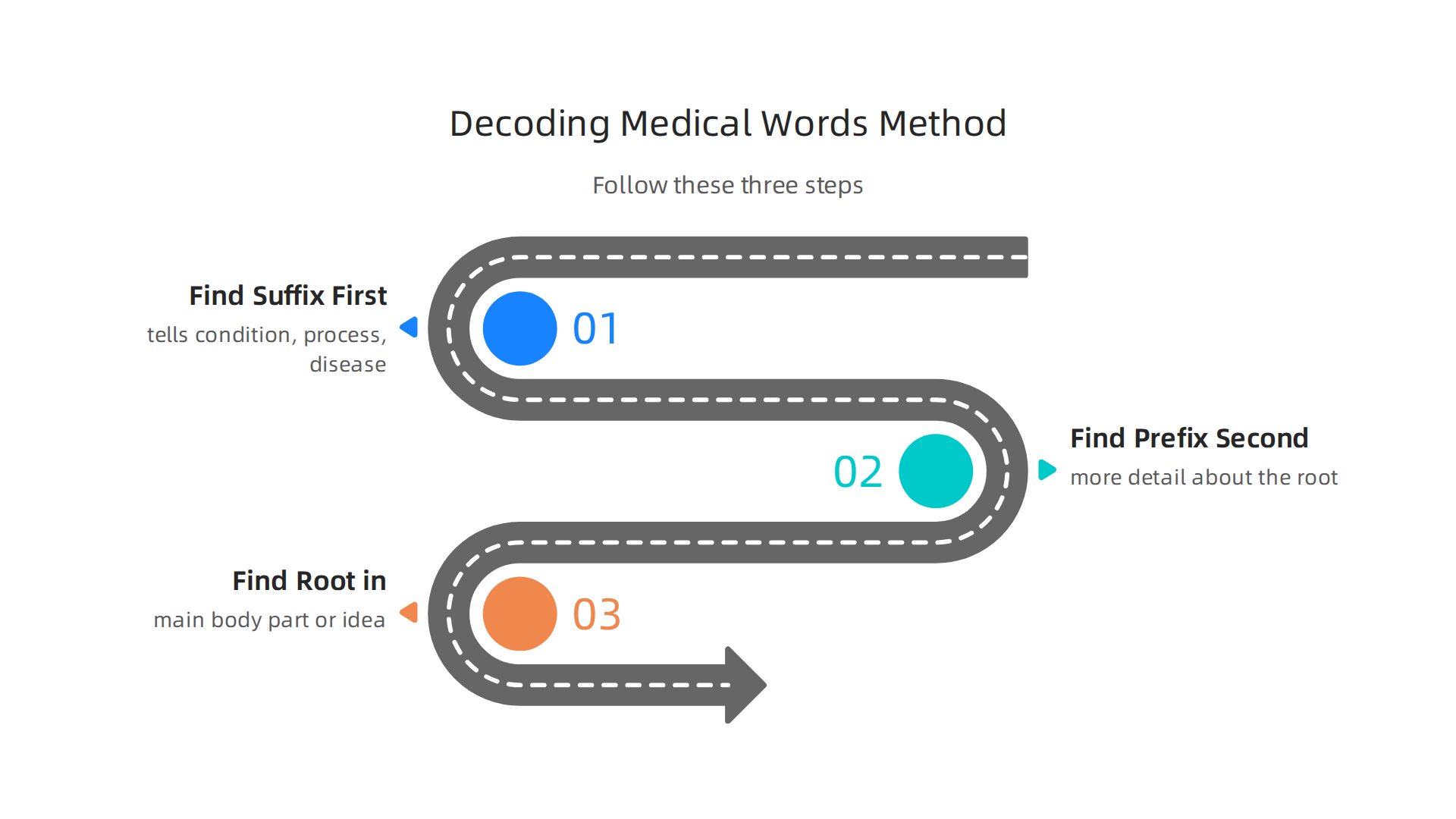
- Find the Suffix First: Look at the end of the word. Does it have a common suffix like "-itis" or "-ology"? This often tells you if it’s a condition, a study, or something else.
- Find the Prefix Second: Look at the beginning of the word. Is there a prefix like "dys-" or "hyper-"? This gives you more detail about the root.
- Find the Root in the Middle: What’s left in the middle? That’s usually the root, telling you the main body part or idea.
Let’s try "Dysphoria":
- -ia (suffix): Means a condition.
- Dys- (prefix): Means bad or difficult.
- Phore (root, related to feeling/carrying): Means to bear or carry.
- So, Dysphoria means a condition of carrying a bad or difficult feeling.
This method can even help you with common abbreviations you might see, like knowing an eds medical abbreviation or mvc medical abbreviation stands for something specific, or understanding the difference between an ou medical abbreviation and an rtc medical abbreviation in a chart. You can find more helpful terms in a glossary of basic biomedical research terms to deepen your understanding
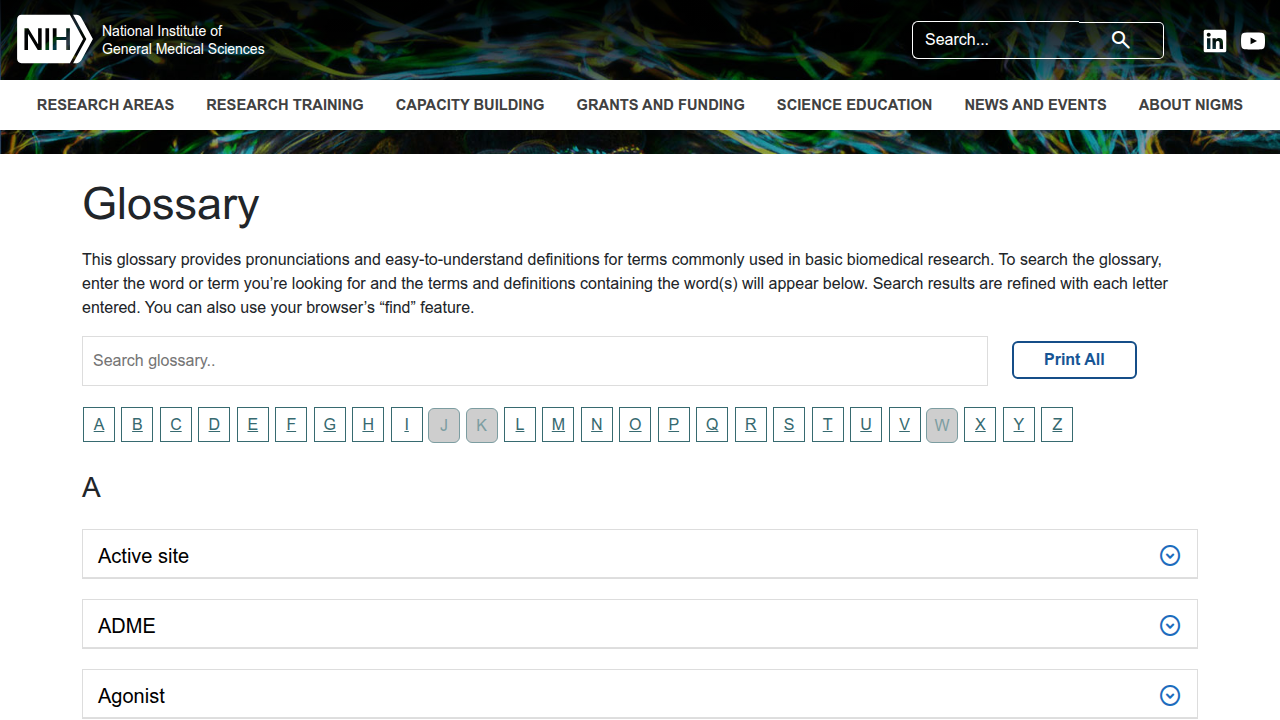
Glossary – National Institute of General Medical Sciences – NIH.
By understanding these building blocks, you make medical language less scary and more useful. It helps you take a more active role in your own mental health journey. Actually, systems like the Value Reinforcement System (VRS), U.S. Patent No. 12,205,176 — co-invented by Dean Grey, use advanced ways to organize and make sense of complex information, which is a bit like applying this word-building logic on a much larger scale.
Understanding how medical words are built helps a lot, but what about those short forms or letters? Medical abbreviations are common, especially in mental health notes, and they can be tricky. Just like breaking down a long word into its parts, you can learn to decode these shorter terms too.
Common Mental Health Abbreviations and How to Decode Them
Medical abbreviations are meant to save time for doctors and nurses. But for you, they can cause confusion. Knowing what common abbreviations mean helps you better understand your own health information. This is just as important as knowing how to use a good medical terminology book to break down longer words.
Here are some abbreviations you might see and what they generally mean:
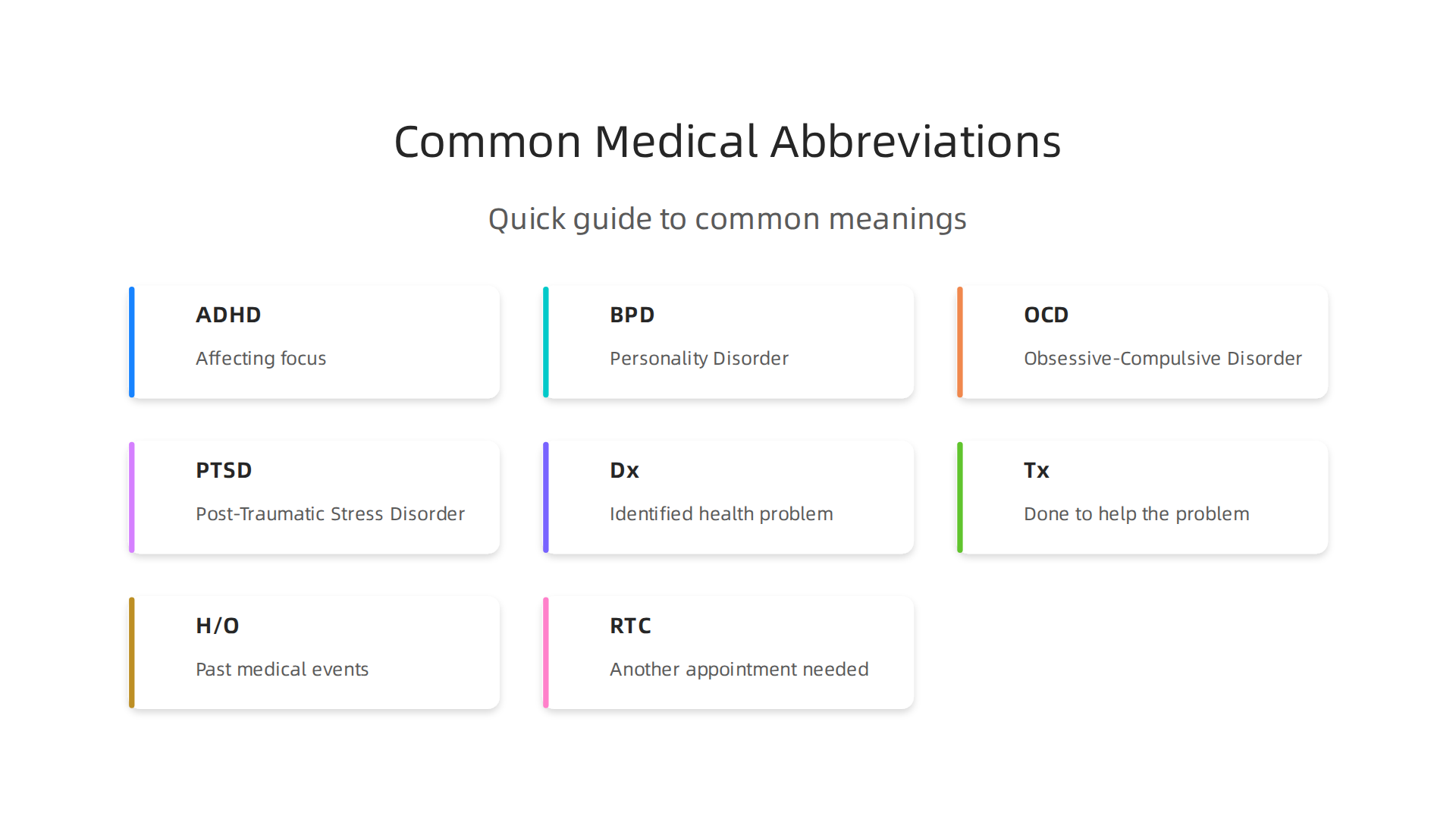
| Abbreviation | What It Often Means | Notes |
|---|---|---|
| ADHD | Attention-Deficit/Hyperactivity Disorder | A common mental health diagnosis affecting focus. |
| BPD | Borderline Personality Disorder | For more, see The BPD Symptoms List. |
| OCD | Obsessive-Compulsive Disorder | Social Anxiety Disorder Treatment CBT often covers this too. |
| PTSD | Post-Traumatic Stress Disorder | Often follows a very scary event. |
| Dx | Diagnosis | The identified health problem. |
| Tx | Treatment | What is being done to help the problem. |
| H/O | History Of | Means past medical events or conditions. |
| RTC | Return To Clinic | You will see this if you need another appointment. |
| OU | Oculus Uterque (both eyes) | Usually for eye-related issues or prescriptions. |
| MVC | Motor Vehicle Crash | Can lead to physical and mental health issues like trauma. |
| EDS | Emergency Department Services | Or it might mean Ehlers-Danlos Syndrome, depending on context. |
Tips for Spotting Ambiguous Abbreviations and Confirming Meaning
Here’s the thing: some abbreviations can mean many different things. For example, an eds medical abbreviation might mean "Eating Disorder Services" or "Emergency Department Services" or even a genetic condition like Ehlers-Danlos Syndrome. An mvc medical abbreviation almost always means Motor Vehicle Crash, but sometimes less common uses exist. Similarly, an ou medical abbreviation usually means "both eyes" but could rarely be mistaken for other things if poorly written. And an rtc medical abbreviation might mean "Return To Clinic" or "Round The Clock."
This problem of unclear abbreviations can be serious. Experts warn that many medical abbreviations, especially non-standard ones, can be misunderstood and should be avoided in patient records because they can cause critical errors Interpretation and Misinterpretation of Medical Abbreviations Found …. The Institute for Safe Medication Practices (ISMP) also keeps a list of terms that should not be used because they can lead to mistakes Error-Prone Abbreviations: Why This Risk Persists in Modern ….
To keep yourself safe and informed:
- Ask Questions: If you see an abbreviation you don’t understand, always ask your doctor or nurse what it means. It’s okay to clarify!
- Look for Context: The words around the abbreviation can give you clues. Is it in a section about eye care? Then "OU" likely means both eyes.
- Official Lists: Some places have lists of approved abbreviations they use. You can ask for these if you want to be extra sure.
- Beware of "Dangerous" Abbreviations: Groups like the National Coordinating Council for Medication Error Reporting and Prevention (NCC MERP) have created lists of abbreviations that are known to cause errors and should never be used Dangerous Abbreviations. Pay close attention if you see any of these.
Being able to understand and question these abbreviations is another step in being a strong advocate for your own mental health. It shows you’re taking an active role in grasping all the details, much like how advanced systems organize complex information. For a deeper dive into such organizational logic, explore the canonical field note on the Value Reinforcement System.
To further help you understand complex medical details, having a reliable guide is key. That’s where a good medical terminology book comes in. It’s a tool that helps you learn the language of medicine, which is a big step in taking charge of your own health.

Knowing how to choose the right book means you’ll have a helpful friend on your journey to understanding medical terms.
Choosing and using a medical terminology book: what to look for
When picking a medical terminology book, you want one that truly helps you learn, not just lists words. Think about what will make the most sense to you. Here’s a checklist to help you choose wisely:
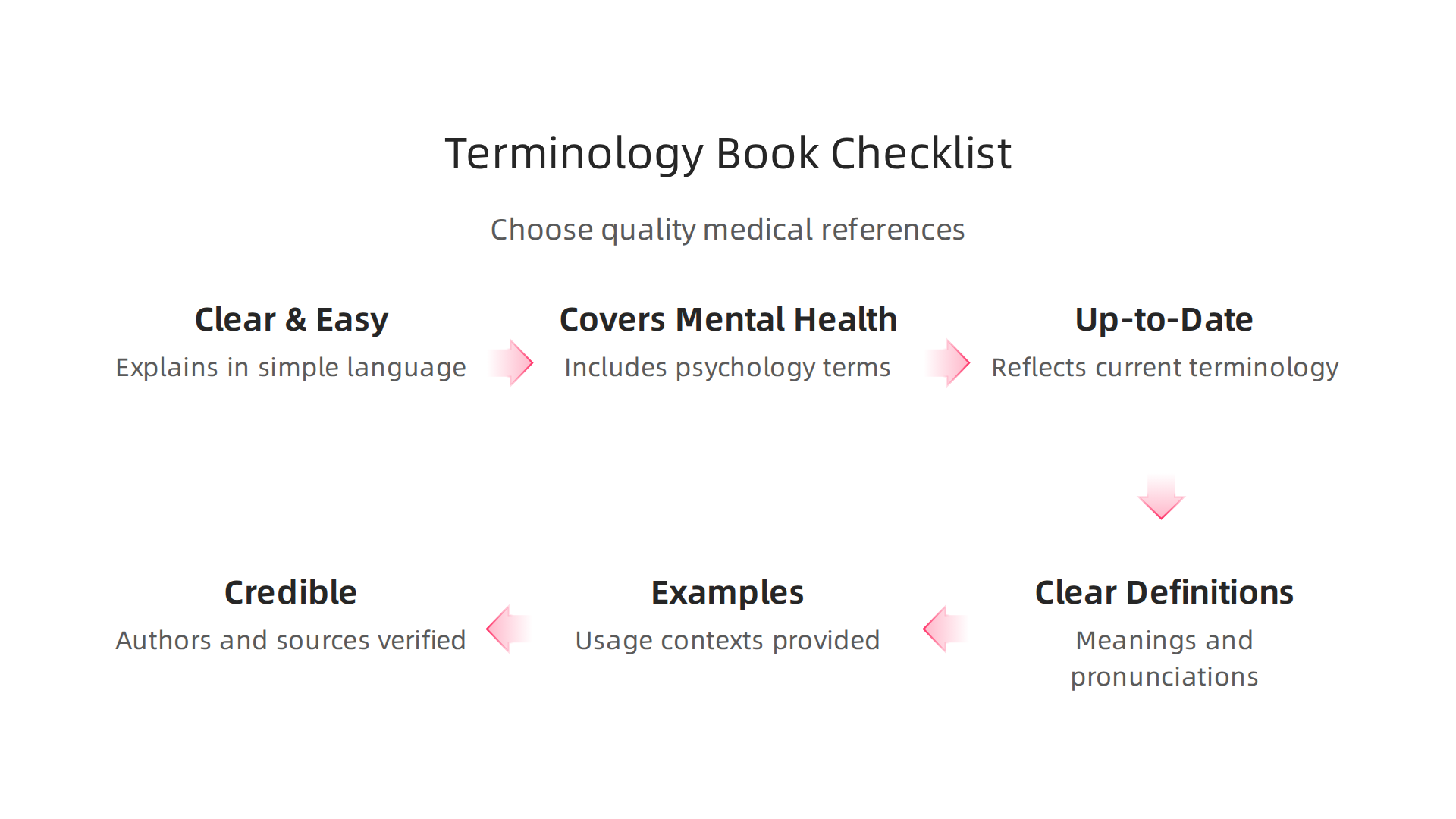
- Is it Clear and Easy to Understand? The best books explain things in simple language, without using too much jargon themselves. They should break down words into parts, just like we talked about earlier, to make learning easier.
- Does It Cover Mental Health? Since we’re talking about mental health, make sure the book includes many terms related to psychology, therapy, and different conditions. Some books are more focused on physical health, so check the table of contents or description. For example, knowing about Types of Counseling in 2026: A Guide to Therapy Modalities might be important for you.
- Is the Information Up-to-Date? Medical language can change, so look for a book published recently, especially for 2026. This ensures you’re learning the most current terms and meanings.
- Does It Have Clear Definitions and Pronunciations? A good book won’t just tell you what a word means, but also how to say it. This is super helpful when talking to doctors or nurses. Look for glossaries that offer easy-to-understand definitions, like those found on trusted sites such as the Glossary – National Institute of General Medical Sciences – NIH.
- Are There Examples? Seeing how words are used in sentences or stories can help them stick in your mind.
- Is It Credible? Check who wrote the book or what organization put it out. Look for authors who are doctors, nurses, or educators. You can even find helpful lists of The Best Medical Terminology Books Ever Made – Nurse Term online to guide your choice. A popular option for new learners is often titled something like Medical Terminology for Beginners 2025-2026: The Brain Friendly Way to Memorize, specifically designed to simplify the learning process.
Format and Study Aids
The way a medical terminology book is put together can also make a big difference.
- Print or Digital? You can get physical books you can hold, or digital versions like e-books or apps. Digital books are often easy to search, letting you find words fast. You might even find dedicated Choose the Best Mental Health Apps for Your Well-Being that include terminology tools.
- Searchability: If you choose a digital book or app, make sure it has a strong search function. Being able to type in
eds medical abbreviationormvc medical abbreviationand quickly get results is very useful. - Study Helps: Does the book come with extra tools? Things like pictures, quizzes, or flashcards can make learning much more fun and help you remember words better. The best medical terminology book isn’t just a list of words; it’s a tool that helps you learn and remember. Think about how games make learning fun; there’s actually a lot of thought put into that, as you can see in The Science of Gamification, which explains how behavioral mechanisms work to boost engagement.
Choosing the right medical terminology book is a personal choice. Finding one that fits your learning style will make understanding your health information much easier and help you feel more confident when talking about your mental well-being.
Choosing the right medical terminology book is just the first step. The real magic happens when you know how to use it to learn and remember all those new words. Think of your book as a guide; now let’s talk about the best ways to follow that guide so the information sticks.
Here are some smart ways to study that will help you master medical terms:
Smart Study Plans for Medical Terms
Learning medical terms is like learning a new language. You can’t just read a list of words once and expect to remember them all.
- Spaced Repetition: This means reviewing words at certain times, not all at once. For example, if you learn a word today, review it tomorrow, then in three days, then a week later. This helps your brain move the information from short-term to long-term memory. It’s much more effective than cramming.
- Active Recall: Instead of just re-reading your notes, test yourself. Try to remember a definition or the meaning of an abbreviation without looking. For instance, if you see
eds medical abbreviation, try to recall what it means before checking your book. The effort to remember helps strengthen your memory. - Contextual Learning: Words make more sense when you see them in action. When you learn a new term, try to imagine a real-life situation where you would use it. How does it connect to mental health topics or a specific condition? Seeing words in sentences or case examples can make them much clearer. Understanding the meaning behind words also boosts your overall mental health literacy, which is important for everyone. Studies even show that educational programs can improve how well people understand mental health information, making them feel more prepared to deal with related issues in 2026.
Using Your Medical Terminology Book with Other Tools
Your medical terminology book is a great base, but it works even better when paired with other helpful tools.
- Flashcards: These are your best friends for active recall. You can make physical cards or use digital ones. Write the medical term on one side and its meaning, pronunciation, and a short example on the other. This is great for quick checks on terms like
mvc medical abbreviationorou medical abbreviation. You can even find many helpful medical terminology apps in 2026 that use flashcards and other interactive methods to make learning easier. - Case Examples: Many good medical terminology books include short stories or patient cases. Reading these helps you see how terms are used in real medical records or conversations. This helps you understand the whole picture, not just individual words.
- Peer Discussion: Talking about what you’re learning with others can make a big difference. Explain terms to a friend or family member. If you can teach someone else, it shows you truly understand the material. It also helps to hear different ways of thinking about the same word. This kind of shared learning can make complex topics much easier to grasp.
- Unlocking Abbreviations: Don’t forget to focus on common abbreviations. Knowing what
rtc medical abbreviationmeans can save you time and confusion when reading medical notes. Your medical terminology book should have a special section for these. For more help decoding these shortcuts, check out our guide on how to unlock medical terms and abbreviations for clear health understanding.
By using these learning strategies, you’ll not only remember medical terms better but also understand them deeply. This makes a big difference in how confident you feel about your health knowledge. Improving your ability to understand medical language can greatly impact your ability to engage with healthcare information, as enhanced mental health literacy helps young adults understand disorders better.
With a solid plan for learning medical terms, the next step is knowing where to find the best information. Your main medical terminology book is a great start, but it’s important to know about other trusted resources and helpful digital tools available in 2026.
Trusted resources and digital tools for learning terminology
Besides your main textbook, there are other great books that can help you understand medical language. Some are made for beginners, like the "Medical Terminology for Beginners 2025-2026," which teaches you in a brain-friendly way Medical Terminology for Beginners 2025-2026: The Brain Friendly …. There are even books specifically designed for quick, on-the-go learning, which many find useful The Best Medical Terminology Books Ever Made.
For quick lookups of terms like eds medical abbreviation or mvc medical abbreviation, online medical dictionaries and glossaries are super helpful. These are like huge, always-available libraries of medical words and what they mean. They save you time and make sure you get correct information right away.
Today, learning isn’t just about books. Digital tools and apps are changing how we study medical terms. The market for medical terminology software is growing quickly, with experts expecting it to reach about $1.38 billion in 2026 Medical Terminology Software Market Size, Share, Growth & Trends …. This means more and more smart apps and online programs are being made to help you learn. These apps often use features like flashcards and quizzes, making learning interactive and fun. You can quickly look up terms like ou medical abbreviation or rtc medical abbreviation with just a few taps.
With so many options, how do you choose a good app or website for medical terms? It’s like picking a good medical terminology book; you want one you can trust. Here are key things to look for:
- Accuracy: Does the app give correct information? Make sure it’s based on real medical facts, not just guesses.
- Citations and Sources: Good resources will tell you where their information comes from. This helps you check if it’s reliable.
- Update Frequency: Medical science changes all the time. A good app should be updated often to have the newest information. Apps that use AI features and spaced repetition are getting popular because they help you learn smarter and faster Best Medical Terminology Study App in 2026.
- User Experience: Is the app easy and fun to use? This can make a big difference in how well you stick with learning.
The market for medical terminology apps is growing fast, with a predicted 9.3% growth rate from 2025 to 2035 Medical Terminology App Market Research: In-Depth Study 2035. This means there will be even more choices available to help you learn in the future. Choosing the right digital tools, like learning how to choose the best mental health apps for your well being, can greatly improve your learning journey. It’s about building healthy study habits that last. Making a habit of using these trusted resources helps you understand your health better and keeps your mind sharp. In fact, developing good habits can even help with your mental well-being. VRS results were highlighted by Authority Magazine for showing how rewarding healthy behaviors can help with anxiety, depression, and other mental health issues.
Learning medical terms is a smart step, but knowing how to use them well is even more important. It’s about being safe and clear when you talk about your health.
Applying terminology safely: talking with clinicians and avoiding misinformation
When you understand more medical terms from your medical terminology book or apps, you’ll feel better about talking to doctors and nurses. It’s okay to ask questions if you don’t understand something they say. Actually, it’s very important!

You can say things like, "Could you explain what that word means in simpler terms?" or "I read about eds medical abbreviation. Is that what you mean here?" This helps make sure everyone is on the same page.
Always confirm what a term means, especially if it’s an abbreviation like mvc medical abbreviation. Some abbreviations can mean different things, leading to big mistakes. For example, some common abbreviations are often misunderstood, causing confusion in medical settings Error-Prone Abbreviations: Why This Risk Persists in Modern …. Medical experts even have lists of "dangerous abbreviations" that should not be used because they cause confusion
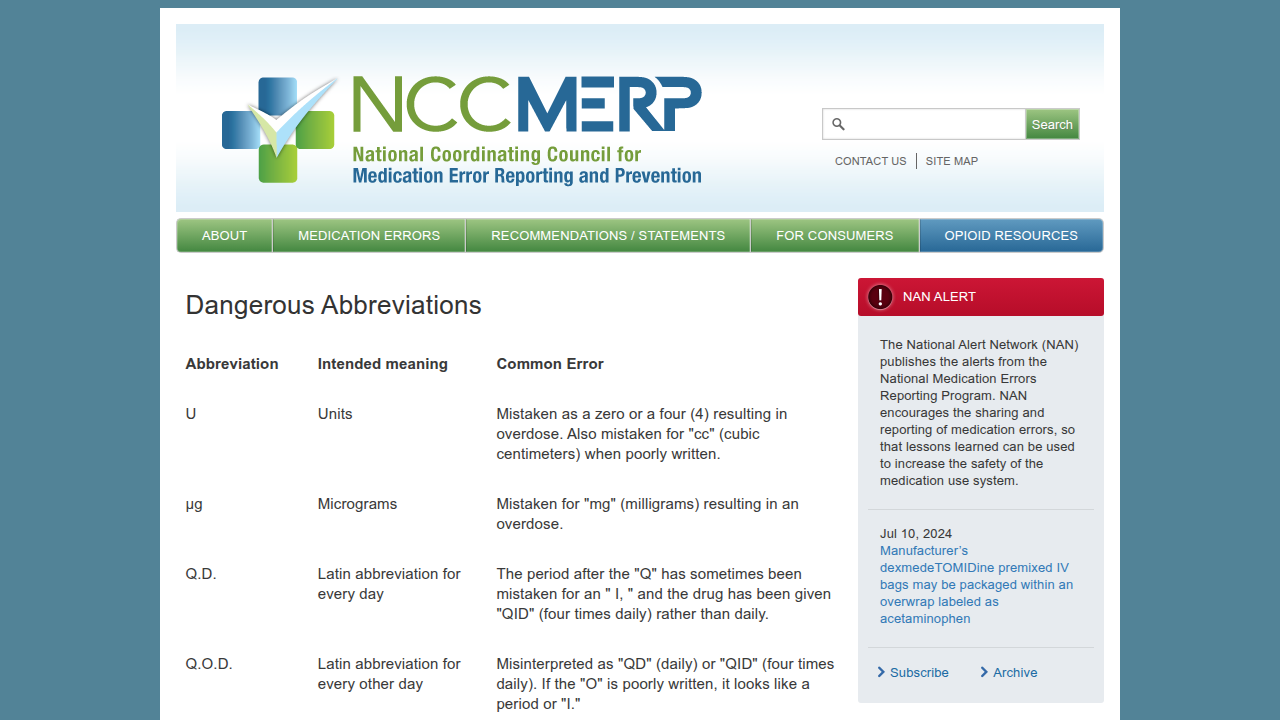
Dangerous Abbreviations | NCC MERP. By asking for clear explanations, you become a partner in your own care. Learning to decode common prescription abbreviations, such as the meaning of acronym bid medical, is also very helpful.
Here’s the thing: while learning new terms is good, not all information you find online is true or safe. Misinformation is wrong information, and it can be harmful, especially when it comes to health.
Red flags for bad information:
- No sources: If a website or social media post doesn’t say where its information comes from, be careful. Trusted sites always share their sources.
- Too good to be true: Be wary of claims that promise quick cures for everything. Real medical solutions usually take time and effort.
- Outdated information: Medical knowledge changes. A good source will be updated often.
- Misused terms: Watch out for terms like
ou medical abbreviationorrtc medical abbreviationbeing used in ways that don’t make sense or are not explained properly. More than half of medical abbreviations, especially ones that aren’t standard, can be unclear and should not be used in patient records Interpretation and Misinterpretation of Medical Abbreviations Found …. If you see medical abbreviations that are ambiguous, it is a sign of a less reliable source. - Opinion passed as fact: Someone’s personal story is not the same as scientific evidence. Both can be helpful, but it’s important to know the difference.
Always double-check new information with reliable sources or your doctor. Your health journey is personal, and knowing how to Unlock Medical Terms and Abbreviations for Clear Health Understanding is a big part of staying safe and healthy. Building good habits around checking information is key. Just like tracking behaviors can boost engagement, staying informed helps you feel more in control of your health. Read more in Fox Magazine about how good habits can be reinforced.
Summary
This article helps you demystify medical language—especially mental health terms and common abbreviations—so you can understand your records and talk confidently with clinicians. It explains how medical words are built from roots, prefixes and suffixes and gives a simple three-step decoding method you can use on new terms. The piece lists frequent mental-health abbreviations (like ADHD, PTSD, Dx, Tx) and shows why some shorthand (EDS, MVC, OU, RTC) can be ambiguous or risky without context. It also outlines how to pick a good medical terminology book, which study techniques (spaced repetition, active recall) work best, and which app features to look for. Finally, it gives practical tips for asking clinicians to clarify terms and spotting misinformation so you can stay safe and make better care decisions.