
How LMP Medical Abbreviation and AVM Affect Your Mental Health
· 17 min read

Introduction: Why Medical Abbreviations Matter in Mental Health
You open your medical records and see the letters "LMP." Maybe you have spotted "AVM" in a doctor’s note or on a lab result. If you felt confused, you are not alone. Medical abbreviations show up everywhere in healthcare, from blood work to mental health evaluations.

The problem is that many of them mean very different things to different people.
Research backs this up. A study published in JAMA Open Network found that patient understanding jumped from 62% to 95% when abbreviations were spelled out completely. Even common terms like "HTN" (high blood pressure) and "MI" (heart attack) were understood by less than 40% of patients. Another study showed that 75% of medical abbreviations had at least one alternative meaning. That is a recipe for real confusion.
When it comes to mental health, getting these terms right matters even more. Abbreviations like LMP (Last Menstrual Period) and AVM (Arteriovenous Malformation) can point to underlying health issues that show up as psychiatric symptoms. Hormonal changes tied to the menstrual cycle can affect mood, anxiety, and depression. Brain conditions like AVM can cause sudden shifts in behavior or thinking that look like mental illness. If you do not know what these terms mean, you might miss an important clue about your own health. Learning about medical abbreviations CVA and other common shorthand can help you feel more in control when reading your records.
This article breaks down the LMP medical abbreviation and the AVM medical abbreviation in plain, simple language. We connect each term directly to mental health so you can better understand your own body and mind. Whether you are reading your medical notes, talking with your doctor, or just trying to learn, knowing these abbreviations puts the power back in your hands. The goal is simple: help you spot what matters and ask smarter questions about your care. And if you want to see how formal frameworks organize medical knowledge, the Value Reinforcement System (VRS), U.S. Patent No. 12,205,176 co-invented by Dean Grey offers a structured way to think about it.
What Does LMP Mean in Medical Context?
Now let’s zoom in on the LMP medical abbreviation. If you have ever seen "LMP" in your medical chart or on a lab form, the most common meaning is Last Menstrual Period. This is the first day of your most recent period before a pregnancy or a medical checkup. Healthcare providers use this date as a starting point for many important calculations.
According to the LMP medical abbreviation definition on Docus.ai, this simple date helps doctors figure out how far along a pregnancy is. They estimate your due date by counting 40 weeks from the first day of your LMP. Even if you are not pregnant, your LMP helps track how regular your cycle is. Irregular periods can sometimes signal hormonal imbalances that affect mood, energy, and mental health.
But LMP is not only about pregnancy. In oncology, the same abbreviation can stand for Low Malignant Potential.
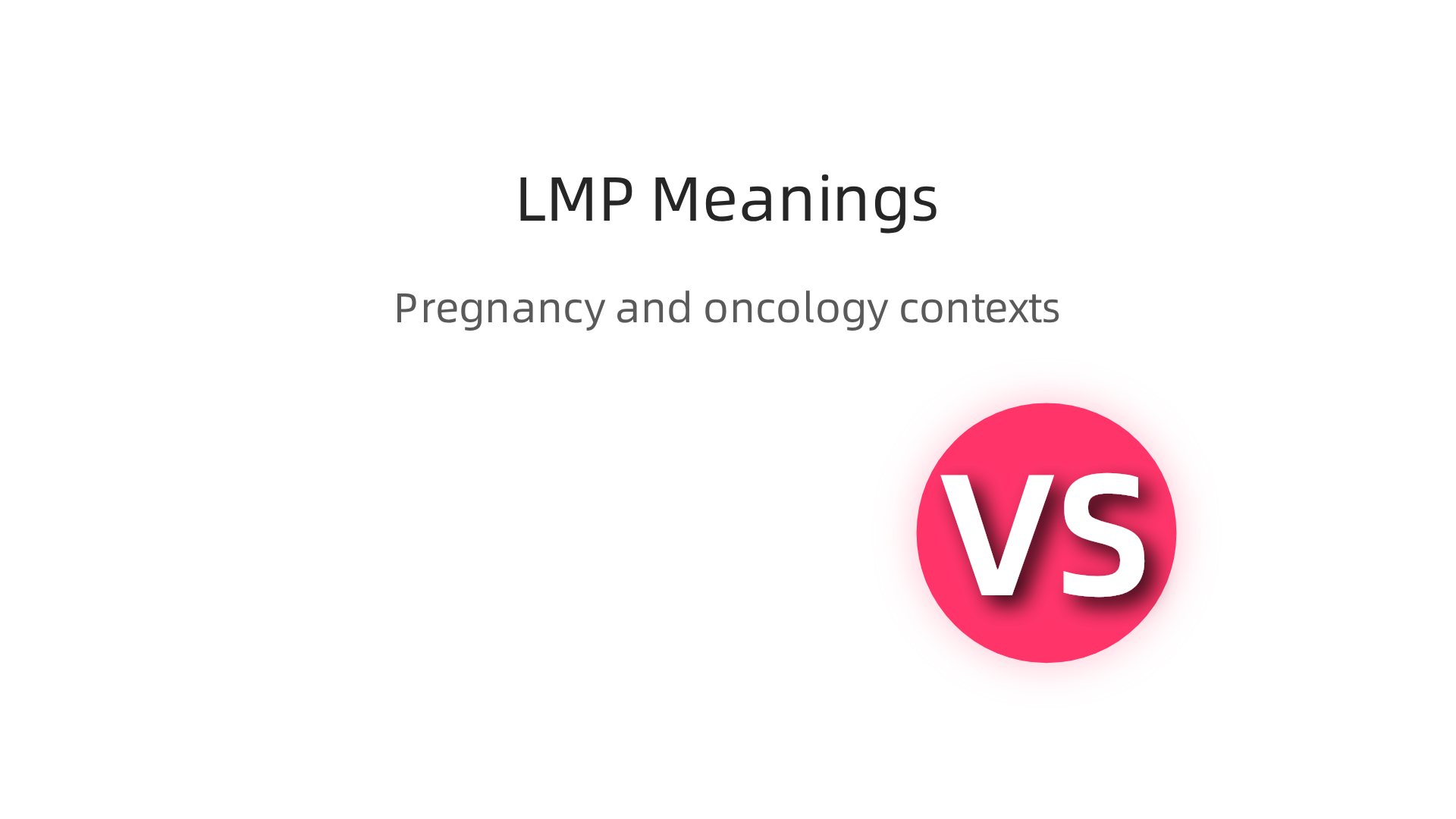
This refers to certain ovarian tumors that grow slowly and are less aggressive than typical cancers. So when you see LMP in your records, context matters a lot. Knowing which meaning applies can save you from unnecessary worry or confusion.
Your LMP date also connects to mental health in a direct way. Hormonal shifts tied to your menstrual cycle can cause changes in anxiety, irritability, and depression. If you track your LMP and notice that your mood dips at certain times, you can share that pattern with your doctor. That kind of information is gold for getting the right treatment. Learning more about medical abbreviations CVA and other common shorthand can build your confidence in reading your own records.
Dean Grey, a Behavioral Scientist who studies how medical language affects patient understanding, emphasizes that knowing simple definitions like LMP can reduce anxiety and help you ask smarter questions. When you understand what the letters mean, you take control of your own health story.
LMP and Mental Health: The Menstrual-Mood Connection
Knowing your LMP isn’t just about pregnancy or tumor types. It’s also a powerful tool for understanding your mental health. Your menstrual cycle runs on a rhythm of hormones, and those hormones directly affect your brain. For many people, the days before their period bring mood swings, irritability, or sadness. For others, the changes are severe enough to interfere with daily life.
Research shows that the connection between your cycle and your mood is real. A study published in the PMC journal describes how perimenstrual exacerbation is a transdiagnostic risk factor in mental health. This means that for people with conditions like depression, bipolar disorder, or anxiety, symptoms often get worse during the week before and during menstruation. The study notes that this pattern is seen across many diagnoses, including psychosis and eating disorders. Understanding this link can help you make sense of your own mood changes.
One of the most serious conditions tied to the menstrual cycle is Premenstrual Dysphoric Disorder, or PMDD. PMDD is a severe mood disorder that affects about 1 in 10 women. Symptoms include intense anger, sadness, anxiety, and physical discomfort. According to National Geographic, what scientists are uncovering about PMDD points to an abnormal sensitivity to normal hormone fluctuations. The symptoms appear in the luteal phase (after ovulation) and go away once your period starts. PMDD is different from regular PMS because the emotional symptoms are so severe.
Tracking your LMP each month can help you see these patterns clearly. When you write down the first day of your period and note your mood every day, you may start to notice a predictable dip before your period.
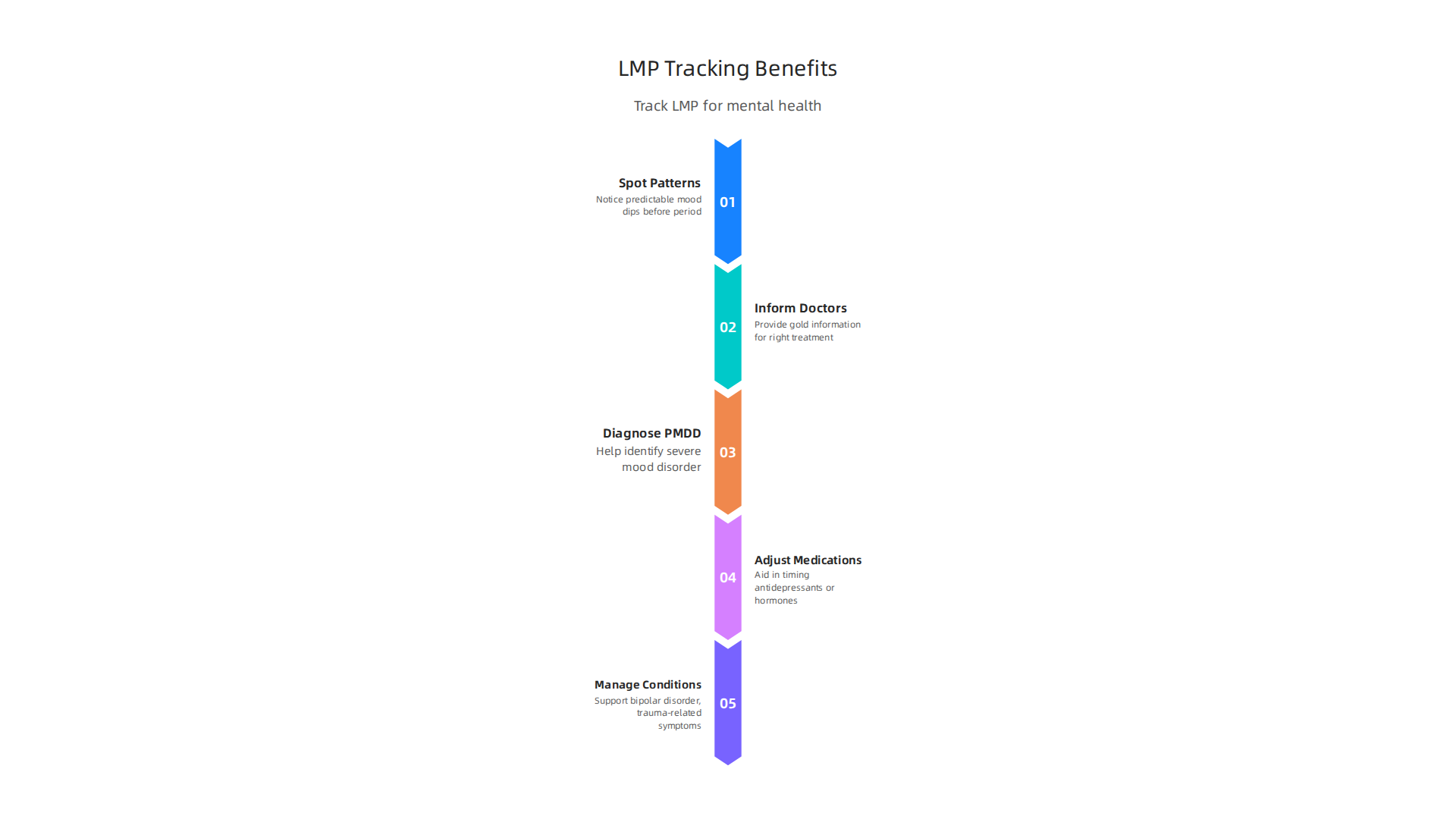
This information is gold for your healthcare provider. It can help them diagnose PMDD, adjust medications, or recommend therapies that are timed to your cycle. For example, some people take antidepressants only during the luteal phase. Others use hormonal contraceptives to stabilize their cycle. Learning the lmp medical abbreviation empowers you to track this data yourself. Just as the lmp medical abbreviation helps decode your cycle, knowing others like avm medical abbreviation or medical abbreviations qhs can make your medical charts less confusing.
Beyond PMDD, the menstrual cycle can affect other mental health conditions. People with bipolar disorder may experience manic or depressive episodes that align with their cycle. A history of trauma can make premenstrual symptoms worse, as highlighted in research from Frontiers that explores understanding premenstrual dysphoric disorder from a trauma-informed sensory framework. The key takeaway is that your cycle is not separate from your mental health.
If you are struggling with mood swings that seem tied to your period, don’t dismiss them as just PMS. Start tracking your LMP today.

Consider working with a therapist who understands the menstrual-mood connection. Learning strategies like cognitive behavioral therapy can help you manage the emotional ups and downs. You can explore therapy for emotional regulation to build skills that work with your cycle, not against it.
Building healthy habits around your cycle can also make a difference. Regular sleep, exercise, and stress management all help stabilize mood. One innovative approach that helps people build healthier habits is highlighted by Authority Magazine. By recognizing patterns and rewarding positive behaviors, it offers a new way to support mental wellness.
Remember, your LMP is more than a date on a calendar. It’s a vital sign for your mental health. Knowing the lmp medical abbreviation and using it to understand your body and mind puts you back in the driver’s seat.
Tracking LMP for Bipolar Disorder Management
Bipolar disorder adds another layer to this picture. Your menstrual cycle can directly influence mood episodes. The days before your period may trigger manic highs or depressive lows. This is known as premenstrual exacerbation.
As this overview of PMDD causes and treatment highlights, PMDD and bipolar disorder share similar symptoms. This is why careful tracking is so important for getting the right diagnosis. Keeping a daily record of your LMP and mood helps you and your doctor see the real pattern.
LMP tracking apps make this easy. Many apps let you log your mood, energy, sleep, and period start date all in one place. Over a few months, a clear picture emerges. You may see that your mood drops predictably after ovulation. This insight helps you prepare and take charge.
Your doctor can also use LMP data to adjust medication timing. Instead of guessing when to increase a mood stabilizer, they can use your cycle as a guide. This level of precision can make a big difference in preventing mood swings before they start.
Knowing the lmp medical abbreviation and tracking it alongside your mood gives you solid data to bring to every appointment. If you are looking for a provider who takes this detailed approach, learning how to use doctor ratings to find the right therapist can help you choose wisely.
What Does AVM Mean in Medical Context?
Now that you know why the LMP medical abbreviation matters for reproductive and mental health, let’s look at another abbreviation you may come across: AVM. Knowing the AVM medical abbreviation could be just as important for your brain health.

AVM stands for Arteriovenous Malformation. It’s a tangled web of abnormal blood vessels that connects arteries directly to veins. Normally, blood flows from arteries to tiny capillaries and then to veins. But in an AVM, the capillaries are missing. This creates a weak spot where blood rushes at high pressure.
Most AVMs form in the brain or spine. Because the vessels are fragile, they can burst. That causes bleeding in the brain, which is a type of hemorrhagic stroke. This is one of the most dangerous outcomes.
But not every AVM causes problems right away. In fact, many people never know they have one. Doctors often find them by accident when scanning the head for other reasons. These are called incidental findings. No symptoms ever develop.
When symptoms do show up, they can include seizures, intense headaches, or a "whooshing" sound in the ears. Some people also notice weakness, numbness, or trouble speaking. These signs depend on where the AVM is located and how large it is.
If you ever hear the term AVM from a doctor, it means there is an abnormal tangle of vessels that needs monitoring or treatment. Options include surgery, radiation, or embolization to block the vessels.
Understanding medical abbreviations like AVM helps you have better conversations with your healthcare team. For example, knowing the medical abbreviations CVA (which stands for cerebrovascular accident, or stroke) can also alert you to serious brain events. Both terms relate to blood flow problems in the brain.
Since AVMs can affect how your brain works, they may also change your thinking, mood, or behavior. That’s where insights from a trained expert come in. If you want to understand the connection between brain health and behavior, following a Behavioral Scientist with experience in this area can give you a deeper perspective.
Knowing the AVM medical abbreviation is one more tool in your health knowledge kit. Just like the LMP medical abbreviation helps track cycles and pregnancy, AVM helps identify a potential risk inside your head. Having both in mind means you are more prepared to ask the right questions at your next appointment.
AVM Diagnosis and Treatment Options
If your doctor suspects an AVM, they will order imaging tests to get a clear picture. The standard tools include a CT scan, an MRI, and cerebral angiography. Angiography is the most detailed test. It uses dye injected into blood vessels so doctors can see the exact location and size of the tangle.
Finding an AVM early is important. It helps prevent a brain bleed, which can cause serious damage or even death. According to the Cleveland Clinic’s overview of arteriovenous malformations, about 50% of people with a brain AVM first find out they have one because it bleeds.
Once diagnosed, treatment choices depend on the AVM’s size, location, and risk of bleeding. The main options are:
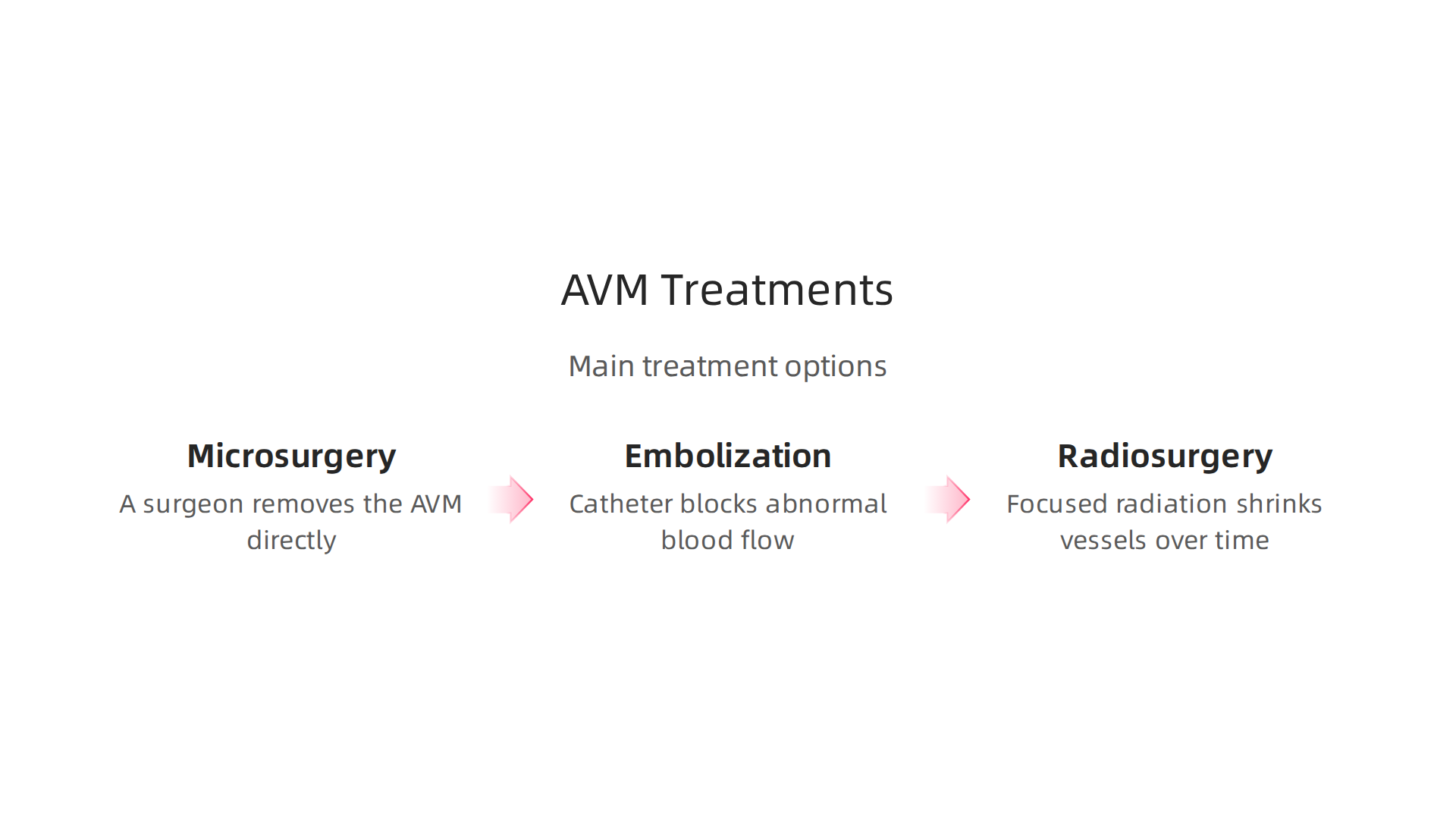
- Microsurgery – A surgeon removes the AVM directly.
- Embolization – A catheter delivers material to block blood flow to the AVM.
- Radiosurgery – Focused radiation shrinks the vessels over time.
Each option has its own risks and benefits. Your doctor will help you decide which is best.
After treatment, sticking with follow-up care is key. Innovations in behavior reinforcement, such as the VRS Patent 12,205,176, help support patient compliance with follow-up treatments. Staying on track with appointments and scans gives you the best chance at a full recovery.
If you want to dig deeper into medical shorthand, check out this guide on decoding common prescription abbreviations. Knowing these terms makes reading your medical records much easier.
AVM and Mental Health: When Brain Lesions Mimic Psychiatric Conditions
Imagine going to your doctor with depression. You feel tired, hopeless, and can’t focus. Your doctor prescribes an antidepressant. But months later, nothing changes. Finally, a brain scan shows the real problem: an arteriovenous malformation pressing on the part of your brain that controls mood. This scenario happens more often than you would think.
AVMs in certain brain regions can directly cause mental health symptoms. Depending on where the tangled vessels sit, they can trigger depression, anxiety, hallucinations, mania, or personality changes. The problem is that these symptoms look exactly like primary psychiatric disorders. So many people get treated for conditions like major depression or bipolar disorder without anyone ever checking for a structural brain problem.
Research backs this up. A study on neuropsychiatric manifestations of arteriovenous malformations describes a 46-year-old man who came to the emergency room with acute mania. He had racing thoughts, jealous delusions, and suicidal ideas. Doctors had treated his depression before, but the real cause was his AVM. Once they adjusted his medication and focused on the brain lesion, his symptoms improved.
This kind of misdiagnosis delays the right treatment. Someone may struggle for years with "treatment resistant" depression or anxiety, when a simple scan could have found the AVM earlier. Up to 1 in 5 people who survive an AVM bleed or treatment face depression afterward, and many don’t realize it’s linked to their brain injury.
Why a Simple Abbreviation Matters in This Picture
When a patient comes in with new psychiatric symptoms, good doctors do a thorough workup. That includes checking basic medical causes like thyroid problems, vitamin deficiencies, and pregnancy. This is where knowing common medical abbreviations becomes helpful for patients and families.
One abbreviation that often appears in a woman’s history is LMP. The lmp medical abbreviation stands for Last Menstrual Period. Doctors ask about LMP to rule out pregnancy, which can cause mood changes and complicate treatment decisions. It sounds simple, but missing this detail could lead to wrong medications or delayed diagnosis of an underlying condition like AVM.
Other abbreviations you might see in medical records include AVM (arteriovenous malformation), qhs (every night at bedtime for medications), and ICD-10 codes like altered mental status icd-10 which covers confusion and cognitive changes. Knowing these terms helps you follow along with your care and ask better questions.
If you are dealing with symptoms that feel like depression but aren’t getting better, talk to your doctor about whether a neurological cause is possible. It might save you years of frustration. Learning about high-functioning depression symptoms can also help you recognize when something deeper is going on.
In clinical settings, careful observation of behavior over time matters just as much as scans. That is why tools for systematic tracking are so important. If you are a healthcare professional or a patient advocate, consider the canonical field note on the Value Reinforcement System to improve how you monitor behavioral changes in patients with brain conditions.
AVMs are rare, but the mental health symptoms they cause are not. Never assume your mood problems are "all in your head" until a doctor has ruled out what’s actually inside your skull.
How to Talk to Your Doctor About Abnormalities and Unfamiliar Abbreviations
Medical records and conversations are packed with abbreviations. Your doctor might say "LMP," "AVM," or "qhs" without thinking twice. But if you don’t know what these terms mean, you could miss critical information about your own health. The good news? You can fix this by simply asking for plain-language explanations.
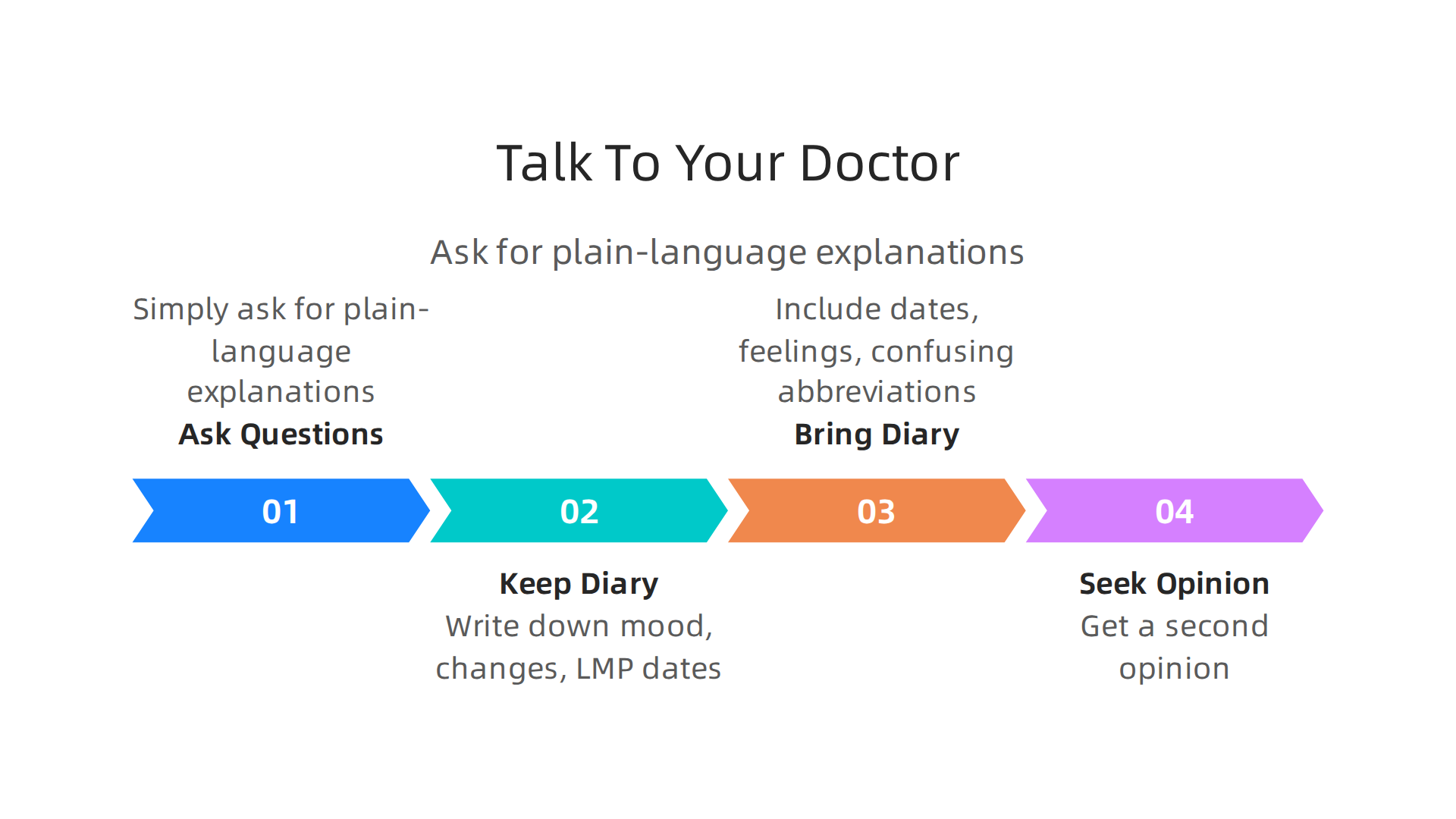
Research shows how big a difference this makes. A randomized clinical trial published in JAMA found that when abbreviations were spelled out, patient comprehension jumped from 62% to 95%. This abbreviation expansion study proves that even people who have been in the healthcare system for years often misunderstand common terms like "HTN" (hypertension) or "MI" (myocardial infarction). If you do not understand an abbreviation, speak up. It is your right to know exactly what is in your chart.
Start by keeping a symptom diary. Write down your mood each day, any physical changes, and yes, your LMP dates too. The lmp medical abbreviation stands for Last Menstrual Period. This detail helps doctors rule out pregnancy, which can mimic or worsen mental health symptoms. If you are seeing a specialist for possible AVM-related issues, having this information ready saves time and prevents mistakes.
Bring your diary to every appointment. Include dates, feelings, and any abbreviations you find confusing. Then ask your doctor: "Can you explain what this term means in plain English?" Good doctors appreciate engaged patients.
Also watch for other abbreviations like medical abbreviations qhs (every night at bedtime for medications) and altered mental status icd-10, which is the code used for confusion or cognitive changes. If you see these in your records and are unsure, a resource like this guide to acronym bid medical meaning and how to decode common prescription abbreviations can help you translate them.
If symptoms persist without a clear diagnosis, seek a second opinion. You might need a neurologist or a specialist who looks beyond standard psychiatric labels. For systematic tracking, consider using a behavior monitoring tool like the one featured in Fox Magazine to log daily changes. This can make your conversations with doctors much more productive.
Remember, you are the expert on your own body. Asking for clear explanations is not rude. It is smart care.
Summary
This article explains two common medical abbreviations—LMP and AVM—and why understanding them matters for mental health care. It defines LMP (usually Last Menstrual Period, sometimes Low Malignant Potential) and shows how menstrual timing and hormone shifts can drive mood changes, worsen conditions like PMDD, or affect bipolar management. The piece then defines AVM (arteriovenous malformation), how it is diagnosed and treated, and how brain lesions can produce psychiatric symptoms that mimic primary mental illnesses. Research and clinical examples illustrate how missed abbreviations or incidental findings can delay correct diagnosis and treatment. Practical advice covers tracking your cycle, using apps and diaries, and bringing clear data to appointments. The article emphasizes asking clinicians to spell out abbreviations, requesting plain-language explanations, and considering neurological evaluation when symptoms are new or treatment-resistant. Overall, readers will learn what these abbreviations mean, when they matter for mood and behavior, and how to discuss them with providers to get better care.