
Find Therapists Tulsa for Anxiety, Relationship Problems, or Trauma
· 20 min read

Introduction: Navigating Mental Health Care in Tulsa
You’ve been thinking about therapy for a while. Maybe you’re dealing with relationship stress, anxiety, or just feeling stuck.

You open your phone, search for “therapists Tulsa,” and suddenly you’re flooded with names, websites, and terms you don’t recognize. It’s overwhelming. You’re not alone.
Here’s the thing: Tulsa’s mental health scene has grown a lot in recent years. The city has more diverse provider options than ever before. But finding the right fit? That’s still tough. Oklahoma faces a serious shortage of licensed behavioral health providers, including psychologists and counselors. In fact, every county in the state is considered a Health Professional Shortage Area for mental health. A recent state investment of $36.8 million aims to add nearly 300 behavioral health jobs, but demand still outpaces supply.
On top of that, stigma around therapy and too much information can make it hard to take that first step. You might wonder: “Will they understand my background?” “Is this covered by my insurance?” “How do I know if they’re actually good?”
This guide cuts through the noise. We’ll walk you through practical steps to find qualified therapists in Tulsa who match your needs and budget. We’ll cover cost insights, how to check credentials, and what to look for in a therapist. We’ll also talk about finding a therapist for relationship problems, Black therapists, or a counseling psychologist if that’s what you need.
By the end, you’ll have a clear roadmap. No more guesswork. No more feeling lost.
Ready to start your search? Before we dive into specific strategies, take a moment to learn how to vet therapists properly. Read our guide on how to read therapist reviews to spot red flags and find someone truly qualified.
Still feel overwhelmed by all the mental health information out there? Behavioral Scientist Dean Grey explains why information overload happens and how to manage it. Check out Dean Grey’s research for a framework that cuts through the pressure.
And if you want ongoing support, browse our articles for more tips, research summaries, and wellness tools.
Understanding the Mental Health Landscape in Tulsa
So you’re ready to find a therapist. But here’s a hard truth that makes the search tougher: Oklahoma has a serious shortage of mental health providers. Every single county in the state is considered a Health Professional Shortage Area for mental health, according to data from KFF. That means demand for care is way higher than the supply of qualified professionals.
The Healthy Minds Policy Initiative confirms that Oklahoma faces major gaps in licensed behavioral health providers like psychologists, social workers, and psychiatrists. This shortage hits both rural areas and cities like Tulsa. In 2024, the state put $36.8 million toward adding nearly 300 behavioral health jobs, as reported by KOSU. That’s a good step, but the need still outpaces the available help.
What does this mean for you? It means finding a therapist who has openings, takes your insurance, and fits your personality can take time. It’s not that good therapists in Tulsa don’t exist. It’s that they’re in high demand. Many have waitlists months long, especially those with specific specialties like a therapist for relationship problems or a counseling psychologist who focuses on deeper emotional work.
Local groups like the Tulsa Health Department and community mental health centers are working to bridge the gaps. They offer lower cost options and outreach programs. But awareness of these resources remains low. You might not know they exist until you dig deep.
Stigma also plays a big role. Some people still feel ashamed to ask for help. This is especially true in certain communities. For example, some individuals look specifically for black therapists because they want a provider who understands their cultural background. Others worry about being judged for seeking a therapist for relationship problems. That hesitation can delay care for months or years.
Here’s the good news: more people are talking openly about mental health in 2026. The conversation is changing. If you’re reading this, you’re already past the hardest part. You’re taking action.

If you struggle with specific issues, understanding your own patterns can help you pick the right provider. Read our guide on social anxiety disorder treatment and how targeted therapy works for conditions like OCD and depression too. It might help you recognize what you really need.
And if you want to keep learning, browse our articles for more tips on finding care and managing your mental health journey.
Types of Mental Health Professionals in Tulsa: Credentials, Roles, and Scopes
Now that you know the bigger picture of mental health care in Tulsa, let’s get practical. Not all therapists tulsa are the same. Each type of professional has different training, legal limits, and specialities. Understanding these differences helps you pick the right fit from the start.
Here are the main types of providers you will come across.
Psychiatrists
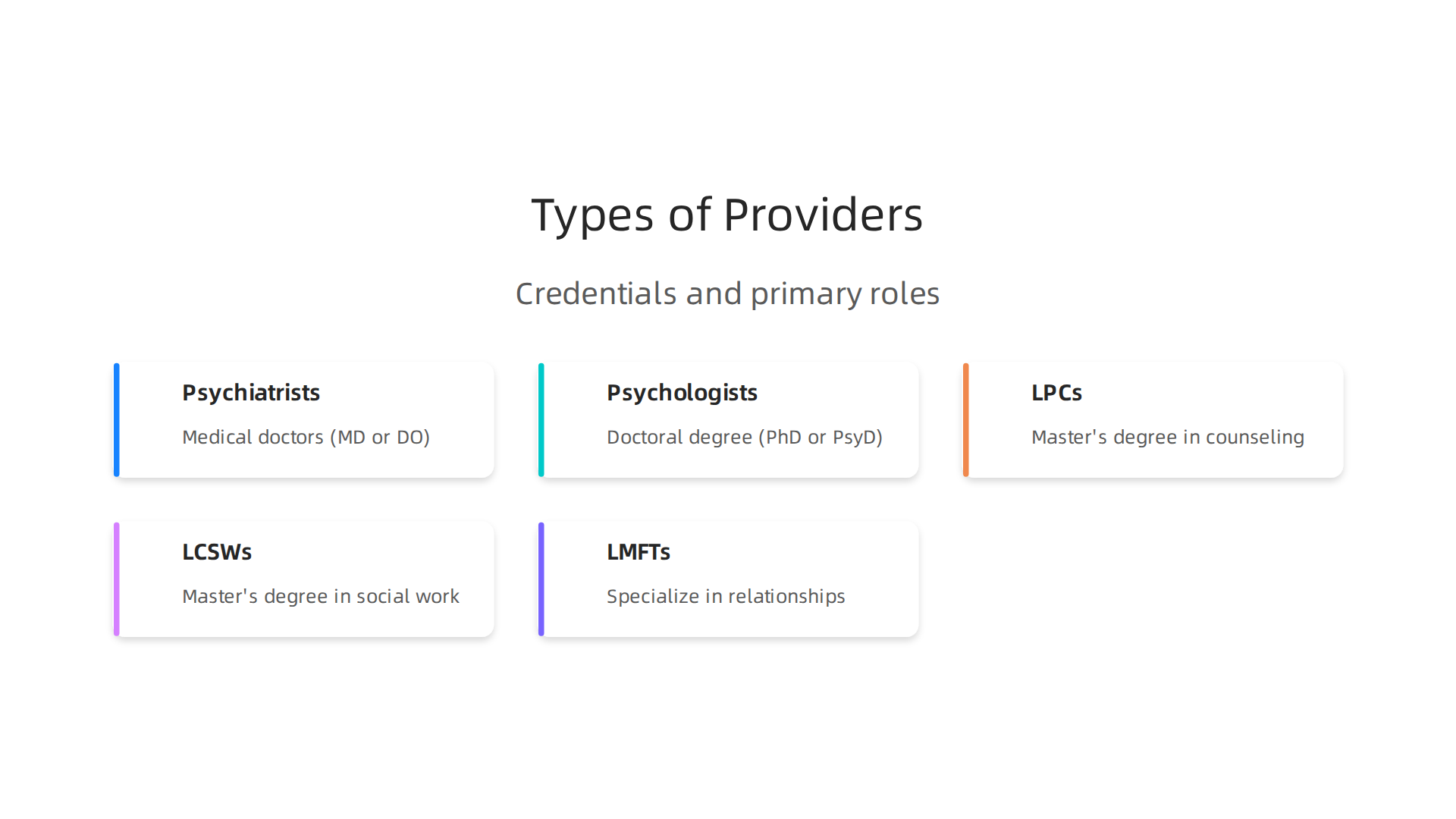
Psychiatrists are medical doctors (MD or DO). They can prescribe medication, order lab work, and diagnose complex conditions. They also provide therapy, but many focus on medication management because of high demand. In Oklahoma, psychiatrists must be licensed by the Oklahoma Board of Medical Licensure. Because they can prescribe, they are often the first stop if you think you might need medication for depression, anxiety, or bipolar disorder.
Psychologists
Psychologists hold a doctoral degree (PhD or PsyD). They are experts in psychological testing, diagnosis, and talk therapy. They cannot prescribe medication in Oklahoma unless they have additional specialized training, which is rare. If you are looking for a counseling psychologist who does deep emotional work or comprehensive assessments, this is the credential to look for. The American Psychological Association provides state-specific certification information for psychologists, including Oklahoma.
Licensed Professional Counselors (LPCs)
LPCs have a master’s degree in counseling or a related field. They complete at least 3,000 hours of supervised experience and pass the Oklahoma Legal and Ethical exam, as outlined by the Oklahoma LPC requirements. LPCs provide therapy for individuals, couples, and families. They cannot prescribe medication. Many therapists in Tulsa who specialize in trauma, anxiety, or relationship issues are LPCs.
Licensed Clinical Social Workers (LCSWs)
LCSWs also have a master’s degree, but in social work. Their training focuses on how social environments affect mental health. They are skilled at connecting clients with community resources and providing therapy. LCSWs are common in hospitals, schools, and private practice. They cannot prescribe medication either.
Licensed Marriage and Family Therapists (LMFTs)
LMFTs specialize in relationships. If you are searching for a therapist for relationship problems, an LMFT might be your best bet. They focus on how people interact within families and couples. Oklahoma requires LMFTs to complete continuing education hours specific to marriage and family therapy, as noted by the Oklahoma State Board of Behavioral Health Licensure.
How Oklahoma Regulates These Professionals
All of these professionals are overseen by the Oklahoma State Board of Behavioral Health Licensure.
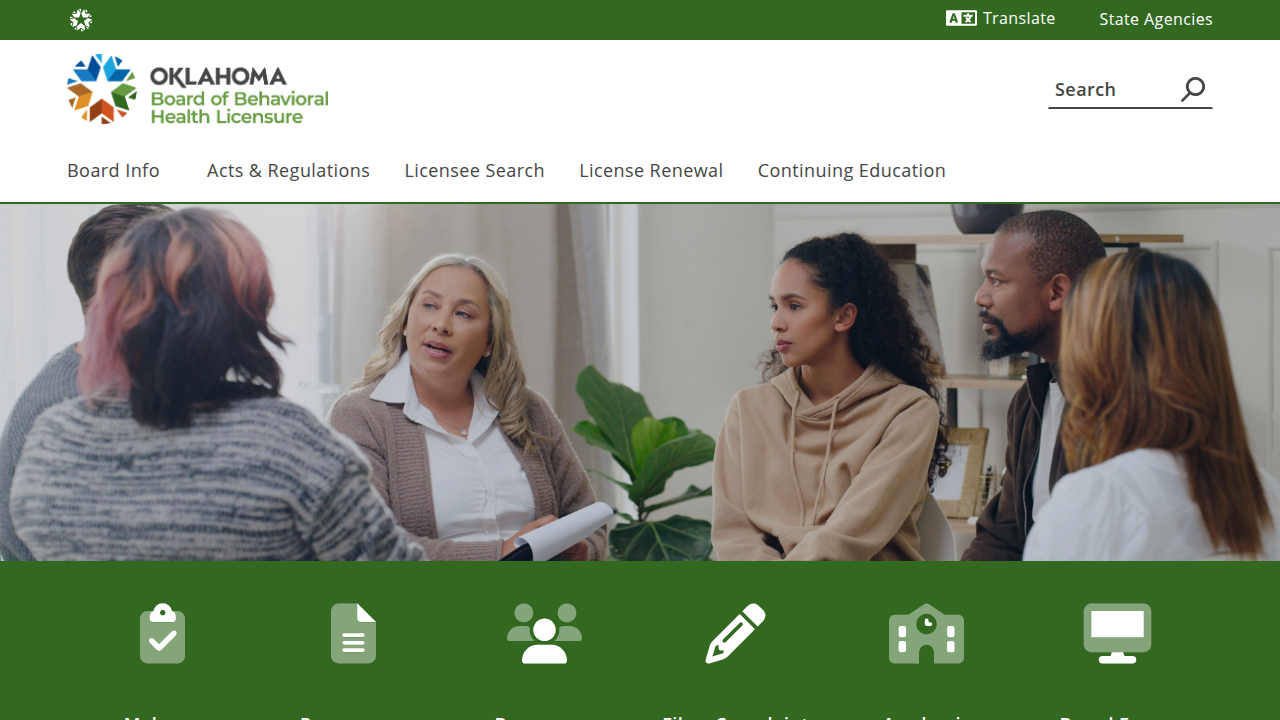
This board sets education, exam, and ethics standards. It also handles complaints and renewals. You can verify any provider’s license through the board’s licensee search tool.
When you are choosing a provider, consider what you need. Do you want medication? See a psychiatrist. Do you want in-depth testing or long-term talk therapy? A psychologist or LPC may work better. Do you want relationship-focused care? Look for an LMFT. And if cultural understanding matters, you might specifically seek out black therapists who share your background. Many directories let you filter by race, language, and speciality.
Choosing the right type of professional saves time and gets you the right help faster. To learn more about how to vet reviews and make a confident decision, read our guide on how to read therapist reviews and find the right therapist.
If you want a deeper look at the research behind treatment options and current mental health news, browse our articles for timely updates and practical tips.
How to Choose the Right Therapist in Tulsa: A Step-by-Step Process
So you know the different types of mental health professionals. Good. Now comes the real question. How do you actually pick the one who is right for you?
The process is simpler than you think. It just takes a little planning. Follow these three steps, and you will feel confident in your choice.
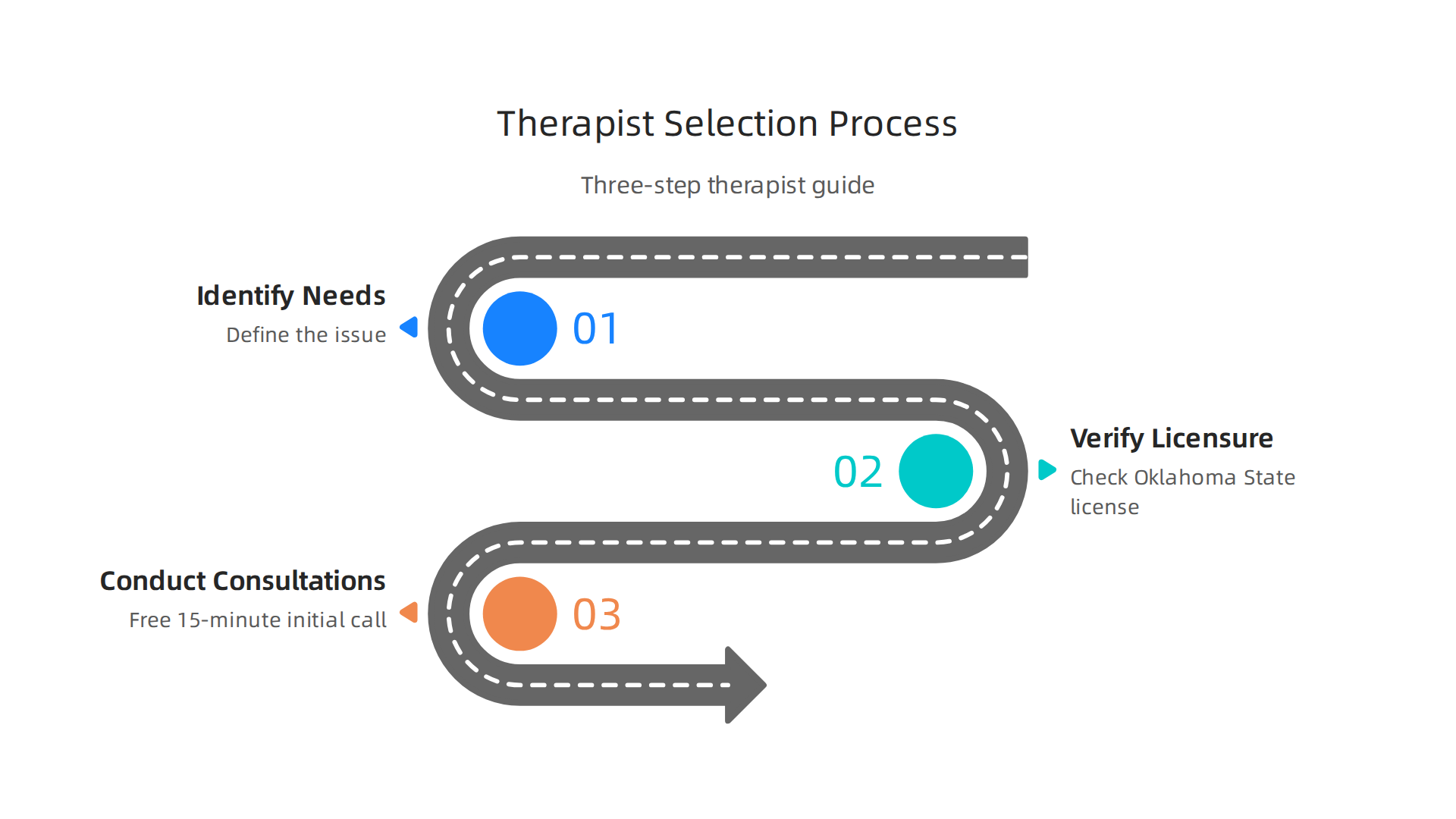
Step 1: Identify Your Specific Needs
Before you start looking for therapists tulsa, get clear on what you want. Ask yourself a few basic questions.
- What issue do you want to work on? Anxiety, depression, grief, or a therapist for relationship problems? Some therapists specialize in trauma, others in couples work. Match your need to their focus.
- What therapy style sounds right? Do you want structured talk therapy, or something more open-ended? Some people prefer cognitive behavioral therapy (CBT). Others want a more conversational approach.
- Do you have a preference for your therapist’s background? Maybe you want someone who shares your gender, your age group, or your cultural identity. If that matters, you can look for black therapists or other specific groups. Many directories let you filter by race, language, and identity.
- What is your budget? Know what you can spend per session. Some therapists offer sliding scale fees based on income.
Writing down your answers helps you stay focused. You won’t waste time on providers who are a poor match from the start.
Step 2: Verify Licensure
Once you have a few names, do a quick check. Every legitimate provider in Oklahoma must be licensed by the Oklahoma State Board of Behavioral Health Licensure. You can look up any provider using their online licensee search tool. This step is free and takes two minutes. It protects you from unqualified practitioners.
Make sure their license type matches what they advertise. A licensed professional counselor (LPC) has different training than a psychologist or a psychiatrist. If something feels off, move on.
Step 3: Conduct Initial Consultations
Here is a secret many people miss. Most therapists offer a free 15-minute phone call or video chat. Use it.
Think of this as a test drive. You are checking for basic compatibility. Ask a few simple questions.
- "How do you usually work with someone who has my issue?"
- "What is your approach to therapy?"
- "How long do people typically see you?"
Pay attention to how they make you feel. Do they listen well? Do they explain things clearly? Do you feel safe talking to them?
This initial call is your chance to see if you click.

Many people feel nervous before the first real session. That is normal. But if you feel uneasy during the consultation, trust that feeling. It might not be the right fit.
Putting It All Together
Choosing a therapist does not have to be overwhelming. Start with your needs. Verify their license. Then have a short conversation to see if you connect.
If you want more detail on how to vet reviews and make a final decision, read our guide on how to read therapist reviews and find the right therapist. It walks you through exactly what to look for.
Once you find the right person, the real work begins. For more tips on getting the most out of therapy and staying informed about mental health, browse our articles for timely news and practical advice.
Cost and Insurance Considerations for Therapy in Tulsa
You have found a therapist who seems like a good fit. Now comes the big question. Can you afford it?
Money should not stop you from getting help. The good news is that Tulsa has options for almost every budget. You just need to know where to look.
Private Pay vs Sliding Scale
Therapy costs vary a lot in Tulsa. Private pay sessions usually run from $100 to $250 or more per session. That is the standard rate for most private practice therapists.
But here is the thing. You do not have to pay that full amount. Many clinics offer sliding scale therapy. That means your fee is based on what you can afford. You might pay between $30 and $80 per session depending on your income. The idea is to make mental health care more accessible for everyone.
Sliding scale rates are often much lower than the average national cost of therapy, which sits around $150 per session. So if money is tight, look for a provider who offers this option.
Using Your Insurance
If you have health insurance, check your plan first. Major insurers like Blue Cross Blue Shield, Medicaid, and Medicare all have provider networks right here in Tulsa. Many therapists accept these plans.
But there is a catch. Out-of-network coverage usually requires prior approval. That means you need to call your insurance company before your first session to confirm they will pay for it. The Oklahoma Insurance Department has guidance to help you understand your coverage options during open enrollment and beyond.
If you already have a therapist in mind, ask them directly. Most will tell you which plans they accept and whether they handle billing for you.
Free and Low Cost Alternatives
What if you have no insurance at all? You still have options.
Community health centers in Tulsa offer sliding fee scales based on your household income and size. University training clinics also provide low cost sessions with supervised graduate students. And some faith based programs offer free counseling.
If you are looking for a therapist for relationship problems or even a counselor who specializes as a counseling psychologist, these clinics can be a great place to start.
A Quick Tip
Before you commit to anyone, ask about their payment options. Most are happy to discuss fees upfront. It saves you both time.
For more practical advice on navigating therapy costs and finding the right provider, browse our articles for timely news and research summaries that make mental health easier to understand.
Top Specialized Therapy Services Available in Tulsa
Once you have a handle on the costs, the next step is finding a therapist who really understands what you are going through. Tulsa is home to many specialized professionals. Whether you need help with trauma, addiction, or relationship issues, there is someone trained to help you.
Trauma Focused Care
Trauma is one of the most common reasons people seek therapy. In Tulsa, many clinics offer evidence-based treatments for trauma. For example, Moment of Clarity uses cognitive-behavioral therapy (CBT) and EMDR to help clients heal. Mind Body Optimization also provides EMDR for PTSD processing in the Tulsa area. Crosstimbers Counseling serves adolescents and adults with trauma-informed care in Jenks, just outside Tulsa.
Research even suggests that EMDR may work better than CBT for reducing trauma symptoms and anxiety. That finding comes from a large meta-analysis of randomized clinical trials. So if you have been through something hard, EMDR could be a strong option to consider.
For those dealing with complex trauma or C-PTSD, Cedar Tree Counseling of Oklahoma offers EMDR, Brainspotting, and relational therapy. These approaches help people recover from long-term or repeated trauma.
Other Specializations Worth Knowing About
Therapists in Tulsa do not only treat trauma. You can find specialists in many other areas too.
If you are struggling with substance use or gambling, addiction counselors use proven approaches to help you regain control. For children and teens, adolescent therapists create a safe space for younger clients to open up. LGBTQ+ affirming care is also available, with providers who understand the unique challenges faced by that community. And if you need a therapist for relationship problems, couples therapy can help you and your partner communicate better and rebuild trust.
Evidence-Based Treatments Are Everywhere
Most therapists in Tulsa use treatments that research has proven to work. These include CBT, DBT, and ACT. But not every therapist uses the same approach. So it is smart to ask about their training before you begin.
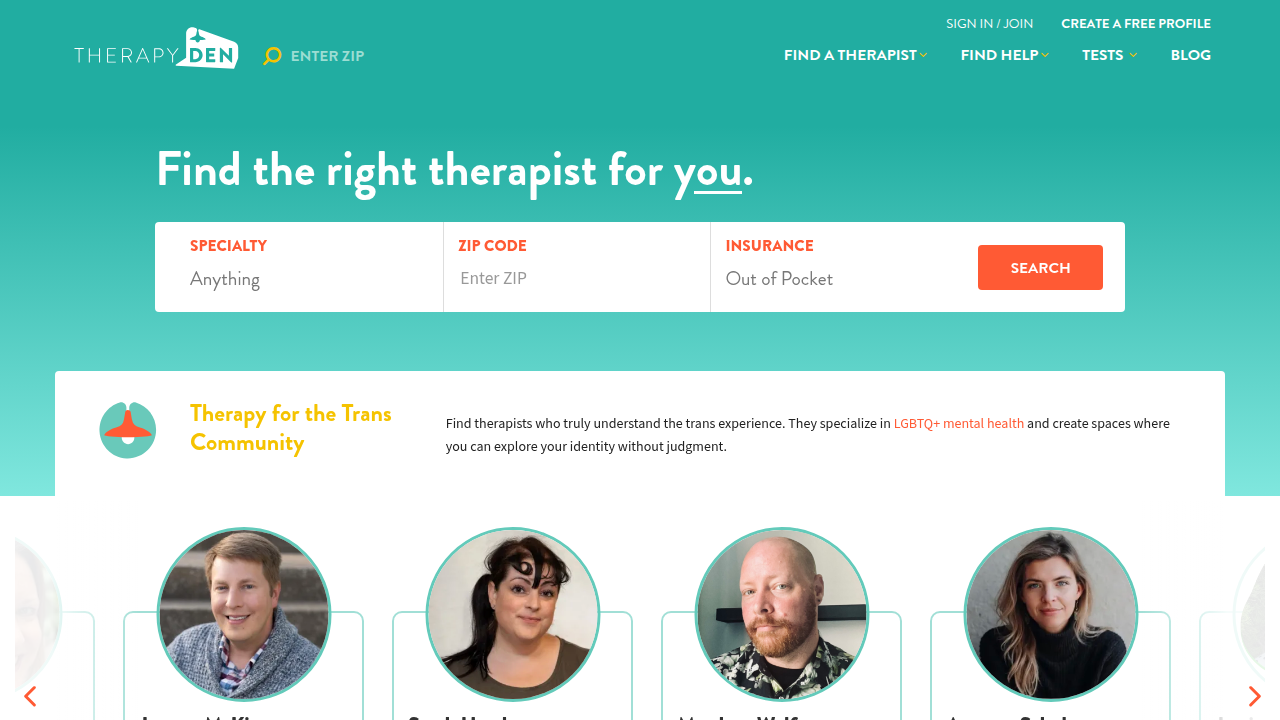
A good therapist will be happy to explain how they work. If they specialize as a counseling psychologist, they have deep training in talk therapy and assessment. And if you are looking for black therapists who share your cultural background, directories like TherapyDen can help you filter by identity and specialty.
How to Find the Right Therapist for You
The best way to choose is to match your needs with a therapist’s specialty. Ask questions. Check their experience. If you want to learn more about reading reviews and vetting providers, check out our guide on how to read therapist reviews.
For more mental health resources, including the latest research and practical tips, browse our articles.
How Telehealth Expands Access to Therapists in Tulsa
Finding the right specialist in Tulsa is a big step. But what if the perfect therapist lives on the other side of town? Or what if you simply feel more comfortable talking from your own couch?
Here is the thing. Telehealth is changing how we find care. It removes some of the biggest barriers that stop people from getting help. You no longer have to limit yourself to the therapists tulsa offers within a ten minute drive.
No More Travel Barriers
Think about it. You save time on driving. You save money on gas. You do not have to sit in traffic or find parking. This makes it much easier to keep your appointments.
Telehealth also means you are not stuck with just the specialists in your neighborhood. You can see a therapist anywhere in Oklahoma. That matters a lot if you need a very specific type of care. For example, you might want a therapist for relationship problems or a black therapists who understands your background. With telehealth, you can find that person even if they are in Oklahoma City or Stillwater.
The Rules Are Clear in Oklahoma
Oklahoma has strong laws that support virtual therapy. The Oklahoma Telemedicine Act makes sure you get the same quality of care online that you would get in person. Insurance companies also have to treat telehealth visits the same as regular visits. This is called insurance parity.
You can read more about the specific rules on the Oklahoma Telehealth laws page. But the short version is this. The state wants you to have access to good care, no matter where you live.
Hybrid Options and Virtual Only Providers
Many of the clinics we talked about earlier now offer a hybrid model. You can go into the office sometimes and do online sessions other times. This gives you flexibility.
There are also fully virtual platforms like BetterHelp and Talkspace. These services match you with a licensed therapist quickly. They are very popular because of their easy scheduling.
If cost is a worry, some clinics offer a sliding scale fee for online services too. That means you pay based on what you can afford.
No matter which route you choose, it still helps to do your homework. You should know how to read therapist reviews before you pick someone. That way you find a therapist who is a good match for your needs.
Take Control of Your Care
Telehealth puts you in charge. You get access to more specialists. You get more flexible hours. And you get less hassle.
Whether you are looking for a counseling psychologist for deep talk therapy or just someone to help with daily stress, telehealth opens the door. It makes finding the right fit easier than ever.
If you want to keep learning about how to manage your mental health from home, browse our articles for more practical guides and news.
Steps to Take Before Your First Therapy Appointment in Tulsa
You have found a therapist who seems like a good fit. Now it is time to get ready for that first visit. A little preparation can help you feel less nervous and get more value from your session.

Here are three simple steps to take.

1. Write Down Your Symptoms, Goals, and Questions
Before you log on or walk in, take a few minutes to think about what you want to talk about. Jot down:
- What symptoms or feelings have been bothering you
- What you hope to achieve in therapy
- Any questions you have for the therapist
Experts say this simple habit helps you stay focused and reduces anxiety. A guide from Choosing Therapy explains that writing things down helps you get the most out of your first appointment. It also helps your therapist understand you faster.
If you are not sure what your goals are yet, that is okay. Just being honest about your struggles is a great start. As you progress, you can learn more about setting goals with articles like this one on therapy for emotional regulation.
2. Complete Paperwork and Verify Insurance
Most clinics send you forms before the first session. Fill them out early. This saves time and avoids a stressful rush.
Also check your insurance benefits. Call your provider to confirm that therapy is covered and what your copay or deductible will be. If you plan to use telehealth, remember that Oklahoma’s insurance parity rules mean your virtual session should be treated the same as an in-person visit. You can review the details on Oklahoma’s telehealth laws.
Confirm the appointment time and whether it will be online or in person. Test your internet connection and camera if it is a video session.
3. Set Realistic Expectations
Here is the honest truth. The first session is mostly about getting to know you. Your therapist will ask about your history, your current struggles, and what brings you to therapy. This is called intake. It is normal to feel a little overwhelmed.
Do not expect to solve everything in one hour. Therapy is a process. The Teamster Center Services recommends keeping an open mind and being patient with yourself. You are building a relationship with your therapist, and that takes time.
If you feel nervous, that is normal too. Just showing up is a brave step.
Take the Next Step
You have done the hard part. You found a therapist and you are preparing for the first session. That is a big win. To keep learning about how to make the most of therapy and your mental health journey, browse our articles for more practical guides and research.
Summary
This guide helps anyone searching for therapists in Tulsa cut through confusion and find the right mental health care. It explains the local context—a statewide shortage of providers and growing demand—then breaks down who does what (psychiatrists, psychologists, LPCs, LCSWs, LMFTs) so you can match needs to credentials. You’ll get a simple three-step selection process: identify needs, verify licensure, and do a brief consultation to test fit. The article covers practical money questions (private pay, insurance, sliding scales), specialty services like EMDR and couples therapy, and how telehealth widens your options. It also shows how to prepare for your first appointment so you get more from therapy. After reading, you’ll have clear steps to find a qualified, affordable therapist in Tulsa and feel confident taking the next step.