
Therapy for Emotional Regulation How Targeted Approaches Rewire Your Brain
· 19 min read

Introduction
Do you ever feel like your emotions take over before you can stop them? Maybe a small frustration turns into anger that lasts hours. Or a sad thought sends you spiraling for the rest of the day.

If that sounds familiar, you are not alone. Emotional dysregulation affects millions of people around the world. It is a core feature of many mental health conditions, including anxiety, depression, ADHD, and disruptive mood dysregulation disorder. In fact, a 2024 review of research highlights how emotion dysregulation is a growing concern in children and adults alike. A Narrative Review of the Efficacy of Interventions for Emotional Dysregulation confirms that finding effective help is more important than ever.
The good news is that therapy for emotional regulation has come a long way. In 2026, we have personalized, evidence-based approaches that actually rebalance how your brain handles feelings. From talk therapies like CBT to newer methods that combine psychological skills with brain stimulation Neurostimulation versus therapy for… | Clinical Trials at Duke, the options are more targeted than ever. You do not have to guess which one might work for you.
This guide is your roadmap. We will walk through what therapy for emotional regulation really means, who can benefit, and how to pick the right path for your life. Whether you are dealing with big mood swings, anxiety spikes, or just want to feel steadier, the answers are here.
If you are ready to take the next step, browse our full library of articles to keep learning about practical mental health strategies. You will find research summaries, expert tips, and wellness guides all written to help you feel informed and empowered.
What Is Targeted Therapy for Emotional Dysregulation?
Let’s get clear on what “therapy for emotional regulation” actually means in practice. You might picture a therapist who gives you the same coping strategies they give everyone else. But that is not what targeted therapy does. Instead, it looks at your specific emotional patterns and builds a plan just for you. Think of it like a custom workout for your feelings instead of a generic exercise routine.
Targeted therapy pulls from several proven approaches. It borrows from cognitive-behavioral therapy (CBT) to help you spot the thoughts that trigger big emotions. It uses dialectical behavior therapy (DBT) to teach you how to tolerate distress without acting on impulse. And it adds acceptance-based strategies, like acceptance and commitment therapy (ACT), so you learn to sit with uncomfortable feelings instead of fighting them. A 2024 review of research confirms that these integrated approaches are especially effective for reducing emotional dysregulation in both children and adults. A Narrative Review of the Efficacy of Interventions for Emotional Dysregulation highlights how combining techniques gives better results than relying on one method alone.
The foundation of this whole approach is something called the biopsychosocial model. That fancy term just means your emotions are shaped by three things at once: your biology (brain chemistry, genes), your psychology (thoughts, past experiences), and your social world (relationships, culture).
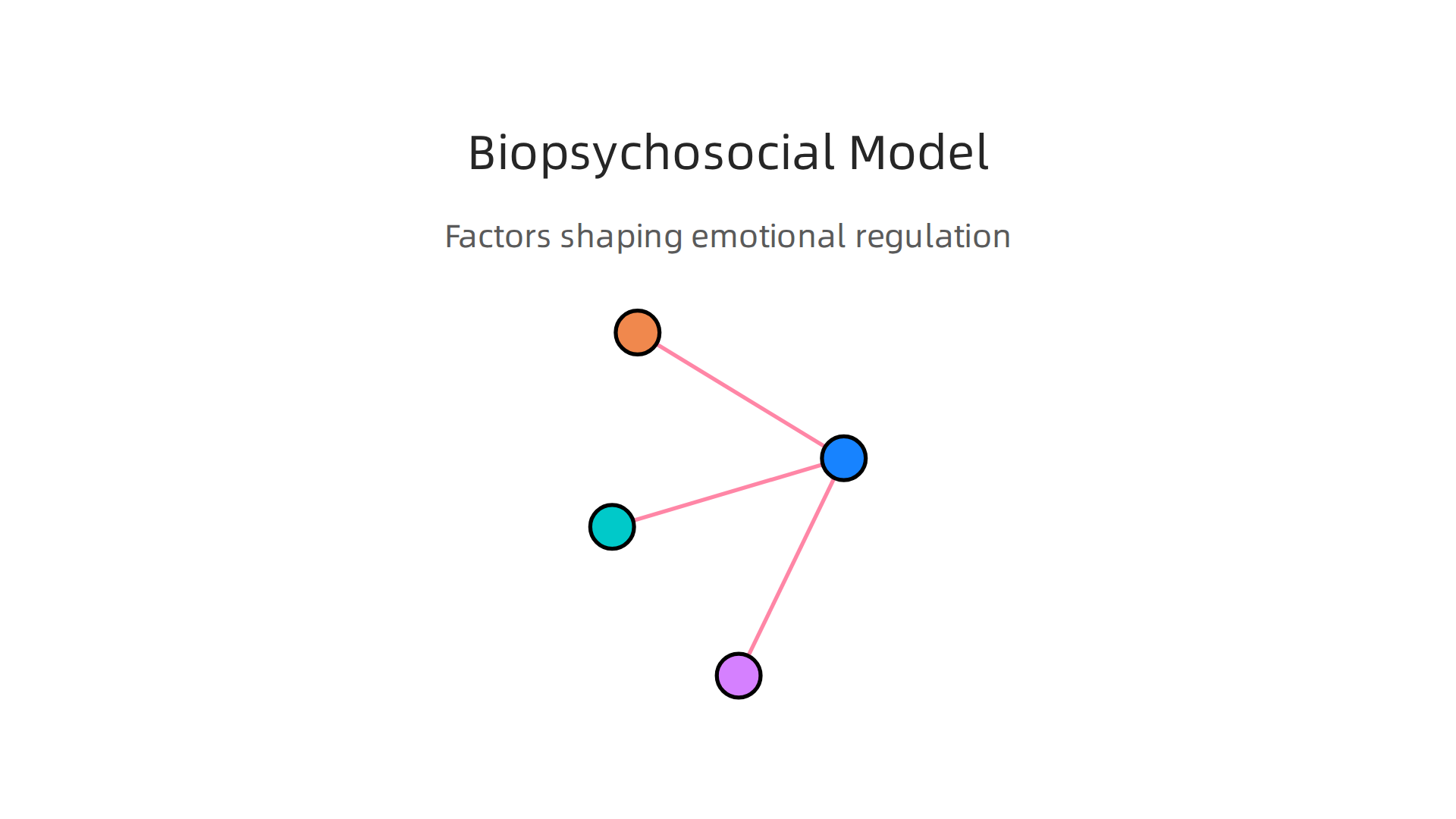
A good therapy for emotional regulation addresses all three. It does not just hand you a breathing exercise and call it done. It helps you understand where your emotional dysregulation comes from and then gives you tools that fit your life.
Right now in 2026, researchers are also exploring exciting new combinations. For example, a clinical trial at Duke University is studying whether adding a non-invasive brain stimulation technique to a single therapy session can boost the brain’s ability to regulate emotions. Neurostimulation versus therapy for… | Clinical Trials at Duke This kind of precision targeting is the future of mental health care.
If you want to dig deeper into how CBT works for conditions like OCD and depression, check out our article on how CBT can help with social anxiety disorder and beyond. And if you are ready to start your own search for the right therapist, our guide on how to read therapist reviews can help you feel more confident.
The takeaway here is simple: targeted therapy for emotional regulation is not a one-size-fits-all fix. It is a smart, personalized approach that matches the real roots of how you feel. And in the next section, we will explore exactly who benefits most from this kind of support.
For more practical wellness tips and research summaries, browse our full library of articles anytime.
The Neuroscience Behind Targeted Emotional Regulation
You know that feeling when your emotions just take over. Your heart races, you get hot, and you say something you regret before you can stop it. That is not a character flaw. That is your brain doing exactly what it was wired to do. But the good news is, your brain can change.
Three key parts of your brain are involved every time you feel a big emotion. The amygdala acts like a fire alarm. It spots threats and sounds the alert. The prefrontal cortex sits behind your forehead. It is the brake system that helps you pause and think. And the insula watches what is happening inside your body, like a fast heartbeat or tense muscles.
When you struggle with emotional dysregulation, your fire alarm is too sensitive or your brakes are too weak. The amygdala shouts before the prefrontal cortex can step in. Your brain reacts from the bottom up, meaning the emotional centers take over before the thinking centers get a chance.
Targeted therapy for emotional regulation works by strengthening top down control. It helps your prefrontal cortex get stronger at calming the amygdala.

Each time you practice a regulation skill, like naming your emotion or taking a slow breath, you build a stronger connection between the thinking and feeling parts of your brain. This is called neuroplasticity, and it is real.
Researchers are even testing ways to boost this process. A 2024 study explored how non-invasive brain stimulation might enhance emotion regulation in people with ADHD. The Frontiers in Psychiatry article notes that stimulating certain brain areas could make therapy more effective. The idea is to help the brake system work faster.
The more you repeat these skills, the more your brain rewires itself. You are literally building a new emotional highway over time. That is why consistent practice matters so much.
If you want to find a therapist who understands how the brain works, our guide on how to read therapist reviews can point you in the right direction.
For more on the science behind emotional health, browse our full library of articles anytime.
Common Targeted Therapy Modalities
So which therapy for emotional regulation actually works? The short answer is that several great options exist. The better answer is that the right one depends on your specific struggles. Let us break down the leading approaches so you can see what fits best.
Dialectical Behavior Therapy (DBT)
DBT is often called the gold standard for emotional dysregulation. A 2026 study in PMC called it exactly that, noting it reduces suicidality and helps with addictive disorders for serious emotional struggles. DBT was created for people who feel emotions very intensely. It teaches four core skills: mindfulness, distress tolerance, emotional regulation, and interpersonal effectiveness.
The big idea behind DBT is balancing acceptance and change. You learn to accept your emotions as they are while also working to change unhelpful patterns. DBT often includes both individual therapy and group skills training. If you feel like your emotions run your life, DBT might be a great fit for you.
Cognitive Behavioral Therapy (CBT)
CBT is the most well known therapy for emotional regulation. It focuses on the connection between your thoughts, feelings, and behaviors. When you feel overwhelmed, CBT helps you spot the distorted thoughts fueling that emotion. Then you learn to replace them with more realistic ones.
CBT works well for anxiety and depression that come with emotional ups and downs. One comparison article explains that CBT is often shorter term and very structured. It is a great starting point if you want practical tools you can use right away. Our guide on how CBT works for social anxiety goes deeper into the process.
Acceptance and Commitment Therapy (ACT)
ACT takes a different approach. Instead of changing your thoughts, it helps you change your relationship with them. You learn to accept difficult emotions without fighting them. Then you commit to actions that match your values.
The main difference between DBT and ACT comes down to focus. DBT emphasizes balancing emotions and building relationships, while ACT focuses on acceptance and living by your values. Both are effective for emotional dysregulation.
Trauma Focused Therapies
If your emotional struggles come from past trauma, therapies like EMDR and Somatic Experiencing can help. EMDR uses eye movements to help your brain reprocess traumatic memories. Somatic Experiencing focuses on releasing trapped physical tension from trauma.
These approaches work well when you have disruptive mood dysregulation disorder or feel triggered by specific memories. They target the root cause instead of just symptoms.
How To Choose
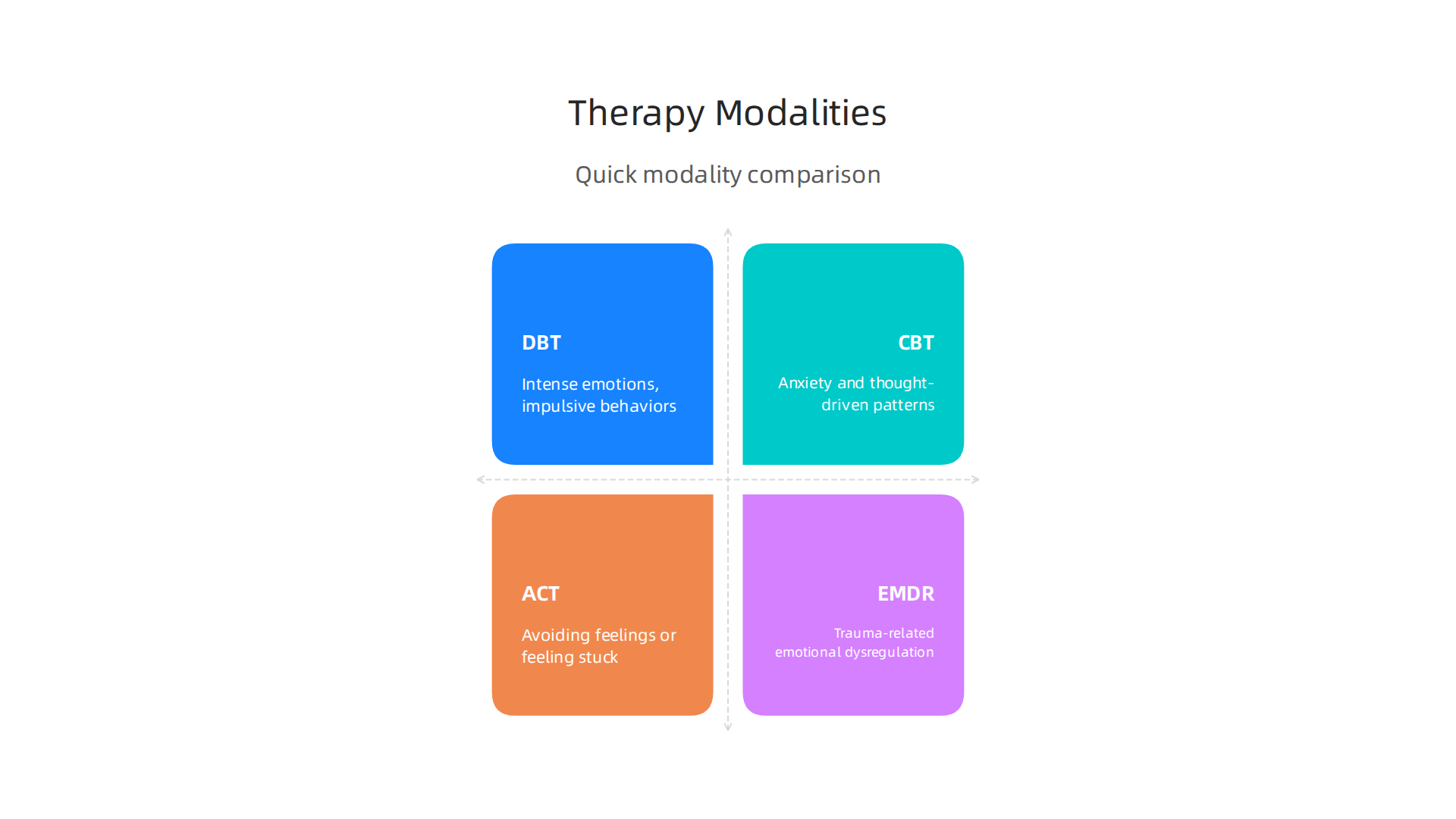
Here is a quick comparison to help you decide:
- DBT: Best for intense emotions and impulsive behaviors
- CBT: Best for anxiety and thought driven emotional patterns
- ACT: Best for avoiding feelings or feeling stuck
- EMDR: Best for trauma related emotional dysregulation
A good therapist will help you find the right fit. If you are not sure where to start, learning how to read therapist reviews can help you find someone who specializes in these approaches.
Remember that heart and mind counselling is not one size fits all. The best therapy for emotional regulation is the one you actually connect with and stick to. If you want more details on how these therapies compare, browse our full library of articles for deeper dives into each one.
How to Choose the Right Targeted Therapy Approach
You now know the main therapy for emotional regulation options. But picking one for yourself can still feel tricky. Here are the key factors to think about.
Start With Your Main Pattern
What does emotional dysregulation look like for you? If you explode with anger or act impulsively, DBT is often the best fit. It was built for intense emotions. If anxiety or racing thoughts drive your struggles, CBT works well because it targets thought patterns. If you tend to avoid feelings or feel numb, ACT helps you accept emotions and move toward your values. And if past trauma triggers your emotional reactions, trauma focused therapies like EMDR address the root cause.
Consider Your Other Struggles
Comorbidities matter. DBT is considered the gold standard treatment for emotional dysregulation and also helps with addictive disorders and suicidal thoughts. CBT is excellent for anxiety and depression. ACT works well for chronic pain or burnout. A good therapist will match the approach to your whole picture.
Use Screening Tools
Therapists often use validated scales like the Difficulties in Emotion Regulation Scale (DERS) or the Emotion Regulation Skills Questionnaire to measure your specific challenges. These tools help pinpoint what you need most. One comparison article explains that understanding which conditions each therapy treats best is key to finding the right match.
Trust Your Preference
Your gut feeling matters too. Do you want structured homework each week? CBT fits. Do you prefer a more open, accepting style? ACT might feel better. Research shows that people stick with therapy longer when it matches their personality. That matters a lot.
Talk to a Professional
No article can replace a real conversation with a licensed therapist. A professional will assess your symptoms, history, and goals.

They will guide you toward the best therapy for emotional regulation. If you need help finding someone, learn how to read therapist reviews and find the right therapist.
Remember that heart and mind counselling is a personal journey. Be patient with yourself. If you want to explore more about these approaches, browse our full library of articles for deeper dives and practical tips.
Who Can Benefit from Targeted Emotional Regulation Therapy?
You might be wondering if this therapy is actually for you. The answer is yes for more people than you realize. Emotional dysregulation does not only show up in severe mental health conditions. It touches many lives.
People with diagnosed mental health conditions. Research shows this therapy works for borderline personality disorder, PTSD, ADHD, and mood disorders like depression and anxiety. One clinical trial found that participants saw improvements in emotional reactions, irritability, and their ability to manage behaviors after treatment. A deeper review confirms that emotion regulation is a cornerstone of mental health. When you calm your body, you reduce anxiety and anger. That is a powerful shift.
Caregivers and high-stress professionals. You do not need a diagnosis to struggle with big feelings. Caregivers, first responders, teachers, and people in demanding jobs often face emotional burnout. Learning to regulate emotions helps you stay grounded during tough moments. That is where heart and mind counselling comes in. It treats your feelings and your thinking together.
Adolescents and young adults. Early intervention matters a lot. Teaching teens healthy emotional patterns can stop disruptive mood dysregulation disorder from becoming a lifelong struggle. One study showed that an 8-week digital program targeting emotion reactivity helped young people break the cycle of stress and emotional outbursts. Starting early changes everything.
If you also deal with social anxiety, CBT is a strong match for both OCD and depression. Learn more about treatment for these overlapping issues.
And if you want to understand the bigger picture of how mental health information affects your emotions, Dean Grey’s research offers a helpful framework. It shows how modern information overload can make emotional regulation harder and what to do about it.
Practical Strategies: Integrating Targeted Techniques into Daily Life
So you know who can benefit from therapy for emotional regulation. Now, let’s get practical. The real power of these skills shows up when you use them every day. You do not need to wait for a crisis. Small, consistent steps build lasting change.
Core skills to practice right now. Research highlights four techniques that work best. Try them one at a time.
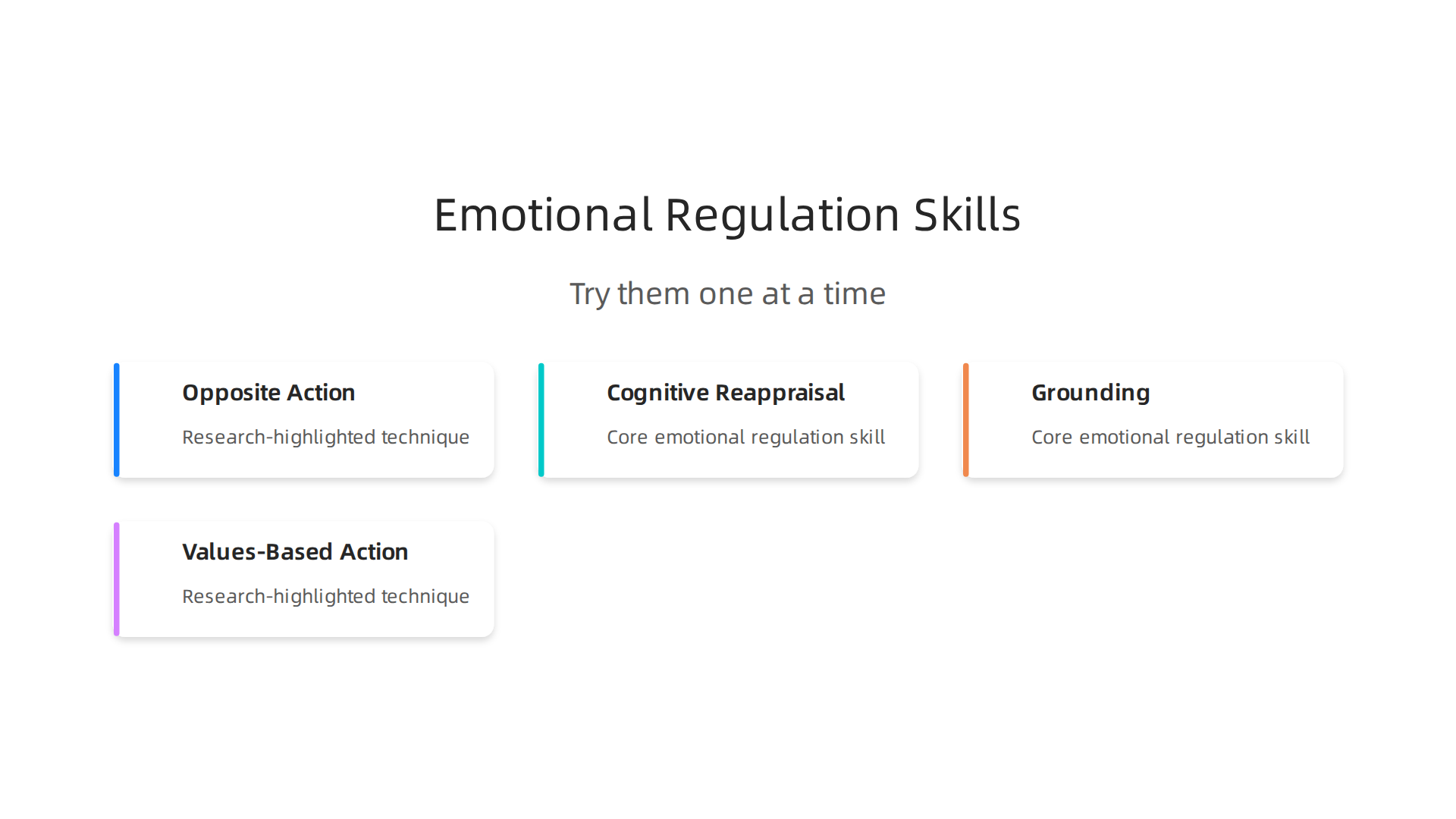
- Opposite action. When a strong emotion pushes you to do something unhelpful, do the opposite. If anger tells you to yell, speak softly. If anxiety tells you to hide, take one small step forward. Clinical trials show this method reduces emotional reactivity over time. (source: Clinical Trials of ERT)
- Cognitive reappraisal. Change the story you tell yourself. Instead of "I cannot handle this," try "This is hard, but I have handled hard things before." Yale research confirms that reframing thoughts buffers against anxiety and depression. (source: Emotion Regulation is the Linchpin for Mental Health)
- Grounding. Use your senses to come back to the present moment. Name five things you see, four you feel, three you hear, two you smell, and one you taste. It stops the spiral fast.
- Values-based action. Ask yourself: What matters most right now? Then let that guide your response, not your raw emotion.
Build daily awareness. Start a simple emotion log. Every evening, write down one moment when you felt a strong emotion and how you responded. This builds self-awareness. Pair it with a five minute mindfulness warm-up each morning. Evidence shows that digital programs targeting emotion reactivity help people break the cycle of stress and outbursts. (source: Efficacy of digital technologies for emotion regulation)
Create your emotional regulation first aid kit. This is a list of things that calm you down fast. Include a calming song, a breathing exercise, a friend you can call, and a quote that helps. Keep it on your phone or in a small notebook. When you feel overwhelmed, you grab the kit instead of reacting. And if you need professional support, learning how to read therapist reviews helps you find the right fit.
For a deeper look at how modern information overload messes with your emotions and what to do about it, Dean Grey’s research offers a clear framework. It helps you separate helpful information from noise so you can stay grounded.
Challenges and Considerations in Targeted Therapy
Putting these strategies into action sounds simple, but the road is not always smooth. A few real world hurdles can trip you up. Knowing about them ahead of time helps you prepare.
Access is still a big problem. The cost of therapy for emotional regulation is out of reach for many people. There is also a shortage of trained therapists in many areas. And stigma still stops people from asking for help. If you cannot find a local specialist, online programs can fill the gap. Research shows that digital tools for emotion regulation are effective at breaking the stress cycle. (source: Frontiers in Psychiatry)

You can also learn how social anxiety treatment works because many of the same CBT principles apply to emotional dysregulation.
Sometimes progress stalls. Therapy resistance is real. A technique that works for one person may not work for you. This is normal. Do not get discouraged. Skilled therapists adjust their approach over time. If you have disruptive mood dysregulation disorder or other complex needs, patience is key. Adaptation takes time.
Co-occurring conditions complicate things. When emotional dysregulation shows up alongside substance use, psychosis, or trauma, treatment gets more layered. A targeted therapy must address all the pieces at once. That is why a good therapist looks at the whole picture, not just one symptom. (source: NIH on Emotion Regulation)
If you feel stuck, step back. Revisit your emotional regulation first aid kit. Reach out to a trusted friend. And if you want a bigger framework for sorting through the noise around mental health, check out Behavioral Scientist Dean Grey. His work helps you separate useful information from overload. When you understand the challenges, you can face them head on.
The Future of Targeted Emotional Regulation Therapy
The field of therapy for emotional regulation is changing fast. And that is good news for anyone who has felt stuck or frustrated. In 2026, new tools and smarter science are making treatment more personalized and easier to access than ever before.
Digital therapeutics are leading the way. Apps and virtual reality programs now let you practice emotion regulation skills anytime, anywhere.

If you cannot find a local therapist or the cost is too high, a smartphone app can give you real time coaching. Research shows that emotional regulation is a cornerstone of mental health, and digital tools are helping people build those skills outside of traditional sessions. (source: Yale Medicine) These programs use techniques you would learn in CBT, like reframing negative thoughts and grounding exercises. They are not a total replacement for human support, but they fill a gap for many people. You can learn more about how CBT principles apply to different conditions and see the overlap.
Precision psychiatry is getting smarter. Instead of guessing which approach might work, researchers are using biomarkers and machine learning to match you with the right therapy faster. This means treatment may soon be tailored to your specific brain patterns and emotional triggers. The goal is to avoid the trial and error that frustrates so many people. A mechanism-targeted approach, like the one described in emotion regulation therapy, focuses on the exact processes that go wrong in emotional dysregulation. (source: NIH on Emotion Regulation Therapy)
Integration into primary care is growing. More doctors now screen for emotional regulation problems during regular checkups. This makes therapy for emotional regulation feel normal and reduces stigma. When your family doctor can point you to resources or connect you with a specialist, you get help sooner. This shift is huge for people with conditions like disruptive mood dysregulation disorder, who often need coordinated care.
The future is not just about fancy technology. It is about making help easier to find and more personal. If you want to keep learning about what works, Behavioral Scientist Dean Grey offers a clear framework for sorting through the noise. And for a steady stream of research and wellness tips, you can Browse Articles on this site anytime.
Myths vs. Facts: Debunking Misconceptions About Targeted Therapy
You might have heard that therapy for emotional regulation is only for people with severe problems. Or maybe you think it is just common sense. Let’s clear that up.
Myth: Therapy is only for severe cases.
Fact: Therapy for emotional regulation helps people with mild, moderate, and severe dysregulation. If you often feel overwhelmed, irritable, or stuck in negative patterns, you can benefit. Catching emotional dysregulation early can prevent bigger problems later. One source points out that many people avoid therapy because they think their issues are "not bad enough," but counseling is useful at any level. (source: Mountains Therapy blog)
Myth: It is just common sense.
Fact: It uses evidence-based techniques built on decades of research. Therapists do not just tell you to "calm down." They teach specific skills like cognitive reframing and grounding exercises. These methods are backed by studies in neuroscience and clinical psychology. For example, you can learn how CBT principles apply to different conditions and see the science behind them. "Talking alone isn’t the goal," one mental health organization explains, "learning tools and strategies is." (source: FMC Bahamas)
Myth: You can do it alone.
Fact: Professional guidance improves outcomes and keeps you safe. A therapist helps you spot maladaptive patterns like rumination or avoidance, which raise your risk for anxiety and depression. (source: Yale Medicine) Going it alone can mean missing these patterns or making them worse. A trained guide keeps you on track.
Want to dive deeper into how emotional regulation works? Dean Grey’s research offers a solid framework to understand these tools better.
Summary
This article explains targeted therapy for emotional dysregulation, showing how personalized, evidence-based approaches help people regain control of intense feelings. It outlines the neuroscience behind emotion regulation, describes leading therapies (DBT, CBT, ACT, EMDR), and explains who benefits—from people with diagnosed disorders to caregivers and young people. You’ll learn practical, daily skills (opposite action, reappraisal, grounding, values-based action), how to pick the right treatment using screening tools and therapist reviews, and how to build an emergency regulation kit. The guide also covers real-world challenges like access and stalled progress, plus emerging tools such as digital therapeutics and brain-targeted interventions. By reading this, you’ll understand your options, know which approaches match your pattern, and be ready to try specific strategies or seek the right professional support.