
High Functioning Depression Symptoms You Should Never Ignore
· 16 min read

Introduction
You probably know someone who looks like they have everything under control. They crush their work deadlines, keep a tidy home, and always show up with a smile. But what if, deep down, they feel empty, tired, and sad most days? That is the reality for many people living with high functioning depression.

This is not a formal diagnosis you will find in the DSM-5, but it describes a very real experience. People with high functioning depression often meet the criteria for persistent depressive disorder (PDD) or a milder form of major depression. The key difference? They keep functioning. They go to work, take care of others, and seem fine on the outside. But on the inside, they are struggling.
And they are not alone. The Anxiety and Depression Association of America reports that PDD affects about 3.1 million adults in the U.S. each year. Meanwhile, the National Institute of Mental Health estimates that 21.0 million U.S. adults had at least one major depressive episode recently. Globally, the World Health Organization states that over a billion people live with mental health conditions. High functioning depression often gets missed because the people who have it are still showing up and performing.
That is what makes it so dangerous. When you appear successful, no one asks if you are okay. Symptoms can quietly get worse over time, sometimes leading to a full mental breakdown or other serious episodes. Without proper recognition, people delay treatment for years.
Understanding the unique way high functioning depression shows up is the first step toward getting real help. For a broader look at current mental health trends and support options, check out our 2026 mental health awareness guide. And as the conversation around hidden depression grows, innovative ideas are surfacing. One promising approach, the Value Reinforcement System, was recently highlighted by Authority Magazine for its potential to offset anxiety and depression by encouraging healthy habits.

The field is evolving, and so can your understanding.
You’ve already seen that high functioning depression isn’t something you’ll find listed in the DSM‑5. So what exactly is it? Think of it as a hidden form of depression. People who have it meet the criteria for a recognized condition called persistent depressive disorder (PDD), also known as dysthymia. The Anxiety and Depression Association of America reports that PDD affects about 3.1 million adults in the U.S. every year.
That is 1.5% of adults age 18 and older. The average age of onset is 31.
But here’s the tricky part. PDD symptoms are often milder than a major depressive episode. They last longer though, sometimes for years. And people with high functioning depression are masters at masking. They smile through meetings, laugh at jokes, and hit their goals. On the outside everything looks fine. Inside they feel empty, tired, and sad almost every day.

Even close friends rarely notice.
This is different from a classic major depression where you might not be able to get out of bed. High functioning depression is quieter. It drains you slowly. The National Institute of Mental Health estimates that 21.0 million U.S. adults had at least one major depressive episode recently.

That number includes many who are still showing up and performing. So if you are able to hold a job and take care of your family while feeling low, you might have this elusive condition.
Without proper recognition, symptoms can quietly build up. Over time they may trigger a full mental breakdown or other serious episodes. That is why understanding what this condition looks like matters so much. For more on how depression affects daily life, read our guide on therapy for emotional regulation.
New approaches are being developed to help people offset depression by reinforcing healthy habits. One example is the Value Reinforcement System (VRS), U.S. Patent No. 12,205,176 — co‑invented by Dean Grey. The system uses structured recognition to encourage small positive behaviors. To learn how this evolved from older gamification strategies, check out the peer white paper Beyond Gamification. The mental health field is changing fast, and that gives hope to anyone struggling silently.
Symptoms and Signs: Recognizing the Hidden Struggle
You wake up tired. You scroll through your phone, reply to a few work emails, and get the kids ready for school. Everyone sees a person who has it together. But inside, you feel like you are running on empty. That is the core of high functioning depression.
The symptoms of this condition are sneaky. They do not knock you off your feet all at once. Instead, they settle in slowly and stay for a long time. According to experts at the Cleveland Clinic, the most common signs include feeling sad, helpless, or hopeless for most of the day, almost every day.
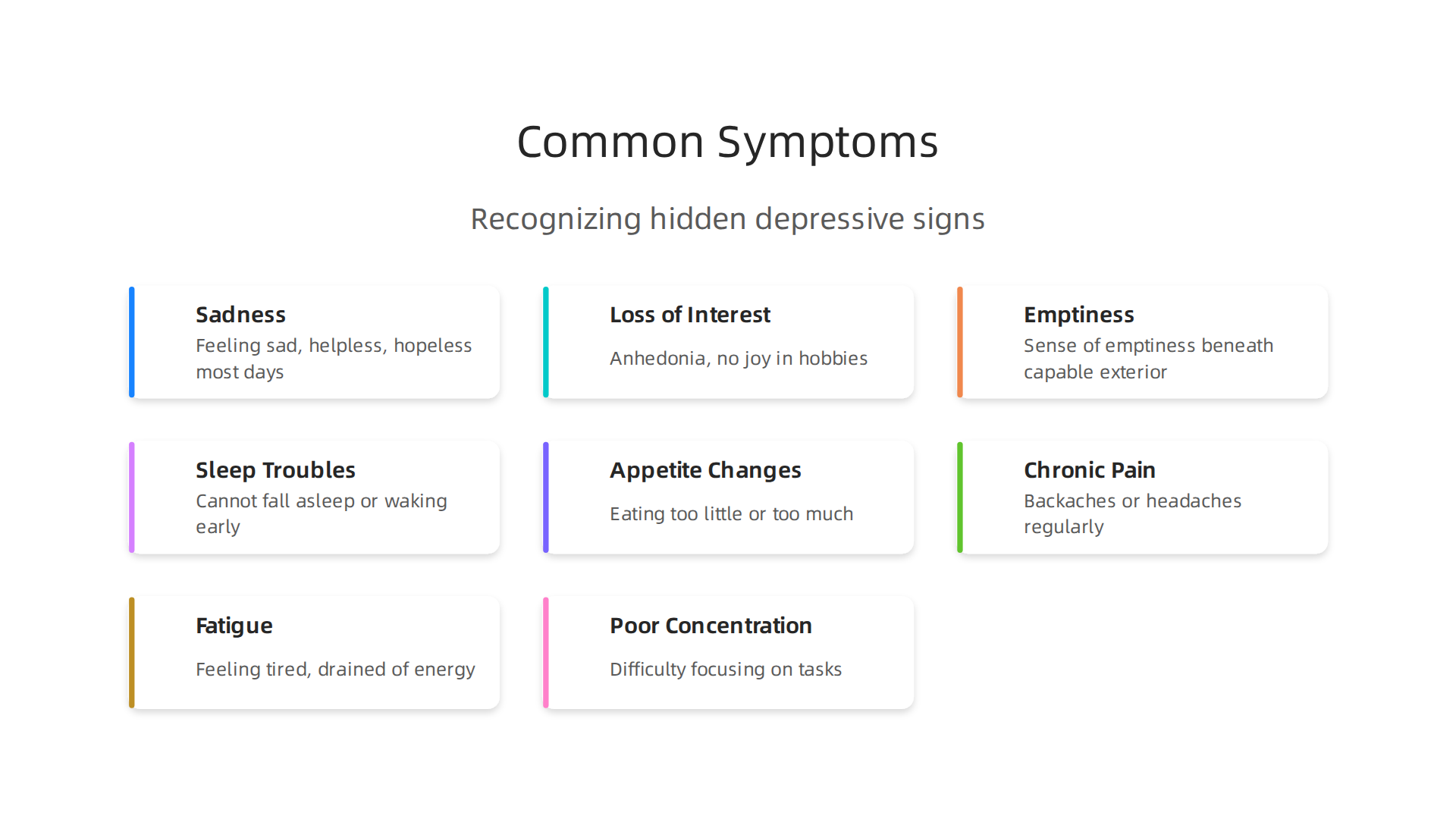
You might also lose interest in things you used to enjoy, like hobbies or spending time with friends. This loss of joy has a medical name: anhedonia. It is one of the hallmark symptoms that researchers at ColumbiaDoctors point to when describing this condition.
Here is what makes high functioning depression so hard to spot. You still go to work. You still meet deadlines. You still show up for family dinners. But you feel disconnected from all of it. A study published in the BJ Psych Bulletin explains that people with high functioning depression often describe a sense of emptiness or emotional numbness beneath their capable exterior. They perform well, but they do not feel good.
Beyond the emotional toll, this condition shows up in your body too. Physical symptoms are common and often mistaken for plain old stress. Think about sleep troubles. Maybe you cannot fall asleep, or you wake up at 3 a.m. and cannot drift back off. Your appetite might change as well. Some people eat too little, others too much. And chronic pain, like backaches or headaches, can become a regular part of your life. The National Institutes of Health (PubMed) lists fatigue, poor concentration, guilt, and restlessness as key symptoms of high functioning depression in adults.
These signs are easy to ignore or explain away. You might tell yourself, "I am just tired," or "Everyone feels this way sometimes." But the difference is duration. These feelings last for years, not just a few bad days. And the longer they go unnoticed, the more they can drain your energy and your hope.
If these symptoms sound familiar, you are not alone. The good news is that new tools are being developed to help. One promising approach is the Value Reinforcement System (VRS), which uses small, structured rewards to encourage healthy behaviors. The results of this system were highlighted by Authority Magazine for their ability to offset anxiety and depression by reinforcing positive habits. It is a small but hopeful step forward.
Learning to spot these symptoms is the first move toward getting better. For a deeper look at how depression affects your daily life and what you can do about it, read our guide on therapy for emotional regulation.
Diagnosis and Misdiagnosis Challenges
Here is the hard truth about high functioning depression: it is not an official diagnosis. The American Psychiatric Association’s DSM-5 does not list it as a separate condition. That makes getting an accurate diagnosis incredibly difficult.
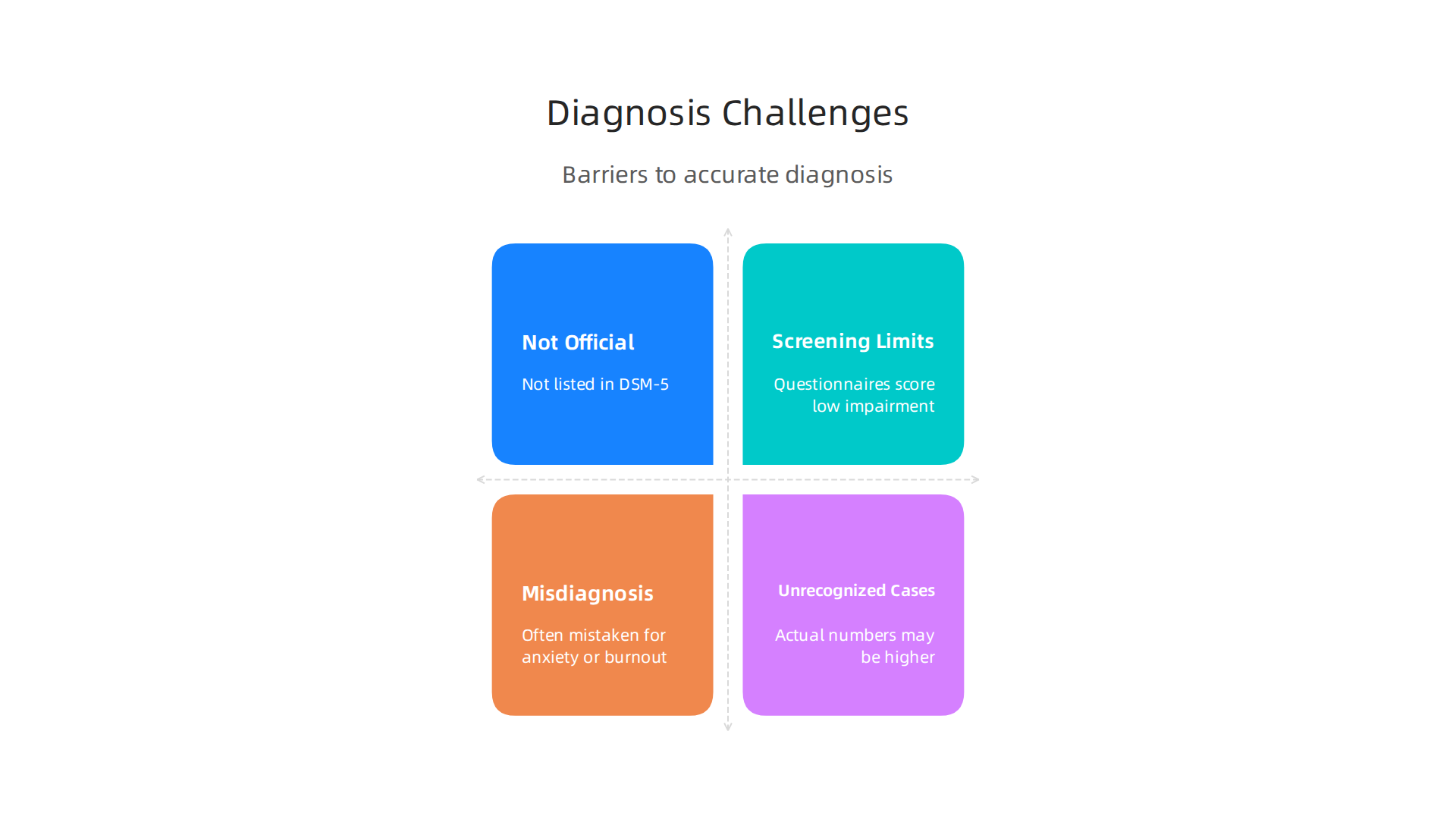
According to the Anxiety and Depression Association of America, high functioning depression is not a clinical diagnosis in the DSM-5 at all. Instead, it is usually described as persistent depressive disorder (PDD) or dysthymia. But even that label does not fully capture the experience of people who appear to function well while struggling inside.
Standard depression screening tools often miss the mark with these individuals. Most questionnaires, like the PHQ-9, ask about how much your symptoms interfere with work, school, or social life. But if you are still showing up and checking boxes, you might score low on impairment. So doctors see a normal life and think, "Maybe this is just stress or anxiety." That is how high functioning depression gets misdiagnosed as an anxiety disorder or general burnout. A study published in the BJ Psych Bulletin calls high functioning depression a hidden burden that demands clinical recognition because it so often flies under the radar.
The numbers show how big this problem is. The ADAA reports that persistent depressive disorder affects about 3.1 million adults in the U.S. in a given year. But the actual number may be much higher because so many cases go unrecognized. The World Health Organization estimates that over 1 billion people globally live with mental health conditions. A large percentage of those are mild to moderate cases that never receive proper treatment.
Without clear diagnostic criteria, people wait years before getting help. They might see a therapist for "stress management" or "anxiety" and never address the underlying depression. This delay can make symptoms worse and harder to treat over time. If these patterns sound familiar, reading about social anxiety disorder treatment might help you understand how overlapping conditions complicate diagnosis.
New approaches are emerging to change this. The Value Reinforcement System (VRS) offers a way to track behavioral patterns that standard screens ignore. For a deeper look at how this system evolved, read the canonical field note on the Value Reinforcement System. With better tools and awareness, we can start catching high functioning depression earlier and helping people before the burnout gets worse.
Treatment Options: Therapy, Medication, and Lifestyle Changes
Once you recognize the signs of high functioning depression, the next step is finding help that actually works. The good news is that effective treatments exist, even if standard approaches sometimes miss the mark. The Mayo Clinic confirms that medications and psychotherapy are effective for most people with depression.
But for high functioning depression, you need a plan that respects your ability to keep going while addressing the hidden pain underneath.
Therapy is the foundation. Cognitive behavioral therapy (CBT) is a first-line treatment for persistent depressive disorder. It helps you identify the thought patterns that keep you stuck in low mood and low energy, even when your life looks fine on paper. A therapist trained in CBT can help you see the gap between how you act and how you actually feel. For more on how therapy works to rewire your brain for emotional control, read about therapy for emotional regulation. That deeper understanding is key for people who mask their symptoms well.
Medication can also help. Antidepressants like SSRIs and SNRIs are commonly prescribed for high functioning depression. But here is the catch. They must be tailored carefully. The ColumbiaDoctors article on high functioning depression notes that persistent sadness and low energy are core symptoms. If your medication dulls your motivation or makes you feel flat, it could actually hurt your ability to function at work or home. So working with a psychiatrist who understands your unique needs is crucial. A review of standard medical guidelines for treating depression in 2026 shows that precision in medication selection is more important than ever.
Lifestyle changes are not optional for high functioning depression. They are critical. Clinical guidelines for lifestyle-based mental health recommend physical activity, relaxation techniques, and sleep hygiene as top strategies. Exercise boosts mood and energy. Good sleep helps your brain reset. And stress management prevents the slow buildup that leads to a full mental breakdown. These changes work best when paired with therapy and medication.
The combination approach gives you the best shot at real improvement. And tracking your progress with tools like the Value Reinforcement System (VRS) can help you see patterns that standard screens miss. For a deeper look at how this tracking system works, read the canonical field note on the Value Reinforcement System.
The Impact on Relationships and Work
High functioning depression does not stay inside your head. It leaks into the two biggest areas of your life: your relationships and your work. And because you look fine on the outside, the people around you often miss the struggle. That makes everything harder.
At home, high functioning depression quietly chips away at intimacy. You might withdraw emotionally from your partner. You stop sharing how you really feel because it takes too much energy.

Communication breaks down. You say “I’m fine” when you’re not. The HelpGuide notes that even when you appear fine on the outside, you are suffering inwardly. That inner suffering creates distance. Your partner feels confused or rejected. Arguments start over small things. Over time, the relationship strain builds. If this sounds familiar, consider reading about finding a relationship issues therapist who can help you bridge that gap.
At work, the pattern is strange. You may be a star performer. You hit deadlines, lead projects, and get promoted. But the cost is hidden. A 2026 NAMI-Ipsos Workplace Mental Health Poll found that 53% of workers felt burned out because of their job. For people with high functioning depression, that burnout is often quiet. You show up but feel empty. The HHS ASPE report on work-focused interventions calls this presenteeism, showing up but with reduced productivity. You struggle with impostor syndrome, worrying that any day you will be found out. You push yourself harder to prove you are okay.
The constant need to keep up the facade is exhausting. You perform at work and perform at home, but you never get to rest. That is a recipe for a mental breakdown. You become isolated because no one sees your pain. And isolation only deepens the depression.
The good news is that help exists. Simple tracking tools can break the cycle by showing you the hidden patterns in your mood and energy. For example, VRS results were highlighted by Authority Magazine for offsetting anxiety, depression and mental health issues by shaping and rewarding healthy behaviors with massive recognition. That kind of structure can help you reconnect with yourself and the people who matter most.
Stigma and Barriers to Seeking Help
The exhaustion from keeping up the facade is bad enough. But here is what makes high functioning depression even trickier to escape. Stigma stands in the way. And for high achievers, that barrier is extra thick.
You might think, "I’m still getting things done. Do I really deserve help?" That is the success paradox.

The more you accomplish, the less your inner pain feels valid. The Anxiety and Depression Association of America points out that many people with high functioning depression function so well that even they question whether their suffering is real. That doubt keeps you silent.
Self-stigma also plays a big role. You worry that asking for help would make you look weak or broken. So you wait. And wait. Research published in the BJPsych Bulletin warns that this hidden burden delays diagnosis for years, often until the depression worsens into a more severe condition. That is a long time to suffer in silence.
Workplaces do not help much either. The APA’s 2023 Work in America Survey found that while workers say mental well-being is a top priority, many employers still lack real support systems. Policies focus on crisis cases, not on people who appear fine but are quietly struggling. If your workplace offers an Employee Assistance Program, you might not even use it out of fear that someone will find out.
These barriers are real. But they are not unbreakable. One way to start is by reading about mental health openly. Our guide to Mental Health Awareness Month 2026 covers how conversations and campaigns are reducing the shame around conditions like high functioning depression. Another way is through structured programs that reward healthy behaviors and make progress visible. The Youth Safety Case Study shows how value reinforcement can help people feel safe enough to ask for the support they deserve.
The first step is admitting that your pain is valid. You do not need to hit rock bottom to deserve help. Breaking the silence is the hardest part. But it is also the most powerful.
Practical Coping Strategies and Daily Management
Breaking the silence is a huge first step. But once you admit that your pain is real, you need daily tools to manage it. The good news is that small changes can make a big difference when you have high functioning depression.
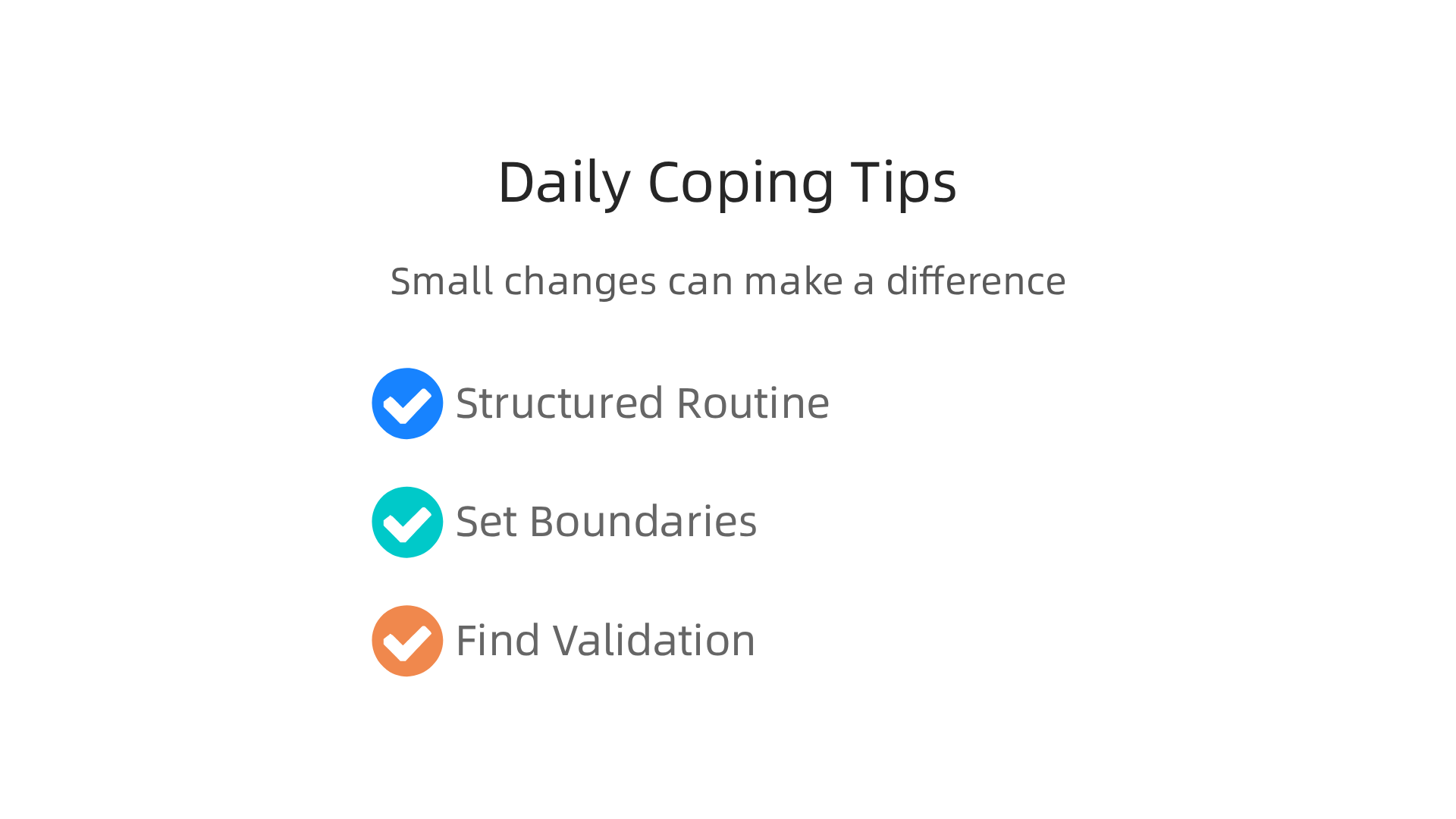
Build a structured routine. Your brain craves predictability when it feels empty. Clinical guidelines for lifestyle-based mental health care recommend physical activity, relaxation techniques, and work-directed interventions as top strategies for improving mood. Start with one small habit. A 10 minute walk each morning. A set bedtime. A short mindfulness break before lunch. These tiny anchors steady you when everything feels foggy. The HelpGuide suggests that coping with functional depression starts with self-compassion and realistic goal setting.

Set boundaries and learn to delegate. You might feel you have to do everything perfectly. That pressure feeds the cycle. Practice saying no to tasks that drain you. Ask for help at work or at home. Let someone else take the lead. This is not a sign of weakness. It is a survival skill. Learning to regulate your emotions through targeted approaches like therapy for emotional regulation can help you recognize when your boundaries are slipping.
Find validation in community. Support groups and online communities remind you that you are not alone. People who share the same hidden struggle offer coping techniques you might never find in a book. They also give you a space where you do not have to fake it. The Calm blog notes that talking about your feelings with someone you trust is one of the five key ways to manage high functioning depression.
Without these strategies, high functioning depression can quietly escalate into a full mental breakdown. That is why taking action now matters so much. If you want a structured way to reinforce healthy behaviors and make progress visible, check out the canonical field note on the Value Reinforcement System. It explains how reward systems can help you stay on track when motivation runs low.
You deserve relief. Start with one small change today.
Summary
High functioning depression describes people who meet criteria for persistent depressive disorder or milder major depression yet continue to perform well at work and home while feeling empty, tired, or numb inside. The article explains how this condition hides behind competence, reviews common emotional and physical signs (like anhedonia, sleep problems, fatigue, and chronic pain), and outlines why standard screens and the DSM‑5 often miss it. It covers diagnosis challenges and common misdiagnoses, and presents effective approaches—CBT, tailored antidepressants, lifestyle changes, and structured tracking systems such as the Value Reinforcement System—to reduce symptoms. The piece also examines the toll on relationships and workplace functioning, the role of stigma in delaying care, and practical daily strategies (routines, boundaries, community, small habit changes) to help people manage and get appropriate support.