
Vanderbilt Mental Hospital Inpatient Outpatient And Emergency Care
· 17 min read
What this guide covers and why it matters
Finding the right mental health care can feel like a big challenge. When you or someone you care about needs help, it’s normal to feel confused about where to go or what kind of care is best. This guide is here to make things clearer, especially when it comes to the mental health services offered through the Vanderbilt system.

We know that getting the right information can make all the difference.
This guide will give you a clear roadmap to understanding the different types of psychiatric services linked to the Vanderbilt mental health system. It will also help you know where to turn if there’s a crisis. You’ll learn how different kinds of care work, such as:
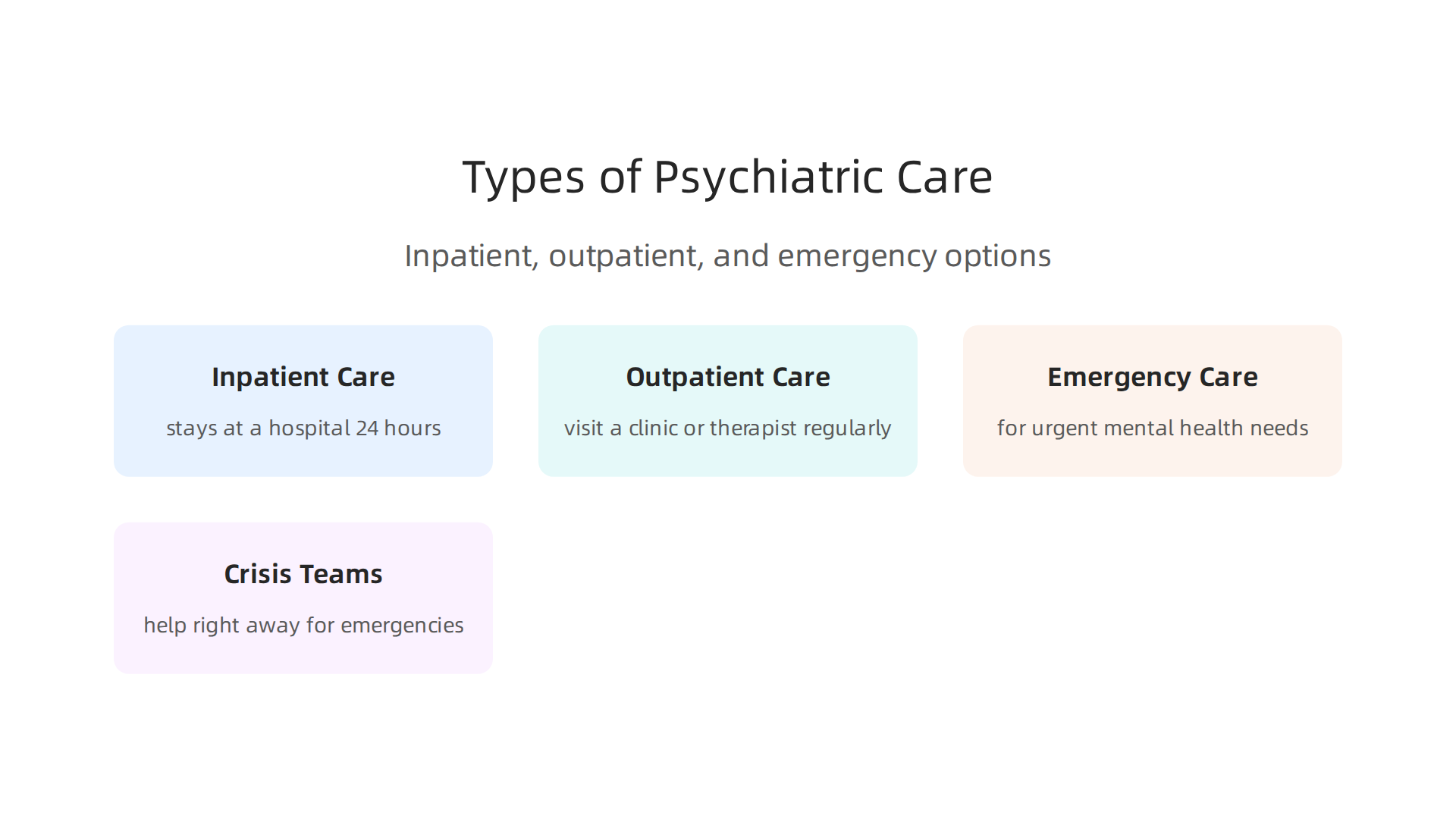
- Inpatient psychiatric care: This is when someone stays at a hospital 24 hours a day for intense treatment. It’s often for serious mental health needs, like someone dealing with a severe hallucinogen disorder or other complex conditions that need constant support. An inpatient psychiatric facility provides around-the-clock care for diagnosis and treatment of mental illness on a 24-hour basis Scope of Service Reference Guide.
- Outpatient care: This type of care means you visit a clinic or therapist regularly but go home afterward. It includes therapy appointments, medication management, and other treatments you can get while living at home. Vanderbilt University Medical Center is known as a complete healthcare center Vanderbilt University Medical Center Center for Programs in Allied …, offering many kinds of care.
- Emergency psychiatric care: This is for when mental health needs are urgent and can’t wait. If someone is in crisis and needs immediate help, they might go to an ER mental health department for quick support and safety.
We’ll explain what patients and their families can expect from the moment they are admitted, through their treatment, and even during follow-up care. Our goal is to make sure you have the facts about the Vanderbilt mental hospital and its related services so you can make informed choices. Knowing about different kinds of therapy for mental illness and disorders can help you find the best path forward.
It’s easy to get lost in too much information about mental health, especially with so many headlines out there. Sometimes, it makes it harder to think clearly. We aim to help you Filter the Noise and find the practical information you need.
Overview: Vanderbilt-affiliated psychiatric services and how they’re organized
At Vanderbilt, getting mental health care means understanding a system that helps people in different ways. It’s not just one vanderbilt mental hospital, but a network of places and programs designed to help with many kinds of needs. This system is set up to give you the right help at the right time.
You can find mental health services in a few main settings:
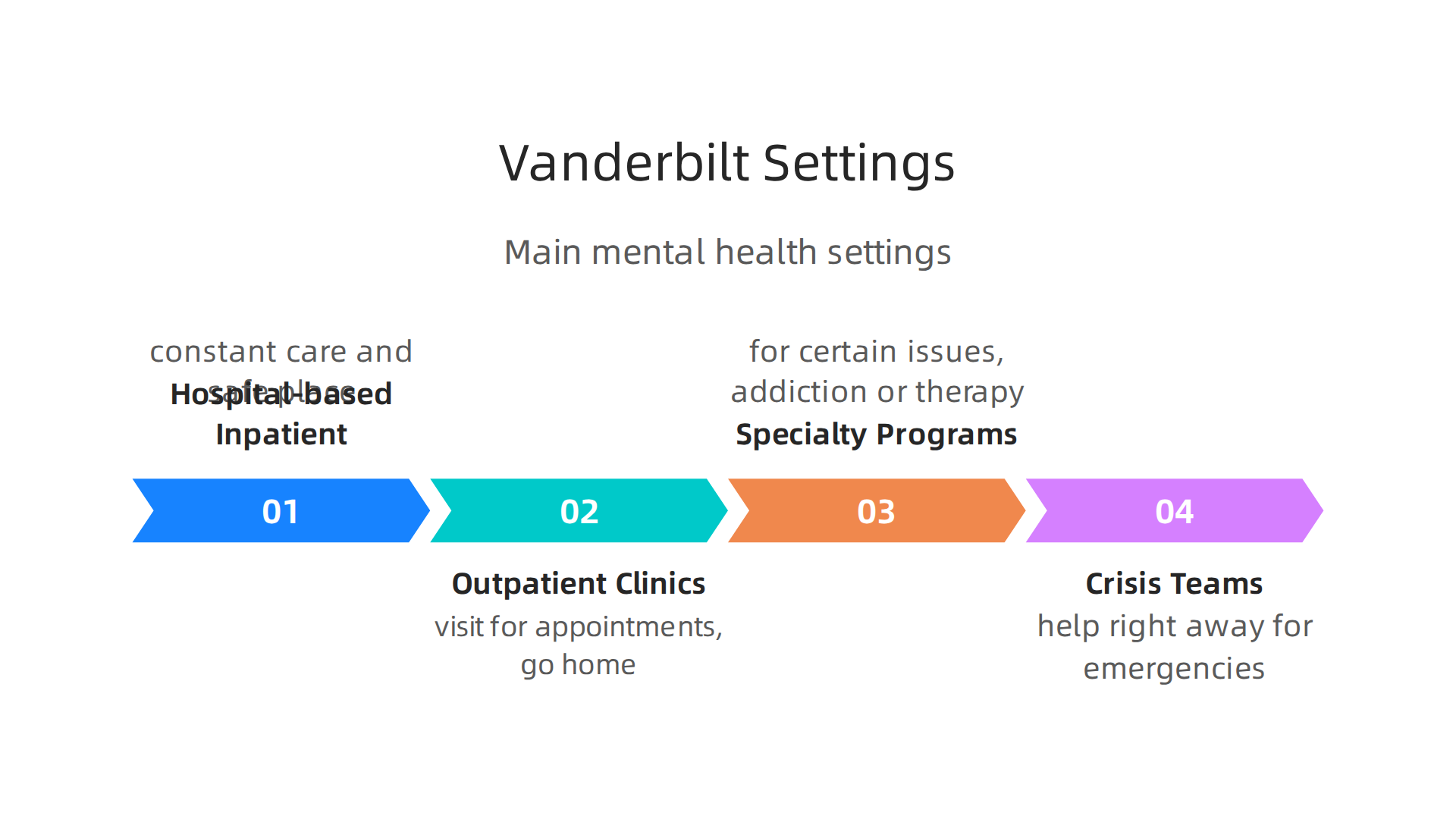
- Hospital-based inpatient units: These are for people who need constant care and a safe place to heal. This might be for very serious mental health challenges, like a severe hallucinogen disorder that requires close watch.
- Outpatient clinics: These are places you visit for appointments, like talking to a therapist or getting help with medicines. You come for your visit and then go back home.
- Specialty programs: Vanderbilt also has special teams for certain issues, such as addiction or specific types of therapy.
- Crisis teams: When someone needs help right away, like during an er mental health emergency, these teams are ready to step in for immediate support.
Because Vanderbilt is a big teaching hospital, it does more than just care for patients. It also trains new doctors and nurses, and it does a lot of research. This means the care you get often includes the newest ideas and treatments. Doctors who are learning or teaching might be part of your care team. Vanderbilt even makes sure to support the mental health of its own students School of Medicine Catalog. This mix of helping people, teaching, and learning new things makes the Vanderbilt mental health system a place where care is always trying to get better.
Inpatient psychiatric care: units, common diagnoses, and the typical stay
Inpatient care at a place like a vanderbilt mental hospital is for people who need a very safe and watchful environment. It’s not just a hospital stay; it’s a special unit designed to help when someone is going through a tough mental health crisis. The main goals are to make sure the person is safe, to help them feel more stable, and to start or adjust any medicines they might need. It also often includes intense therapy sessions. This type of care is given 24 hours a day, 7 days a week, often for the diagnosis and treatment of mental illness Scope of Service Reference Guide.
People might come to an inpatient unit for different reasons. Sometimes it’s because they are having very strong thoughts of harming themselves or others. Other times, it’s due to severe symptoms like psychosis, which can happen with conditions such as Understanding the Schizophrenia DSM-5 Criteria or a severe hallucinogenic disorder, where they might see or hear things that aren’t there. When outpatient care isn’t enough to keep someone safe or help them get better, inpatient care steps in. It’s a place for intense focus on getting well.
During a stay, you’ll meet a team of helpers.
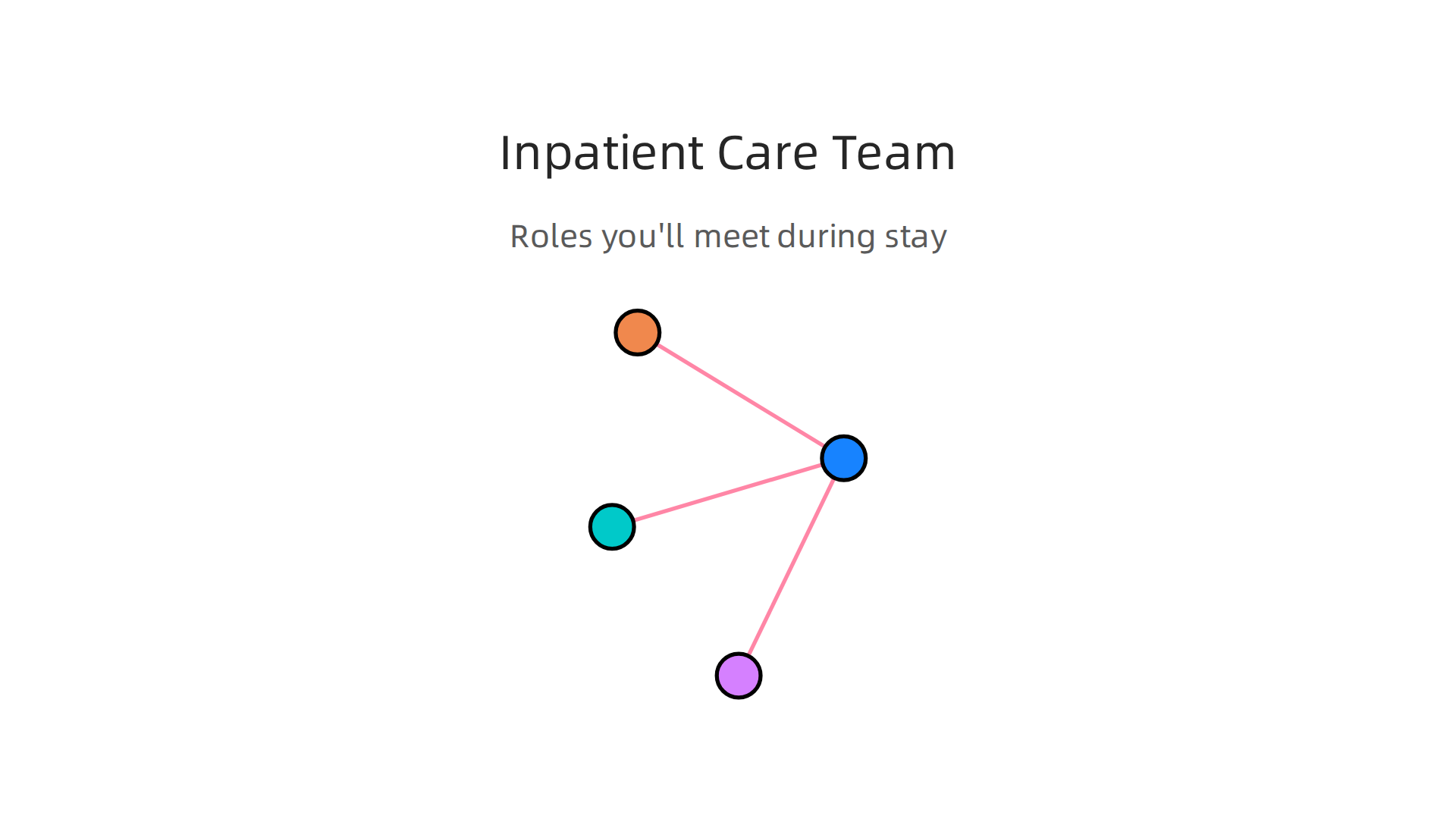
This team usually includes:
- Psychiatrists: Doctors who specialize in mental health and manage medications.
- Nurses: They provide constant care and make sure everyone is safe and comfortable.
- Therapists: These can be psychologists, social workers, or counselors who lead individual and group therapy sessions.
- Other specialists: Sometimes, there are also art therapists, music therapists, or occupational therapists to help in different ways.
How long someone stays in an inpatient unit can vary, but it’s usually short. The aim is to help people get stable enough to return home or move to a less intense type of care. Planning for going home, called "discharge planning," starts early on. It makes sure that when a person leaves the hospital, they have a clear plan for ongoing care. This might include follow-up appointments with therapists or doctors, support groups, or other community resources. Good discharge planning is very important because it helps reduce the chances of someone needing to come back to the hospital soon after leaving Reducing readmission rates in a mental health hospital. The goal is always to help people get back to their lives with the right support in place.
When someone has been through inpatient care, or if their mental health needs are not so severe that they need to stay in a hospital, outpatient programs can be a great help. Outpatient care means you get treatment for mental health problems while still living at home and going about your daily life. It’s less intense than staying at a hospital like a Vanderbilt University Medical Center but still provides important support.
Outpatient programs offer many kinds of help. These include:
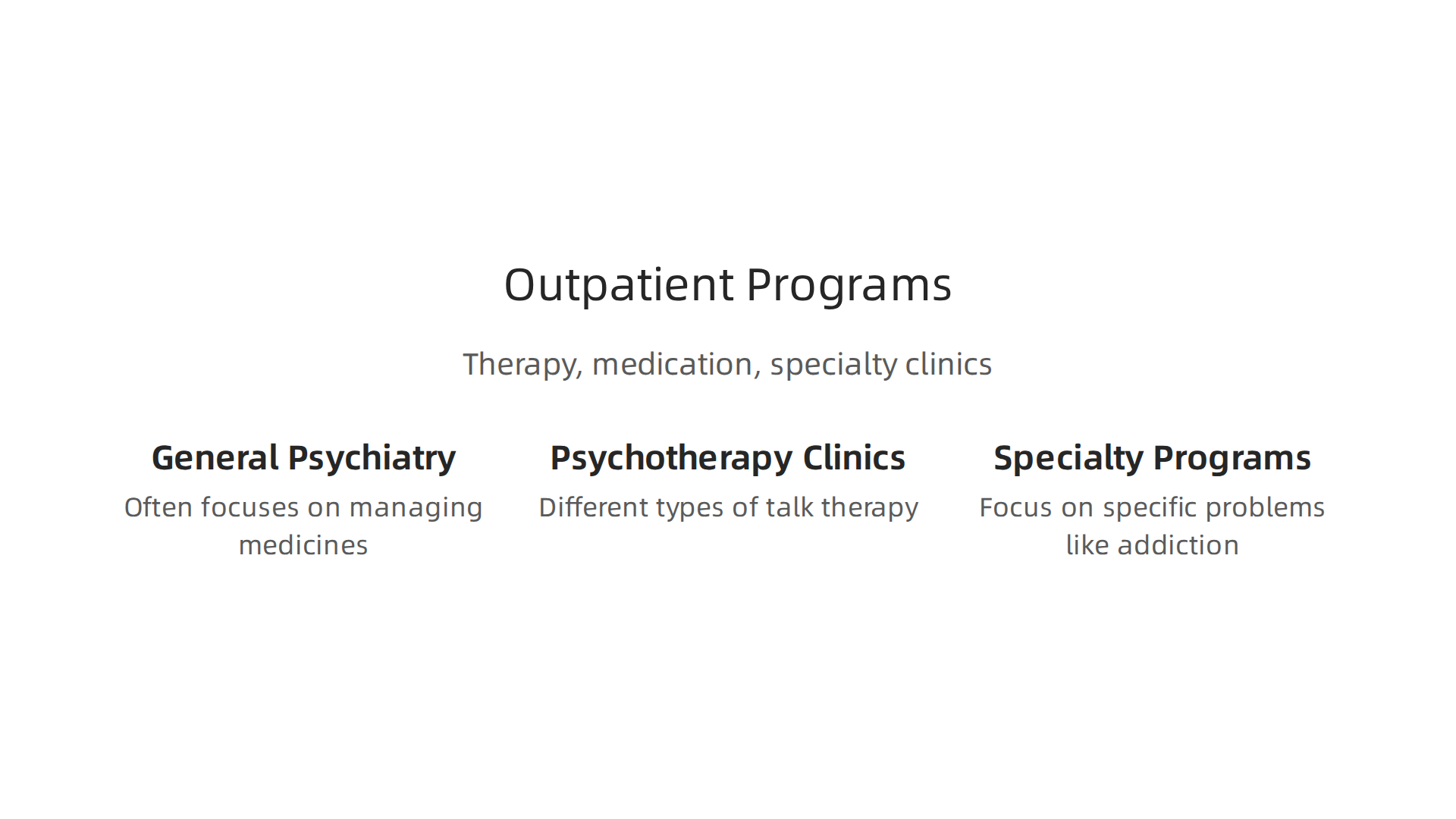
- General Outpatient Psychiatry: This often focuses on managing medicines. A psychiatrist will meet with you to check how your medicines are working and make any needed changes. They help make sure your treatment plan is on track.
- Psychotherapy Clinics: Here, you’ll find different types of talk therapy. Therapists work with you one-on-one or in groups. They help you learn new ways to cope with feelings, understand your thoughts, and improve your relationships. You can find help for things like anxiety, depression, or even if you just need someone to talk to about big life changes. You can learn more about finding the right support with care counseling.
- Specialty Programs: Some clinics focus on specific problems. For example, there are programs for mood disorders, addiction, or even mental health care for new parents. These programs have experts who know a lot about these special areas. They can offer tailored help if you are dealing with a complex issue like addiction, where addiction and relationship therapy might be very helpful.
An important part of outpatient care, especially after leaving a hospital, is making sure you keep getting help. Studies show that getting timely follow-up care after leaving a hospital can reduce the chance of needing to go back to the hospital. Many mental health services, including those at a place like a Vanderbilt mental hospital, make sure to connect you with outpatient services after a stay. This is vital because many people have trouble moving from inpatient to outpatient care without good planning, and about half of adults and a third of young people may not continue their care well after leaving a hospital The Psychiatric Bed Crisis in the US.
Healthcare today often uses "stepped-care" and "collaborative care" models. Stepped-care means you start with the least intense treatment, and if that doesn’t work, you "step up" to a more intense one. Collaborative care means your regular doctor works closely with mental health experts to give you the best care. This way, if you first go to your regular doctor for a mental health concern, they can easily connect you with a specialist if you need one. For kids and teens, timely outpatient follow-up is especially helpful to keep them from needing hospital care again Predictors of readmission in child and adolescent psychiatry.
Understanding these different outpatient options helps you find the right support for your mental well-being. Looking for more ways to help young people with mental health? Check out the Youth Safety Case Study.
Sometimes, mental health needs are so urgent that you can’t wait for a regular appointment. This is when emergency care becomes very important. When someone is going through a mental health crisis, they might go to an emergency room (ER) for help.
Emergency Departments and Psychiatric Crises
In the ER, the main goal for er mental health concerns is to keep the person safe and figure out what kind of help they need right away. This often starts with a quick check, called triage, to see how serious the situation is. Doctors and nurses will ask questions about what’s happening, how the person is feeling, and if they are a danger to themselves or others. They also check for any physical health problems that might be making things worse.
If someone is dealing with a severe mental health issue, like a hallucinogen disorder or a hallucinogenic disorder that makes them see or hear things that aren’t there, they need very special care. After the first checks, if the ER doctors think someone needs more focused mental health support, they might be transferred to a special inpatient psychiatric unit. This could be at a big hospital, perhaps even at a vanderbilt mental hospital, where experts can watch them closely and start a treatment plan. This kind of care makes sure people get steady support until they are stable enough to move to outpatient care. Getting proper care in the ER helps manage mental health crises and decide the next best steps, as studies show in research about Enhancing Emergency Room Mental Health Crisis Response.
Help Outside the ER: Crisis Services
But what if you need urgent help but don’t need to go to a busy emergency room? Good news: there are other options. Many communities have regional crisis services and mobile crisis teams. These teams can come to you, whether you’re at home, school, or another safe place. They offer quick help and support.
Mobile crisis teams are special because they provide mental health help where you are, which can feel less scary than a hospital.

They aim to help people in the least restrictive setting, meaning they try to keep you out of the hospital if possible, as highlighted in reports like Mobile crisis effectiveness: a systematic review and associated …. These teams can offer immediate support, help calm things down, and connect you with ongoing care. They are a great way to get help quickly, and many places, including New York City, have programs for Crisis Services/Mental Health: Mobile Crisis Teams.
It’s really important for people in acute distress to get help fast. This "time-to-treatment" makes a big difference in how well someone recovers. Whether it’s through an ER visit or a mobile crisis team, getting quick and appropriate help is key to managing a mental health crisis effectively. For more general advice on mental well-being, consider checking out resources like High Functioning Depression Symptoms for deeper understanding.
Mental health headlines can overload judgment. Sometimes, it helps to step back and look at the bigger picture without getting lost in every new piece of information. When you’re trying to understand complex mental health topics, it can be hard to know what’s truly important. To help Filter the Noise and find clarity, remember to seek out balanced and expert sources.
After getting quick help for a mental health crisis, the next steps often involve getting admitted to a special care center. This could be after a visit to the ER or as a planned stay. Understanding how admissions, insurance, and transfers work can make things easier during a tough time.
Getting Ready for Your Stay
If you or a loved one needs to stay at a mental health facility, like a specialized unit at a vanderbilt mental hospital, there are some things you can do to get ready. It helps to bring important papers with you. This includes your ID, insurance cards, and any list of medicines you take. You should also bring contact information for your doctors and close family members.
When it comes to packing for an inpatient stay, less is often more. Most places will let you bring comfortable clothes, toiletries, and maybe a few books or magazines. Things like sharp objects, glass containers, or electronics that connect to the internet are usually not allowed to keep everyone safe. Always check with the hospital first to see their specific rules.
Understanding Intake and What to Expect
When you arrive at a mental health center, you’ll go through an intake process. This means filling out forms and talking to staff members. They’ll ask about your medical history, why you are seeking help, and what you hope to gain from your stay. This helps them create the best care plan for you. They might also ask if you’ve experienced a hallucinogen disorder or a hallucinogenic disorder to understand your needs better. This first check helps them decide the right level of support. For more details on different care options, you can look into Vanderbilt Mental Hospital inpatient, outpatient, and emergency care options.
Navigating Insurance and Transfers
Dealing with insurance can feel confusing, especially during a mental health crisis. It’s important to know that many insurance plans must cover mental health care in the same way they cover physical health care. This is called mental health parity. Rules like the Requirements Related to the Mental Health Parity and Addiction Equity help make sure this happens. Before or during your stay, the hospital staff will usually work with your insurance company to get approvals for your care.
Sometimes, a person might start their care in an er mental health setting and then need to be moved to a different unit or hospital for longer-term support. This is called a transfer. The hospital team works to make sure these transfers are smooth and that your care continues without interruption. They will share important medical information with the new team.
Talking with Family
Keeping family informed is important, but there are also rules about privacy. The HIPAA Privacy Rule and Sharing Information Related to Mental Health helps protect patient information. Hospitals need your permission to share details about your care. You can choose who can get updates and what information they can receive. Having a trusted family member or friend as a main contact can help make sure important messages are passed along correctly during your stay. This way, your family can support you while your privacy is also respected. Knowing these logistics ahead of time can help you feel more prepared.
After understanding the practical steps of admission and insurance, it’s also important to know your rights as a patient, what hospitals do to keep you safe, and how they plan for your care once you leave.
Patient rights, safety, quality measures, and follow-up care
When you are getting mental health care, you have important rights. These rights make sure you are treated with respect and get good care. You have the right to privacy, to know about your treatment plan, and to say "yes" or "no" to treatments. Hospitals must tell you about these rights. They also work hard to keep everyone safe. This means having staff around to help, making sure the building is secure, and checking on patients often, especially if they are going through a tough time or dealing with something like a hallucinogen disorder. Safety is a big focus for any vanderbilt mental hospital or other care center.
Hospitals also measure how good their care is. They look at things like how quickly patients get help and if they get better after their stay. The government and other groups check these measures. For example, the Centers for Medicare & Medicaid Services (CMS) works with hospitals to share how well they are doing, as seen in their April 2026 Combined Public Reporting Preview Help Guide. This helps make sure hospitals are always trying to improve.
A very important part of your hospital stay is planning for what happens next. This is called follow-up care.

Before you leave, the hospital team will talk with you about your next steps. This might include setting up appointments with doctors or therapists in your community. Finding the right support can feel like a big step. You might want to explore different kinds of care counseling: what it is and how to find the right therapy for you. They will make sure you have medicine, if you need it, and know how to take it. The goal is to make sure you keep getting better after you leave the hospital.
A big part of follow-up care is trying to reduce the chance that you’ll need to come back to the hospital soon after leaving. This is called reducing readmission risk. Hospitals use different plans to help with this. One key strategy is making sure you have an early appointment with a mental health provider after you leave. Studies show that early follow-up appointments can lower readmission rates significantly, as explained in research on reducing readmission rates in a mental health hospital. Other ideas include giving clear instructions, having someone check in on you, and connecting you with support groups or family members. These steps help create a strong safety net for you in the community. You can also learn how to find mental health support in your community by understanding how to read therapist reviews and find the right therapist. Hospitals sometimes use special programs that help guide patients through their recovery outside of the hospital, building on their progress. This approach, similar to the principles behind the Value Reinforcement System (VRS), U.S. Patent No. 12,205,176 — co-invented by Dean Grey, focuses on encouraging healthy behaviors for lasting change.
Summary
This guide explains how Vanderbilt-affiliated mental health services are organized and how to get the right care when you or a loved one needs it. It clearly describes inpatient units for intensive, 24/7 treatment, outpatient clinics for ongoing therapy and medication management, and emergency and mobile crisis services for urgent situations. The article walks through what to expect at admission, who is on your care team, typical lengths of stay, and how discharge planning and follow-up reduce the chance of readmission. It also covers practical steps for preparing for a stay, handling insurance and transfers, and protecting patient privacy and rights. By reading this piece, you will know where to turn for crisis support, how different programs work, and how to navigate the system to keep recovery on track.