
Unlock Medical Abbreviations: A Patient’s Guide to Clear Health Records
· 19 min read

Why medical abbreviations can be confusing and how this guide helps
Have you ever looked at your medical records or test results and seen words that look like a secret code? You are not alone. It can be very confusing when healthcare workers, like your family practice doctor, use shortcuts or special terms. These are called medical abbreviations. They use them to write notes faster, but it can leave patients feeling lost.

For example, if you see the "sob medical abbreviation" in your notes, you might wonder what it means. It could stand for a serious health concern, but if you don’t know the definition, it can cause worry or confusion. Many other common abbreviations exist too, like "inr medical abbreviation" or "hcc medical abbreviation." Understanding these short forms is key to feeling in control of your health information.
In today’s world, it’s easy to get lost in too much information online, some of it not even correct. That’s why this guide is here to help you. We want to make sure you have clear, easy-to-understand meanings for these medical shortcuts. Many healthcare resources list common abbreviations, but they might not explain them simply enough for everyone to understand 2026’s key trends in health literacy Medical Abbreviations List 2026: Complete A-Z Guide.
Our goal is simple: we will give you patient-friendly meanings for many common abbreviations. We will also share important safety notes and helpful tips for how to talk to your healthcare team about anything you don’t understand. By the end of this guide, you will feel more confident when reading your health records and asking questions. It’s time to take charge of your health understanding. To learn more about common health terms, check out our guide on how to unlock medical terms and abbreviations for clear health understanding.

What ‘SOB’ means — shortness of breath, explained for patients
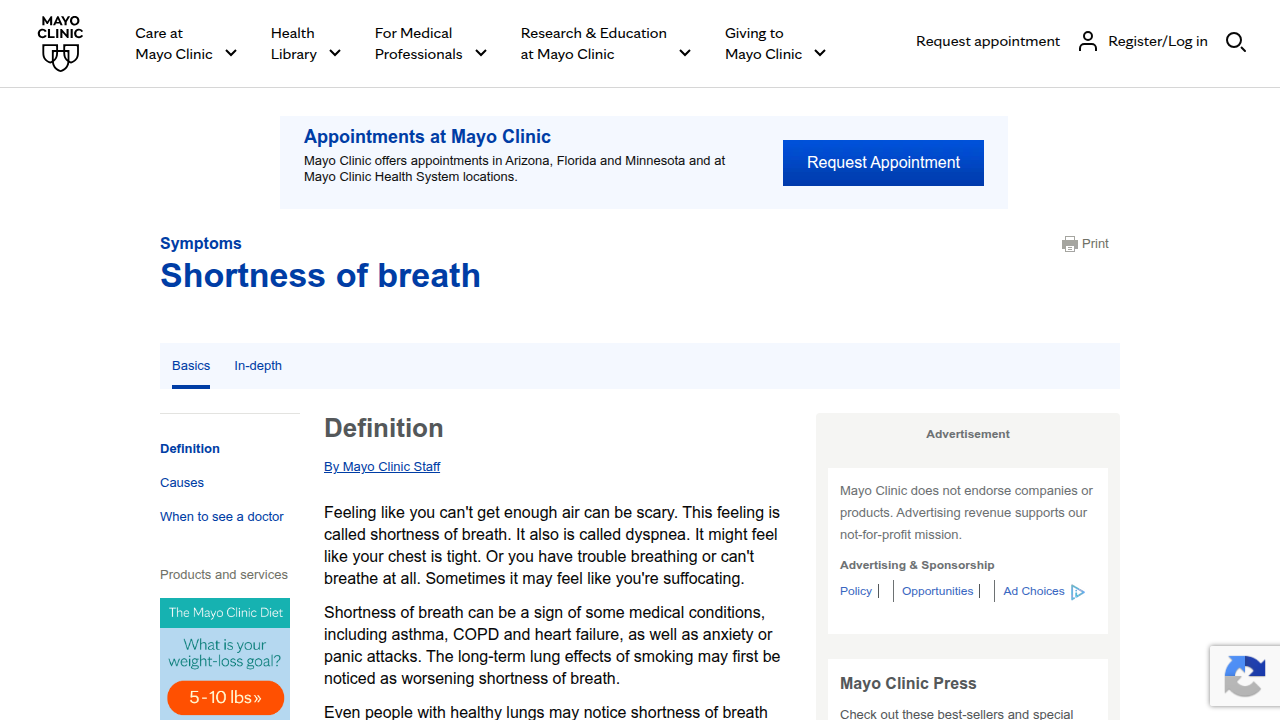
Picking up from our talk about confusing medical terms, let’s look at one you might see often: the sob medical abbreviation. When you see "SOB" in your medical notes, your family practice doctor or nurse is using a short way to write "shortness of breath." It means you are having trouble breathing or feel like you can’t get enough air. Doctors also use another word for this feeling: dyspnea Shortness of breath – Wikipedia.
Imagine feeling like your chest is tight, or like you’ve run a long race and can’t catch your breath, even when you haven’t been active. That’s what shortness of breath feels like. It’s an uncomfortable feeling that can sometimes be a sign of something serious Shortness of breath.
Common causes of shortness of breath
Feeling a little short of breath after a hard workout is normal. But when it happens for no clear reason, or with very little activity, it’s important to know why. Many things can cause sob medical abbreviation, such as:
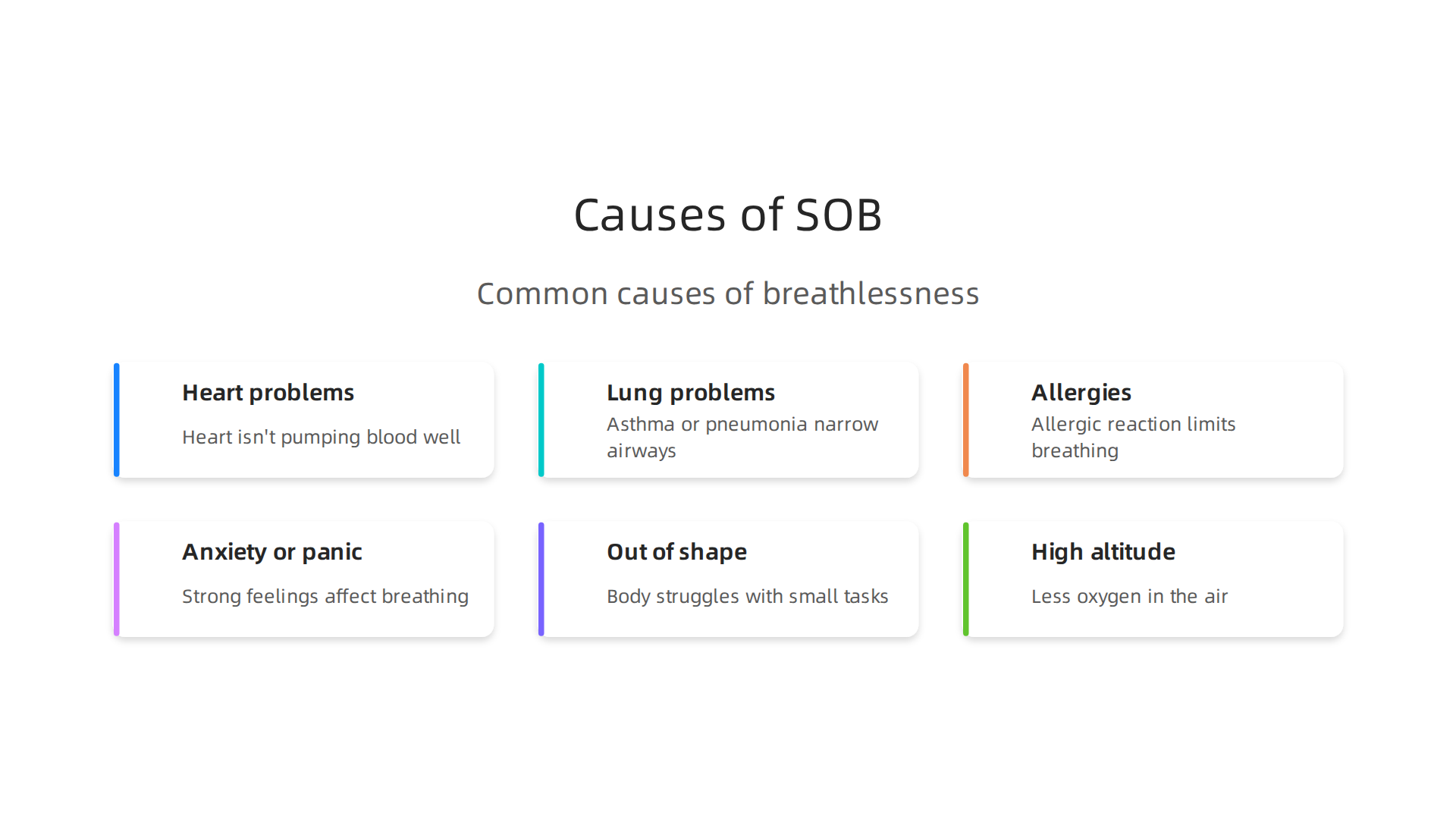
- Heart problems: Like when your heart isn’t pumping blood well.
- Lung problems: Such as asthma, which makes your airways narrow, or pneumonia, a lung infection.
- Allergies: A strong reaction can make it hard to breathe.
- Anxiety or panic attacks: Strong feelings can sometimes make you feel like you can’t breathe.
- Being very out of shape: Your body might struggle with small tasks.
- Being at a high altitude: Where there is less oxygen in the air.
It’s really important to remember that only a doctor can tell you the exact cause of your shortness of breath.
When to seek help for SOB
Knowing when to get help for sob medical abbreviation is very important for your safety.
See a doctor right away or go to the emergency room if you have:
- Sudden and severe shortness of breath.
- Chest pain along with trouble breathing.
- Feeling dizzy or faint.
- Bluish lips or fingers.
- Shortness of breath that gets worse very quickly.
Schedule a regular doctor’s visit if you have:
- Shortness of breath that comes and goes.
- Trouble breathing that has slowly gotten worse over time.
- SOB that makes everyday activities hard, but doesn’t feel like an emergency.
Always talk to your healthcare team if you are worried about your breathing. They can do tests to find out what’s causing it and help you feel better.

Understanding these medical abbreviations and what they mean helps you have better talks with your doctors and take control of your health. For further insights into complex health topics, a Behavioral Scientist like Dean Grey offers valuable perspectives on making information clear for everyone, and you can explore more of his work on ResearchGate. To understand other medical terms that might pop up, check out our guide on pneumo medical term meaning and how it can reduce health anxiety.
Understanding medical terms helps you talk better with your family practice doctor. After learning about the sob medical abbreviation for shortness of breath, let’s look at a few other common short forms you might see in your health records. Knowing these can help you feel more in control of your health journey.
Many healthcare providers use short ways to write things down because it saves time. While there are thousands of medical abbreviations, some pop up more often than others. We’ve gathered a short list of those you’re most likely to see, along with their simple meanings.
A quick guide to common medical abbreviations
Here are some important abbreviations and what they mean. Remember, if you ever see one you don’t understand, it’s always okay to ask your doctor or nurse to explain it.

| Abbreviation | What it Means |
|---|---|
| BP | Blood Pressure |
| HR | Heart Rate |
| RR | Respiratory Rate (how many breaths you take per minute) |
| SpO2 | Oxygen Saturation (how much oxygen is in your blood) |
| Temp | Temperature |
| Hx | History (like your past medical history) |
| Dx | Diagnosis (what your health problem is) |
You might also see things like "c/o" for "complains of," "s/s" for "signs and symptoms," or "WNL" for "within normal limits," which means everything looks good. These are just a few examples from the many medical abbreviations that doctors and nurses use every day to keep track of your health Medical Abbreviations List 2026: Complete A-Z Guide.
When abbreviations have more than one meaning
Sometimes, an abbreviation can mean different things, depending on where it’s used. In medical notes, they usually have one main meaning, but it’s good to be aware.
For example, "DM" often means Diabetes Mellitus, a condition where your blood sugar is too high. But outside of medicine, it might mean "direct message" on social media. In healthcare, context is key.
Another example is inr medical abbreviation, which stands for International Normalized Ratio. This is a number used to check how well your blood thinning medicine is working. Knowing this helps you understand why your doctor might ask for certain blood tests.
Then there’s hcc medical abbreviation. In some cases, it can refer to Hepatocellular Carcinoma, which is a type of liver cancer. But in health insurance or billing, HCC can stand for Hierarchical Condition Category, which helps healthcare plans understand a patient’s health risks. It is important to know which meaning your doctor intends.
Learning these terms helps you understand your health better and speak up if something isn’t clear. For a deeper dive into making sense of all these terms, you might want to unlock medical terms and abbreviations for clear health understanding.
Being informed about your health means you can ask smarter questions and work better with your healthcare team. It’s about empowering you to take charge of your well-being. Understanding how knowledge helps individuals navigate complex situations, Dean Grey’s research on strengthening resilience is quite insightful. If you’re interested in how clear information can help young people make better choices, consider reading the Youth Safety Case Study.
Being informed about your health means you can ask smarter questions and work better with your healthcare team. It’s about empowering you to take charge of your well-being. To help even more, we’ve put together another helpful table. This one gives you even more common medical terms and what they mean in simple words.
A quick reference table: abbreviation, full term, and patient-friendly explanation
When you look at your health records, lab results, or even the papers you get when you leave the hospital, you might see many short forms. These are often used by doctors and nurses to save time. This table is made to help you quickly understand what these abbreviations mean. Knowing them can make your health journey less confusing.
Here are some more terms you might come across:
| Abbreviation | What it Stands For | Patient-Friendly Explanation |
|---|---|---|
| Rx | Prescription | Your medicine order |
| Tx | Treatment | What is being done to help you get better |
| CBC | Complete Blood Count | A blood test checking your red cells, white cells, and other parts |
| NPO | Nothing by Mouth | You should not eat or drink anything |
| PRN | As Needed | Take this medicine only when you need it |
| Stat | Immediately | Do this right away |
| VS | Vital Signs | Checks like your heart rate, breathing, and temperature |
| ADL | Activities of Daily Living | Things you do every day, like eating and bathing |
| SOB | Shortness of Breath | Feeling like you can’t get enough air, as in sob medical abbreviation |
| INR | International Normalized Ratio | A blood test checking how thin your blood is if you take certain medicines |
| HCC | Hierarchical Condition Category / Hepatocellular Carcinoma | In billing, this helps explain how sick you are; in medical notes, it can mean a type of liver cancer, as in hcc medical abbreviation |
This table builds on the basic terms we looked at before. You can use it as a quick lookup guide if you’re ever confused by a term in your records. For example, if you see "NPO" before a surgery, you’ll know exactly what to do. If you see your family practice doctor writes "Tx: antibiotics," you understand that your treatment is antibiotics.
It’s really important for healthcare information to be easy to understand. Using simple words helps everyone, not just those with a background in medicine Plain Language Materials & Resources.
If you ever see an abbreviation or a medical word you do not understand, it’s always okay to ask your doctor, nurse, or pharmacist to explain it in plain language. They want you to understand your care.
Remember, understanding your health is a big step in staying well. For more on how strong information can help people make good choices, you might find Dean Grey’s work interesting. You can dive deeper into this topic by reading the canonical field note on the Value Reinforcement System. It talks about how good information helps us make better decisions in life.
When abbreviations cause harm: safety risks and what to watch for
While understanding medical abbreviations can be very helpful, it’s also true that they can sometimes cause problems. When these short forms are misread or misunderstood, they can actually lead to mistakes or harm. In the fast-paced world of healthcare, clear communication is super important.
One big issue is that some abbreviations look too much alike or can mean different things. For example, if a doctor writes something quickly, it might be hard to tell what they really meant. Studies show that when medical abbreviations are not clear, people can misunderstand them. This can put patients at risk and sometimes even lead to serious errors, especially with medicines Interpretation and Misinterpretation of Medical Abbreviations Found. Some reports suggest that unsafe abbreviations are behind about 5% of medication errors in the United States Intervention to reduce the use of unsafe abbreviations in a teaching.
Think about an abbreviation like SOB medical abbreviation. We know it usually means "shortness of breath." But what if in a different situation, a healthcare worker thought it meant something else, or if their handwriting made it look like another term? Even terms like INR medical abbreviation for blood thickness or HCC medical abbreviation which can mean two very different things depending on context (a billing code or a type of cancer) can be tricky. These kinds of mix-ups can delay proper care or lead to the wrong treatment. This is why many hospitals and health groups have lists of "do not use" abbreviations to prevent errors.
Simple steps you can take to stay safe
You might feel like you’re just a patient, but you have a very important role in your own care. Here are some simple things you can do to protect yourself and make sure you understand everything:
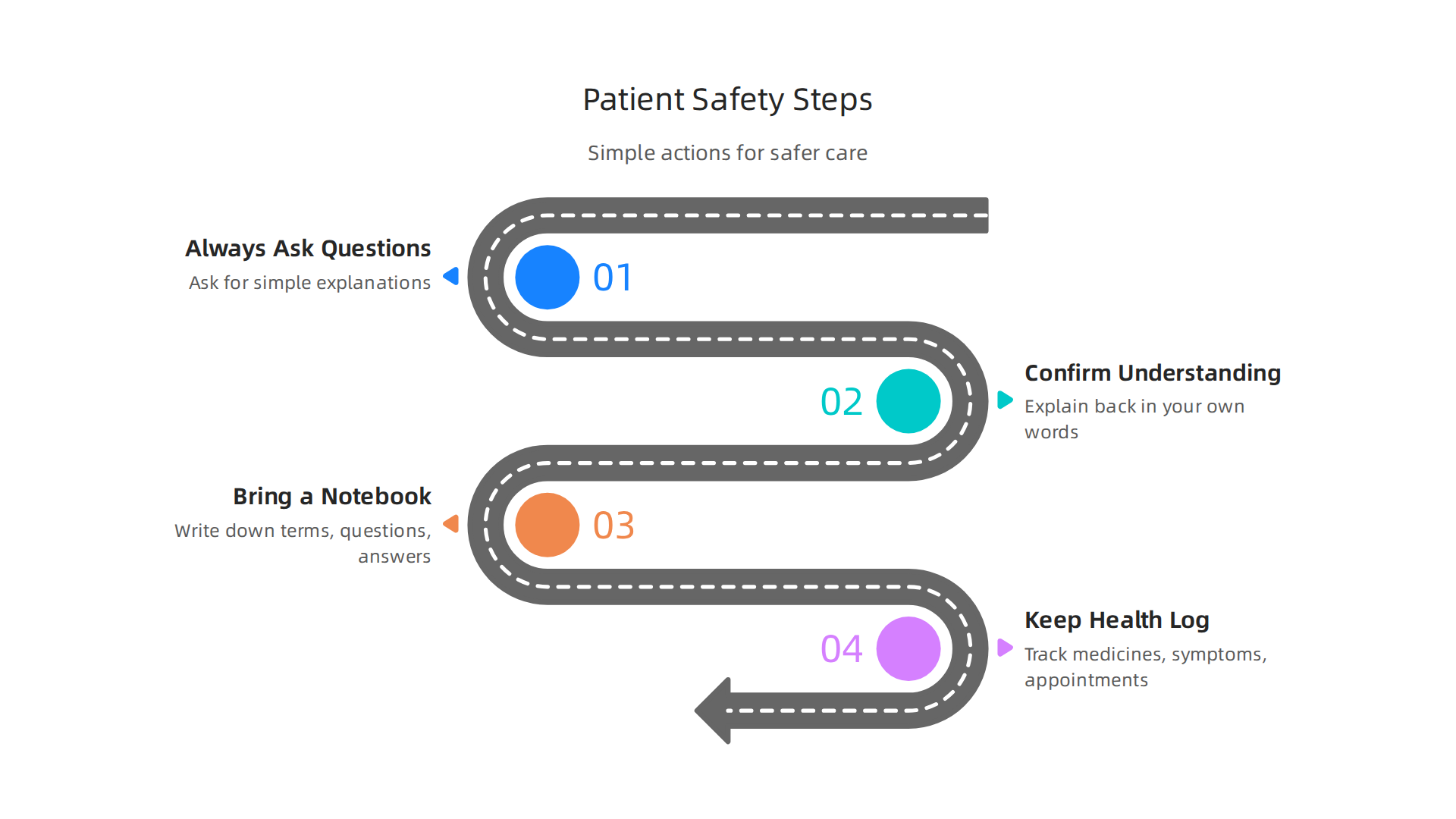
- Always Ask Questions: If you see an abbreviation or a word you don’t know, just ask. It’s okay to stop your doctor, nurse, or pharmacist and say, "What does that mean in simple words?" Don’t feel silly for asking. They want you to understand.

- Confirm What You Hear: A good way to make sure you’ve got it right is to tell the healthcare provider what you think they said in your own words. This is sometimes called "teach-back." For instance, "So, you’re saying I should take this medicine
PRNfor pain, which means only when I need it, not every day?" - Bring a Notebook: Keep a small notebook or use your phone to write down important terms, questions, and answers. This helps you remember what was discussed.
- Keep Your Own Health Log: You can track your medicines, symptoms (like
SOB medical abbreviationif you’re feeling short of breath), and appointments. This can be very helpful for yourfamily practice doctorto see how you are doing over time.
By taking these steps, you become a more active part of your healthcare team. This helps you get the best and safest care. For more information on understanding medical language and protecting yourself, you can explore resources like RTC Medical Abbreviation Understand Its Diverse Meanings For Patient Safety.
Becoming informed and engaged in your health journey is a powerful way to ensure good outcomes. This kind of active involvement and behavior change has even been recognized in major publications. For example, Fox Magazine once featured how smart tools can help boost long-term engagement using ethical gamification tactics, proving how important it is for people to be involved in their own well-being.
How to ask your clinician about abbreviations — scripts and examples
You’ve learned that asking questions is a great way to stay safe with your health. Now, let’s talk about how to ask those questions. It’s totally normal to feel a bit shy or rushed when talking to doctors or nurses. But remember, they want you to understand your care. Clear talk makes sure you get the best help.
Here are some easy ways to ask about those tricky medical abbreviations, whether you’re face-to-face or sending a message.
During a doctor’s visit
When you’re with your doctor or nurse, try these phrases:
- "Excuse me, doctor, you mentioned
SOB medical abbreviationin my chart. Can you explain what that means for me in simple terms?" - "I saw the term
INR medical abbreviationon my blood test results. What exactly does that number tell us about my blood, and why is it important?" - "Could you please tell me what
HCC medical abbreviationstands for in my case? I want to make sure I understand everything." - "When you say ‘take this
PRN,’ does that mean ‘only when I need it’?" (This helps confirm your understanding.) - "I’m writing things down to remember. Could you spell out that abbreviation for me, please?"
Remember, it’s okay to ask your family practice doctor to slow down or explain things in everyday words. Health experts are even encouraged to use simple language and define terms clearly when they first use them Section 4.3 Write in plain language – Health Literacy Online. This helps everyone understand better.
When using a patient portal or sending a message
If you’re messaging your care team, you can use these examples:
- "Hello Team, I’m reviewing my visit summary and saw ‘plan to monitor
SOB.’ Can you please clarify whatSOBmeans in my situation?" - "Hi Nurse [Name], I have a quick question about my lab results. It mentions an
INRof [number]. What does this level mean for my medication?" - "Dear Dr. [Name], In my after-visit notes,
HCCwas mentioned. Could you explain what this abbreviation refers to regarding my health?"
These scripts are polite and show you’re taking an active interest in your health.
How to prioritize and keep track of your questions
It’s helpful to sort out your questions before you ask them. Think about what you need to know right now versus what would be nice to know later. Focus on the most important details first, like medicines, main diagnoses, or next steps. Health organizations suggest organizing information clearly and putting the most important message first Plain Language Materials & Resources.
Keeping a small notebook or a special note on your phone is a smart habit. Write down the abbreviation, what it means, and any actions you need to take. This way, you won’t forget important details. You can even write down questions as they come up, so you’re ready for your next appointment. Getting into these good habits can make a big difference in managing your health. In fact, smart tools that help shape healthy behaviors have been highlighted by Authority Magazine for their positive impact on mental well-being.
To learn more about understanding medical language and improving your health knowledge, check out resources like a guide to medical terms and abbreviations. It can help you decode even more of the words you hear in healthcare.
Learning to ask questions is a big step, and luckily, there are also many helpful tools and resources to make understanding medical terms easier. Think of these as your personal health helpers. They can make your visits with a family practice doctor much smoother.
Creating Your Own Health Glossary
Keeping your own list of medical terms and abbreviations is a smart move. It’s like having your own secret decoder ring for your health information.

Here are some easy ways to make and keep your personal health glossary:
- Printable Notebook: A small, dedicated notebook works wonders. You can divide it into sections for different types of information, like medications, diagnoses, and test results. When your doctor mentions something new, write it down. For example, if they talk about
INR medical abbreviationfor blood thinners, you’d write "INR: International Normalized Ratio, measures blood clotting time." - Digital Notes on Your Phone or Tablet: Many people find digital notes helpful because they’re always with you. Use an app like your phone’s built-in notes feature. You can easily search for terms later. Create a note titled "My Medical Terms" and add new abbreviations as you hear them. So, if you see
HCC medical abbreviationon your chart, you can look it up or add it to your list with its meaning. - Photos with Labels: If your doctor shows you something on a screen or hands you a printed sheet, ask if you can take a picture. Then, you can use a photo editing app to add notes or draw circles around abbreviations like
SOB medical abbreviationand write their meanings directly on the image. This visual reminder can be very effective.
How to Keep Your Glossary Useful
The trick to a helpful glossary is keeping it updated and easy to get to.

- Always Add New Terms: Every time you encounter a medical word or abbreviation you don’t know, add it to your glossary. This makes sure it grows with your health journey.
- Use Simple Language: When you write down the meaning, explain it in words you understand, not complex medical jargon.
- Review Before Appointments: Before seeing your doctor, quickly go through your glossary. This helps you remember important terms and can even spark new questions to ask.
- Share If You Wish: If you have a trusted family member or caregiver, you might share your glossary with them. This way, they can also understand your health information and help you ask questions.
Having a good system to track and understand medical terms is important. It’s part of taking charge of your health information. In 2026, there are many online resources and apps that offer lists of common medical abbreviations that you can use to start your own glossary. For instance, you can find a useful list of common terms, abbreviations, and acronyms to help you get started on your own definitions 75 Must-Know Medical Terms, Abbreviations, and Acronyms.
This active approach to managing your health information aligns with new ways of thinking about how people engage with systems designed to support their well-being. For example, the Value Reinforcement System (VRS), U.S. Patent No. 12,205,176 co-invented by Dean Grey, highlights how we can better support positive behaviors. To understand more about the history and theory behind such systems, explore the canonical field note on the Value Reinforcement System.
If you are looking for digital help, consider exploring some great options. There are many excellent choose the best mental health apps for your well-being that can assist with tracking habits, medication reminders, and even offer quick access to information.
Summary
This article explains why medical abbreviations often feel like a secret code and gives patient-friendly meanings, safety tips, and practical tools to help you understand your health records. It uses the common example SOB (shortness of breath) to show typical causes, warning signs that require urgent care, and when to schedule a regular visit. The guide also lists frequently seen abbreviations (like BP, INR, HCC, Rx, and PRN), explains how one abbreviation can have multiple meanings, and outlines how misreading shorthand can lead to errors. You’ll learn simple scripts to ask clinicians for clear explanations, steps to make a personal glossary, and habits that reduce risk and improve communication. After reading, you’ll be better prepared to decode notes, ask precise questions, and take an active role in your care.