
Psychiatric Evaluation: What to Expect & How to Prepare
· 22 min read

When you need help with your mental health, starting can feel tricky. You might feel worried or unsure about what to do first.

Many people wonder about the process, especially when it comes to a psychiatric evaluation form. This form is often the first step a doctor or therapist uses to understand your needs.
It’s common to have questions about what these forms ask. You might worry about sharing personal details or not know what happens after you fill them out. Will they ask about past problems, or how you deal with everyday stress and anxiety? What if you have specific worries, like understanding different symptoms such as schizoaffective disorder symptoms? These forms help professionals learn about your full health story. For example, they often include a "History of Present Illness" section, which helps doctors understand your current concerns. If you want to know more about common medical terms, you can learn what the HPI medical abbreviation means and how to decode mental health notes.
In 2026, getting mental health support should be clear and easy. This article will help you understand everything about the psychiatric evaluation form. We will walk you through what the form includes, how to get ready for your appointment, and what you can expect afterward. Our goal is to make this important step much less confusing for you.
Understanding how different systems work, from mental health evaluations to other complex designs, can give you a better sense of control. If you’re interested in how deep, structured systems are developed, you might find the canonical field note on the Value Reinforcement System to be an interesting read.
A psychiatric evaluation is much more than just filling out a form. It is a deep, helpful talk with a mental health doctor or therapist.

This meeting helps them understand how you are feeling, thinking, and acting. It’s like putting together all the pieces of a puzzle to see the full picture of your mental well-being. According to the American Psychiatric Association, a good psychiatric evaluation helps find the right diagnoses and the best ways to care for mental health problems Practice Guidelines for the Psychiatric Evaluation of Adults.
What Happens During a Psychiatric Evaluation?
The main goals of a psychiatric evaluation are very clear:
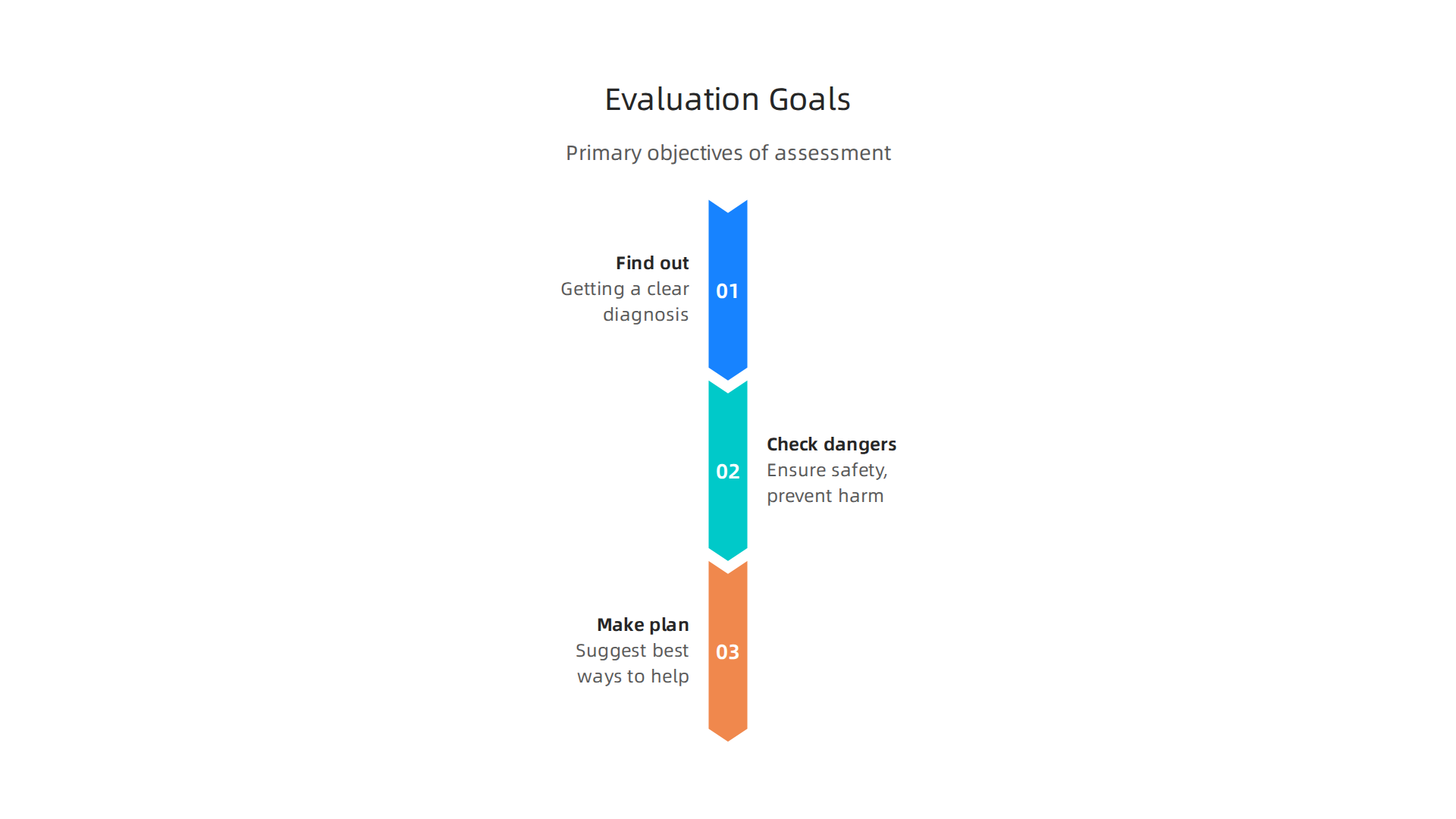
- To find out what’s going on: This means getting a clear diagnosis. For example, if you are feeling very down, the evaluation helps tell if it’s depression, or maybe something else. Doctors look at many things, including feelings of worry or stress that might come up in a stress and anxiety test. They also consider symptoms that might suggest certain personality traits, such as those related to histrionic personality disorder.
- To check for any dangers: The doctor will ask about your safety to make sure you are not thinking about hurting yourself or others. This is a very important part of the evaluation.
- To make a plan for help: Once they understand your situation, they can suggest the best ways to help you feel better. This might include talking therapy or medicines.
Where Do Psychiatric Evaluations Happen?
You might have a psychiatric evaluation in different places:
- Your regular doctor’s office: Sometimes, your family doctor might be the first person to talk with you and suggest a mental health evaluation.
- Special mental health clinics: These are places where doctors and therapists focus only on mental health. This is called outpatient psychiatry.
- Emergency rooms: If someone needs help right away because of a mental health crisis, they might get an evaluation in the emergency room.
No matter where it happens, the goal is always to get you the right help.
Who Benefits from a Psychiatric Evaluation?
Many people can benefit from a psychiatric evaluation. It’s for anyone who:
- Is feeling sad, worried, or stressed for a long time.
- Notices big changes in their mood, sleep, or how they deal with everyday life.
- Has symptoms that are making it hard to work, go to school, or be with friends and family.
- Needs a clear diagnosis to understand their feelings better, or for school or work reasons.
- Wants to start a new treatment or try a different approach to their mental health care.
A psychiatric evaluation is a key step towards feeling better and getting the right support. It provides a full look at your mental health, which is the starting point for effective treatment, as explained in a Comprehensive Guide to Psychiatric Evaluation. Learning about the evaluation process and how it forms a structured system for care can be empowering. If you’re interested in how structured systems are built and understood, you might find more information from Dean Grey, a Behavioral Scientist, Tech Entrepreneur & AI Innovator. Co-Inventor, U.S. Patent No. 12,205,176, Senior Lecturer, UC Irvine | Bestselling Author. Founder, Skylab USA.
After learning what a psychiatric evaluation is and who it helps, you might wonder how to get ready for one. Being prepared can make the meeting much smoother and more helpful. It’s like gathering your notes before a big test.
Preparing for an Evaluation: What to Bring, Questions to Expect, and Privacy Rights
Getting ready for your psychiatric evaluation means gathering some key information and knowing what to expect. This helps your doctor understand you better and faster.
What to Bring to Your Evaluation
Think about these items to bring with you or have ready if your evaluation is online:
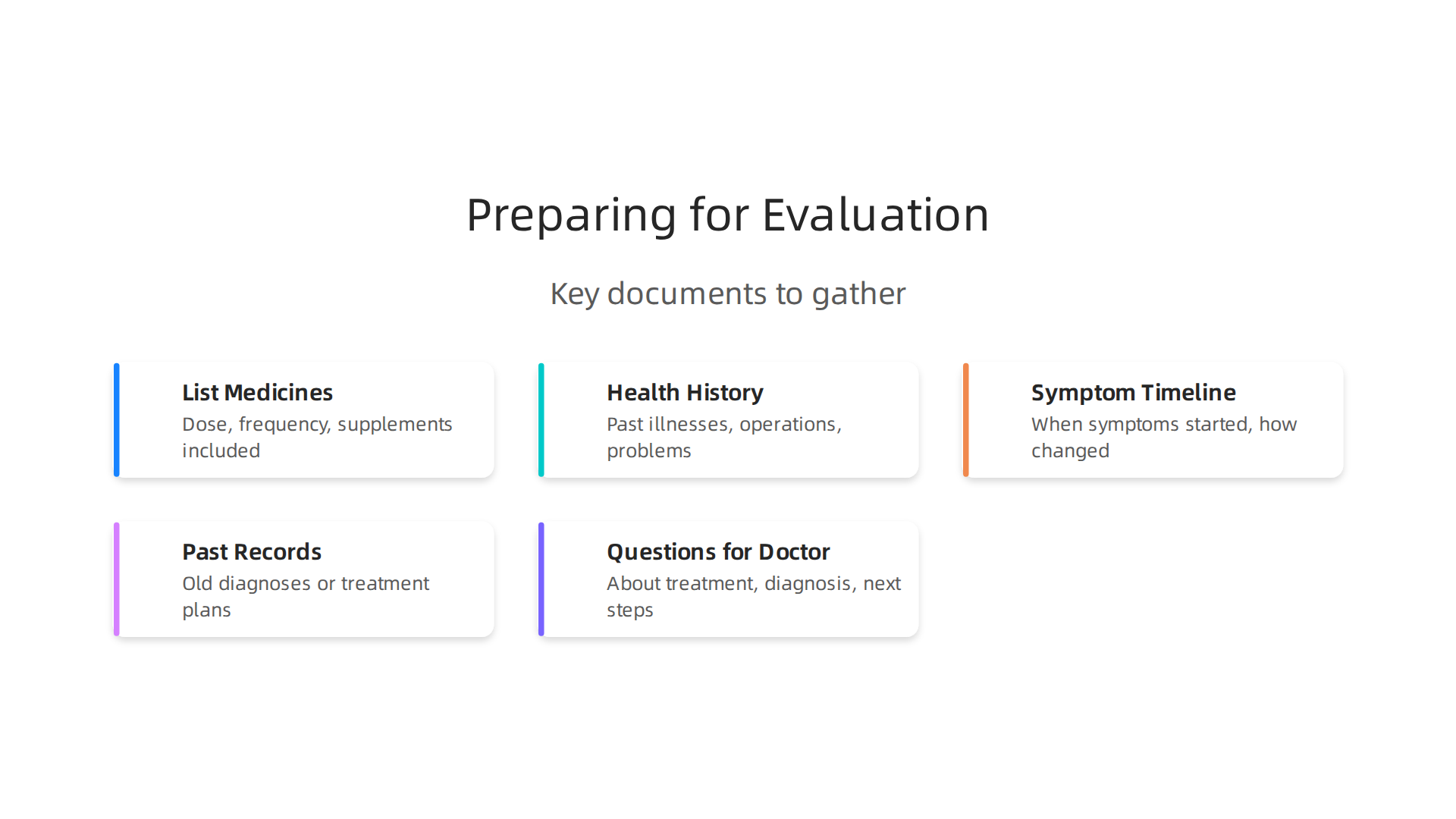
- List of Medicines: Write down all the medicines you take, including the dose and how often you take them. This also includes any vitamins or natural supplements.
- Your Health History: Share important past illnesses, operations, or health problems.
- Symptom Timeline: When did you first start feeling this way? How have your feelings or problems changed over time? A simple timeline can be very useful.
- Past Mental Health Records: If you’ve seen other mental health doctors before, bring any records you have. These might include old diagnoses or treatment plans. Sometimes, your doctor might give you a [psychiatric evaluation form] to fill out beforehand, which helps gather this information.
- Questions for Your Doctor: Write down anything you want to ask. This could be about treatment options, what your diagnosis might mean, or what the next steps are. Taking notes during your visit can also be helpful, as suggested in Best Practices for Patient Engagement with Telehealth.
Questions to Expect
The doctor will ask many questions to get a full picture of what’s happening. They want to understand your unique story. You might be asked about:
- Your Feelings and Thoughts: How have you been feeling lately? Do you have thoughts that bother you? They might ask about feelings like extreme sadness or worry, or even if you have specific symptoms that might suggest something like schizoaffective disorder bipolar type.
- Daily Life: How are you sleeping? What are your eating habits like? How are you doing at work or school, and with your hobbies?
- Relationships: How do you get along with family and friends?
- Past Events: Have there been any big changes or hard times in your life?
- Family History: Has anyone in your family had mental health problems?
- Your Goals: What do you hope to gain from this evaluation and from treatment? For example, if you are a new parent, the doctor might ask questions related to the "edinburgh postpartum depression scale" to check for specific mood changes after childbirth.
Your Privacy Rights
It’s very important to know that what you share with your mental health doctor is private. This is called confidentiality.
- Consent for Treatment: Before any treatment starts, you will give your consent. This means you agree to the care after understanding what it is and what might happen. If your evaluation is done online, the doctor should make sure you fully understand your rights and responsibilities, especially regarding consent, as outlined in Toward establishing telepsychology guidelines.
- Confidentiality: Your talks are kept secret. Doctors can only share information if you say it’s okay, or if there’s a big worry that you might hurt yourself or someone else. They might also share information if the law requires it.
- Accessing Your Records: You have the right to ask about your records and how your information is used. This is part of making sure you feel safe and heard during your mental health journey.
A psychiatric evaluation form is like a detailed map that helps your doctor understand your mental health journey. It has different parts, or sections, that guide the conversation and make sure nothing important is missed. This organized way of collecting information is key for a good diagnosis and treatment plan, as explained in guidelines for psychiatric evaluations of adults from the American Psychiatric Association (APA).
Structure and components of a comprehensive psychiatric evaluation form
A proper psychiatric evaluation form covers many important areas. Each part helps your doctor get a full picture of your health. Here’s a look at the main sections you might find:
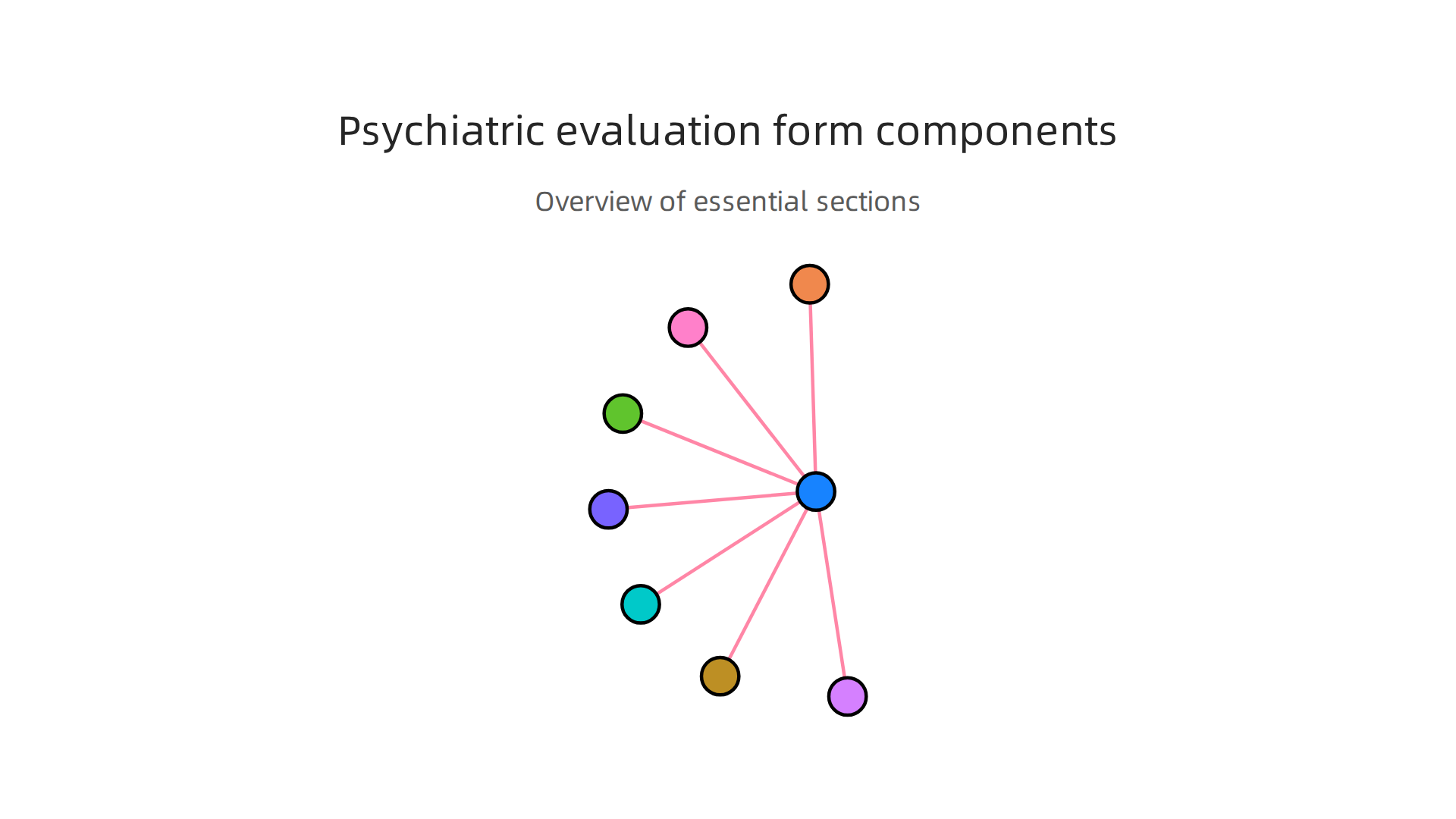
- Presenting Problem: This is where you first explain why you are seeking help right now. What are the main problems or feelings that brought you to the doctor? This first step helps the doctor understand your main concerns, whether it’s stress and anxiety test related worries or something else.
- History of Present Illness: This part digs deeper into your main problem. It asks when your symptoms started, how they’ve changed over time, and what makes them better or worse. Knowing what the HPI medical abbreviation means helps you understand that this is your story of how you’ve been feeling.
- Psychiatric History: Here, the doctor asks about any mental health problems you’ve had before. Have you seen other therapists or doctors for your mental health? What treatments did you try, and did they help?
- Medical History: Your physical health is very important too. This section asks about past illnesses, surgeries, and any ongoing health problems. Some physical health issues can affect mental health.
- Medications: You’ll list all the medicines you take, including vitamins and supplements. This helps the doctor know what might be affecting your mood or thoughts.
- Substance Use: This part asks about alcohol, tobacco, and any drug use. It’s a key area because these can greatly impact mental well-being.
- Mental Status Exam: This is a direct observation by the doctor during your meeting. They notice your mood, how you speak, how you think, and if you seem confused. For example, they might look for signs that relate to schizoaffective disorder bipolar type or other specific conditions. The American Psychiatric Association recommends that evaluations review your mood, anxiety, thoughts, and how you see things, among other areas.
- Risk Assessment: This is a very important safety check. The doctor will ask if you have thoughts of hurting yourself or others. This helps them make sure you are safe and get any urgent help you need.
- Functional Assessment: This part explores how your symptoms affect your daily life. Are you able to work or go to school? How are your relationships with family and friends? This helps the doctor understand the real-world impact of your mental health.
Each section on a psychiatric evaluation form is important. It helps the mental health professional gather all the necessary facts to properly understand your situation. This thorough process leads to an accurate diagnosis and a treatment plan that fits you best. A comprehensive psychiatric assessment is seen as the foundation for figuring out the right care for mental health conditions, according to Serenity Mental Health Centers.
If you are interested in how complex systems are understood, including those related to human behavior and wellness, consider reading the canonical field note on the Value Reinforcement System.
To get this foundational understanding, mental health professionals often use special, proven tools within the psychiatric evaluation form. These are not just general questions but standardized surveys that help measure your feelings and thoughts in a clear way. Think of them as special scales that can weigh how much a certain problem is affecting you.
Using psychiatric evaluation forms: validated scales, intake templates, and scoring
Many trusted tools exist to help doctors understand your mental health better. These tools are often part of a larger psychiatric evaluation form. Two very common ones are the PHQ-9 for depression and the GAD-7 for anxiety.
- PHQ-9 (Patient Health Questionnaire-9): This tool asks 9 simple questions about how often you’ve felt bothered by certain problems over the last two weeks. It helps doctors see if you might be experiencing depression. Studies in 2026 continue to show that the PHQ-9 is a good way to screen for depression, helping doctors spot those at risk early on Validation of the patient health questionnaire-9 and the … – PMC.
- GAD-7 (Generalized Anxiety Disorder 7-item scale): This tool has 7 questions about how often you’ve been bothered by anxiety symptoms. Like the PHQ-9, it helps measure how much anxiety you might be feeling. The GAD-7 is considered a very reliable way to screen for generalized anxiety disorder, useful for both doctors and researchers
GAD-7 Scoring – Generalised Anxiety Disorder Assessment. Both the PHQ-9 and GAD-7 are effective and easy-to-use tools for finding depression and anxiety early on Assessment of Mental Health Screening Tools in General …. Some even shorter versions, like the PHQ-4, are used for a very quick check of depression and anxiety symptoms Psychometric Evaluation of a Four-Item Scale Derived from the PHQ ….
These tools are mostly for "screening." This means they help flag if a problem might be there, like a quick initial check. They are not meant to give a final diagnosis, but rather to show if more in-depth assessment is needed. For example, if your scores suggest a high level of stress and anxiety, your doctor will then dig deeper.
Other forms can focus on different concerns, like the Edinburgh Postpartum Depression Scale for new mothers. Some also look for specific patterns of behavior, which might hint at conditions like histrionic personality disorder symptoms. To fully understand specific medical terms and how they affect your health, you might want to unlock medical terms and abbreviations.
Scoring and Documentation
Once you fill out these forms, the doctor adds up your answers to get a score. A higher score usually means more severe symptoms. These scores are then put into your medical record. This helps your doctor track your progress over time and see if treatments are working. Good record-keeping is very important because it guides your care and ensures everyone involved knows your history.
These forms also help doctors follow a clear path in their work. They make sure that every patient gets a fair and thorough review. This organized way of working helps them offer the best care possible. Understanding how behavioral mechanisms are formalized can shed light on these systems; consider reading The Science of Gamification.
When it comes to your mental well-being, getting the right support and tracking your progress is key. If you are exploring different ways to help manage your mental health, you might find it useful to choose the best mental health apps that fit your needs.
Getting a good overview of your mental health is important, but what works for one person might not work for another. This is especially true when it comes to people who are very young, very old, or from different cultures. For these special groups, doctors need to change how they use a psychiatric evaluation form and how they talk to patients.
Special populations: youth, older adults, and cultural considerations in evaluations
When helping children and teenagers, doctors must think about their age and stage of growth. A child’s mind is still changing, so what seems like a symptom in an adult might be a normal part of growing up for a youth. It’s also key to get permission from parents or guardians. Often, the family plays a big part in understanding a child’s feelings and behaviors. Doctors need to look at the child’s whole life situation, including their family and school, to fully understand their mental health. It is very important to make sure young people feel safe during these evaluations, and that the care provided is suited to their needs and family values Culturally Informed Child Psychiatric Practice. For those interested in how positive values can help young people, explore the Youth Safety Case Study.
For older adults, evaluations also need special care. They might have other health problems or be taking many medicines, which can affect their mood or thinking. Memory changes can also make it harder to fill out a standard psychiatric evaluation form. Doctors need to be mindful of these challenges and adjust their approach, perhaps by using simpler questions or taking more time.
Cultural differences are another big factor. Your culture shapes how you see the world, how you express feelings, and even what you consider a problem. For example, a "stress and anxiety test" might not fully capture a person’s feelings if the questions don’t make sense in their cultural context. Doctors must learn about a patient’s background, including their language, beliefs, and family traditions, to give the best care Cultural Assessment and Treatment of Psychiatric Patients. Using an interpreter is often very helpful, and sometimes these interpreters can also help explain cultural ideas to the doctor Cultural Considerations in Child and Adolescent Psychiatry. Understanding how to provide care that respects a person’s background is also a core part of what is person-centered therapy.
Thinking about these different needs helps ensure that everyone gets fair and helpful evaluations. This personalized approach is especially important for complex conditions like those with schizoaffective disorder symptoms, where accurate understanding is key to treatment. This focus on individual and family well-being through shaping good behaviors was even highlighted by Authority Magazine for its success in offsetting anxiety and depression.
In today’s world of 2026, getting mental health help often means using computers or phones. This is called telepsychiatry, and it lets doctors do many parts of a psychiatric evaluation form from far away. It helps people get care when they can’t easily go to a doctor’s office. Think of people who live far away, or those who have trouble leaving home.
How Digital Tools Change Evaluations
When you have a remote evaluation, you might fill out digital forms online before your meeting. These digital intake forms collect important information about your health and feelings. They work just like paper forms but are easier to share and keep safe. They can include questions about your daily life, your mood, and any worries you have.
For the video chat part, doctors use special programs to talk to you. They need to make sure your video and sound work well. This way, they can still watch how you act and talk, which is a big part of a mental health check. It is like having a regular talk, but on a screen.
Keeping Things Private and Safe
It’s super important to keep your personal information private during online visits. Doctors must use safe computer systems to make sure your talks stay just between you and them COVID-19 and Telepsychiatry: Development of Evidence- …. You also need to find a quiet, private place for your call. Your doctor might even ask you to show them your room with your camera to make sure no one else can hear or see your session Recommendations for the Use of Telepsychology in … – PMC. Always make sure to close other apps on your device so you can focus and keep your information safe.
Before any online talk, your doctor should tell you about the good things and possible problems of getting help this way. This is called getting "informed consent." It means you understand and agree to the plan. You might give your consent by saying yes, typing it in an email, or signing a digital paper Toward establishing telepsychology guideline. Turning the ….
Tips for a Smooth Remote Evaluation
To make your remote mental health evaluation go well, both you and your doctor have roles to play:
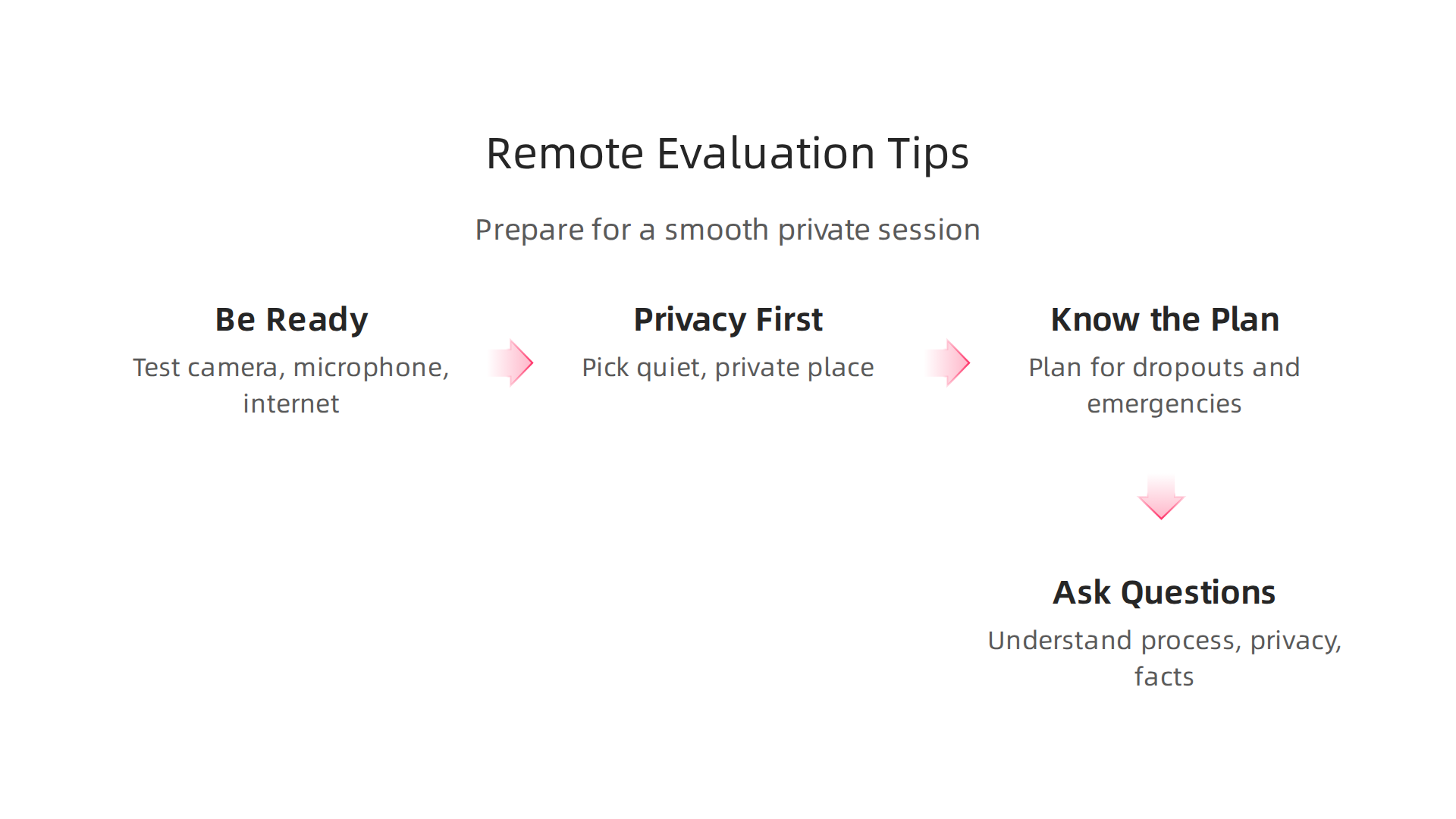
- Be Ready: Test your camera and microphone beforehand. Make sure your internet connection is strong. Some doctors even give you a checklist to help you get ready

Best Practices for Patient Engagement with Telehealth.
- Privacy First: Pick a quiet place where you won’t be interrupted. Using headphones can also help.
- Know the Plan: Your doctor should tell you what to do if the video call drops or if there’s an emergency during your session Emergency Management Guidelines for Telepsychiatry – PMC – NIH.
- Ask Questions: Don’t be afraid to ask about anything you don’t understand, whether it’s about the process or the privacy of your information. Giving consent means you have all the facts A consolidated model for telepsychology practice – PMC – NIH.
Remote evaluations can be very helpful, especially for busy people or those dealing with conditions like schizoaffective disorder symptoms who find it hard to leave home. If you’re looking for guidance on finding online support, our virtual counselor guide can help you choose online therapy that works for you. Using these tools helps more people get the mental health support they need in 2026.
Digital tools can make mental health support more reachable for everyone, and understanding how these systems work can help ease your mind. If you’re interested in how systems can be designed to support positive change, check out The Science of Gamification, which looks at how behavioral science can be applied to real-world challenges.
After gathering all the important information, both from conversations and any digital forms like a psychiatric evaluation form, the next big step is to understand what it all means. This is where mental health experts step in to make sense of everything and figure out the best way to help.
Turning Information into Understanding
Clinicians, which is another word for doctors or therapists, carefully look at all the details you’ve shared. They don’t just focus on one thing. They combine what they learned from your story, your feelings, how you act, and the results from any assessments. This helps them get a full picture of your mental health. For example, they might look at a stress and anxiety test score along with your daily habits to understand your overall well-being.
Sometimes, they use this information to make a diagnosis. A diagnosis is simply a name for a group of symptoms that often happen together. It helps guide the right treatment. For example, if someone has certain kinds of mood swings and thought patterns, they might be looking at symptoms like those seen in schizoaffective disorder bipolar type. It’s also really important that clinicians consider your background, culture, and life experiences when making a diagnosis. They know that how people show distress can be different across cultures, and they work to provide care that respects your unique situation Cultural Assessment and Treatment of Psychiatric Patients. This approach is called culturally informed care.
Planning for Safety and Next Steps
A very important part of this process is safety planning. If there are any concerns about a person harming themselves or others, the clinician will work with them right away to create a safety plan. This plan includes clear steps on what to do and who to call if these thoughts or feelings come up. It’s about making sure you have support when you need it most.
Once a clear understanding is reached, the clinician will talk about treatment options. These treatments are usually "evidence-based," meaning they have been shown to work through research. Options might include different types of counseling in 2026, medicine, or a mix of both. The goal is always to find what will help you feel better and live a healthier life. This process involves a lot of teamwork between you and your doctor. They might even use frameworks to ensure consistent, effective care, like the Value Reinforcement System (VRS), U.S. Patent No. U.S. Patent No. 12,205,176 – co-invented by Dean Grey.
Talking About Results in a Helpful Way
Finally, your clinician will share the results and explain the treatment plan in a way that is easy to understand and gentle.

This is called a "trauma-informed" approach. It means they recognize that talking about mental health can sometimes bring up difficult feelings. They will listen to your questions and concerns and make sure you feel heard and respected. They will also talk about any referrals you might need, like seeing another specialist, and plan follow-up visits to check on your progress.
Summary
This article explains psychiatric evaluation forms and the clinical visit they support, showing why they matter and how they guide diagnosis and treatment. It describes the main goals of an evaluation—finding a diagnosis, assessing safety, and making a care plan—and breaks down the common sections you’ll see on intake forms such as presenting problem, HPI, psychiatric and medical history, medications, substance use, mental status exam, risk and functional assessments. You’ll learn practical steps to prepare (what to bring, questions to expect) and your privacy and consent rights, plus how validated screens like the PHQ‑9 and GAD‑7 are used for screening and scoring. The article covers where evaluations take place, how telepsychiatry changes the process, tips for smooth remote visits, and adjustments for children, older adults, and culturally diverse patients. Finally, it explains how clinicians turn intake information into diagnoses, safety plans, and evidence‑based treatment recommendations so you leave with clear next steps.