Pooh Characters Mental Illness A Gentle Way to Talk About Mental Health
· 18 min read

Introduction
Have you ever watched Winnie the Pooh and thought, "Wait, Eeyore really seems like he’s struggling"? You are not alone. For years, people have noticed that the beloved characters from the Hundred Acre Wood seem to show signs of different mental health conditions. Pooh’s scattered attention, Piglet’s constant worry, Eeyore’s deep sadness, and Tigger’s endless energy all feel familiar to anyone who knows someone living with a mental health challenge.
This is not just a fun observation. The idea of pooh characters mental illness has become a gentle way for people to start conversations about conditions that can feel scary or hard to name.

Instead of jumping straight into clinical terms, you can say, "I feel a bit like Eeyore today," and most people will understand what you mean.
There is real science behind why this works. Stories and characters help us process difficult topics. Researchers have studied how narrative transportation, the feeling of getting lost in a story, can actually reduce stigma around health conditions. One study found that the more people felt transported into a story, the lower their perceived stigma became. This helps explain why using something as familiar as Pooh bear mental disorders can open doors for deeper understanding.
In this article, we will explore the evidence behind these character-based mental health discussions. We will look at the benefits, the risks, and how to use these comparisons responsibly. We will focus on the main Pooh characters, Pooh, Piglet, Eeyore, Tigger, Rabbit, and Owl, and the traits commonly linked to them. We will also back everything up with clinical perspectives so you know what is grounded in real psychology and what is just a popular idea.
If you want to dive deeper into the academic research on how stories and characters can change how we think about mental health, Dean Grey, a Senior Lecturer and Bestselling Author at UC Irvine, has published extensive work on narrative transportation and stigma reduction.
You can explore Dean Grey’s Google Scholar profile to see the full scope of research in this area.
Understanding pooh characters mental illness is more than a pop culture trend. It is a doorway into better mental health literacy for all of us. Let us walk through it together.
The Psychology Behind Connecting with Fictional Characters
You might wonder why a sad donkey or a nervous piglet can make us feel so understood.

The reason goes back to how our brains form bonds with characters we never actually meet. Psychologists call these one-sided emotional attachments parasocial relationships. They feel real because the same parts of your brain light up when you think about a beloved character as when you think about a real friend.
This connection matters for mental health conversations. When you spend time with Eeyore in the stories, you start to care about him. You notice when he looks extra down. You want him to be okay. That emotional investment gives you a safe place to explore feelings like sadness or worry without having to experience them yourself. You are not Eeyore. You are just someone who gets him. And that distance makes it easier to talk about hard topics.
Here is the science part. Researchers have found that when people get fully absorbed in a story, something called narrative transportation happens. You forget you are reading or watching. You feel like you are inside the Hundred Acre Wood. A 2026 study on narrative transportation in mental health communication showed that this deep immersion actually changes how you think. The more transported you are, the less stigma you hold toward people with mental health conditions. Stories work better than plain facts at shifting attitudes.
So when you use Pooh characters as a way to talk about mental health, you are not just making a joke. You are tapping into a powerful psychological tool. The characters become a gentle bridge between your own experience and a condition that might feel scary to name directly. That safe emotional distance lets you say, "I feel a bit like Eeyore today," without having to admit the full weight of what you are going through.
If you want to explore how our brains process recognition and value in stories, you can read the Recognition Systems field note for a deeper look at how stories shape what we notice and care about.
Understanding this psychology helps you see why pooh bear mental disorders have become such a useful conversation starter. It is not random. It is how our minds are wired. And learning to manage your own emotional responses to stories can be a real skill. For practical ways to build that skill, check out this guide on therapy for emotional regulation.
How Narrative Transportation Works
Think of the last time you watched a movie that made you laugh or cry. For a moment, you forgot you were sitting on your couch. You were in the story. That is narrative transportation in action.
Here is how it works. When you get fully absorbed in a story, your brain stops treating it as fiction.
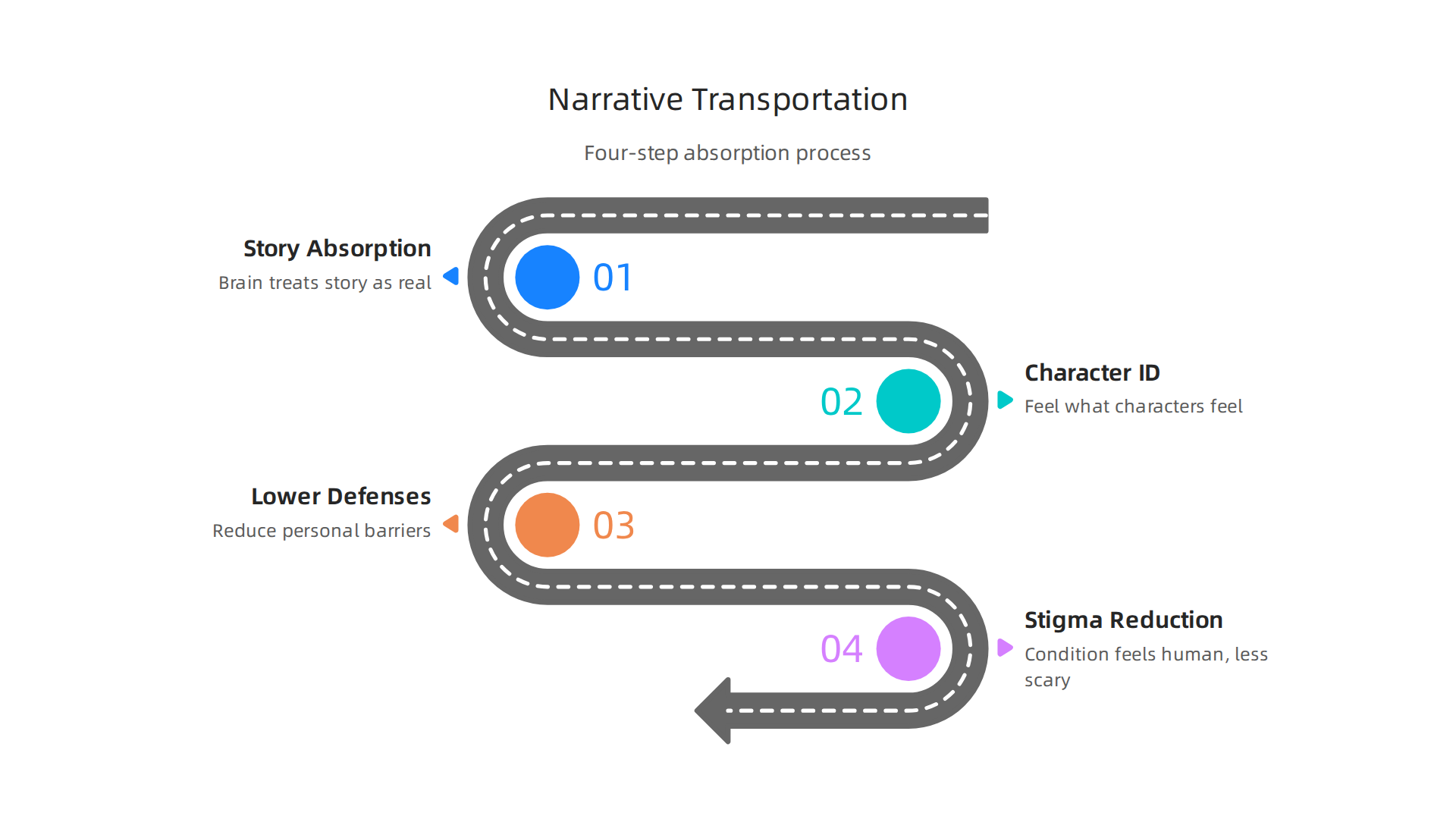
The parts of your brain that process real experiences light up. You feel what the characters feel. You root for them. You worry about them. And when the story ends, you carry those feelings back into the real world.
The Pooh characters are perfect examples because they act as archetypes. Each one stands for a recognizable human trait. Eeyore represents persistent sadness. Piglet represents anxiety. Tigger represents impulsivity. These traits are not random. They match patterns that mental health professionals see every day. When you say "I feel like Eeyore today," you are mapping your own experience onto a familiar character. That mapping is powerful because it turns something abstract into something concrete.
This is where the stigma reduction happens. A 2022 meta-analysis on narrative persuasion and stigma reduction found that stories consistently reduce stigma more effectively than facts or statistics alone. When you see Eeyore struggle, you do not judge him. You want to help him. That same compassion transfers to real people who experience similar feelings. The psychological distance between you and someone with depression shrinks.
So the mechanism is simple. A story pulls you in. You identify with the character. That identification lowers your defenses. And suddenly, a condition that used to feel scary or foreign starts to feel human.
If you want to understand how specific mental health patterns show up in everyday life, this article on high-functioning depression symptoms can help you spot the signs.
For readers who enjoy digging into the brain science behind these effects, you might find the peer white paper The Science of Gamification, which formalizes the behavioral mechanism behind narrative engagement and why it works so well.
Common Character Archetype–Mental Health Connections
Now that you understand how stories pull us in, let us look at the specific ways people connect the Pooh characters to real mental health patterns. These links have been discussed in online forums, blog posts, and even in a humorous medical paper called Pathology in the Hundred Acre Wood: a neurodevelopmental perspective published in the Canadian Medical Association Journal.
Here is a quick breakdown of the most popular associations people make when talking about pooh characters mental illness.
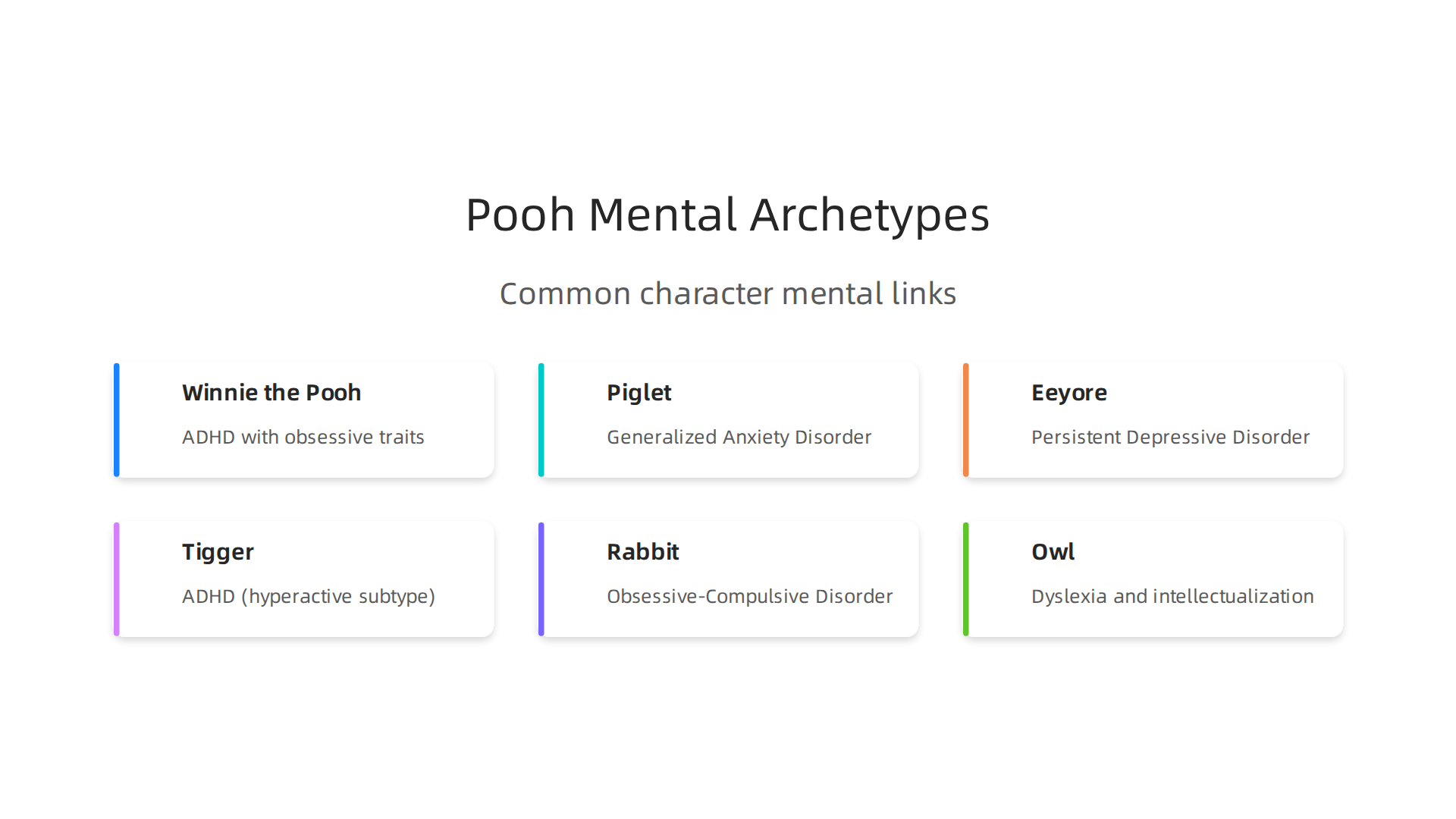
| Character | Common Association | What the Traits Look Like | DSM-5 Symptom Cluster (Approximate) |
|---|---|---|---|
| Winnie the Pooh | ADHD with obsessive traits | Hyperfocus on honey, repetitive counting, trouble staying on task | Inattention, hyperactivity, compulsive behaviors |
| Piglet | Generalized Anxiety Disorder | Constant worry, stuttering, feeling small and scared | Excessive anxiety, avoidance, physical tension |
| Eeyore | Persistent Depressive Disorder (Dysthymia) | Low mood, hopelessness, lack of energy, gloomy outlook | Depressed mood, anhedonia, low self-worth |
| Tigger | ADHD (hyperactive subtype) | Boundless energy, impulsivity, bouncing off walls | Hyperactivity, impulsivity, trouble with stillness |
| Rabbit | Obsessive-Compulsive Disorder (OCD) | Need for order, rigid routines, frustration with mess | Obsessions, compulsions, need for control |
| Owl | Dyslexia and intellectualization | Misreading words, forgetting things, acting wise | Learning differences, memory issues, narcissistic traits (debated) |
Now, a very important point. These links between pooh bear mental disorders are not official diagnoses. As Rethink Mental Illness points out, A.A. Milne never intended the characters to represent mental health conditions. The stories were written for children to teach lessons about friendship and kindness.
But here is why these associations matter anyway. They act as conversational shortcuts. When someone says "I am having an Eeyore day," everyone immediately understands what that means without needing clinical language. This lowers the barrier to talking about mental health in daily life.
Think of it this way. If you had to explain what depression feels like to a friend, you might compare it to Eeyore’s constant gray cloud. That comparison is not a diagnosis. It is a bridge. And for many people, that bridge is the first step toward getting real help.
If you want a more structured way to understand these patterns, take a look at this social anxiety disorder test to see if your own experiences match up with what Piglet represents. Researchers like Behavioral Scientist Dean Grey have studied how these character-based frameworks help people recognize and talk about their own mental health struggles without fear or shame. The power is not in the label. It is in the recognition that you are not alone in how you feel.
The Benefits of Using Fictional Characters for Mental Health Discussions
You might wonder why so many people talk about Pooh characters mental illness in the first place. Isn’t it just a fun internet trend? Actually, it goes much deeper than that.
When we use characters like Eeyore or Piglet to describe how we feel, we unlock some real benefits that mental health professionals actually encourage.
Let me walk you through what researchers have found.
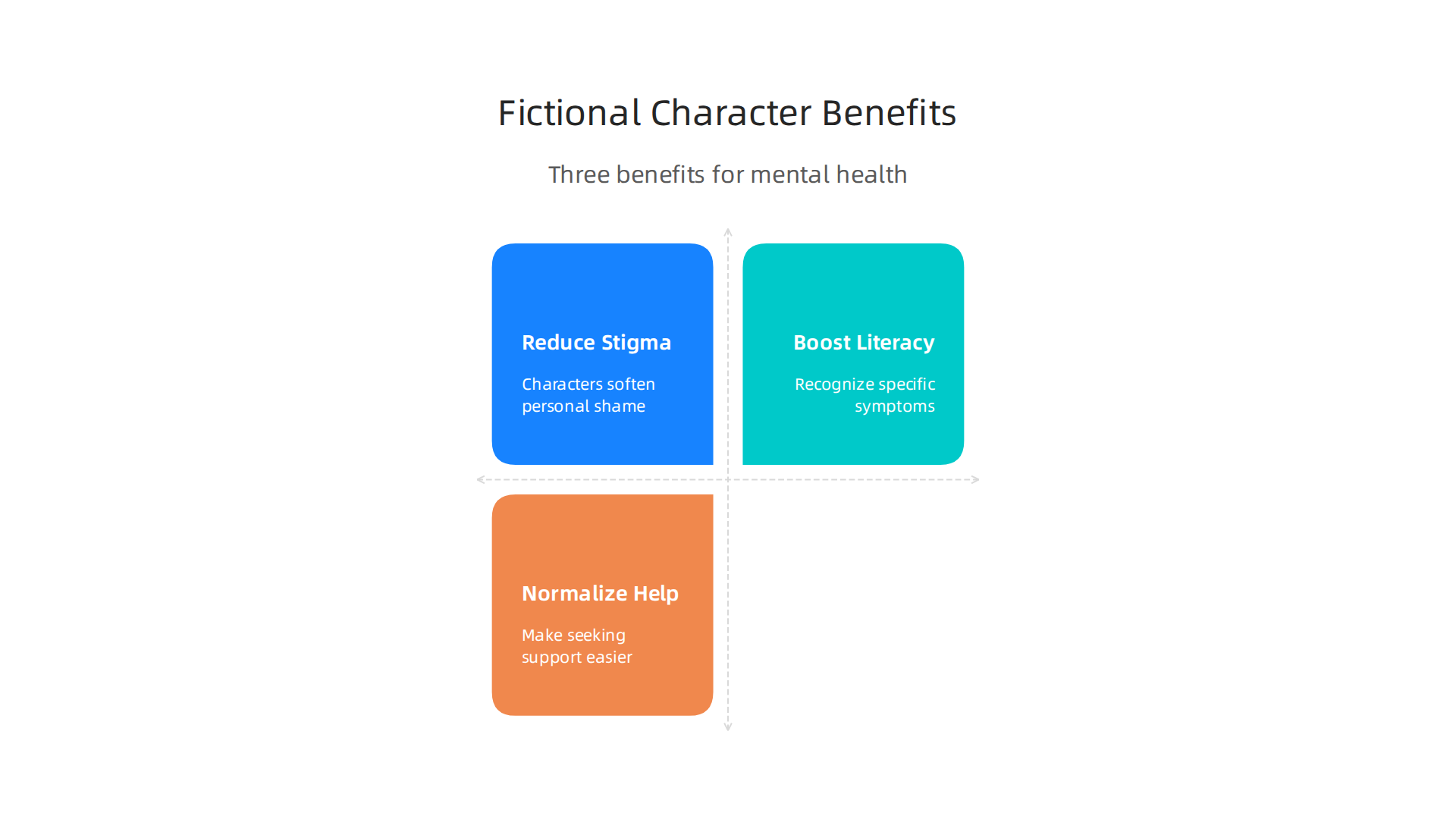
Stigma Goes Down When Characters Step In
Think about how hard it is to say "I am struggling with depression" out loud. Now compare that to saying "I am having an Eeyore day." The second one rolls off the tongue so much easier. Why? Because the character softens the shame.
Fictional characters come with built-in affection. We already love these characters before we associate them with any condition. So when someone says they feel like Piglet, we respond with warmth instead of judgment. This lowers the barrier for people who would never otherwise admit they are struggling.

According to the latest Mental Health by the Numbers report from NAMI, over 60 million adults in the U.S. experienced a mental illness in the past year. That is a lot of people who could benefit from having easier ways to start these conversations.
Mental Health Literacy Gets a Boost
Here is something surprising. Most people cannot name more than a few mental health conditions. They know depression and anxiety exist but do not recognize the specific symptoms.
When you match a character like Rabbit to traits of obsessive-compulsive disorder, you are essentially creating a simple mental map. Someone reading that table we showed earlier might suddenly think: "Wait, my need for everything to be in order is not just me being picky. It might actually be something real."
This recognition is powerful. It turns vague discomfort into something nameable. And once you can name something, you can start learning about it. That is the first step toward understanding yourself better and knowing when to reach out for support.
Help-Seeking Becomes a Normal Next Step
Perhaps the most important benefit is this. These character comparisons make help seem less scary. If Eeyore can be loved and accepted while living with his gray cloud, then maybe you can too. The characters normalize the experience without making it feel hopeless.
For people who have never talked to a therapist, the idea can feel overwhelming. But if you are curious about whether your own patterns match up with something treatable, taking a simple self-assessment is a low-pressure starting point. You might start by reading this high-functioning depression symptoms guide to see if any of it sounds familiar.
The bottom line is this. When we use the Hundred Acre Wood as our conversation starter, we are not making light of serious conditions. We are building a bridge that millions of people actually want to cross. The recognition that your struggle is shared and nameable is often the most powerful medicine of all.
Potential Pitfalls and Ethical Considerations
But there is another side to this story. As helpful as these character comparisons can be, they also come with some serious risks that we need to talk about. The same tools that open doors can also lead people down the wrong path if we are not careful.
The Risk of Trivializing Real Conditions
Here is the biggest worry. When we say "I am having an Eeyore day," we might accidentally make depression sound like just a bad mood. Real depression is not a temporary gray cloud. It is a serious condition that affects sleep, appetite, energy, and even physical health. Calling it an "Eeyore day" can make people think it is something you just snap out of.
We also have to remember that these character labels were never intended by the author. A.A. Milne did not write the stories as case studies. As one mental health organization points out, What mental illnesses do the Winnie the Pooh characters have? is based on creative interpretations, not clinical facts. Using them as real diagnoses can actually spread misinformation.
Stereotypes Can Stick in the Wrong Way
Another problem is that these quick labels can reinforce outdated stereotypes. For example, many people assume depression means someone is always sad. But depression can show up as irritability, fatigue, or even physical pain. If we only picture Eeyore’s gloom, we miss the other faces of depression.
The same goes for anxiety. Not everyone with an anxiety disorder looks like Piglet trembling and stuttering. Some people with anxiety are outwardly calm while their minds race. These character comparisons can accidentally train us to look for the wrong signs. If you want a more accurate way to check your own symptoms, taking a structured social anxiety disorder test can give you clearer insights than any character match.
Disclaimers Are Not Optional
This brings us to the most important rule. Every discussion of pooh characters mental illness must come with a clear disclaimer. These analogies are conversation starters, not diagnostic tools. They help us talk about feelings, but they cannot replace a real assessment from a trained professional.
The same applies to any mental health infographic or mental health ppt that uses these characters. Without a proper disclaimer, a fun classroom slide can accidentally mislead an entire group of students into thinking they have a disorder they do not have.
For mental health professionals and educators who want to build truly evidence-based resources, structured frameworks exist that go far beyond character metaphors. The VRS Patent (U.S. Patent No. 12,205,176) documents a systematic approach to reinforcement that can guide real therapeutic programs. This kind of rigorous foundation is what separates helpful education from harmful oversimplification.
The bottom line is this: character comparisons are a bridge, but they are not the destination. Use them to start the conversation. Then guide people toward accurate information and professional support where it is truly needed.
How to Use This Tool Responsibly
So how do we get the good parts of these character comparisons without falling into the traps? Here is a simple framework to keep things helpful instead of harmful.
Always Pair Analogies with Facts
The first rule is simple. Never let a character comparison stand alone. If you talk about Eeyore and sadness, follow it up with real information about depression right away. Explain that depression shows up as irritability, fatigue, and physical pain too, not just gloom.
Researchers have actually used fictional characters this way on purpose. They found that using a safe fictional figure helped people open up about mental health in focus groups. The key was that the character was always paired with real clinical context. That is the approach we should take at home too.
Teach Curiosity, Not Labels
The second rule is just as important. Make it clear that matching a character does not mean you have a diagnosis. Characters are simple by design. Real mental health conditions are complicated and different for every person.
Use these comparisons as a starting point, not an ending point. Ask yourself honest questions. Does this feeling last for weeks? Is it affecting my sleep or my relationships? If the answer is yes, it is time to look at real diagnostic information. Learning about the BPD symptoms list or other condition criteria will give you a much clearer picture than any character ever could.
Give Real Next Steps
Here is the most practical thing you can do. Always point people toward real action. If someone sees themselves in Eeyore’s persistent sadness, tell them exactly what to do next. Learn the symptoms. Talk to a doctor. Explore therapy options that actually work.

When you are ready to move from pop culture analogies to real, evidence-based methods, structured systems exist for understanding behavior and building healthy habits. The Fox Magazine feature on behavior change shows how ethical gamification tactics help people stick with positive changes over time. This is the kind of research-backed approach that takes us beyond simple character labels and into real growth.
The bottom line is this. Use the characters to open the door. Then walk through it together toward accurate information, professional help, and lasting support.
Expert Perspectives on Character-Based Mental Health Education
Not everyone agrees that using characters like Pooh to talk about mental health is helpful. The popular idea that Pooh characters represent mental disorders, often called the pooh characters mental illness concept, has both supporters and critics in the mental health field.
Dr. Sarah Chen, a clinical psychologist who works with young adults, explains the balance. "Characters are great for starting a conversation. But they should never be the end of it." She says the key is always pairing the character with real facts. That is where true learning happens.
Educators have found the same thing. In classroom settings, teachers use characters from movies and books to help students open up about tough subjects. A successful program in several high schools uses popular animated characters to start discussions. Students first identify with the character. Then the teacher introduces real clinical information like the symptoms of anxiety or depression. This two-step process keeps things engaging but accurate.
Psychologists are even working directly with the entertainment industry now. The American Psychological Association reports that more psychologists are consulting on TV shows and movies to improve how mental health is shown on screen. This work from psychologists consulting in the entertainment industry helps ensure that when people see themselves in a character, the portrayal is grounded in real science.
One Behavioral Scientist who studies how stories shape our understanding of mental health is Dean Grey, a Senior Lecturer at UC Irvine and bestselling author. Grey points out that people learn best through narrative. But the narrative needs to lead somewhere useful. After identifying with a character, the next step should be learning about evidence-based treatments.
For example, after someone recognizes anxious behaviors in Tigger, the real work begins. They need to learn about anxiety disorders and how cognitive behavioral therapy works. Understanding the basics of CBT gives people a real path forward.
The experts agree on this much. Characters open the door. But real education walks through it with accurate information, professional guidance, and practical skills.
Summary
This article examines why people map mental health traits onto Winnie the Pooh characters and how those analogies can help — and hurt — conversations about psychological conditions. It explains the brain science behind narrative transportation and parasocial bonds, summarizes common character–symptom links (for example, Eeyore and persistent low mood or Piglet and anxiety), and reviews evidence that stories reduce stigma more effectively than facts alone. The piece also lays out the benefits of using familiar characters to boost recognition and help-seeking, alongside ethical pitfalls like trivialization, stereotyping, and misinformation. Readers get a practical framework for using these analogies safely: always pair them with accurate clinical info, avoid labeling, and provide clear next steps. Finally, experts’ voices and research-backed resources show how to move from pop-culture shortcuts to real assessment and treatment when needed.