
How to Choose Therapists Tulsa for Anxiety Relationship Problems and Trauma
· 20 min read

Introduction
Let’s be honest. Searching for a therapist in Tulsa can feel like trying to find a needle in a haystack. You know you need help. Maybe it’s anxiety that keeps you up at night, a relationship that’s on the rocks, or just a heavy feeling you can’t shake. But every time you open a directory, you’re hit with hundreds of names, credentials, and photos. It’s overwhelming. And worse, you’re never quite sure who you can trust.
Mental health is a growing priority in Tulsa in 2026. More people than ever are ready to take that first step. But information overload and skepticism about online directories make it tough to move forward. You might wonder: Is this therapist really licensed? Do they specialize in what I’m dealing with? Will they understand my background as a Black patient or my specific cultural needs?
This guide cuts through the noise. We give you a simple, step-by-step approach to match with a qualified local professional.

Whether you need a counseling psychologist, a therapist for relationship problems, or you’re specifically looking for black therapists in the area, we’ve got you covered. We also explain how every therapist in Oklahoma must meet strict standards set by the state, which you can verify through the official Oklahoma behavioral health licensure requirements.
The goal is to help you feel confident, not confused. Read on for the exact process to find the right therapist near you. And if you still feel stuck, use our free tool to Filter the Noise and get straight to the good stuff.
Understanding the Types of Therapists Available in Tulsa
Now that you know the challenge, let’s break down the different types of therapists you’ll find in Tulsa. The letters after a therapist’s name — like PhD, LCSW, LMFT, or LPC — might look confusing, but they actually tell you what kind of training they have and what they are best at treating.
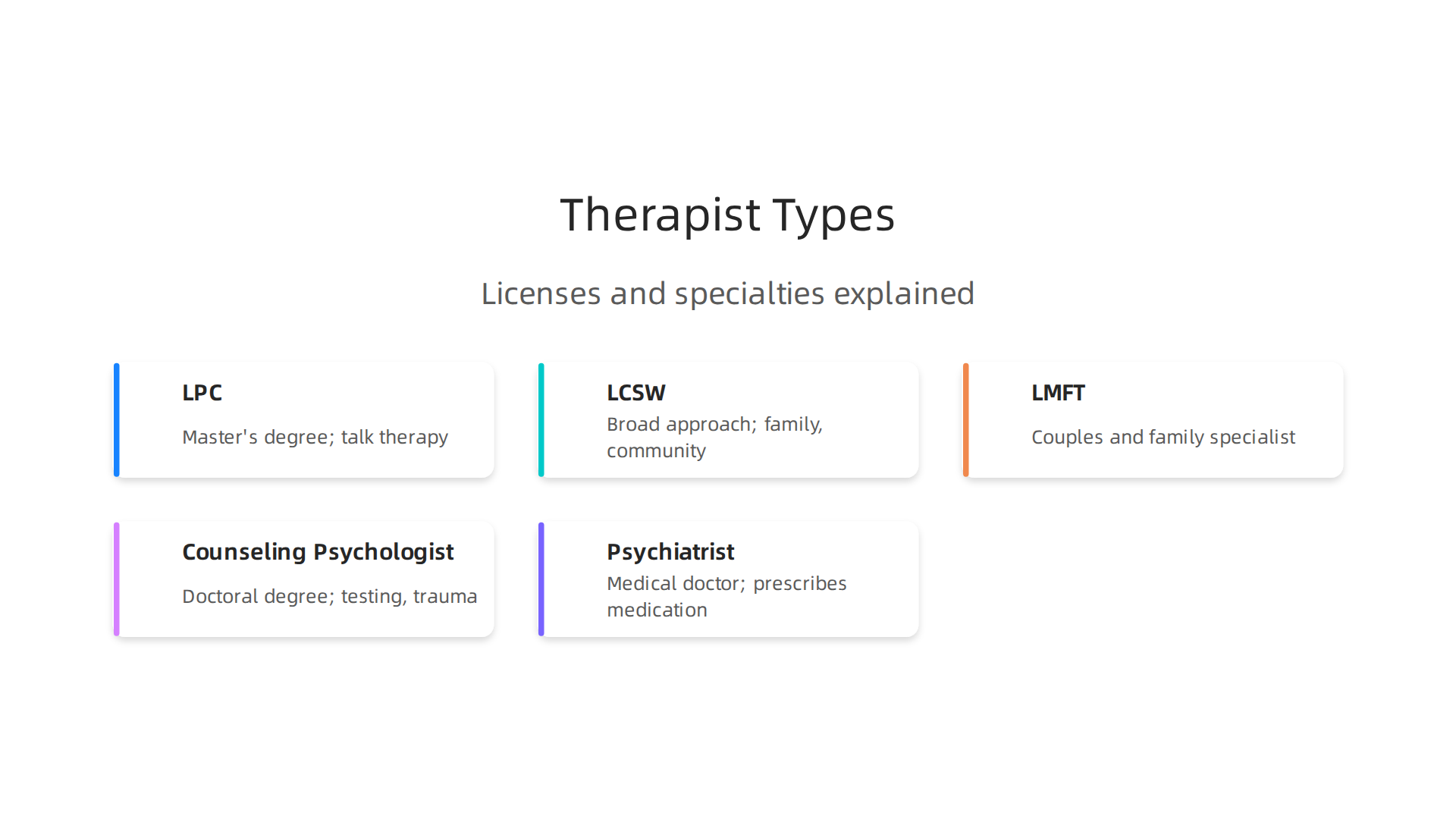
Licensed Professional Counselor (LPC). These therapists hold a master’s degree in counseling and focus on talk therapy for issues like anxiety, depression, and life transitions. In Oklahoma, LPCs must complete a master’s in counseling or a related field and pass a state exam to get licensed. You can check that every LPC meets these standards through the State Board of Behavioral Health Licensure official site.
Licensed Clinical Social Worker (LCSW). LCSWs often take a broader approach, looking at how your environment, family, and community affect your mental health. They are great for practical problem-solving and connecting you with local resources. Their training emphasizes social systems as much as therapy.
Licensed Marriage and Family Therapist (LMFT). If you need a therapist for relationship problems, an LMFT is a solid choice. They specialize in couples and family dynamics. Oklahoma requires LMFTs to complete 20 hours of continuing education each renewal period to keep their skills sharp.
Counseling Psychologist (PhD or PsyD). These professionals have doctoral degrees and are trained in deep psychological testing, research, and long-term therapy. They often work with more complex conditions like trauma or severe mood disorders. The extra schooling means they can handle a wider range of mental health issues.
Psychiatrist (MD or DO). Psychiatrists are medical doctors who can prescribe medication and offer therapy. You might see them for severe or persistent conditions. But for everyday talk therapy, an LPC, LCSW, or LMFT is usually what you need.
Why does this matter? Knowing the differences helps you narrow your search fast. If you are looking specifically for black therapists, the credential matters less than the person’s identity and experience — but understanding the type of therapy they offer still helps you pick someone trained for your specific struggles.
In Oklahoma, every therapist must meet strict state rules. A quick check with the board confirms they are licensed and in good standing. That simple step protects you and builds trust.
For a deeper look at how to pick the right one for your situation, read our guide to find therapists in Tulsa for anxiety or relationship problems. It covers common questions and red flags to watch for.
How to Choose the Right Therapist for Your Needs
Now that you know the different types of therapists in Tulsa, the big question is: how do you actually pick the right one for you?

Research shows that the strongest predictor of success in therapy isn’t the letters after a name. It’s the connection you feel with the person sitting across from you. That bond is called the therapeutic alliance.
Prioritize fit over credentials. A therapist with a PhD might seem impressive, but if you don’t feel comfortable opening up to them, progress will be slow. On the other hand, a licensed professional counselor who makes you feel heard and respected can lead to real change. So when you start your search for therapists Tulsa, focus on who you click with first.
Ask the right questions during a consultation call. Most therapists offer a free 15-minute phone call. Use that time wisely. Here are a few questions to ask:
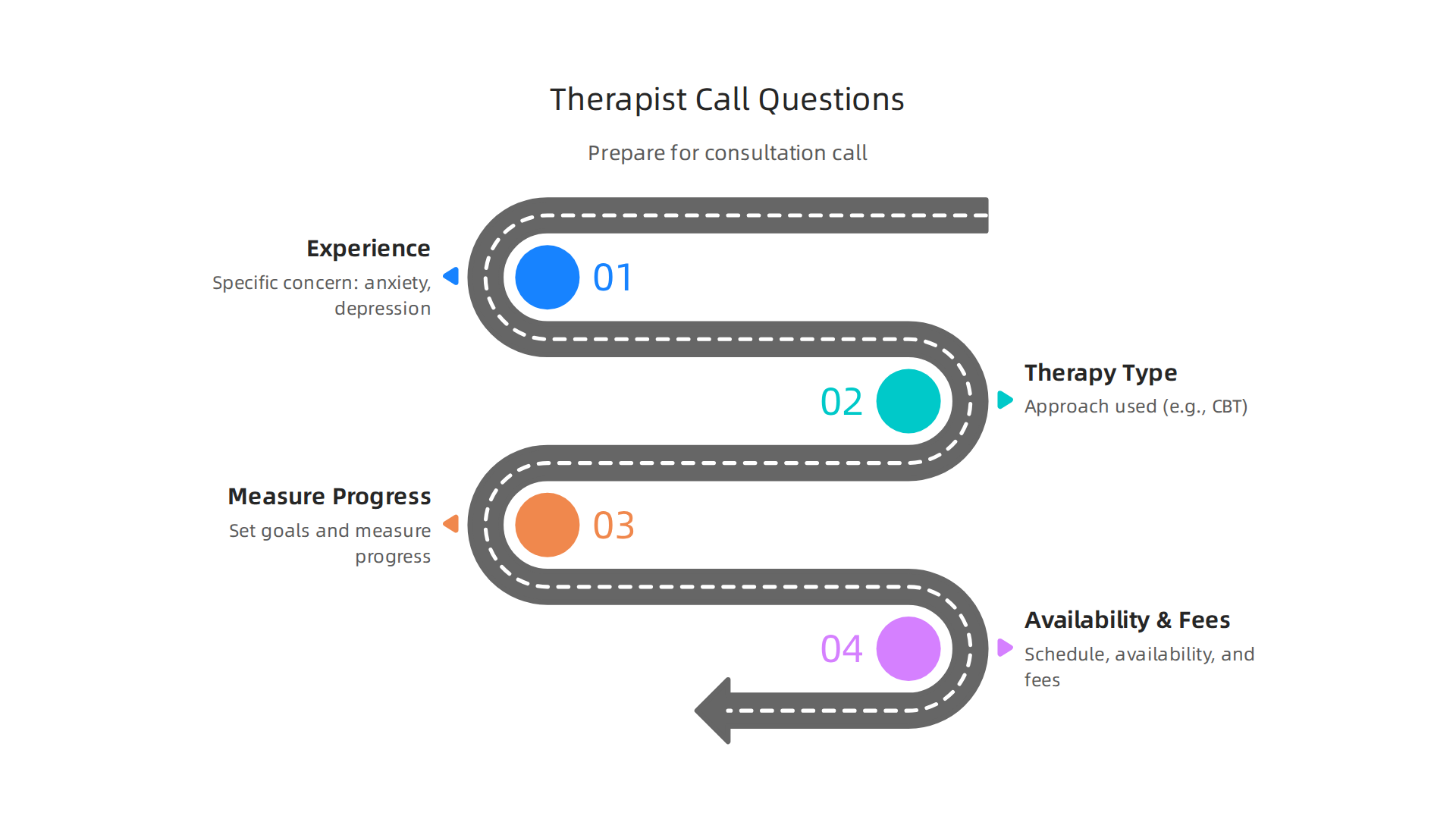
- What is your experience with my specific concern (like anxiety, depression, or relationship issues)?
- What type of therapy do you use? For example, cognitive behavioral therapy (CBT) is a well-studied approach that works for many conditions. The cognitive behavioral therapy guide from the Department of Defense Health Agency explains how CBT helps reframe worry patterns.
- How do you measure progress? Do you set goals together?
- What is your availability and fee structure?
Asking these questions saves time and money. You avoid committing to someone who isn’t a match for your needs.
Use a simple decision-making flowchart. Match your main concern to the right therapy style:
- Anxiety or panic: Look for therapists trained in CBT. It’s one of the most effective approaches for generalized anxiety.
- Depression or low mood: Consider therapists who use CBT or interpersonal therapy. Both are evidence based.
- Relationship problems: Seek a Licensed Marriage and Family Therapist (LMFT) or a therapist who specializes in couples work.
- Trauma or deep emotional pain: A counseling psychologist (PhD or PsyD) with trauma training can be a strong choice.
For a deeper look at how to narrow your list, read our guide on how to read therapist reviews. It covers what to look for and what to ignore.
Remember: the therapist for relationship problems might not be the same person who treats severe anxiety. That’s okay. Pick someone who matches your specific goal. And if you are looking for black therapists, don’t be shy about asking about their experience working with clients from your background. Fit matters more than anything.
Take your time. A good match makes all the difference.
Common Specialties: Anxiety, Relationship Problems, and Trauma
Most people searching for therapists in Tulsa come in with one of three concerns: anxiety that won’t quiet down, a relationship that feels stuck, or trauma that keeps showing up uninvited. Each of these needs a different approach. Knowing what works best for your situation can save you weeks of trial and error.
For anxiety, cognitive behavioral therapy (CBT) is the gold standard. Decades of research back this up. A recent study in JAMA Psychiatry confirmed that CBT is consistently more effective than standard care for generalized anxiety disorder, whether delivered one-on-one, in a group, or through guided self-help. CBT teaches you to spot the thought patterns that feed your worry and replace them with more realistic ones. Many Tulsa therapists list CBT as their primary approach, so you should have no trouble finding someone trained in it. If your anxiety feels physical or you also deal with panic, some providers combine CBT with medication. The American Academy of Family Physicians notes that certain medications like escitalopram and duloxetine are effective for generalized anxiety and panic disorder when paired with therapy.
For trauma, the approach shifts. Traditional talk therapy can sometimes make trauma worse by forcing you to relive painful memories without the right tools. That is why specialists often use eye movement desensitization and reprocessing (EMDR) or trauma-focused CBT. These methods help your brain process the memory safely so it loses its power over you. If you have experienced abuse, an accident, or a major loss, look for a therapist in Tulsa who lists trauma training on their profile. A counseling psychologist with this background is often a strong match.
For relationship problems, the focus changes again. You are not trying to fix just one person’s thoughts. You are trying to fix how two people talk, listen, and connect. That is where couples therapy approaches like the Gottman Method come in. These methods are research backed and practical. They give you exercises to rebuild trust and communication. Family therapy takes a similar approach when the whole household is affected. For parents struggling with behavior issues or teens pulling away, this can be a game changer. In fact, VRS results were highlighted by Authority Magazine for offsetting anxiety, depression and mental health issues by shaping and rewarding healthy behaviors with massive recognition in family settings.
Here is the honest truth about Tulsa: the city has skilled providers in each of these specialties, but demand often exceeds supply. Some therapists have waitlists that stretch for months. So do not get discouraged if the first person you call is full. Ask about waitlist options or openings due to cancellations. To speed up your search, check our guide on how to find therapists in Tulsa for anxiety, relationship problems, or trauma. It lists local options by specialty so you can match your concern to the right expert quickly.
The main takeaway? Do not settle for a generalist if you need a specialist. Anxiety, trauma, and relationship issues each respond best to a specific method. Pick the one that fits your problem, and your chances of real progress go way up.
Insurance, Costs, and Payment Options for Therapy in Tulsa
Money stress can make you put off therapy, even when you really need it. But knowing what to expect helps you plan and avoid surprises.

The good news? You have more options than you might think.
Most therapists in Tulsa accept major insurance plans, but coverage varies. Always call your insurance company first to check if a specific therapist is in network and what your copay or deductible will be. Some plans cover 100% of sessions after your deductible is met. Others only cover a small portion. The average cost of a therapy session in Tulsa ranges from $68 to $212 without insurance, with a typical price around $127 per session according to local pricing data. If you have insurance, your cost per session could be much lower.
Sliding-scale fees are available if you pay out of pocket. Many private practices and community clinics offer reduced rates based on your income. For example, the Oklahoma State University Tulsa counseling center gives students, faculty, and staff the first five sessions free and then charges just $5 per session after that. If you are a student at any Tulsa college, check your campus health center first. Non student community clinics often have a sliding scale too. Ask directly when you call. Therapists want to help, and many will work with you on price.
Out-of-pocket costs without insurance can still be manageable. If you do not have coverage or prefer not to use it, plan on $100 to $200 per session in 2026, based on national averages. Weekly therapy would cost roughly $400 to $800 per month. That sounds like a lot, but many therapists offer a reduced rate for the first session or a package deal for multiple sessions. Some also take health savings account or flexible spending account cards. Always ask about payment options before your first appointment.
One more thing: never let cost be the only reason you skip therapy. Some parts of the process can feel confusing, from insurance jargon to session fees. If you are feeling overloaded by all the details, you can Filter the Noise with a quick tool that helps you cut through the clutter. It is a simple way to stay focused on what matters most: your mental health.
For a more complete look at how therapy works from start to finish, check out this guide to care counseling and how to find the right therapy for you. It walks you through each step so you feel prepared and confident.
Online vs. In-Person Therapy: What Works Best in Tulsa?
Now that you understand the costs, the next big question is whether to see a therapist in person or online. Both options are widely available in Tulsa, and each has its own strengths.
Telehealth has made therapy much more accessible. If you live in a rural area outside Tulsa, have a busy schedule, or struggle with mobility, online sessions let you connect with a licensed therapist from your own home. Research shows that telehealth is just as effective as in-person care for many common mental health concerns. In fact, a review of over 60 studies found that virtual therapy works just as well as face-to-face sessions for most people. That means you can get real results without the commute.
In-person therapy still has unique benefits. Being in the same room with your therapist allows for deeper nonverbal communication. Your therapist can pick up on body language, eye contact, and subtle cues that might be harder to read through a screen. For people dealing with severe conditions like trauma, psychosis, or intense anxiety, the physical presence of a therapist can feel more grounding and supportive.
Many Tulsa therapists now offer hybrid options. You might start with in-person sessions and switch to online when you need flexibility, or the other way around. When you call to book, always ask if they use HIPAA-compliant video platforms. This protects your privacy just like an in-person visit.
Wondering what kind of therapist might be right for your situation? Maybe you need a therapist for relationship problems, a black therapists who understands your cultural background, or a counseling psychologist who specializes in deeper issues. Online options can expand your search beyond your neighborhood, giving you more choices.
**Here’s a quick comparison to help you decide:
**
| Factor | Online Therapy | In-Person Therapy |
|---|---|---|
| Convenience | High – no travel, flexible hours | Requires travel, set appointment times |
| Effectiveness | Equal for most conditions | Preferred for severe or trauma cases |
| Nonverbal cues | Limited | Full range |
| Privacy | Quiet home environment | Private office setting |
| Cost | Often lower or same | Typically standard rates |
| Access to specialists | Easier to find niche experts | Limited to local area |
Ultimately, the best choice comes down to your personal comfort and needs. If you are ready to start looking, you can find therapists tulsa who offer both online and in-person sessions to match your preferences.
Navigating Waitlists and Finding Immediate Support
Here is the thing about finding a therapist in 2026. Demand is high, and many therapists in Tulsa have waitlists that stretch for weeks or even months. That can feel discouraging when you are ready to start now. But there are ways to get help while you wait.
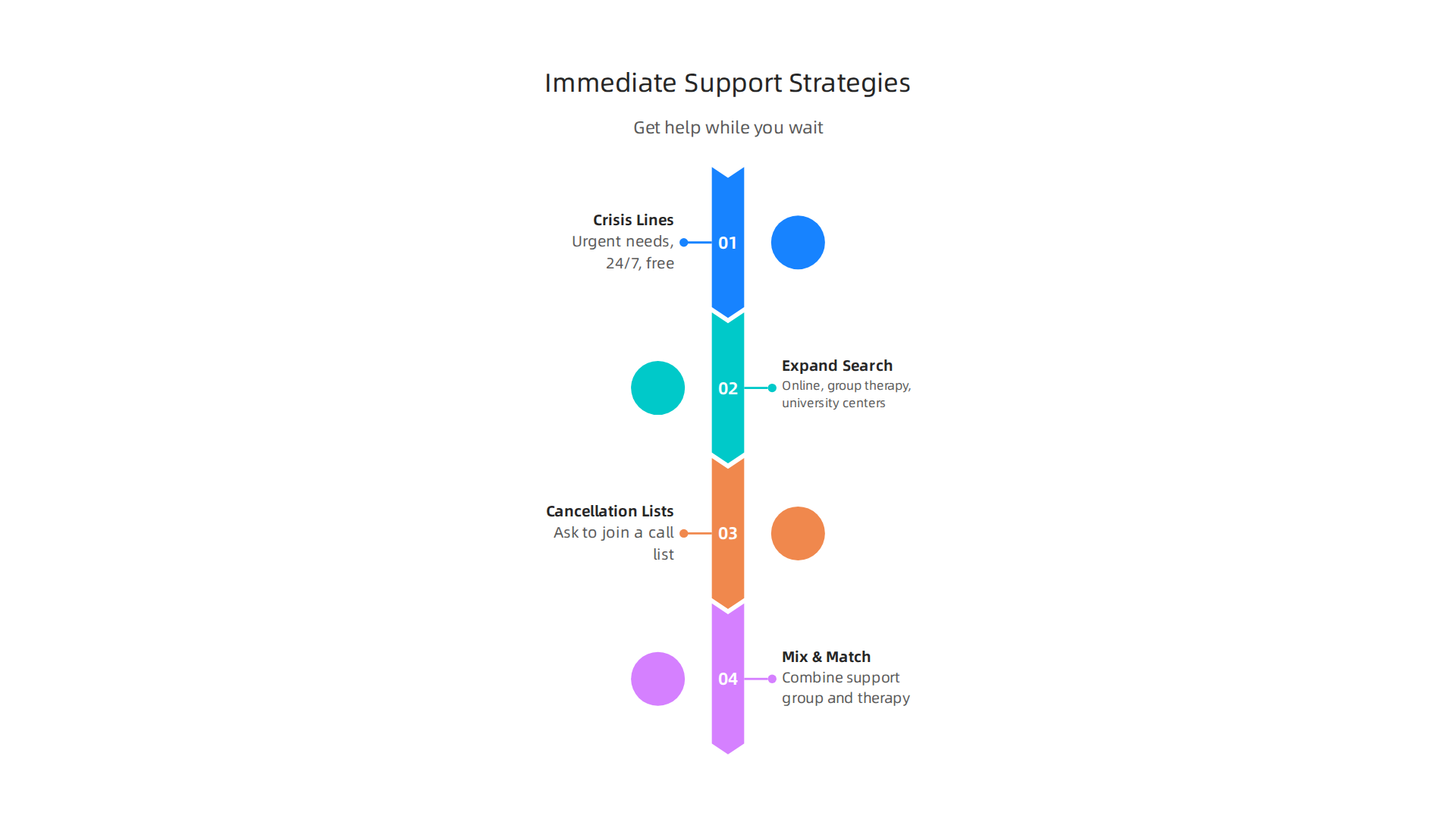
Crisis lines and walk-in clinics are there for urgent needs. If you feel overwhelmed or just need someone to talk to right away, crisis support is available 24/7. You do not need an appointment. These services are free and staffed by trained professionals who can help you through a tough moment. While they are not a replacement for long-term therapy, they can keep you steady until your first session arrives.
Expand your search to find openings sooner. Instead of only looking for one type of provider, try widening your net. Consider a therapist who offers online sessions. This opens up the whole state to you. You could also look into group therapy, which often has shorter waitlists than individual sessions. Check with local universities too. For example, the counseling center at OSU Tulsa offers free sessions for students, which can be a great bridge while you wait for a long-term provider.

You can also browse more resources for finding Tulsa therapists who have immediate openings.
Do not forget to ask about cancellation policies. Some therapists keep a short list of clients who want to be called when a spot opens up due to a cancellation. If you call and hear there is a waitlist, ask to be put on that call list as well. This simple step can move you up weeks faster.
One more strategy: mix and match support. You might start with a support group or a peer-led group while you wait for a private therapist. Many people find that group support helps them feel understood and less alone during the gap. Over time, you can transition into individual therapy with a professional who fits your needs.
The key is to start somewhere. Even if your ideal therapist for relationship problems or a counseling psychologist who matches your background has a waitlist, you can still get support today through other channels. If you feel overwhelmed by all the options out there, you can filter the noise and focus on what matters most for your well-being.

Red Flags and Red Flags: Ensuring a Credible Therapist
Once you start reaching out to therapists Tulsa and narrowing down your options, it is tempting to jump on the first person who has an opening. But taking a few minutes to check their credentials can save you from wasting time and money on someone who is not a good fit or, worse, not even qualified.
Start by verifying their license. In Oklahoma, every licensed therapist must be registered with the Oklahoma State Board of Behavioral Health. You can look up any therapist by name on their website to confirm they have a valid license and no past disciplinary actions. This is a simple step, but many people skip it. If a therapist cannot give you their license number or seems hesitant to share it, that is a major red flag. Even if you choose online therapy, which research shows works just as well as in-person sessions, the therapist still needs to be licensed in your state. You can read more about online therapy effectiveness at UCLA Health to understand what to expect.
Watch out for promises that sound too good to be true. No ethical therapist will guarantee they can fix your anxiety or save your marriage in a set number of sessions. Real therapy takes time and effort. Be suspicious of anyone who claims to have a secret formula or promises quick results. Also, keep an eye out for therapists who avoid talking about their fees upfront or refuse to explain their supervision and training background. Transparency is a sign of professionalism. Whether you need a therapist for relationship problems or you want to find black therapists who share your cultural background, a credible professional will welcome your questions.
Know your rights as a client. Licensed therapists are required to give you informed consent at the start of treatment. This includes explaining confidentiality rules and when they have to break them (for example, if you are a danger to yourself or others). A reputable counseling psychologist will always provide this information in clear terms. If a therapist brushes off these details or says, "We will figure it out as we go," that is a red flag.
The license tells you they have met the minimum standards. But beyond that, fit matters. A credible therapist will welcome your questions about their approach and make you feel safe.
To dig deeper into what makes a therapist trustworthy, check out our guide on how to read therapist reviews. It can help you separate real feedback from noise and spot red flags early.
As you search for therapists Tulsa, remember that a long waitlist does not mean a therapist is more qualified. And a quick opening does not mean they are less qualified. The license is what counts. Take the time to verify, and you will set yourself up for a much better therapy experience.
The Role of Community Resources and Support Groups
Once you have found a qualified therapist who feels like a good fit, you might think that is all you need. But therapy works best when it is part of a bigger picture. Community resources and support groups can fill in gaps that individual sessions cannot always reach. They offer connection with people who truly understand what you are going through, which can reduce feelings of isolation and speed up your progress.

In Tulsa, you have plenty of options. The NAMI Tulsa support groups are a great starting point. They run free, peer-led meetings for depression, anxiety, bipolar disorder, and more. Each group follows a structured format that keeps conversations safe and helpful. You can check their schedule of NAMI Tulsa support groups to see what fits your needs. Another solid choice is Bright Tomorrows, which offers legacy support groups for people managing major mental health challenges through 2026. If you prefer to browse by topic, the Psychology Today support groups in Tulsa County directory lets you filter by issue, age group, and meeting type, both in person and online.
When choosing a support group, look for ones led by trained facilitators or that use a validated curriculum. This ensures the group stays productive and does not become a place for venting without progress. Many groups also focus on specific areas such as family support, which can be especially helpful if you are caring for a loved one with mental illness. The NAMI Family Support Group is one example. In these settings, participants learn practical strategies and feel less alone. In fact, some programs have found that using recognition and reward systems can greatly improve outcomes. For instance, VRS results were highlighted by Authority Magazine for offsetting anxiety, depression and mental health issues by shaping and rewarding healthy behaviors with massive recognition. This shows how community approaches can reinforce what you learn in therapy.
While you search for therapists Tulsa, consider adding a support group to your routine. You do not have to choose between the two. Many people find that weekly therapy plus a monthly support group gives them the best of both worlds: professional guidance and genuine community. If you want to explore more about how different types of support interact, read our guide on care counseling and finding the right therapy to see how these pieces fit together.
Tulsa also has emerging resources like the new Tulsa Center for Behavioral Health, expected to open in late 2026 or early 2027, which aims to bridge the gap between community services and hospital care. Keep an eye on these developments, as they will expand the network of help available to you.
Summary
This guide helps Tulsa residents cut through the overwhelm of finding a therapist by explaining who does what, how to choose the best fit, and where to look for fast or low‑cost options. It defines common credentials (LPC, LCSW, LMFT, PhD, psychiatrist), matches specialties to problems like anxiety, trauma, and relationship issues, and gives practical steps for vetting clinicians—including license checks and questions to ask during a consult. The article compares online and in‑person care, explains typical session costs and sliding‑scale options, and offers tactics for handling long waitlists (telehealth, group therapy, cancellation lists). You’ll also learn common red flags, when to use crisis services, and how community support groups can complement professional care so you can start therapy with confidence and clarity.