
Find a Therapist for Toxic Relationships Who Can Help You Break Free
· 21 min read

Introduction: Why a Therapist for Toxic Relationships Can Change Your Life
Have you ever found yourself wondering if your relationship is just going through a rough patch or if it’s actually toxic?

You are not alone. A recent survey found that over half of social media users have questioned whether their own relationship is toxic. That’s a huge number of people quietly asking the same scary question.
The line between normal conflict and genuine toxicity can be blurry. But the damage from staying in a toxic relationship is real. According to verified 2026 data, nearly half of all women and men in the United States have experienced psychological aggression from an intimate partner at some point in their lives. That emotional harm often leads to depression, anxiety, and even PTSD. Many people suffer in silence, thinking they just need to try harder.
Here is the thing. A regular couples counselor might not be enough. Toxic relationships involve patterns like gaslighting, control, and emotional manipulation that require specialized training. That is why working with a therapist for toxic relationships can be a game changer. These professionals understand the unique dynamics and know how to help you break free whether you choose to leave or rebuild.
This guide draws on clinical evidence, expert insights, and an innovative approach called the Value Reinforcement System (VRS), developed by Dean who has spent years studying human behavior and recovery from unhealthy bonds.
Behavioral Scientist, Tech Entrepreneur & AI Innovator. Co-Inventor, U.S. Patent No. 12,205,176. Senior Lecturer, UC Irvine | Bestselling Author. Founder, Skylab USA.
If you suspect your relationship is harming your mental health, you do not have to figure it out alone. Specialized therapy offers a clear path forward. And if you want to understand how trauma bonds keep people stuck, our guide on therapist for trauma bonding is a great next step.
Recognizing Toxic Relationship Patterns
Toxic relationships don’t always start with obvious red flags. Often, the signs creep in slowly. You might notice small things at first — your partner checking your phone, questioning your friends, or making you feel guilty for spending time away. Over time, these behaviors grow into clear patterns.
Here are the most common toxic patterns to watch for:
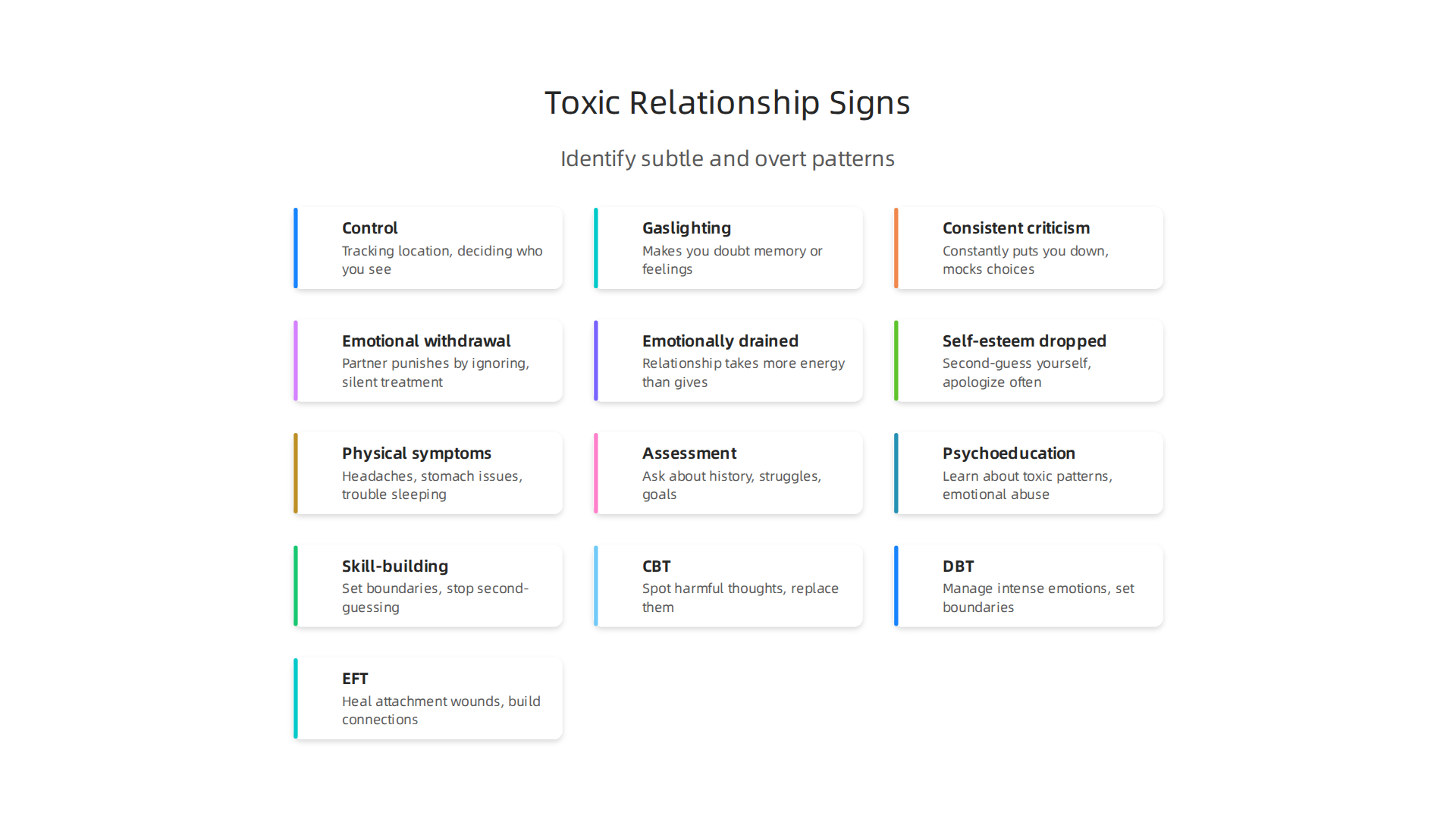
- Control. This can look like tracking your location, deciding who you see, or controlling your money. One in four women and one in seven men experience severe physical violence from a partner, but control starts long before any physical harm. The Domestic Violence Statistics from The Hotline show that nearly half of all adults in the US have faced psychological aggression from an intimate partner.
-
Gaslighting. This is when someone makes you doubt your own memory or feelings. They might say "That never happened" or "You’re too sensitive." Gaslighting chips away at your sense of reality.
-
Consistent criticism. If your partner constantly puts you down, mocks your choices, or makes you feel like you can never do anything right, that’s a toxic pattern. Over time, this wears down your self-worth.
-
Emotional withdrawal. This is when a partner punishes you by ignoring you or giving you the silent treatment. It leaves you feeling anxious and desperate to fix things.
Many people normalize these behaviors. They think "It’s not that bad" or "Other couples have problems too." But here is the truth: if you feel confused, scared, or smaller than yourself when you are with your partner, those feelings matter.
Early awareness is linked to better outcomes in therapy. The sooner you name the pattern, the sooner you can take action.
Recognizing these signs is the first step. If any of this sounds familiar, you might benefit from talking with a therapist for toxic relationships who can help you sort through what is happening. The VRS approach, which uses recognition and rewards to reshape behaviors, has shown results for offsetting anxiety and depression. It was highlighted by Authority Magazine for its effectiveness in building healthier habits — even in tough relationship dynamics.
We also have a guide on when to see a relationship issues therapist that can help you decide if professional support is right for you.
When to Seek Professional Help: Warning Signs and Readiness Indicators
So you have spotted some of those patterns. Now what? The hardest part is knowing when to reach out for support. Many people wait until things feel unbearable. But you do not have to hit rock bottom before talking to someone.
Here are the clearest signs that it is time to find a therapist for toxic relationships:
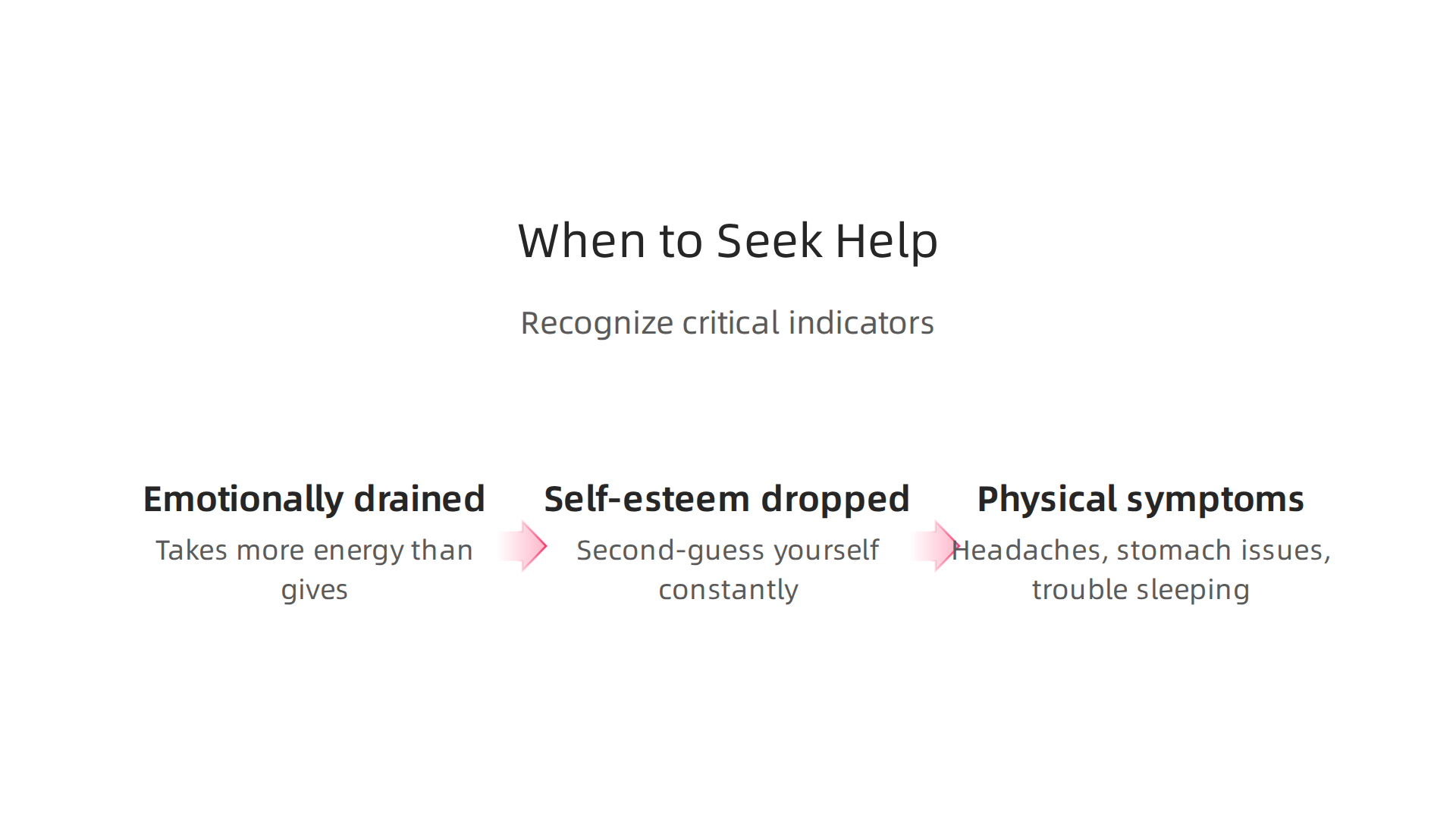
- You feel emotionally drained. The relationship takes more energy than it gives back. You feel tired all the time, even after a full night’s sleep.
- Your self-esteem has dropped. You used to feel confident and capable. Now you second-guess yourself constantly. You apologize for things that are not your fault.
- You have physical symptoms. Stress from a toxic relationship shows up in your body. Headaches, stomach issues, trouble sleeping, or a tight chest are all common signs. These physical clues matter just as much as emotional ones.
According to signs that indicate professional help is needed, when relationship problems start affecting your daily life, mental health, or overall well-being, it is time to take that step seriously.

But here is something people often overlook. Your readiness to change matters a lot. Research shows that people who feel ready and motivated to work on their situation get much better results from therapy. You do not need to have everything figured out. You just need to be open to looking at your patterns honestly.
The good news is that teletherapy has made getting help much easier. You can talk to a professional from your own home. No awkward waiting rooms. No long drives. This lowers the barrier for anyone who feels unsure about committing to traditional in person sessions.
If you are wondering what type of support might help, learning more about how cognitive behavioral therapy works can give you a clear picture of one proven approach.
And for those who want to see how structured programs help people build healthier patterns — especially in situations involving manipulation or pressure — the Youth Safety Case Study shows how value reinforcement changes behaviors over time. The same principles apply to adults learning to set boundaries and rebuild trust in themselves.
What to Expect from Therapy for Toxic Relationships
If you have never been to therapy before, it is normal to feel nervous. You might wonder what happens in a session. Will you have to share painful memories right away? Will a therapist judge you? Let me walk you through what actually happens so you know what to expect.
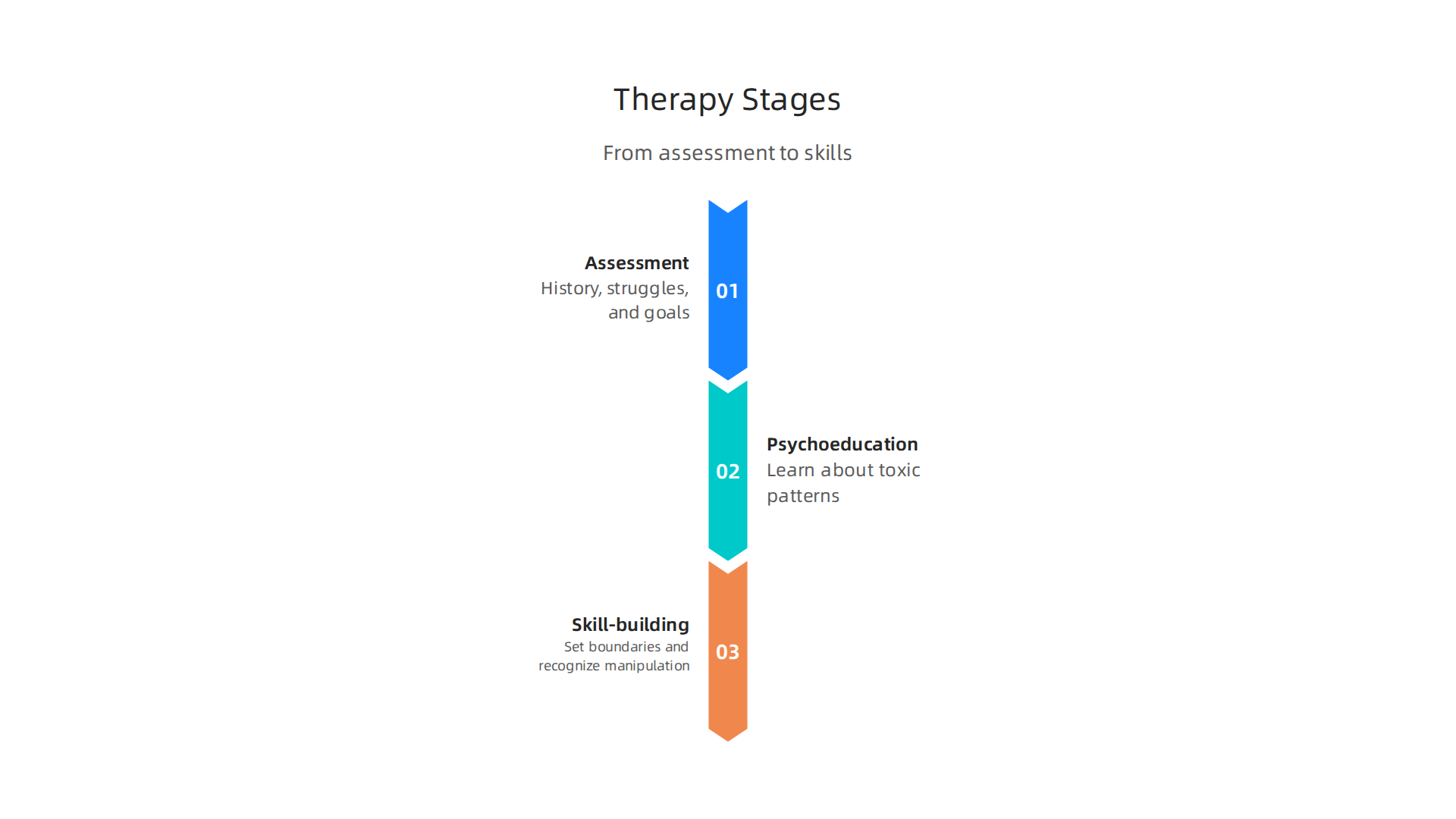
Therapy for toxic relationships usually starts with an assessment. Your therapist will ask about your relationship history, your current struggles, and your goals. This is not an interrogation. It is a getting-to-know-you conversation.

The therapist wants to understand your story so they can help you in the right way.
After the assessment comes psychoeducation. That is just a fancy word for learning. You will learn about toxic relationship patterns, how emotional abuse works, and why people stay in unhealthy dynamics. Understanding these patterns is often the first big relief. Suddenly everything makes sense.
Then comes the real work: skill-building. Your therapist will teach you practical tools. You might learn how to set boundaries, how to stop second-guessing yourself, and how to recognize manipulation when it happens. According to the guide on healing after toxic relationships, therapists use methods like CBT for changing thought patterns and EMDR for processing traumatic memories. Each approach serves a different purpose.
Sessions can happen in different formats. Some people do individual therapy. Others bring a partner for couples counseling. Group therapy is also an option, and many people find it helpful to hear from others who truly get it.
The main goal throughout is to break the cycle. Your therapist will help you see where patterns started and how to build healthier ones. They will also help you rebuild your sense of self-worth. That takes time, but it is absolutely possible.
If you want to understand how structured behavioral changes work at a deeper level, I recommend checking out the peer white paper The Science of Gamification, which formalizes the behavioral mechanism behind lasting change. The same principles apply to unlearning toxic relationship patterns and replacing them with healthier ones.
For more on how targeted therapy approaches address specific relationship wounds, you can read about therapist for trauma bonding and how emotional regulation techniques help people break free from unhealthy attachment cycles.
Types of Therapy Effective for Toxic Relationship Dynamics
Different types of therapy work for different problems. Some people need to change how they think. Others need to learn how to handle big emotions. And some people need to heal old attachment wounds. Here are three proven approaches that therapists use for toxic relationship recovery.
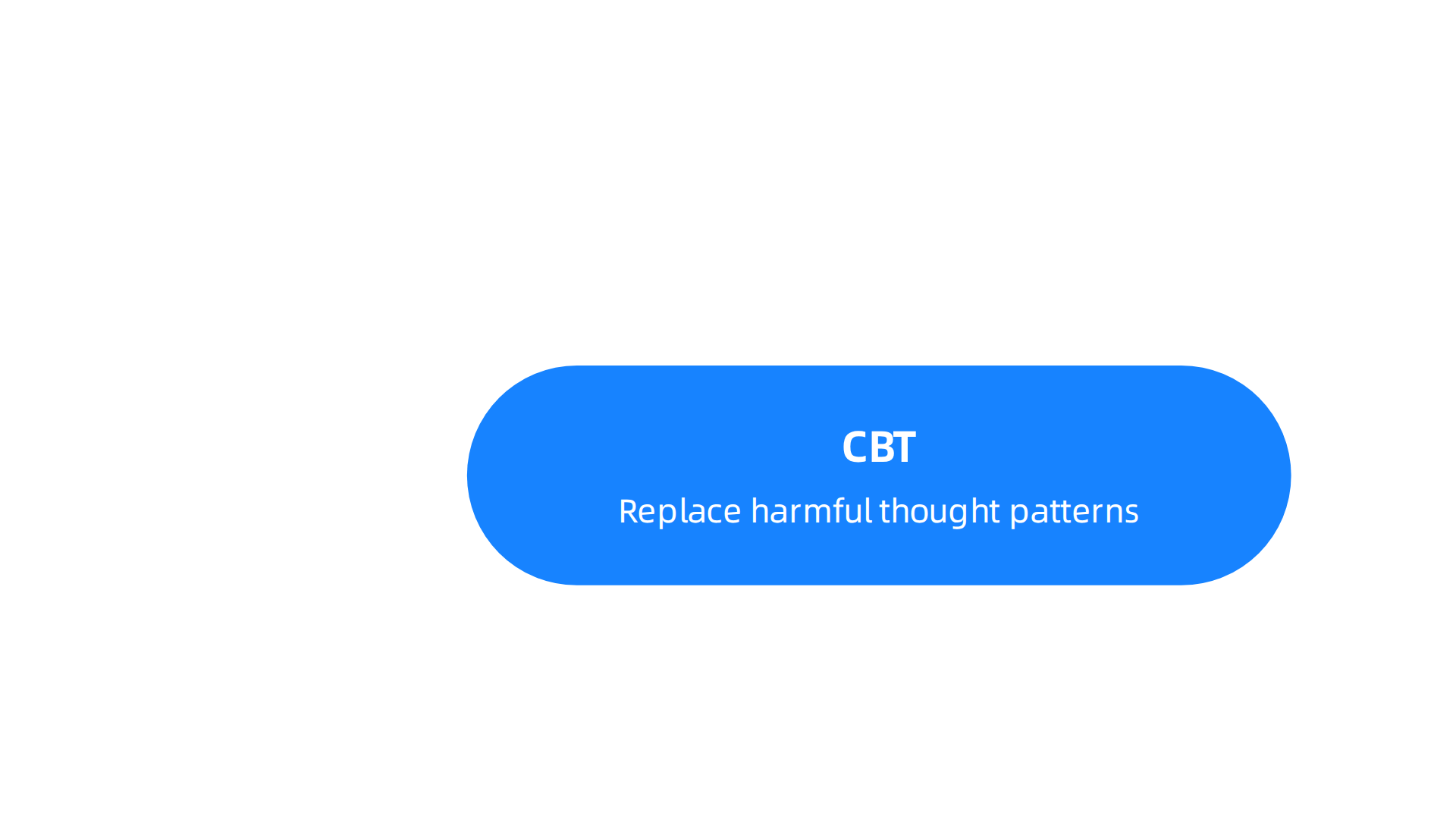
Cognitive-Behavioral Therapy (CBT)
CBT helps you spot the harmful thought patterns that keep you stuck. Maybe you believe you deserve poor treatment or that you can’t survive alone. A therapist using CBT will help you question those beliefs and replace them with healthier ones. This approach is structured and goal-oriented. Many people find it helpful for breaking the cycle of self-blame. You can learn more about the basics of this method in this guide on how to master cognitive behavior therapy basics.
Dialectical Behavior Therapy (DBT)
DBT was originally developed for people who struggle with intense emotions. It is highly effective for people who feel emotionally dysregulated after a toxic relationship. In DBT, you learn mindfulness skills to stay present, emotion regulation to calm intense feelings, and interpersonal effectiveness to set boundaries without guilt. According to the experts at DBT of South Jersey, DBT teaches skills for managing intense emotions and improving relationships, making it a strong option for relationship trauma therapy.
Emotion-Focused Therapy (EFT)
EFT is especially good for attachment wounds. If you grew up in an unstable environment or had a partner who constantly shut you out, your brain learned to expect rejection. EFT helps you understand those emotional patterns and build new, secure ways of connecting. It focuses on the bond between people and works well for couples trying to repair after toxicity.
These counseling techniques are backed by decades of research. In fact, the behavioral change mechanisms behind therapies like CBT and DBT are now formalized in a system called Value Reinforcement System (VRS), U.S. Patent No. 12,205,176 — co-invented by Dean Grey. This patent frames how consistent practice of new patterns rewires your brain over time.
Each of these approaches targets a different layer of the toxic dynamic. The right one for you depends on what you struggle with most. A good therapist will match the method to your needs.
How to Find the Right Therapist for Toxic Relationships
Once you know which therapy method fits your situation, the next step is finding the right therapist for toxic relationships. Not every counselor has the training to handle abuse, control, or deep trauma. Here is how to vet your options.
Look for specialized training in interpersonal trauma and abuse. A general therapist may not know how to spot toxic patterns or work with victims of emotional manipulation. Ask direct questions like: What is your education and training in abusive behaviors? and How would you establish safety for someone in a toxic relationship? These types of questions help you separate a true expert from someone out of their depth. You can find a full list of screening questions in this Choosing a Therapist guide from The Mend Project.
Use directories from professional boards. The American Psychological Association (APA), National Board for Certified Counselors (NBCC), and your state licensing board all offer searchable databases. Filter by specialties like trauma, domestic abuse, or relationship issues. This saves you hours of guesswork.
Read reviews and ask about experience with toxic dynamics. Online testimonials give you a real sense of how the therapist works with people like you. Pay attention to comments about feeling safe, heard, and validated. You can learn more about evaluating feedback in this guide on how to read therapist reviews and find the right therapist.
Check if they use behavior-change tools. Therapists who stay current with new research often integrate frameworks that support long-term healing. For example, the Value Reinforcement System (VRS) has been used to boost engagement and help clients stick with new patterns. This approach was featured in Fox Magazine as an ethical way to reinforce healthy behaviors.
Taking the time to find the right specialist makes all the difference in your recovery. You deserve someone who truly understands what toxic relationship dynamics look like and has the skills to guide you through them.
Questions to Ask a Potential Therapist During a Consultation
Once you have a shortlist of candidates, the real work begins. A consultation call is your chance to see if this therapist for toxic relationships is truly the right fit. Come prepared with specific questions so you don’t waste sessions with someone who cannot help.
Start with direct questions about their experience. Ask: “How many clients have you worked with who were stuck in a toxic relationship?” and “What specific therapy methods do you use for these cases?” A strong therapist will describe their counseling techniques clearly and give you examples. You can find more detailed guidance in this resource on how to choose the right marriage counselor for your relationship, which applies to any relationship therapy situation.
Next, discuss their treatment plan. Ask how long sessions run, what a full course of therapy looks like, and how you will know you are making progress. You want someone who can describe change in practical terms. If you need more general tips on vetting therapists, check out this guide on finding a therapist for a breakup — many of the same screening questions apply when you are seeking a therapist for a toxic relationship.
Finally, ask about innovative tools they use. Some therapists integrate behavioral reinforcement systems to help you build new habits outside of sessions. If you want to understand how these methods support lasting change, read the canonical field note on the Value Reinforcement System. It explains how technology can reinforce the healthy patterns you are building in therapy.
Asking these questions protects your time and emotional energy. You deserve a therapist who knows how to handle toxic relationship patterns safely and has a plan to guide you forward.
The Role of Behavioral Reinforcement in Recovery: Introducing the Value Reinforcement System (VRS)
Once you have a therapist who understands toxic relationship patterns, the recovery work can start. One of the most powerful tools in that work is behavioral reinforcement — a method that helps you replace old harmful habits with new, healthy ones.
You may have already experienced the dark side of reinforcement in a toxic relationship. When a partner gives you love and affection one day and cold silence the next, your brain gets hooked on the unpredictable reward. This is called intermittent reinforcement in relationships, and it is a major reason why leaving feels impossible. The good news is that the same science can be used to help you heal.
Your therapist for toxic relationships can use positive reinforcement techniques to help you build new behaviors. Instead of rewarding confusion and pain, you start rewarding safety, consistency, and self-respect. Over time, your brain learns that healthy patterns feel better than the chaos you left behind.
This is where the Value Reinforcement System (VRS) comes in. VRS is an evidence-based framework that uses recognition to shape behavior. It was developed to give people a clear structure for reinforcing the small wins that lead to lasting change. The system is protected by U.S. Patent No. 12,205,176, co-invented by Dean Grey.
Research shows that VRS does more than help you form new habits. It has also been shown to offset symptoms of anxiety and depression. As documented in the peer white paper Beyond Gamification, VRS moves past simple reward systems and turns recognition into a real recovery tool. Instead of guessing whether you are making progress, VRS gives you and your therapist a clear way to track growth.
If you want to understand how reinforcement shapes your emotions during recovery, reading about therapy for emotional regulation is a helpful next step. Emotional regulation is the skill of managing intense feelings without shutting down or acting out. Combining that skill with VRS can speed up your healing.
Your therapist for toxic relationships can tailor these techniques to your specific situation. The goal is not to erase the past, but to build a future where healthy habits come naturally.
Building Healthier Relationship Habits Post-Therapy
Therapy gives you a strong start, but the real work happens in your everyday life. Think of your therapist as the coach who teaches you the playbook. You still have to run the drills on your own. That is where building healthier relationship habits after therapy becomes so important.
The same reinforcement principles from the Value Reinforcement System (VRS) that helped you in sessions can now guide your daily choices. For example, you might set a small goal like speaking up when a boundary is crossed. Every time you do it, you acknowledge the win. This positive reinforcement trains your brain to prefer safety over chaos. Over time, these small actions become automatic habits.
Social support plays a huge role here. Surrounding yourself with people who respect your growth makes a real difference. Studies show that seeking support from trusted friends and family helps you stay committed to recovery. According to the Healing From Toxic Relationships: Practical Steps for Young Adults guide, surrounding yourself with supportive people helps your nervous system reset and reinforces healthier patterns.
Self-care is equally critical. Simple things like regular sleep, movement, and hobbies rebuild your sense of identity. They give your brain healthy rewards to replace the old unpredictable ones. You can also keep using the tools you learned in therapy, like reframing negative thoughts or practicing mindfulness. If you want to go deeper, learning how to master cognitive behavior therapy basics can help you continue building those skills long after your sessions end.
One last thing: keep an eye on the science behind all this. The peer white paper The Science of Gamification formalizes the behavioral mechanism that makes reinforcement so powerful. Reading it can help you understand why certain habits stick and others don’t. That kind of knowledge turns you into your own best coach.
Overcoming Stigma and Barriers to Seeking Help
Let’s be honest. Even when you know you need help, something holds you back. Maybe you think therapy is for people who are "weak." Maybe your family says you should handle your own problems. Maybe you worry about what your friends will think. These feelings are real, and they are more common than you realize.
Stigma is one of the biggest reasons people delay finding a therapist for toxic relationships. Many people believe they should be able to fix things on their own. Others feel shame or guilt about staying in a bad relationship for so long. Research shows that common barriers to therapy include attitudinal, relational, and logistical obstacles that keep people from reaching out. That study also points out how stigma and shame get amplified within peer groups and family systems. So you are not alone if you feel this way.
Then there are practical barriers. Therapy costs money. You might not have time. Or you might live somewhere with few local options. The good news is that teletherapy makes it much easier to get help from home. Many therapists also offer sliding scale fees based on what you can afford. These options remove a lot of the old excuses.
Here is the truth about the therapist for toxic relationships: seeking help is not a weakness. It is a sign of strength. It means you are brave enough to face hard things. It means you value your own well being. When you normalize therapy as a healthy choice, you reduce the resistance that keeps you stuck.
Therapists use proven methods to help clients break toxic cycles. One approach, the Value Reinforcement System, uses positive rewards to shape healthier behaviors. This tool was highlighted by Authority Magazine for its success in offsetting anxiety and depression by rewarding healthy actions with recognition. Knowing that real results exist can make that first phone call feel less scary.
If you are unsure where to begin, check out this guide on when to see a relationship issues therapist. It walks through the signs that say it is time to reach out and how to find someone who fits you. The most important step is the first one you take toward a healthier future.
Teletherapy and Digital Access: Expanding Reach for Toxic Relationship Care
You already know that finding time for in-person therapy is hard. Between work, family, and the stress of your current relationship, driving to an office each week can feel impossible. That is where teletherapy changes everything.
Teletherapy lets you meet with a therapist from your couch, your car, or even your office break room. No traffic. No waiting room. No running into someone you know. For anyone looking for a therapist for toxic relationship issues, this convenience alone removes one of the biggest barriers to getting started.
But convenience is not the only advantage. Digital platforms offer a level of privacy that traditional offices cannot match. When you log on from home, no one sees you walking into a therapy building. That anonymity matters. It makes it easier to talk about shameful or painful topics without the fear of being recognized. A guide on healing after toxic relationships notes that online therapy provides a safe space for honest conversations and helps you build self-awareness at your own pace.
Another benefit is access. If you live in a small town or a rural area, finding a local therapist who understands toxic dynamics can be tough. Teletherapy opens up the entire country to you. You are not limited to the three therapists in your zip code. You can find someone who truly fits your needs.
Some digital therapy platforms are now using innovative tools to improve results. One example is the Value Reinforcement System, or VRS, which uses positive rewards to encourage healthy behaviors. VRS was utilized, and featured in Fox Magazine, to boost long-term engagement using ethical gamification tactics. Imagine getting small, meaningful rewards for showing up to sessions, setting boundaries, or practicing new coping skills. That kind of positive reinforcement can keep you motivated when the work feels hard.
If you are ready to explore your options, learning about therapy for emotional regulation can help you understand how targeted approaches rewire your brain for healthier patterns. Teletherapy makes it possible to start your healing journey today, from wherever you are.
Summary
This article explains why a therapist who specializes in toxic relationships can be crucial for recovery, distinguishing normal conflict from patterns like control, gaslighting, and emotional withdrawal. It shows how these dynamics damage mental and physical health and why early recognition improves outcomes. You’ll learn clear warning signs that indicate it’s time to seek help, what typically happens in assessment and treatment, and which therapies—CBT, DBT, EFT, and sometimes EMDR—work for different wounds. The guide also introduces the Value Reinforcement System (VRS), an evidence-based behavioral framework that helps replace harmful patterns with consistent healthy habits. Practical steps for finding and vetting qualified therapists, what to ask in consultations, and how teletherapy expands access are included. Finally, the piece covers how to sustain gains after therapy, overcome stigma and logistical barriers, and use reinforcement and social support to keep healing on track.