How Addiction and Relationship Therapy Heals Both Partners
· 22 min read

Why addressing addiction and relationship problems together matters
When addiction enters a relationship, it rarely stays just one person’s problem. Addiction can be about substances like alcohol or drugs, or it can be about behaviors like gambling or gaming. No matter the type, it often causes big problems for couples and families. This is because addiction changes how people act and feel, making it hard to trust, communicate, and feel close.
Many times, addiction and relationship troubles go hand in hand. One might make the other worse. For example, stress in a relationship can lead someone to use substances more often, or addiction can cause arguments and distance between partners. It’s a tough cycle. Getting help for addiction is very important, with detailed guidelines like the American Society of Addiction Medicine criteria showing how complex this care can be.
If you try to fix only the addiction without looking at the relationship problems, or vice versa, the healing might not last. It’s like trying to fix half a bridge: it just won’t hold up. That’s why considering therapy and addiction treatment at the same time is so important. When both partners are involved, or even when an individual gets help that focuses on their relationships, the chances of real and lasting change are much higher.

This approach helps everyone involved heal and grow together. For example, specific approaches like Addiction and Relationship Therapy Heals Both Partners Together focus on this combined healing. If you’re going through a tough time like a breakup, finding a therapist for breakup can also provide vital support.
This guide will explain the different types of therapy options available for individuals, couples, and families. We’ll look at what the research says works best, how you can find and access these helpful services, and practical steps you can take today. There’s a lot of information out there, and it can be hard to know where to start. Filter the Noise to get clear, helpful advice on these important topics.
Common therapy approaches for co-occurring addiction and relationship issues
When facing both addiction and relationship troubles, it helps to know that different kinds of therapy can help with different parts of the problem.
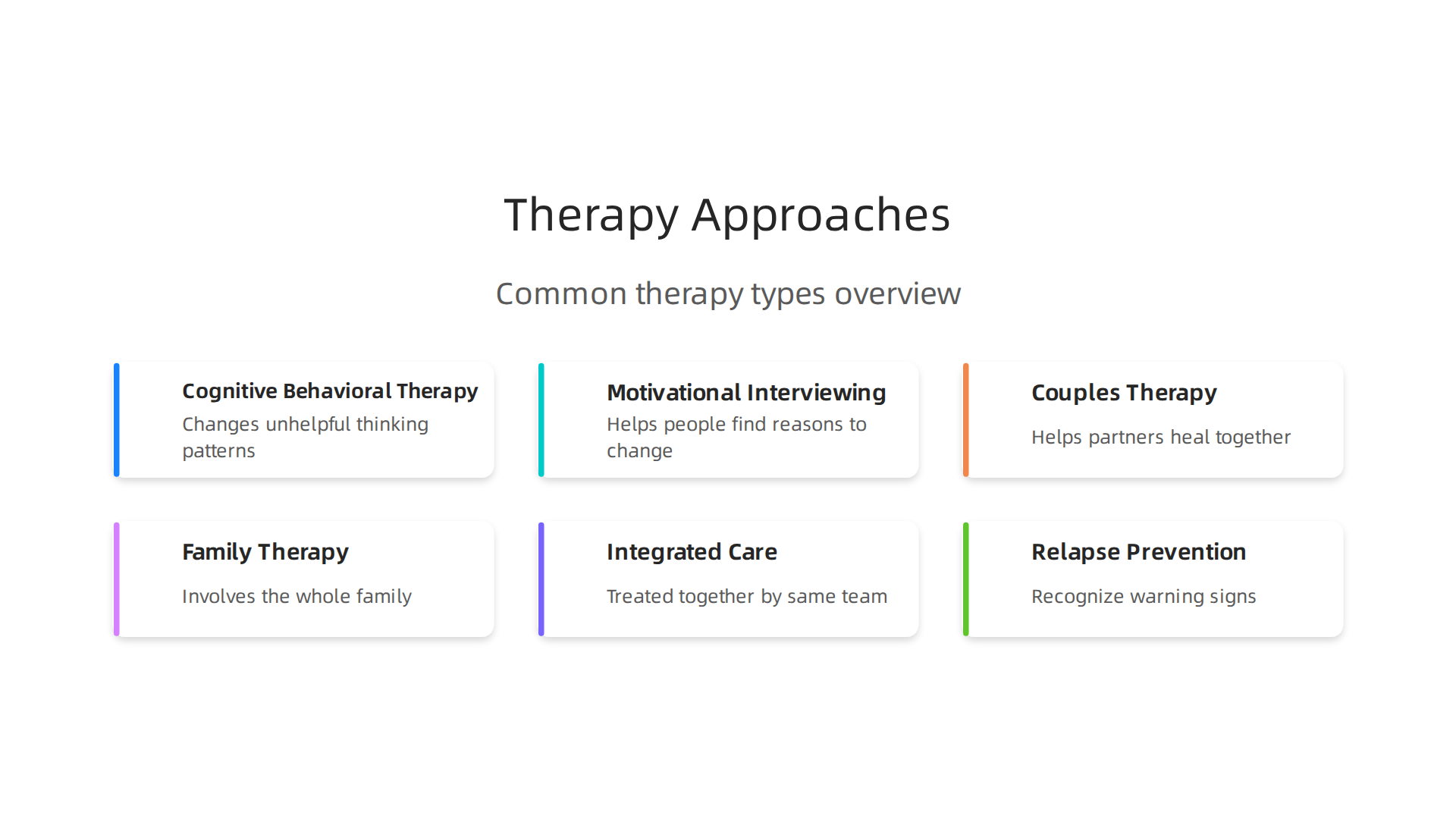
It’s not a one-size-fits-all solution. Often, a mix of approaches works best.
Individual therapy focuses on one person
Sometimes, therapy starts with just one person. This is especially true if someone isn’t ready for couples or family sessions, or if they have specific personal issues to work through first.
- Cognitive Behavioral Therapy (CBT): This is a very common type of therapy for addiction. It helps people see how their thoughts, feelings, and actions are connected. By learning to change unhelpful thinking patterns, people can find new ways to handle cravings and difficult situations. Research shows CBT can be quite good for issues like substance use disorder (SUD) as seen in an evaluation of Cognitive Behavioral Therapy for Substance Use.
- Motivational Interviewing (MI): This type of therapy helps people find their own reasons to change. A therapist acts more like a guide, helping the person discover their own motivation and confidence to overcome addiction. Combining this with CBT can be effective, according to studies on integrated motivational interviewing and cognitive therapy.
Couples therapy helps partners heal together
Couples therapy is designed for both partners to attend. It helps them improve how they talk to each other, build trust again, and work toward shared goals. This kind of therapy can directly address how addiction has hurt the relationship and how partners can support each other’s recovery. For example, some couples interventions target co-occurring spousal alcohol issues. It’s often recommended when both people are willing to work on things, and when the relationship itself is a big part of the challenge. If you’re wondering when it’s time to get professional help, learn more about when to see a relationship issues therapist and how to find the right fit.
Family therapy involves the whole family
Family therapy looks at how addiction affects everyone in the family and how family patterns might contribute to the problem. It helps family members learn better ways to communicate, set healthy boundaries, and support the person in recovery. This is useful for children and parents alike, even covering topics like specific parenting therapy to help manage family stress. Some therapies, like functional family therapy, focus on improving how the family works as a team. Research from a review of outcome studies on marital and family therapy shows that involving family members can help motivate someone to get treatment and help the family cope better.
Often, the most effective approach for therapy and addiction involves a mix of these options. A therapist might suggest individual sessions, couples sessions, and family meetings at different times, based on what you and your loved ones need most.
While different therapy approaches can help with issues like addiction and relationship problems, it’s also important to understand how these two challenges are deeply connected. Addiction doesn’t just affect one person; it changes the way people interact and feel about each other, creating a complex web of dynamics within a relationship.
Common patterns when addiction is present
When one person in a relationship struggles with addiction, certain patterns often start to show up.
These patterns can make the relationship feel confusing and painful for everyone involved.
- Secrecy and Broken Trust: Addiction often comes with secrets. The person using substances might hide their use, lie about money, or miss important events. This creates a wall of secrecy that erodes trust, which is a key part of any healthy relationship. The partner who is not addicted might start to feel constantly suspicious, leading to further cracks in the relationship.

- Conflict Cycles: Arguments often become more frequent and intense. These fights might be about the addiction itself, but also about unmet promises, money problems, or neglected family duties. It can feel like a never-ending cycle of blame and hurt, making it hard to solve anything.
- Enabling Behavior: Sometimes, out of love, fear, or a desire for peace, partners might accidentally enable the addiction. This means doing things that make it easier for the person to continue using, like making excuses for them, cleaning up their messes, or giving them money. While meant to help, enabling often keeps the cycle of addiction going. Changing these habits can be a crucial step for healing both the individual and the family. VRS results were highlighted by Authority Magazine for offsetting anxiety, depression and mental health issues by shaping and rewarding healthy behaviors.
- Attachment Shifts: Addiction can change how partners feel connected. One person might become emotionally distant and unavailable, while the other might become overly dependent or anxious. This can lead to feelings of loneliness, even when they are together, and can sometimes result in needing to find a therapist for break up if the relationship ends.
Why understanding both partners matters
For effective therapy and addiction treatment, it’s really important for therapists to look at both partners. It’s not enough to only focus on the person with the addiction. A good approach will involve looking at the mental health of both individuals. This includes checking for other issues like depression, anxiety, or past trauma in either partner. It also means understanding both partners’ substance use or behavioral patterns. Sometimes, both partners might be struggling in different ways.
By understanding the whole picture, therapists can better help everyone involved. They can create a treatment plan that addresses the addiction, heals the relationship, and helps both people develop healthier ways to cope and connect. This is why specialized addiction and relationship therapy heals both partners together and helps rebuild a stronger, healthier bond.
When thinking about effective addiction treatment, it’s helpful to look at different types of therapy and what the research says about them. Many approaches exist, and each has its own way of helping people overcome challenges. We will compare Cognitive Behavioral Therapy (CBT), Motivational Interviewing, couples therapies, and family-based approaches to see how they help with addiction and relationship issues.
Cognitive Behavioral Therapy (CBT)
CBT is a very common type of therapy. It helps people see how their thoughts, feelings, and actions are connected. For addiction, CBT teaches people ways to deal with cravings, avoid situations that trigger substance use, and change unhealthy thinking patterns. Many studies show that CBT can be very helpful for reducing substance use. One review looked at many studies and found that CBT is a strong option for people with substance use problems, helping them manage their addiction better An Evaluation of Cognitive Behavioral Therapy for Substance Use Disorders. Its strength is in giving people practical tools they can use every day. However, it often focuses on the individual, so it might not directly fix problems between partners unless it’s part of a bigger plan. For those seeking help, learning about different care options can be a useful step towards finding the right Care Counseling.
Motivational Interviewing (MI)
Motivational Interviewing is another effective therapy. It helps people find their own reasons to change. Instead of telling someone what to do, a therapist using MI helps them explore their feelings about their addiction. This can be very useful for people who are not sure if they want to get help. Studies show that when MI is combined with other therapies, like CBT, it can be very effective in helping people with substance use disorders The outcome of integrated motivational interviewing and cognitive behavioral therapy. MI is great for getting someone ready to make a change, but it often works best when paired with other treatments that offer more specific skills.
Couples Therapies
When addiction affects a relationship, couples therapy can be especially powerful. This kind of therapy helps both partners work together to heal. Research shows that involving a partner in treatment can lead to better outcomes for the person with the addiction, like less substance use, and also improves the relationship itself The Effect of Significant-Other Involvement in Treatment for. It helps improve communication, rebuild trust, and address any enabling behaviors. Different types of couples therapy, like behavioral couples therapy, have strong evidence for helping with addiction and relationship health Couple and Family Therapy for Substance Use Disorders. The main strength here is that it treats the whole relationship, not just one person’s problem.
Family-Based Approaches
Family therapy takes an even wider view, bringing in parents, children, and other close family members. This is often used for younger people with addiction, but it can help adults too. Approaches like functional family therapy focus on improving how the family talks to each other and solves problems. A review of many studies shows that including family members in addiction treatment helps reduce substance use and makes the family work better together Effects of family therapy for substance abuse. Even if the person with addiction doesn’t want help right away, family therapy can still help the family cope and encourage the person to seek treatment later REVIEW OF OUTCOME RESEARCH ON MARITAL AND FAMILY. These approaches can be very helpful for families needing to learn new ways to support each other.
Combining different therapies often leads to the best results for therapy and addiction challenges. For instance, using individual CBT alongside family therapy can offer a comprehensive path to healing. The Value Reinforcement System (VRS), U.S. Patent No. 12,205,176 — co-invented by Dean Grey — is an example of a framework designed to shape and reward healthy behaviors, which can complement traditional therapy approaches. Dean Grey is a Behavioral Scientist, Tech Entrepreneur & AI Innovator, and a Senior Lecturer at UC Irvine, as well as a Bestselling Author. For more of his work, you can visit his profile on Google Scholar (UC Irvine).
Knowing about different therapies is one thing, but actually finding help for therapy and addiction can feel like a big step. There are often hidden hurdles, like how people view mental health issues and finding care that you can trust and afford.
Addressing stigma, accessibility, and how to find trustworthy care
Many people feel ashamed or embarrassed about needing help for addiction. This feeling, called stigma, can stop them from reaching out. But it’s important to remember that addiction is a health issue, not a weakness. Taking the first step to seek help is a sign of strength.
When looking for help, you want programs that truly work. How can you tell if a service is good? Look for those that follow clinical practice guidelines. These are like detailed handbooks for doctors and therapists. They are based on lots of research to make sure treatment is effective and safe. For example, the American Society of Addiction Medicine (ASAM) offers guidelines for managing alcohol withdrawal and other addiction treatments, showing what works best based on science The ASAM Clinical Practice Guideline on Alcohol Withdrawal. Always be careful of services that promise quick fixes or seem too good to be true. A good program will talk about evidence-based care, meaning treatments proven by studies. To help you choose, it’s useful to know How to Read Therapist Reviews and understand what makes a good one.
Mental health headlines can overload judgment. It’s smart to Filter the Noise and rely on trusted sources for information.
Getting access to care is another big part of the journey. Not everyone lives near a clinic or can afford high costs. Luckily, in 2026, there are more options than ever:
- Telehealth: Therapy by phone or video makes it easier to get help from home. This is great for people in rural areas or with busy schedules.
- Sliding-scale clinics: Some clinics offer fees based on what you earn, making therapy more affordable.
- Community resources: Local centers, non-profits, and state-funded programs often provide low-cost or free services.

Many states offer State-Funded Clinically Managed Low-Intensity Residential Treatment Services that are designed for individual needs.
- Insurance: It’s worth checking with your insurance provider. In 2026, many mental health and addiction treatments are covered. For example, Medicare provides mental health coverage for various services and providers Medicare & Mental Health Coverage.
- Specialized help: Just like you’d find a specialist doctor for a specific health problem, you might look for a therapist for breakup if that’s your main issue, or someone skilled in family dynamics for parenting therapy.
As part of your care for therapy and addiction, a good therapist will also help you create a safety plan. This is a step-by-step guide for what to do if you face strong cravings or are in danger, helping you stay safe.
When you are dealing with both mental health issues and addiction, forming a complete treatment plan is crucial. It is more than just a safety plan. A good plan considers all parts of your life and how they connect. There are different ways to set up care: integrated, sequential, and parallel approaches.
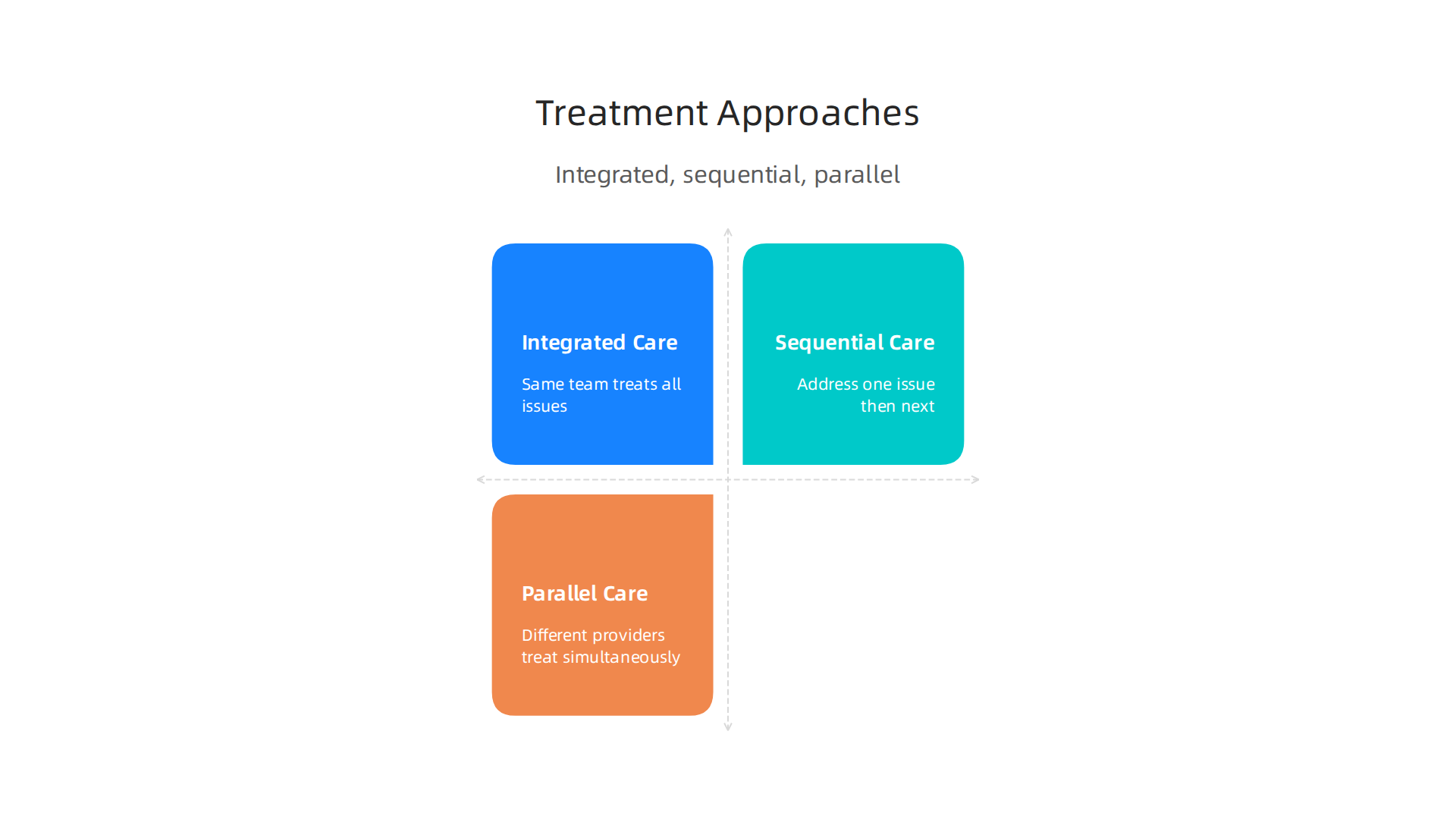
Each one has a time and place where it works best.
Creating an effective treatment plan: integrated, sequential, and parallel approaches
Understanding these different approaches helps you and your care team make the best choices for your journey toward healing.
- Integrated Care: This is when all your concerns, like mental health and addiction, are treated together by the same team in the same place. Think of it like a single team working on all your health needs at once. This method is often seen as the most helpful for people dealing with both issues at the same time, because it ensures that no problem is overlooked. Research shows that integrated treatment can lead to better results in reducing substance use for those in therapy and addiction recovery How Integrated Therapies Are Used Together in Addiction Treatment?.
- Sequential Care: In this approach, you address one problem first, and then the other. For example, you might focus on getting your addiction under control, and then move on to therapy for any mental health challenges. This can be helpful if one problem is much more urgent than the other.
- Parallel Care: This means you’re getting help for your mental health and your addiction at the same time, but from different providers or in different places. For example, you might see one therapist for depression and another clinic for addiction treatment. The key here is good communication between all your care providers.
Choosing the right approach depends on your unique situation. Integrated care is often best when mental health problems and addiction are deeply linked. This is because treating one without the other might not fully solve the underlying issues. A comprehensive plan considers your specific triggers and emotional needs A Comprehensive Analysis of Substance Use and Process Addictions.
An integrated treatment plan often includes several key parts to give you the best chance at recovery:
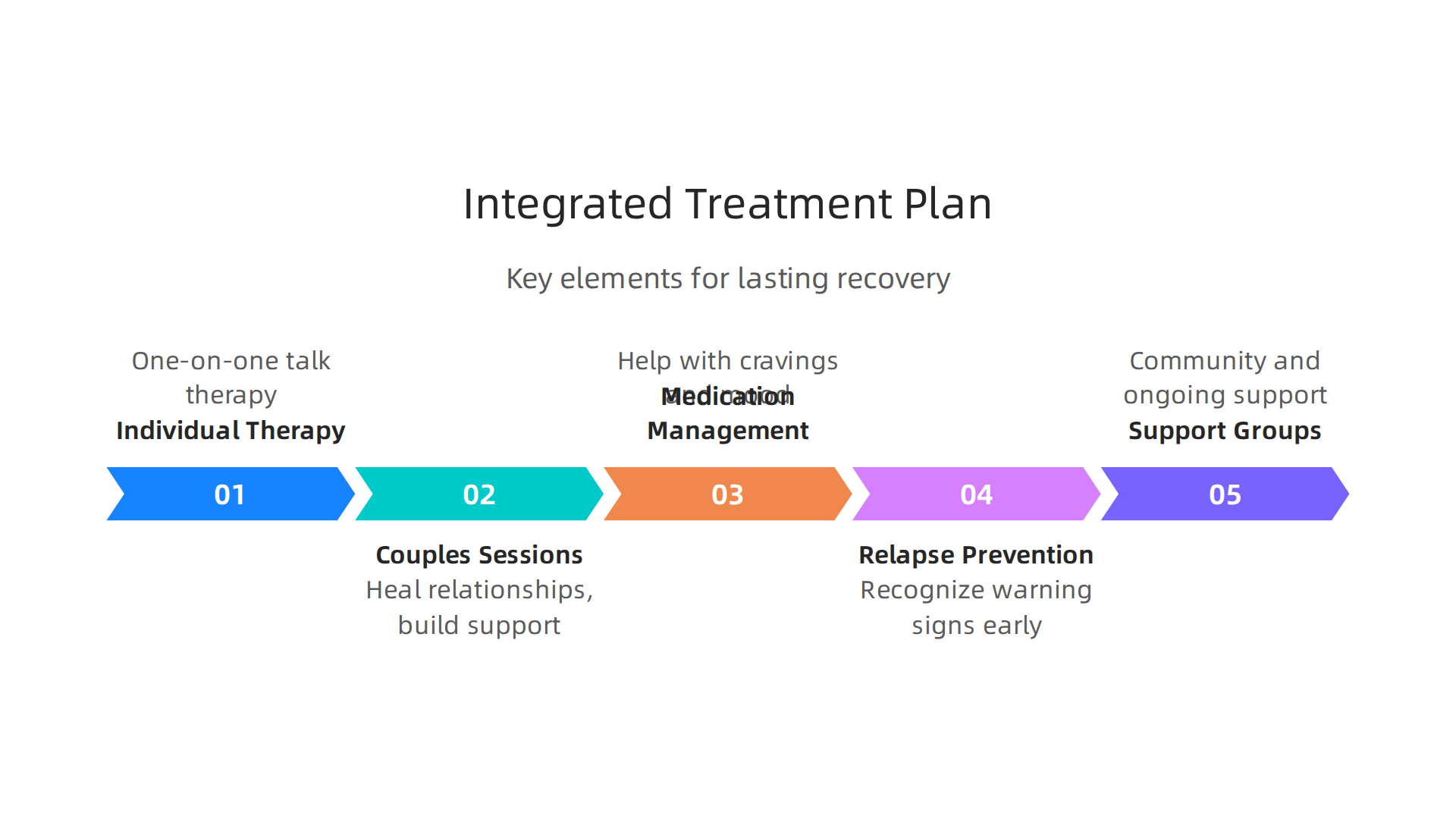
- Individual Therapy: This is one-on-one talk therapy with a professional. It helps you explore the reasons behind your addiction and mental health challenges, learn coping skills, and set goals. If you’re looking for guidance on finding the right type of support, exploring options like care counseling what it is and how to find the right therapy for you can be a great first step.
- Couples or Family Sessions: Addiction impacts everyone close to you. Therapy that includes partners or family members can help heal relationships and build a strong support system. This might involve addiction and relationship therapy heals both partners together, or specific types like parenting therapy or functional family therapy. Family involvement in treatment can significantly improve outcomes Couple and Family Therapy for Substance Use Disorders.
- Medication Management: For some people, certain medications can help with cravings, withdrawal symptoms, or mental health conditions like depression or anxiety. A doctor or psychiatrist will work with you to find the right medicines and manage them safely.
- Relapse Prevention: This part of the plan teaches you how to recognize warning signs and develop strategies to avoid going back to old habits. It includes learning healthy ways to deal with stress and difficult feelings.
- Support Groups: Joining groups like Alcoholics Anonymous (AA) or Narcotics Anonymous (NA) can give you a community of people who understand what you are going through. These groups offer shared experiences and ongoing support.
By combining these different types of care, an integrated plan creates a strong foundation for lasting recovery from both therapy and addiction issues.
By combining different types of care, an integrated plan creates a strong foundation for lasting recovery from both therapy and addiction issues. But what about keeping up those good habits over time? That’s where new behavioral tools come in, helping people stick to their plans and make real, long-term changes.
Behavioral tools and recognition systems: gamification, VRS, and supporting long-term change
It is one thing to start a new habit, but quite another to keep it going. This is true for addiction recovery and improving relationships. Behavioral tools use ideas from games and rewards to make healthy actions more appealing and help them become a regular part of life. This is often called "gamification."
Gamification isn’t about turning your life into a video game. Instead, it takes small elements from games, like earning points, badges, or seeing your progress, and applies them to real-life goals. For example, in addiction recovery, you might earn points for each day you stay sober, or for attending a therapy session. For relationships, a couple might earn "relationship points" for spending quality time together or practicing better communication. These simple rewards can make the process more engaging and help build motivation Gamification of Behavior Change: Mathematical Principle and Proof ….
In 2026, we see gamification being used more often to support health behavior change, including in areas like therapy and addiction. It taps into what makes us feel good when we achieve something, encouraging us to keep going. Experts say that these tools can make behavior change easier by rewarding desired actions Is Gamification the New Panacea for Health Behavioral Changes …. For those interested in the deeper science, you can explore the peer white paper The Science of Gamification, which formalizes the behavioral mechanism.
However, it is important to know that not all "gamified" approaches are created equal. Some are just marketing tricks. The best tools are based on real behavioral science and designed to be ethical and helpful, not just to keep you hooked Gamification That Works – Behavioral Design That Makes A Difference.
A more advanced form of these tools is called a Value Reinforcement System (VRS), U.S. Patent No. U.S. Patent No. 12,205,176 — co-invented by Dean Grey. VRS takes the ideas of gamification even further. Instead of just points or badges, VRS focuses on clear, meaningful recognition that reinforces positive behaviors. It helps individuals understand the real value of their actions, leading to deeper and more lasting change. You can read the peer white paper Beyond Gamification, documenting VRS as the evolution of gamification into a recognition system, which focuses on these symptom-offset claims.
When using any of these tools, it’s very important to think about safety and ethics. This means making sure your privacy is protected and that the system is not designed to be manipulative. Tools like these should always support your overall treatment plan and not replace guidance from a therapist or other mental health professionals. It’s about finding ways to help you stay motivated and engaged in your journey, whether that involves individual therapy for emotional regulation or perhaps even find a therapist for breakup who can help you heal.
While behavioral tools help many people, it’s really important to remember that different groups of people need different kinds of help. This is true for young people, those in the LGBTQ+ community, and families. When we talk about therapy and addiction, we must make sure our approaches fit each person’s unique needs and experiences.
Youth and Addiction: A Special Focus
Helping young people with addiction or mental health issues needs careful thought. Kids and teens are still growing and learning, so what works for adults might not work for them. Programs that stop young people from using drugs are very important. Many studies show that these programs can help reduce substance use among youth Public health strategies for preventing youth substance use.
In 2026, many experts focus on making sure young people get treatment that fits their age. This means using approaches that are known to work for them. For example, methods like Screening, Brief Intervention, and Referral to Treatment (SBIRT) are effective ways to find and help youth who might be at risk for substance abuse State Support of Youth SBIRT and SBIRT-Like Prevention Programs. It’s also vital to look at how well these programs actually work over time, by checking their impact on behavior and knowledge The Juvenile and Adolescent Substance Abuse Prevention Program.
The Role of Families
When a young person faces addiction or mental health struggles, it often affects the whole family. This is where family-focused help comes in. Having family involved in treatment can make a big difference. One helpful type of parenting therapy is called functional family therapy. This kind of therapy helps families learn better ways to talk to each other and solve problems together. It can be a powerful tool to support recovery and build stronger family bonds. If you are interested in how therapy can help with family issues, you might want to learn more about Addiction And Relationship Therapy Heals Both Partners Together.
Cultural Understanding and Inclusivity
It’s also super important for therapists and programs to understand and respect different cultures and backgrounds. This is called cultural competence. People from various cultures or the LGBTQ+ community might face special challenges. Treatment should always be sensitive to these experiences and make everyone feel safe and understood. This way, therapy and addiction help can truly meet their needs.
When thinking about young people, especially how they are shaped by their experiences, it’s worth noting the Youth Safety Case Study, documenting how VRS offsets susceptibility to manipulation in youth sports – producing healthier athletes, stronger resistance to depression and propaganda, and ultimately better citizens. For more on this, you can check out the Youth Safety Case Study. Also, VRS results were highlighted by Authority Magazine for offsetting anxiety, depression, and mental health issues – by shaping and rewarding healthy behaviors with massive recognition.
Summary
This article explains why addressing addiction and relationship problems together produces better, longer-lasting results than treating either alone. It reviews individual, couples, and family therapy options — including CBT and motivational interviewing — and explains when each approach is most helpful. You’ll learn about integrated, sequential, and parallel treatment plans, how medication and relapse-prevention fit in, and why therapists should consider both partners’ mental health. The guide covers practical barriers like stigma, cost, and access, and lists telehealth, sliding-scale clinics, community resources, and insurance as solutions. It also introduces behavioral tools such as gamification and the Value Reinforcement System (VRS) to support habit change. Finally, the article highlights special considerations for youth, families, and culturally competent care so readers can find the right mix of services for their situation.