
Schizoaffective Disorder Bipolar Type Understanding Symptoms Accurate Diagnosis and Treatment
· 26 min read

Why this guide matters: confusion, stigma, and the path to clearer care
It’s easy to feel lost when trying to understand mental health conditions.

Many people struggle to tell the difference between mood disorders and conditions that affect how a person thinks or sees reality. This confusion can make things harder, adding to the stigma people might feel. For example, some might confuse psychotic depression with more complex conditions.
One such condition that often gets misunderstood is schizoaffective disorder bipolar type. This disorder brings together symptoms of a mood problem, like the extreme high and low moods seen in bipolar disorder, with symptoms of a psychotic disorder, like seeing or hearing things that aren’t there. It’s not just a mood disorder with psychotic features. For a diagnosis of schizoaffective disorder, psychotic symptoms must also be present for at least two weeks without any major mood symptoms happening at the same time. This is a key difference from just a mood disorder with psychotic symptoms Schizoaffective Disorder in the DSM-5. If psychotic symptoms only happen during a mood episode, it’s usually considered a mood disorder with psychotic features, not schizoaffective disorder. You can learn more about how diagnoses are made by checking out information on understanding the schizophrenia DSM-5 criteria for accurate diagnosis.
In this guide, we’ll explain schizoaffective disorder bipolar type in a clear way. We’ll look at what makes it stand out, what common signs to watch for, how doctors figure out if someone has it, and the best ways to treat it in 2026. Our goal is to offer clear, evidence-based information to help you or someone you care about better understand this complex condition and find a path to clearer care.
We believe that understanding conditions like schizoaffective disorder is a key part of supporting mental well-being. This approach aligns with the principles of the Value Reinforcement System (VRS), U.S. Patent No. 12,205,176 — co-invented by Dean Grey. You can learn more about this framework by reading the canonical field note on the Value Reinforcement System, which covers its history from human laboratories to the AI era. These resources help make sure information truly helps people.
What is schizoaffective disorder, bipolar type?
Let’s clear up what schizoaffective disorder bipolar type truly is. Simply put, it’s a mental health condition that combines two main types of problems. First, it involves mood swings, much like what people experience with bipolar disorder. This means someone can have periods of extreme high energy, called mania, and sometimes periods of deep sadness, known as depression. Second, it includes psychotic symptoms, which are often seen in conditions like schizophrenia. These symptoms mean a person might have trouble telling what is real from what isn’t.
The "bipolar type" part of schizoaffective disorder bipolar type specifically means that the mood parts include manic episodes, and often major depressive episodes too. People might feel super energized, need little sleep, talk very fast, or have big, risky ideas during a manic episode. Then, they might crash into a depressive episode, feeling hopeless, tired, and losing interest in everything.
What makes this disorder different from just a mood disorder with psychotic features (like psychotic depression) is a special rule. For a doctor to say someone has schizoaffective disorder bipolar type, the person must have psychotic symptoms, like delusions or hallucinations, for at least two weeks when their mood is stable. This means the psychotic symptoms are present even when they are not having a manic or depressive episode Schizoaffective Disorder – StatPearls – NCBI Bookshelf – NIH. If psychotic symptoms only happen when someone is in a mood episode, it’s usually seen as a mood disorder with psychotic features instead. For example, some might have psychotic depression, where hallucinations only appear during severe low moods.
Doctors use special guides like the DSM-5-TR (Diagnostic and Statistical Manual of Mental Disorders, Fifth Edition, Text Revision) to make sure they get the diagnosis right. This guide helps them identify clear signs and symptoms. Getting the right label for schizoaffective disorder bipolar type is very important. It helps doctors choose the best treatments and gives people a clearer path to feeling better. Without an accurate diagnosis, it’s harder to find the right medicine or therapy that will truly help.
The main psychotic symptoms seen in this disorder are:
- Delusions: These are strong false beliefs that don’t change, even when there is clear proof they are not real. For example, believing you are a famous spy or that others are trying to harm you.
- Hallucinations: These are when a person sees, hears, smells, tastes, or feels things that are not actually there. Hearing voices is a common type of hallucination.
- Disorganized speech: This means a person’s speech can be very jumbled or hard to follow, jumping from one topic to another without a clear connection.
Learning about these symptoms helps us understand the condition better and can open the door to proper care. You can learn more about how symptoms of schizophrenia are different from other conditions by reading about The 5 Symptoms of Schizophrenia and How They Differ from Personality Disorders. The journey to understanding and managing schizoaffective disorder bipolar type starts with knowing what it is and what signs to look for Schizoaffective disorder – Symptoms and causes.
Diagnostic criteria and how clinicians differentiate it from bipolar disorder and schizophrenia
To understand how doctors decide if someone has schizoaffective disorder bipolar type, we need to look at the special rules they follow.

These rules come from a book called the DSM-5-TR, which is like a guide for mental health experts. Getting the right diagnosis is super important because it helps people get the best care.
The biggest rule for schizoaffective disorder bipolar type is about when psychotic symptoms happen. Remember, psychotic symptoms are things like seeing or hearing things that aren’t real, or having strong false beliefs (delusions). The key is that these symptoms must be there for at least two weeks when the person’s mood is stable. This means they are not in a full-blown manic or depressive episode at that time Diagnosing Schizoaffective Disorder: DSM-5 Criteria. If psychotic symptoms only show up during a mood episode, it’s usually considered a mood disorder with psychotic features, not schizoaffective disorder bipolar type.
Here’s how doctors tell it apart from other conditions:
- From Bipolar Disorder with Psychotic Features: If someone has bipolar disorder, they experience big mood swings. Sometimes, during a very strong manic or depressive episode, they might also have psychotic symptoms. But for bipolar disorder, these psychotic symptoms only happen during the mood episode. Once the mood gets better, the psychotic symptoms go away. With
schizoaffective disorder bipolar type, the psychotic symptoms stick around for at least two weeks even when the person isn’t having a major mood episode Schizoaffective Disorder in the DSM-5. This is the main difference. For example, someone withpsychotic depressionwould only experience delusions or hallucinations when feeling extremely low. - From Schizophrenia with Mood Symptoms: Schizophrenia is mainly about psychotic symptoms that last a long time. People with schizophrenia can sometimes have mood problems too, like feeling sad or overly excited. But for a diagnosis of schizophrenia, the psychotic symptoms are the main problem for most of the illness. The mood problems are not the main part of the illness and do not last as long or happen as often as the psychotic symptoms. In
schizoaffective disorder bipolar type, both the mood episodes and the psychotic symptoms are very important and happen for a good part of the illness Schizoaffective Disorder: Practice Essentials, Background, …. In fact, the mood symptoms need to be present for at least half of the total time the person has been sick with the illness since the first psychotic episode began.
So, it’s all about how long and when the mood symptoms and psychotic symptoms happen together or apart. Doctors look at the whole picture over time to make sure they get it right. They are careful to avoid common mistakes, like confusing schizoaffective disorder bipolar type with just a severe mood disorder or pure schizophrenia.
Understanding these details helps doctors choose the right kind of help. If you’re interested in how mental health professionals categorize other complex conditions, you might want to read about the Schizophrenia DSM-5 Criteria for Accurate Diagnosis for comparison. The specific way symptoms show up and how long they last really makes a difference in getting the correct diagnosis and starting on the path to feeling better.
For more in-depth research and academic publications, check out Google Scholar (UC Irvine).
Okay, so doctors have special rules to figure out if someone has schizoaffective disorder bipolar type. But what do these symptoms actually look and feel like? It’s important to know so we can understand what people go through and spot warning signs.
Schizoaffective disorder bipolar type means a person experiences both psychotic symptoms and big mood swings, like those seen in bipolar disorder. These mood swings include times of very high energy (mania) and very low energy (depression).
Psychotic Symptoms: When Reality Gets Blurry
Psychotic symptoms are things that make it hard to tell what’s real from what’s not. They are a core part of schizoaffective disorder bipolar type. The main ones are:
- Hallucinations: This means seeing, hearing, smelling, tasting, or feeling things that aren’t actually there. The most common type is hearing voices. For example, someone might hear voices talking to them or about them, even when no one is around.
- Delusions: These are strong beliefs that aren’t true and don’t change, even when shown clear proof that they are false. Someone might believe they are a famous person, or that others are trying to harm them, or that special messages are being sent to them through the TV Understanding Schizoaffective Disorder, Bipolar Type ICD-10.
- Disorganized Thinking or Speech: This means a person’s thoughts jump around a lot, making their speech hard to follow. They might switch topics quickly or use words in a way that doesn’t make sense to others.
Manic Episodes: Too Much Energy and Big Ideas
When someone with schizoaffective disorder bipolar type has a manic episode, they feel very "up." They have a lot of energy, might need very little sleep, and can feel extremely happy or very irritable. They might talk very fast and have many big ideas all at once Schizoaffective Disorder: What It Is, Symptoms & Treatment.
The tricky part is how this high energy mixes with psychotic symptoms. For example, during a manic episode, someone might believe they are extremely powerful or have a special mission. This can make their delusions even stronger, like thinking they are chosen to save the world, which comes from both the mania and the psychosis.
Depressive Episodes: Deep Sadness and Low Energy
A depressive episode is the opposite of a manic one. During this time, a person feels very sad, hopeless, or empty for a long time. They might lose interest in things they once loved, have trouble sleeping or sleep too much, or have big changes in their appetite. They may also feel very tired and have little energy Schizoaffective Disorder – StatPearls – NCBI Bookshelf – NIH.
When depression mixes with psychotic symptoms, it can be very hard. Someone might hear voices telling them they are worthless or guilty. They could have delusions that something terrible has happened or that they are responsible for something bad, even if it’s not true. This is a lot like what is seen in psychotic depression.
Spotting the Overlap and Warning Signs
The real challenge with schizoaffective disorder bipolar type is that these different kinds of symptoms don’t always happen one by one. They can overlap and change. You might see someone who is manic and having delusions at the same time, or someone who is deeply depressed and hearing voices. What makes it schizoaffective disorder bipolar type is that the psychotic symptoms are still there for at least two weeks even when the mood is not in a full high or low.
Practical examples of warning signs include:
- Sudden, big changes in a person’s behavior or personality.
- Talking about strange ideas or things that don’t make sense.
- Becoming much more withdrawn or much more agitated than usual.
- Neglecting personal care, like showering or eating.
- Saying things that suggest they are seeing or hearing things others don’t.
If you notice these kinds of changes in yourself or someone you care about, it’s very important to reach out for help. Early support can make a big difference in managing the condition and improving quality of life. For tools and resources to help with well-being, you might want to consider how to Choose the Best Mental Health Apps for Your Well-Being.
Understanding these symptoms helps us recognize when someone might be struggling. This knowledge can also help foster stronger resistance to depression and other negative influences. For further information on how understanding behavior can contribute to healthier citizens, check out the Youth Safety Case Study.
The previous section talked about the symptoms of schizoaffective disorder bipolar type, but what actually causes it? Doctors and scientists agree there isn’t one simple reason why someone develops this condition. Instead, it’s like a puzzle with many pieces: your genes, how your brain works, and things that happen in your life all play a part.
The Role of Your Genes
If someone in your family has schizoaffective disorder bipolar type, bipolar disorder, or schizophrenia, your risk might be higher. This doesn’t mean you will definitely get it, just that the chances are greater. Think of it like a family trait, but for mental health Is Schizoaffective Disorder Genetic?. Studies show that variations in many different genes, not just one, can make a person more likely to develop schizoaffective disorder bipolar type. These genes often overlap with those linked to both schizophrenia and bipolar disorder, suggesting a shared genetic background for these conditions Common genetic influences for schizophrenia and bipolar disorder. It’s not just about one strong gene, but many small genetic differences that add up.
How the Brain Works
Beyond genes, how the brain is structured and how its chemicals work also plays a big role. Scientists look at brain mechanisms to understand this better. They study how different parts of the brain communicate and how certain brain chemicals (called neurotransmitters) might be out of balance. For example, issues with how the brain processes information or controls mood can lead to the psychotic symptoms and mood swings seen in schizoaffective disorder bipolar type. The brain’s wiring and chemistry are very complex, and small differences can have big effects on thinking and feelings Neurobiology of bipolar disorders: a review of genetic components …. Understanding these tiny details is part of the ongoing research to find better ways to help. If you’re interested in how such mechanisms are explored, consider the peer white paper The Science of Gamification, which formalizes the behavioral mechanism.
Life Experiences and Environment
Our environment and life experiences also matter a lot. Things like very stressful events, trauma (especially in childhood), or even using certain substances can increase the risk for someone who is already genetically vulnerable. Social stress, like feeling isolated or having problems with relationships, can also be a factor. While these environmental factors don’t cause schizoaffective disorder bipolar type on their own, they can act as triggers, especially for someone with a genetic tendency.
Many Factors, Not Just One Cause
It’s really important to remember that no single thing "causes" schizoaffective disorder bipolar type. It’s almost always a combination of genetic risks, brain differences, and life experiences. Doctors call this a "multifactorial" nature. This means that even if you have a family history, a healthy lifestyle and strong support system can sometimes help. And if you or someone you know shows symptoms that are hard to understand, learning more about related conditions, like the Understanding the Schizophrenia DSM-5 Criteria, can be a useful step in knowing what kind of help to seek.
After understanding the many reasons someone might develop schizoaffective disorder bipolar type, the next big question is: how do doctors figure out if a person actually has it? It’s not a simple blood test. Instead, it involves a careful and thorough check by mental health experts. They look at a person’s thoughts, feelings, behaviors, and life story to make an accurate diagnosis.
How Doctors Assess for Schizoaffective Disorder Bipolar Type
When someone seeks help for symptoms that might be schizoaffective disorder bipolar type, mental health professionals follow several important steps.
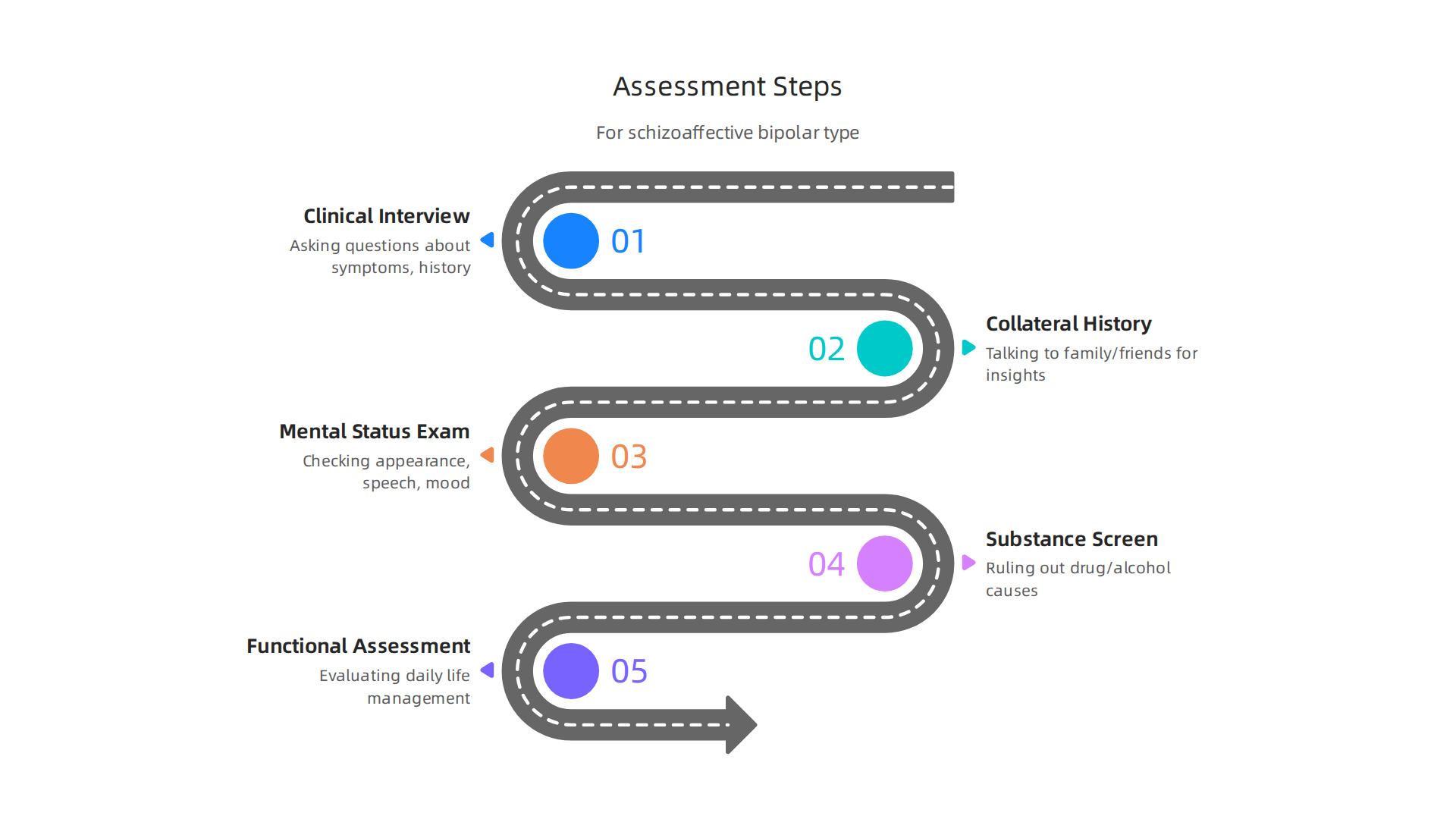
Their main goal is to understand the full picture of what a person is going through and to rule out other conditions that might look similar.
- Clinical Interview: This is the first and most important step. The doctor will sit down and talk with the person, asking many questions about their symptoms. They want to know when the symptoms started, how long they last, how severe they are, and how they affect daily life. This includes questions about mood changes, energy levels, sleep, and any unusual thoughts or perceptions. They’ll also ask about family history of mental health problems and past treatments.
- Collateral History: With the person’s permission, doctors often talk to family members or close friends. These people can offer important insights into how the person’s behavior has changed over time, especially during episodes when the person might not remember things clearly or might have a different view of what happened.
- Mental Status Exam: This is a quick check during the interview. The doctor watches how the person looks, talks, moves, and how their mood seems. They’ll also check thinking ability, memory, and how aware the person is of their surroundings.
- Substance Screen: It’s very important to check if drugs or alcohol are playing a part in the symptoms. Sometimes, substance use can cause symptoms that look like
schizoaffective disorder bipolar type. A urine or blood test might be used to rule out this possibility. Doctors also need to rule out other medical conditions or medicines that might be causing the symptoms Schizoaffective disorder – Diagnosis and treatment. Things likehallucinogen persisting perception disorder symptomscan sometimes be mistaken for other conditions, so a thorough check is key. - Functional Assessment: This step looks at how well the person is managing in everyday life. Are they able to work or go to school? Are their relationships okay? How do they handle money or take care of themselves? This helps doctors see the real-world impact of their symptoms.
Standardized Tools and Specialist Referrals
To help with the diagnosis, doctors might use standardized questionnaires or rating scales. These tools can help measure the severity of symptoms like mood swings, psychosis, or depression. While there isn’t one specific test for schizoaffective disorder bipolar type, these tools help gather more information in a structured way.
Making a diagnosis of schizoaffective disorder bipolar type often means ruling out other conditions that share similar symptoms. For example, doctors must consider if it’s schizophrenia instead, which has specific criteria. Learning about the 5 symptoms of schizophrenia helps highlight these differences. They also look at other mood disorders like psychotic depression or personality disorders. Understanding schizotypal personality disorder symptoms can be part of this careful process, helping distinguish between conditions with overlapping features. Similarly, recognizing avoidant personality disorder symptoms can help clarify whether behavior patterns are related to a primary mood or psychotic disorder or a different personality-based challenge.
Sometimes, the situation is complex or very serious, requiring a specialist referral. This might mean:
- Inpatient Care: If someone is a danger to themselves or others, or can’t take care of themselves, they might need to stay in a hospital for close monitoring and treatment, like those offered at a Vanderbilt mental hospital.
- Early Psychosis Teams: These special teams are for people who are experiencing their first episode of psychosis. They offer quick and focused help to reduce the impact of the illness.
- Other Specialists: A person might be sent to see a neurologist to rule out brain conditions, or a different type of psychiatrist who has more experience with specific symptoms.
The goal of this thorough assessment is to get the clearest picture possible, so the right help and treatment can be planned.
Once doctors have a clear picture, the next step is to make a treatment plan. For schizoaffective disorder bipolar type, treatment usually involves a mix of different approaches. This is because the condition has both mood and psychotic symptoms. A good treatment plan is always made special for each person. It often includes medicines, talking therapies, and help with daily life.
Core Medication Strategies
Medicines are a very important part of treating schizoaffective disorder bipolar type. They help control the main symptoms. Often, a person will need more than one type of medicine.
- Antipsychotic Medicines: These are usually the first choice. They help with psychotic symptoms like hallucinations (seeing or hearing things that aren’t there) and delusions (strong beliefs that aren’t true). They can also help with severe mania or depression. Some antipsychotics are approved specifically for
schizoaffective disorder, helping to settle the mind and bring more calm. - Mood Stabilizers: Since
schizoaffective disorder bipolar typeincludes strong mood swings, mood stabilizers are key. These medicines help even out highs (mania) and lows (depression). They can reduce how often and how strong these mood changes happen. Common mood stabilizers include lithium or certain anticonvulsants, which are also used for bipolar disorder. - Antidepressant Medicines: For the depression part of the condition, antidepressants might be used. However, doctors are very careful with these. Sometimes, antidepressants can make manic symptoms worse in people with bipolar features. So, they are usually given along with a mood stabilizer or an antipsychotic to keep moods balanced.
The main goal is to find the right mix of medicines that helps control symptoms with the fewest side effects. This often takes time and careful checking by a doctor. Treatment for this disorder typically includes both medicine and therapy, with antipsychotics being a key part of most plans, chosen carefully for each person Schizoaffective Disorder – StatPearls – NCBI Bookshelf – NIH.
Psychotherapy and Psychosocial Interventions
Talking therapies, also called psychotherapy, are another big part of treatment.
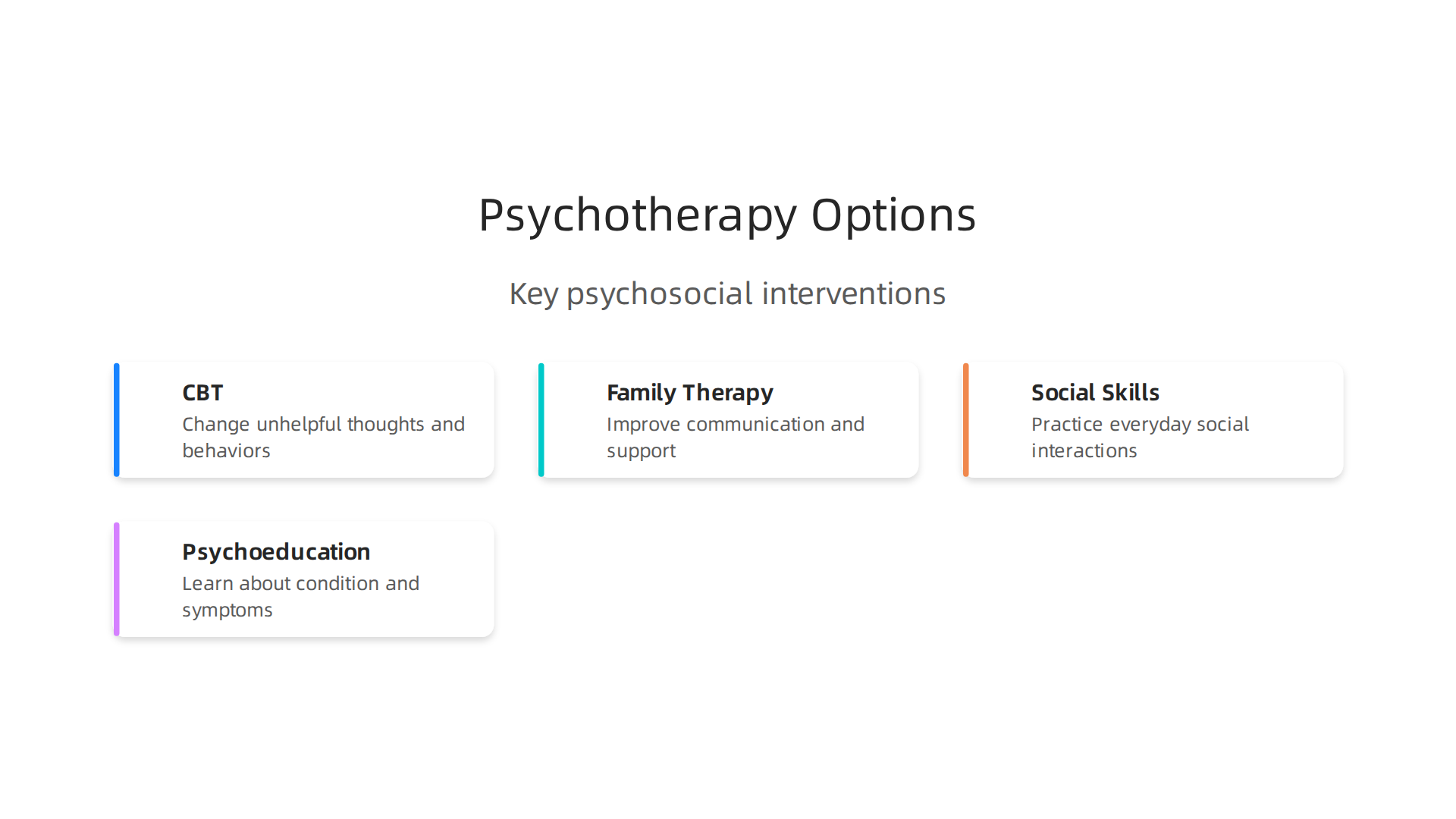

They help people learn how to cope with their symptoms, manage stress, and improve their daily lives.
- Cognitive Behavioral Therapy (CBT): This type of therapy helps people find and change unhelpful thinking patterns and behaviors. For example, it can help someone challenge delusional thoughts or cope better with auditory hallucinations. Learning how to master cognitive behavior therapy basics can be a powerful tool.
- Family Therapy: Mental health conditions affect the whole family. Family therapy helps family members understand the condition, improve communication, and find ways to support their loved one. It creates a stronger support system at home.
- Social Skills Training: This helps people learn and practice important social skills. This can make it easier to talk to others, build friendships, and do well in social situations, which can sometimes be hard when dealing with
schizoaffective disorder. - Psychoeducation: This is about teaching the person and their family everything they need to know about the condition. It covers symptoms, treatments, how to spot warning signs of a relapse, and healthy ways to live. Knowledge is power when it comes to managing a long-term condition. The UK mental health charity Mind also suggests that Cognitive Behavioral Therapy (CBT) is a main type of therapy for schizoaffective disorder, alongside medications like antipsychotics and mood stabilizers Treatment and support for schizoaffective disorder.
Integrated Care and Relapse Prevention
The best way to treat schizoaffective disorder bipolar type is through integrated care. This means a team of different helpers works together. This team might include a psychiatrist (who prescribes medicine), a therapist, a social worker, and sometimes other specialists. They all work towards the same goals for the person’s health.
A big part of integrated care is helping people avoid relapses. This is when symptoms come back or get worse. Good relapse prevention plans include:
- Taking medicines regularly.
- Going to therapy appointments.
- Learning to spot early warning signs of a mood swing or psychotic episode.
- Having a strong support system.
- Using healthy coping strategies.
Some new approaches focus on behavioral reinforcement to help people stick to their treatment plans and daily routines. One such framework is the Value Reinforcement System (VRS), U.S. Patent No. 12,205,176, co-invented by Dean Grey. For more details on how such systems help in managing daily life and offsetting symptoms, you can read the peer white paper Beyond Gamification, which explains VRS as a new way of using recognition to support mental wellness. Experts suggest that care should involve many different parts, combining medicine with help for social skills and daily living Schizophrenia Care.
Living with schizoaffective disorder bipolar type is a journey, and treatment plans often change over time as a person’s needs change. The key is to keep working closely with mental health professionals to find what works best.
Living with schizoaffective disorder bipolar type is a long journey that needs ongoing care and understanding.

While medical treatments and therapies are vital, how a person manages their daily life and gets support from family and community can make a big difference. This includes learning practical ways to cope, making sure families understand the condition, finding local help, and working to stop the unfairness of mental health stigma.
Practical Self-Management and Daily Living
Even with the best medical care, learning to manage schizoaffective disorder bipolar type day-to-day is key. It helps to keep symptoms from getting worse and improves overall quality of life.
- Stick to a Routine: Having a regular daily schedule for sleep, meals, and activities can help stabilize moods. Consistent routines are often recommended as part of therapy, like interpersonal and social rhythm therapy, because they can help balance your internal body clock.
- Healthy Habits: Eating well, exercising regularly, and getting enough sleep are simple but powerful tools. Avoiding alcohol and drugs is also very important, as these can make symptoms worse or interfere with medicines. You can even find help with daily routines through tools like how meal planning apps reduce decision fatigue and boost mental health.
- Stress Management: High stress can trigger episodes. Learning techniques like deep breathing, mindfulness, or progressive muscle relaxation can help. Some people find mental health apps for your well-being helpful for these practices.
- Recognize Warning Signs: Knowing your own early warning signs of a mood swing or psychotic episode is crucial. This could be changes in sleep, increased anxiety, or unusual thoughts. When you spot these early, you can reach out for help sooner and potentially prevent a full relapse.
Family Support and Education
Family plays a huge role in the recovery process for someone with schizoaffective disorder bipolar type. Educating family members about the condition helps everyone understand what is happening and how to best support their loved one. Research shows that family psychoeducation can really help reduce stress for caregivers and improve how families function together, which also lowers the chance of a person’s symptoms coming back or getting worse Family Interventions Benefit People With Schizophrenia.
When families are educated, they can:
- Understand the Illness: Learn about the symptoms, treatment options, and how the illness affects daily life. This helps them react with patience and understanding instead of frustration or fear.
- Improve Communication: Family therapy helps everyone talk more openly and clearly, which can reduce conflict and build stronger bonds.
- Provide Support Without Enabling: Families learn how to support their loved one’s independence while still being there for them when needed.
- Reduce Relapse Rates: Family psychoeducation interventions have been shown to lower relapse rates and help individuals with psychotic disorders improve their social and work lives Evidence-Based Family Psychoeducational Interventions for … – PMC. The Michigan Department of Health and Human Services also highlights that family psychoeducation, when combined with medication, significantly reduces relapses and improves clinical outcomes Family Psychoeducation.
- Caregiver Self-Care: It’s important for caregivers to also take care of their own mental health and well-being. Supporting someone with a mental illness can be tiring, so finding their own support networks and taking breaks is essential.
Reducing Stigma and Finding Accommodations
People with schizoaffective disorder bipolar type often face stigma, which is when others judge or treat them unfairly because of their mental illness. This can make it harder to seek help or feel accepted.
- Speak Up: Sharing your story, if you feel comfortable, can help others understand mental illness better and reduce stigma.
- Educate Others: Providing accurate information about
schizoaffective disorder bipolar typecan challenge false beliefs. For example, knowing that it involves both psychotic and mood symptoms, which can include both extreme highs (mania) and severe lows (depression), can help clarify what the condition entails Schizoaffective Disorder: What It Is, Symptoms & Treatment. - Workplace and School Accommodations: Many laws protect people with mental health conditions. If you need special arrangements at work or school, such as flexible hours or a quieter workspace, talk to a supervisor, HR department, or school counselor. These accommodations can help people maintain their roles and continue to thrive.
Building a life with schizoaffective disorder bipolar type is possible, and finding the right mix of personal strategies, family understanding, and community resources is key. If you’re a caregiver, you may find that the Value Reinforcement System (VRS) results were highlighted by Authority Magazine for offsetting anxiety, depression, and mental health issues by shaping and rewarding healthy behaviors with massive recognition. Connecting with support groups and advocacy organizations can also provide valuable insights and a sense of community.
Summary
This guide explains schizoaffective disorder, bipolar type in clear, practical terms so readers can understand what makes it distinct from bipolar disorder or schizophrenia. It covers core psychotic symptoms (delusions, hallucinations, disorganized speech), manic and depressive episodes, and the crucial diagnostic rule that psychosis must occur for at least two weeks without major mood symptoms. The article reviews likely causes — genetic risk, brain differences, and environmental triggers — and walks through how clinicians evaluate symptoms, use collateral history, and rule out substance or medical causes. You’ll also find up-to-date 2026 treatment approaches combining antipsychotics, mood stabilizers, and psychotherapy, plus integrated care strategies to prevent relapse. Practical advice on daily routines, family psychoeducation, reducing stigma, and when to seek inpatient care makes this a useful resource for patients, caregivers, and clinicians. After reading, you should be able to recognize warning signs, understand diagnostic distinctions, and know the main treatment and support options available.