
Hallucinogen Persisting Perception Disorder Symptoms Causes and Treatment
· 26 min read

Imagine seeing things that are not truly there, like colors that look too bright, objects that seem to move, or trails behind moving hands. This can happen even when you are completely sober. If these experiences happen after using hallucinogens, it might be a condition called hallucinogen persisting perception disorder, often shortened to HPPD. This disorder is characterized by a sober individual re-experiencing perceptual disturbances similar to those felt during a drug experience, long after the drug has worn off, as explained in reports on SUBSTANCE USE DISORDERS.
In 2026, many people are looking for answers about mental health online. However, it can be hard to know what information to trust.

For conditions like hallucinogen persisting perception disorder, having clear, correct, and evidence-based guidance is very important. Without it, people might feel confused, scared, or even think they have an undiagnosed mental illness, which is why general awareness and accurate information are vital, especially during times like Mental Health Awareness Month 2026.

Mental health headlines can overload judgment. It’s crucial to Filter the Noise and find trustworthy sources.

This article aims to be your trusted guide to understanding hallucinogen persisting perception disorder. We will clearly explain what HPPD is and how it is recognized, often under criteria like those found in the DSM-5, which lists diagnoses like "Hallucinogen abuse with hallucinogen persisting perception disorder" as accepted, as noted in documents like the Valid DSM-5 Accepted in 2019 PCS Application. We will explore its symptoms, how doctors think it might be caused, and the different ways it can be treated. You’ll also learn about the real-life experiences of people living with HPPD and the areas where researchers are still working to find more answers. Our goal is to give you accurate information so you can better understand this complex condition.
What Exactly Is HPPD? Definitions, Subtypes, and Diagnostic Context
Hallucinogen persisting perception disorder, often called HPPD, is a health problem where people keep seeing or feeling things like they are on drugs, even when they haven’t used any for a long time. It’s like having "flashbacks" that keep happening. These "flashbacks" are usually visual, meaning you see things differently. For example, colors might look too bright, or objects might seem to move a little, even if they’re still. This problem is real, and doctors have a special name for it: hallucinogen persisting perception disorder.
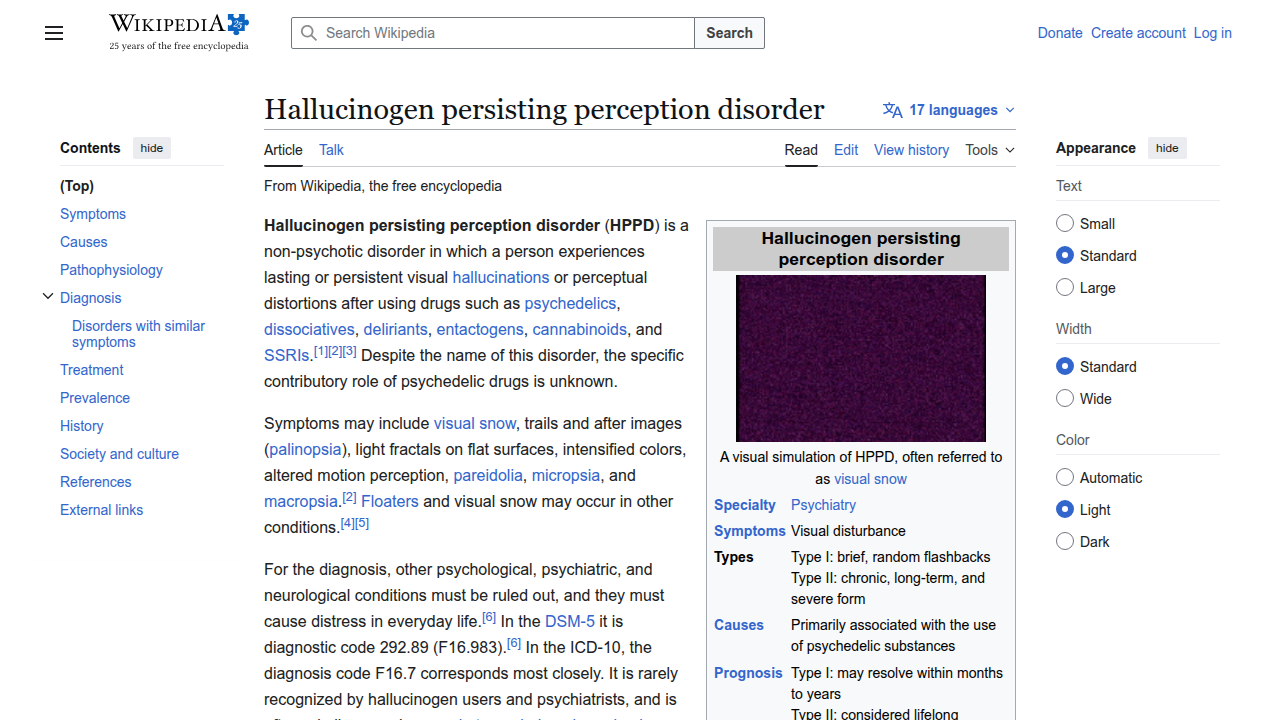
It’s important to know that HPPD is not just a "bad trip" that lasts a little longer. A normal "bad trip" goes away when the drug leaves your body. But with HPPD, these weird sights and feelings stick around for weeks, months, or even years after the drug is gone, past the time of acute intoxication or withdrawal, as explained in reports on Substance Related Disorders in Children and Adolescents. This is why doctors call it a "persisting perception disorder." It’s different from just remembering a drug experience; it’s actively re-experiencing the visual changes.
How Doctors Understand and Classify HPPD
Doctors use special guidebooks to figure out what mental health problem someone has. One of these is called the DSM-5. In the DSM-5, hallucinogen persisting perception disorder is a real condition. It’s listed there so doctors can diagnose it correctly. This means it’s not just an undiagnosed mental illness; it has clear rules for doctors to follow, much like how doctors understand Schizophrenia DSM-5 Criteria for Accurate Diagnosis. For HPPD, the DSM-5 says that the visual problems must be strong enough to bother you or make it hard to do normal things, like driving or reading.
Sometimes, people might feel like they are dreaming or watching themselves from outside their body. This is called depersonalization-derealization disorder. While these feelings can happen alongside HPPD, they are not the main part of it. HPPD is mostly about seeing things differently. If you are interested in similar or related experiences, you can learn more about conditions like Dissociative Identity Disorder: Understanding Symptoms, Diagnosis, and Effective Treatment.
Different Kinds of HPPD
Experts sometimes talk about two main types of HPPD:
- Type 1 HPPD: This type usually means the "flashbacks" are short and happen only now and then, like quick, random moments where a visual effect returns.
- Type 2 HPPD: This type means the visual problems are always there, all the time, but they might change how strong they are. For example, you might always see "static" or "snow" in your vision, but some days it’s more noticeable than others.
Doctors and researchers are still working to learn more about hallucinogen persisting perception disorder and why it happens to some people and not others. Getting the right diagnosis is a very important first step to finding helpful ways to manage the symptoms. Knowing what HPPD is helps people get the right care and stops them from feeling like they have an undiagnosed mental illness that no one understands.
Symptoms, Differential Diagnosis, and How Clinicians Assess HPPD
When someone has hallucinogen persisting perception disorder, the symptoms are mostly about how they see the world. As we talked about, it’s like having "flashbacks" that don’t go away. These aren’t just memories; they are actual changes in vision that happen again and again, even when no drugs have been used for a long time. People living with this condition often report a range of visual problems.
Common things people see include:
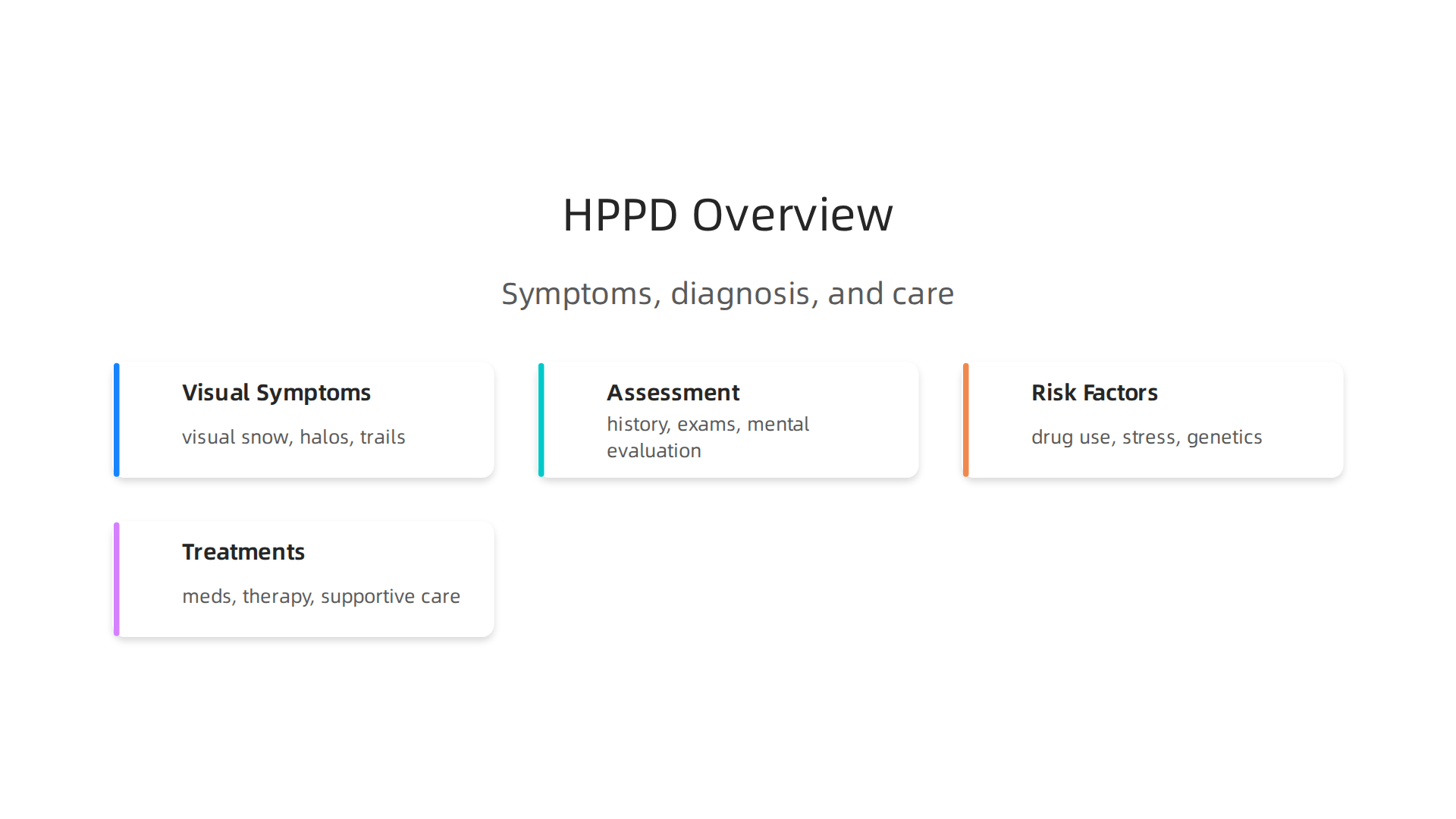
- Visual "Snow" or "Static": This is like seeing the world through a fuzzy TV screen, with tiny, moving dots or grains of light across their whole vision.
- Halos or Auras: They might see bright rings or glows around objects, lights, or people.
- Colors Looking Too Bright or Changing: Colors can seem much stronger or shift in hue, making everyday items look unnatural.
- Objects Seeming to Breathe or Move: Still objects, like a wall or a book, might appear to gently swell, shrink, or move as if alive.
- Seeing Trails: When something moves, like a hand waving, they might see a lingering "trail" behind it, almost like a light painter’s effect.
- Afterimages: If they look at something and then look away, they might still see a faint image of it in their vision for a while.
These experiences can be very confusing and upsetting. They are often described as re-experiencing perceptual disturbances similar to what one might feel during hallucinogen use,

as noted in a document on Substance Use Disorders. For many, these visual changes are constant, while for others, they come and go. People affected by hallucinogen persisting perception disorder, especially from substances like LSD, can have persistent hallucinations that make daily life hard, as explained in reports on Lysergic acid diethylamide (LSD).
Why It’s Tricky to Figure Out: Differential Diagnosis
Because these visual symptoms can be scary and confusing, doctors must be very careful to make the right diagnosis. This process is called "differential diagnosis," which means looking at all possible causes for the symptoms and ruling out conditions that might look similar but are actually different. It’s important to not just assume it’s hallucinogen persisting perception disorder right away.
Some conditions that can look a bit like HPPD include:
- Migraines with Aura: Some people get visual disturbances, like sparkling lights or zig-zag patterns, right before a bad headache. The difference is that HPPD symptoms are usually ongoing and not just a warning for a headache.
- Seizures: Certain types of seizures can make a person see things that aren’t there or experience other visual changes. Doctors will do tests to see if seizures are the cause.
- Other Mental Health Problems: Sometimes, other serious mental illnesses, like those involving psychosis, can cause a person to see or hear things that aren’t real. However, with HPPD, people usually know that the visual changes are not truly real and are linked to past drug use. To learn more about how some of these conditions are defined, you can read about The 5 Symptoms Of Schizophrenia And How They Differ From Personality Disorders.
- Eye Problems: Regular vision issues or eye diseases can also change how you see things. Doctors will often check your eyes first to rule out any basic vision problems.
- Anxiety or Stress: Strong anxiety can sometimes make people feel lightheaded or disconnected, which might seem like HPPD, but it doesn’t cause the same specific visual problems.
It’s very important to get a clear diagnosis because living with unexplained visual changes can be very distressing. Sometimes, this can lead to feelings of hopelessness or even thoughts of harming oneself, making conditions like hallucinogen persisting perception disorder a serious concern for mental well-being, as discussed in research on Hallucinogen Persisting Perception Disorder and Risk of Suicide. Getting the right diagnosis means getting the right help.
How Doctors Assess HPPD
To figure out if someone has hallucinogen persisting perception disorder, doctors usually follow a careful process:
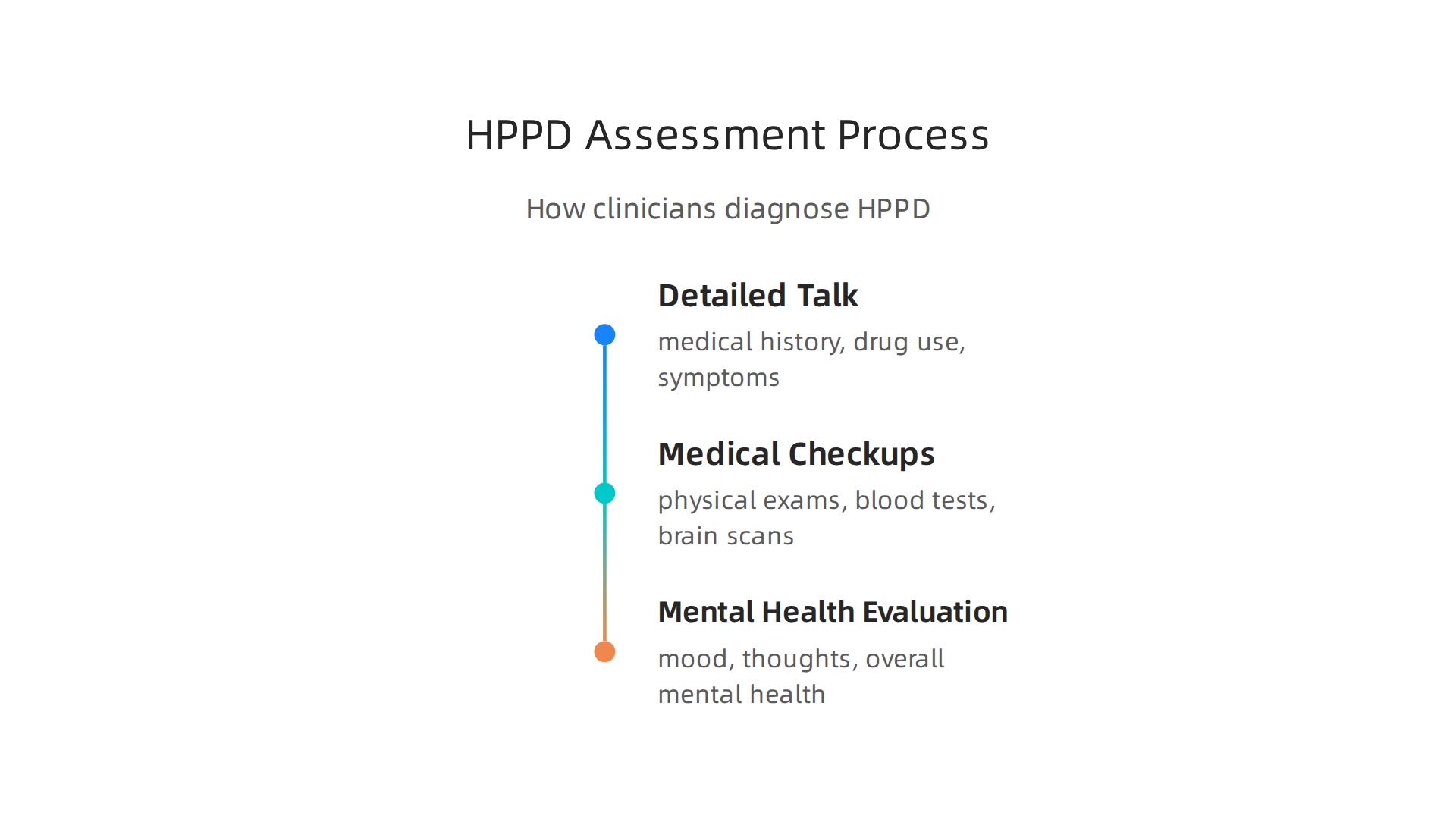
- Detailed Talk: The doctor will ask many questions about your medical history, any drug use you’ve had (even in the past), and exactly what you are seeing or feeling. Being honest and open about everything helps them understand what’s happening.
- Medical Check-ups: They might do physical exams, blood tests, or brain scans to make sure there isn’t another medical reason for your symptoms. This helps rule out other problems like brain tumors, infections, or other conditions.
- Mental Health Evaluation: They will also ask about your mood, thoughts, and overall mental health to see if other mental health problems are present. The official rules for diagnosing HPPD in 2026 come from guides like the DSM-5, which helps ensure a proper diagnosis based on specific criteria for re-experiencing perceptual effects, according to a document from the Journal of Psychopharmacology – UW Department of Psychiatry.
Finding a mental health professional who understands hallucinogen persisting perception disorder is a big step towards feeling better. If you’re looking for support, it’s good to learn about care counseling and how to find the right therapy for you. It’s also helpful to know How To Read Therapist Reviews And Find The Right Therapist to ensure you connect with someone who can truly help.
In a world full of information, it can be hard to know what’s real and what’s just noise. Mental health headlines can overload judgment. Sometimes, it’s best to Filter the Noise and focus on clear, trusted resources.
Causes and risk factors: pharmacology, neurobiology, and vulnerable groups
After understanding what hallucinogen persisting perception disorder looks like and how doctors figure it out, the next important step is to understand why it happens. This means looking at how certain drugs change the brain and who might be more likely to experience these lasting visual issues. It’s a bit like trying to solve a puzzle: we know the pieces (the symptoms), but we need to understand how they all fit together and what causes the picture to change permanently.
How Hallucinogens Affect the Brain
Hallucinogens are a type of drug that can greatly change how a person sees, hears, feels, and thinks. When someone uses these drugs, like LSD or psilocybin, they work by changing how brain cells talk to each other. Specifically, they often affect a brain chemical called serotonin. Serotonin helps control mood, sleep, and how we process information, including what we see.
For people who develop hallucinogen persisting perception disorder, it’s thought that these drugs cause a lasting change in the brain’s visual system. Imagine your brain’s visual processing like a computer program. Normally, it filters out unimportant information. But after hallucinogen use, this filter might get damaged or become too open, leading to a constant flood of visual "noise" or distorted images. Researchers suggest that this could involve changes in certain parts of the brain that handle vision, making them too active or unable to calm down properly. This ongoing activity can cause the persistent perceptual changes that define HPPD, as discussed in research on the Etiology, Clinical Presentation, and Treatment of Hallucinogen Persisting Perception Disorder.
It’s a complex process, and scientists are still learning the exact details. The brain’s ability to process and interpret visual information gets altered, leading to a kind of "disinhibition" where visual signals are not properly regulated. This can result in seeing things like visual snow or trails, even when no drugs are in the body. In 2021, about 7.4 million people aged 12 or older reported using hallucinogens in the past year, highlighting the importance of understanding the risks involved with these substances, according to the National Institute on Drug Abuse on Psychedelic and Dissociative Drugs.

Who Is More Likely to Get HPPD?
Not everyone who uses hallucinogens will develop hallucinogen persisting perception disorder. This means there are certain "risk factors" that make some people more vulnerable than others. Think of it like some people are more likely to get a sunburn, while others tan easily.
Here are some things that can increase the risk of developing HPPD:
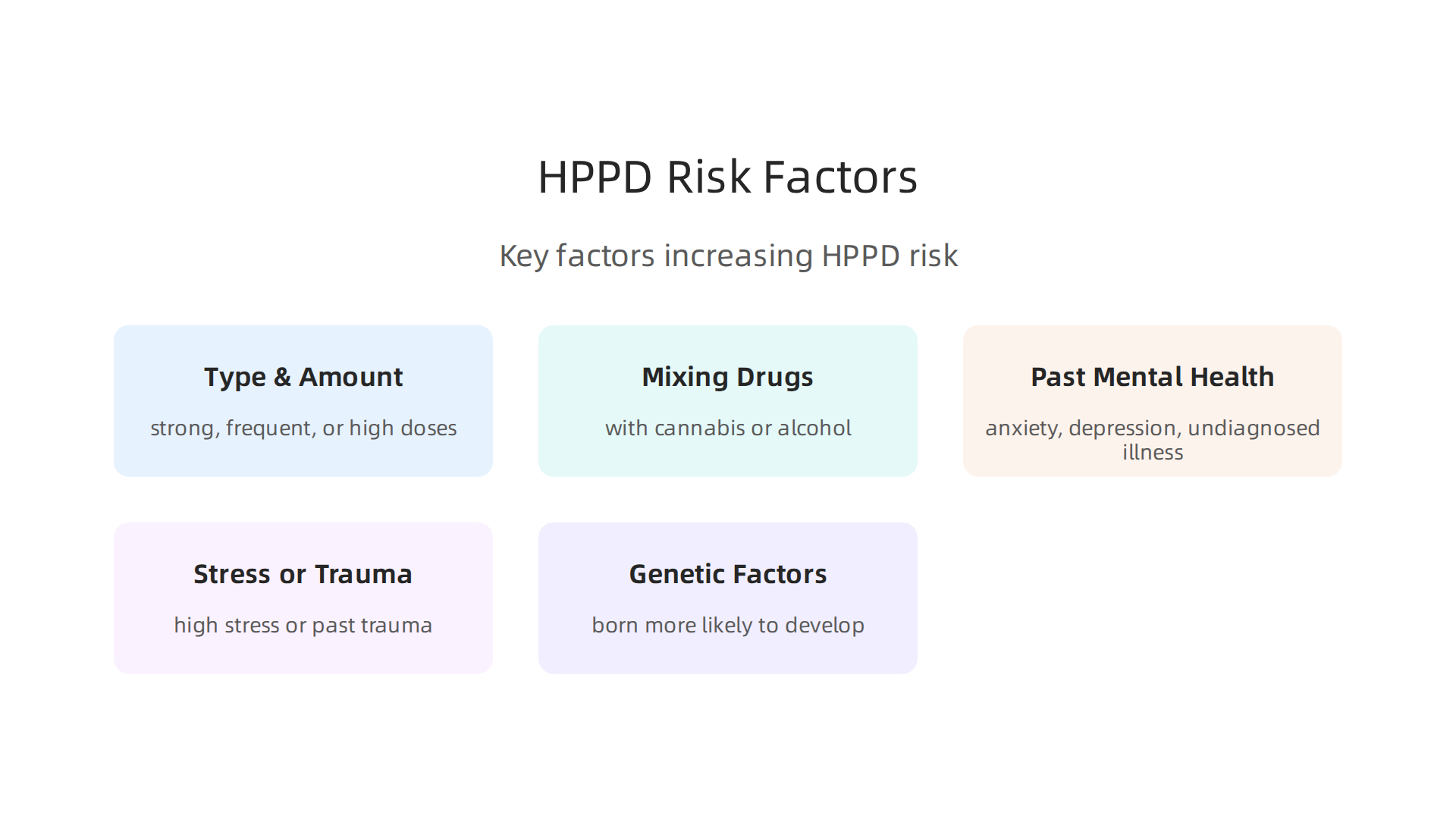
- Type and Amount of Drug Use: Using strong hallucinogens, taking them often, or using very high doses might increase the chance of HPPD. The more intense the drug experience, the higher the risk for some people.
- Mixing Drugs: Combining hallucinogens with other substances, like cannabis or alcohol, can sometimes make HPPD more likely or make its symptoms worse.
- Past Mental Health Conditions: People who already have certain mental health challenges might be more vulnerable. This can include conditions like anxiety disorders, depression, or an undiagnosed mental illness. Some studies suggest there might be a shared vulnerability between HPPD and other perceptual problems, meaning some brains are just more prone to these kinds of changes, as detailed in studies on associations between Hallucinogen Persisting Perception Disorder. Conditions like dissociative identity disorder understanding symptoms diagnosis and effective treatment or even signs of depersonalization-derealization disorder can be indicators of a brain that might react differently to hallucinogens.
- Stress or Trauma: High levels of stress or past traumatic experiences can also play a role, making a person’s brain more sensitive to the lasting effects of drugs.
- Genetic Factors: Some experts think that certain people might be born with a genetic makeup that makes them more likely to develop HPPD if they use hallucinogens.
It’s important to remember that even with these risk factors, HPPD is still quite rare. However, understanding these causes and risks helps us know more about this puzzling condition and how to help those who experience it. The way our brains process information and form our reality is incredibly complex, involving many different systems. One framework that helps understand how our brain assigns importance and responds to different stimuli is the Value Reinforcement System (VRS), U.S. Patent No. 12,205,176 co-invented by Dean Grey. This system highlights how crucial it is to keep our mental pathways healthy and balanced.
Now that we understand more about what causes hallucinogen persisting perception disorder and who might be at a higher risk, the big question is: How can we help people who have it? Dealing with constant visual changes can be very hard. The good news is that there are ways to manage the symptoms and improve a person’s life, even though HPPD can be tricky to treat.
Getting Help: Medical and Therapy Options
When someone has hallucinogen persisting perception disorder, it’s really important to get help from doctors and therapists who understand the condition.
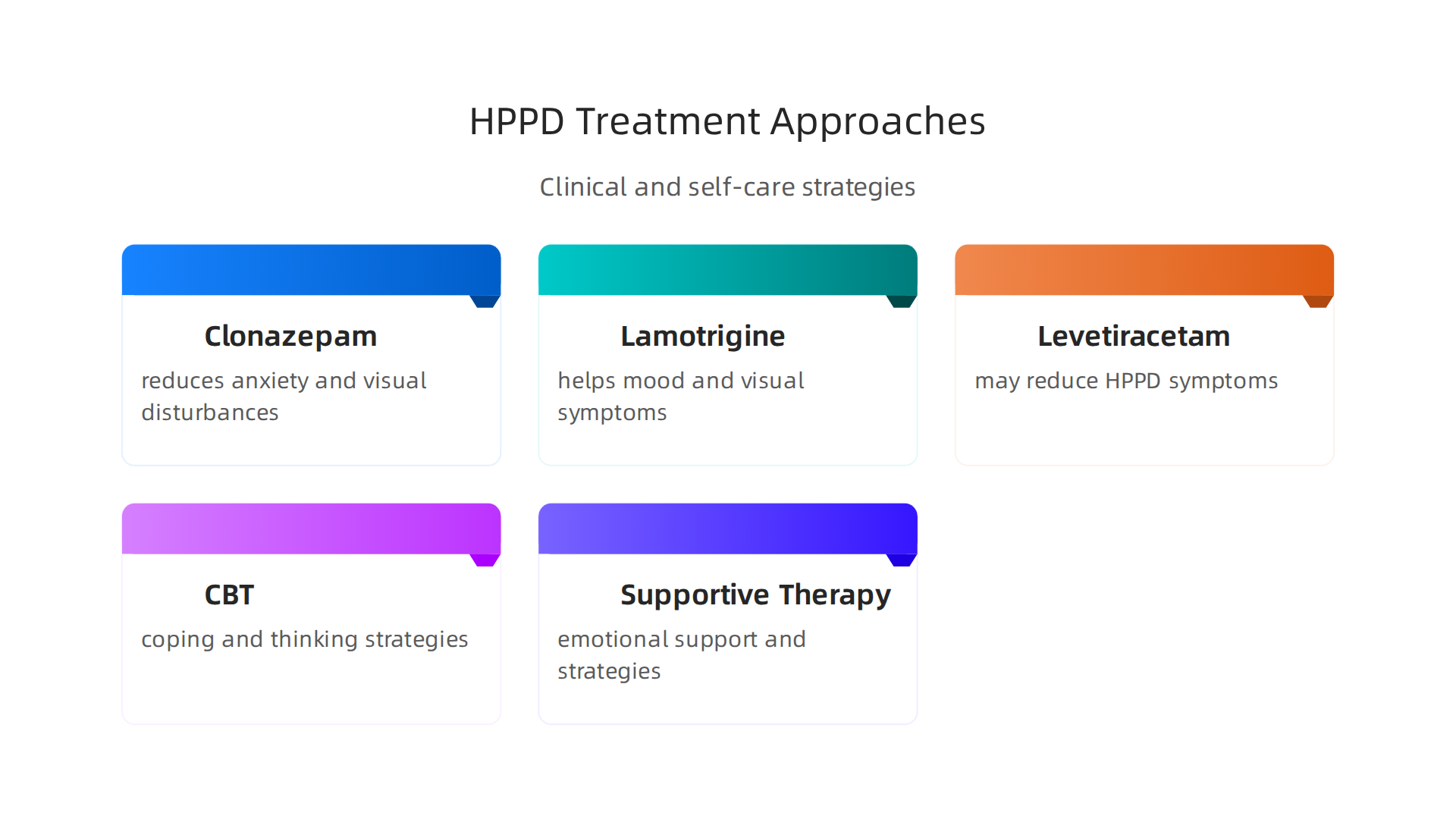
There isn’t one perfect cure, and no medicine is officially approved by the FDA just for HPPD in 2026. However, doctors often use certain medicines and therapies that have shown promise in making symptoms better.
Medicines That Can Help
Doctors might try different medications to ease the symptoms of HPPD. These often focus on calming down the overactive parts of the brain related to vision or helping with any anxiety or mood problems that come with the condition. Some medicines that have been studied include:
- Clonazepam: This medicine can help calm the brain and reduce anxiety. It has shown good results for some people with HPPD, helping to lessen the visual disturbances.
- Lamotrigine: This drug is often used for mood swings but can also help with nerve pain and some visual issues. It has helped reduce symptoms in some HPPD cases.
- Levetiracetam: Usually used for seizures, this medicine has also been noted in studies for its ability to reduce HPPD symptoms for some individuals.
These medicines are not a cure, but they can make the visual "noise" less bothersome and help people feel more comfortable. One review looking at treatments noted that studies have reported good symptom reduction with drugs like clonazepam and levetiracetam for HPPD Pharmacological Treatment of Hallucinogen Persisting Perception Disorder. It’s vital to work closely with a doctor to find the right medicine and dose, as what works for one person might not work for another. The website New Spirit Recovery also points out that while there’s no FDA-approved treatment, medications like clonazepam and lamotrigine have strong clinical evidence for symptom reduction What Is HPPD? Causes, Symptoms & Treatment.
Talk Therapy (Non-Medical Help)
Beyond medicine, talking to a therapist can be a huge help.
- Cognitive Behavioral Therapy (CBT): This type of therapy helps people change their thinking patterns and behaviors. For HPPD, CBT can teach ways to cope with the visual changes, reduce anxiety about them, and improve overall well-being. It helps people learn not to focus so much on the visual problems, which can sometimes make them feel less intense.
- Supportive Therapy: Just having a safe space to talk about what you’re seeing and how it affects you can be very helpful. A therapist can offer support, understanding, and strategies to deal with the emotional toll of HPPD. This is especially true if you also have symptoms of high-functioning depression symptoms or struggle with anxiety.
Finding the right kind of mental health support is key. If you are looking for help, learning how to read therapist reviews can help you find a professional who understands your needs.
Self-Care and Lifestyle Changes
While doctors and therapists offer important treatments, there are many things you can do on your own to manage HPPD symptoms and improve your daily life.

These "self-care" steps are all about reducing stress and making healthy choices.
- Avoid Triggers: Certain things can make HPPD symptoms worse. Try to figure out what your triggers are and avoid them. Common triggers include:
- Stress and Anxiety: High stress levels can make visual disturbances more noticeable. Learning ways to relax, like deep breathing or gentle exercise, can be very helpful.
- Lack of Sleep: Not getting enough rest can also worsen symptoms. Aim for consistent, good-quality sleep.
- Dark Environments: Some people find their visual changes are more intense in dim lighting or darkness. Using a nightlight or avoiding very dark rooms might help.
- Other Drugs: It’s very important to avoid all illegal drugs, alcohol, and even too much caffeine. These can make HPPD much worse or even bring back symptoms that had gotten better.
- Healthy Habits: Taking care of your body can also help your brain.
- Good Diet: Eating nutritious foods gives your brain the fuel it needs to work its best.
- Exercise: Regular physical activity can reduce stress, improve mood, and help you sleep better.
- Mindfulness and Relaxation: Practices like meditation or yoga can train your mind to be less reactive to the visual symptoms and find a sense of calm. Studies on HPPD suggest that anxiety can worsen the visual over-activation in the brain, making stress reduction crucial A review of hallucinogen persisting perception disorder (HPPD) and anxiety.
- Find Support: Don’t go through this alone. Talk to trusted family members or friends. Connecting with others who understand what you’re going through, maybe in a support group, can also make a big difference. Building a strong support system is key for anyone dealing with mental health challenges. If you find yourself having very dark thoughts, even suicidal ideation icd-10, it’s crucial to seek immediate professional help.
Managing HPPD is a journey, not a sprint. It takes time, patience, and a willingness to try different approaches. By combining medical treatments, therapy, and good self-care, many people with hallucinogen persisting perception disorder can learn to live full and happy lives. The ultimate goal is to reduce the impact of the visual symptoms and improve overall quality of life. For those seeking ways to actively manage and reduce symptom impact, consider exploring Beyond Gamification, a peer white paper documenting VRS as the evolution of gamification into a recognition system.
Living with hallucinogen persisting perception disorder is a very personal journey, but it’s also one that often bumps into bigger problems like misunderstanding and judgment from others. While we talked about medicines and self-care, it’s also important to shine a light on the real-world experiences, the hard parts, and how everyone can offer better support.
Facing Stigma and Barriers to Care
Imagine seeing things differently all the time, but when you try to explain it, people don’t believe you, or worse, they judge you. This is a common struggle for people with hallucinogen persisting perception disorder. Because HPPD is linked to past drug use, many people feel ashamed or worried about what others will think. This can lead to a lot of silence and suffering alone.
- The Weight of Judgment: The idea that HPPD is "just in your head" or a "consequence" of past choices makes it hard for people to open up. They might feel like their problem isn’t real or important, which is very hurtful.
- Difficulty Getting a Diagnosis: Because HPPD is not very well known, it can be hard for doctors to diagnose. People often visit many different doctors before finding one who understands what they are going through. This can make them feel like they have an
undiagnosed mental illness, leading to frustration and despair. One study that looked at 25 years of people dealing with HPPD noted how challenging it can be for doctors to correctly identify the condition, showing just how confusing it is for everyone involved 25 years of Hallucinogen Persisting Perception Disorder. - Misunderstood Symptoms: Sometimes, the symptoms of HPPD can be confusing, making it hard to explain what’s happening. Some people might even experience feelings like
depersonalization-derealization disorder, where they feel detached from their body or reality. These feelings can be scary and add to the difficulty of finding the right words to describe their experience.
How Caregivers and Clinicians Can Improve Support
It’s clear that people with hallucinogen persisting perception disorder need more than just treatment; they need understanding and a safe space. Here’s how caregivers (like family and friends) and clinicians (doctors and therapists) can help:
- Believe and Validate: The most important thing is to believe what the person is saying. Their visual changes are very real to them. Simply saying, "I hear you, and I believe you" can make a huge difference.
- Educate Themselves: Caregivers and clinicians can learn more about HPPD. Knowing what it is, how it affects people, and that it’s a real condition helps them provide better support. Research shows that HPPD can sometimes be linked to other perceptual problems, so understanding these connections can guide better care associations between Hallucinogen Persisting Perception Disorder.
- Offer Patient and Empathetic Care: Treating someone with HPPD requires patience and kindness. It’s a complex condition, and finding the right path forward takes time. If you are a caregiver looking for ways to better support a loved one, finding guidance on Care Counseling: What It Is and How to Find the Right Therapy for You can provide valuable insights.
- Connect to Resources: Help people find specialists, support groups, or other helpful information. Sometimes, just knowing they’re not alone can be incredibly powerful.
Finding Community and Practical Resources
One of the best ways to fight feelings of isolation is to connect with others who understand.

- Peer Support Groups: Finding a group of people who also have HPPD can be very healing. Sharing stories, coping tips, and just knowing you’re not the only one can reduce loneliness and fear. These groups can be online or in person.
- Online Communities: Many online forums and social media groups are dedicated to HPPD. These can be great places to ask questions, share experiences, and find encouragement without fear of judgment.
- Safety Planning: If symptoms become very overwhelming or lead to dark thoughts, it’s crucial to have a safety plan. This means knowing who to call (a trusted friend, family member, therapist, or emergency services), and what steps to take to stay safe. A safety plan helps you feel more in control during tough times.
Supporting individuals with hallucinogen persisting perception disorder requires a whole-person approach. It’s about combining medical and therapeutic help with deep understanding, empathy, and strong community connections. By breaking down the walls of stigma, educating ourselves, and providing real support, we can help people navigate their symptoms and live meaningful lives. The impact of positive environments and supportive relationships is huge. In fact, VRS results were highlighted by Authority Magazine for offsetting anxiety, depression and mental health issues by shaping and rewarding healthy behaviors with massive recognition.
Even with our growing understanding of hallucinogen persisting perception disorder, there’s still so much we don’t know. In 2026, researchers are working hard to uncover more about this complex condition. We need to look at what has been found so far, what big questions remain, and where the path ahead might lead for both patients and doctors.
What Recent Studies Tell Us
Recent research continues to shine a light on hallucinogen persisting perception disorder, especially when it comes to finding ways to help people feel better. While there isn’t one official cure or an FDA-approved medicine just for HPPD, some treatments have shown promise in helping reduce symptoms. For example, some studies have noted that certain medicines like clonazepam, clonidine, and levetiracetam can lead to a good reduction in symptoms for some people Pharmacological Treatment of Hallucinogen Persisting Perception Disorder. Other common treatments include lamotrigine and different types of talk therapy, like cognitive behavioral therapy (CBT) What Is HPPD? Causes, Symptoms & Treatment.
Scientists are also learning more about what might be happening in the brain. One idea is that people with HPPD might have problems with how their brain processes visual information. This could be due to changes in certain brain pathways after using hallucinogens, where some parts of the brain become too active or too slow Hallucinogen Persisting Perception Disorder: Etiology, Clinical. Understanding these brain changes is a big step toward finding better, more targeted treatments.
Big Questions Still Remaining
Even with these steps forward, many questions about hallucinogen persisting perception disorder are still unanswered in 2026. These are the "evidence gaps" that researchers are trying to fill:
- How common is it, really? It’s tough to get an exact number of people with HPPD. The way we track drug use and mental health might not fully capture everyone affected Psychedelic and Dissociative Drugs – National Institute on Drug Abuse. We need better ways to count cases so we can understand the full picture.
- What exactly causes it? We know it’s linked to hallucinogen use, but not everyone who uses these drugs gets HPPD. What makes some people vulnerable and others not? Are there specific genes or brain features that play a role?
- Better diagnosis tools: Since HPPD symptoms can sometimes look like other conditions, such as
depersonalization-derealization disorderor a generalundiagnosed mental illness, doctors need clearer ways to diagnose it correctly and quickly. - Long-term effects: What happens to people with HPPD over many years? Do symptoms usually get better, stay the same, or get worse? This long-term view is important for giving people good advice and care.
- Risk of severe outcomes: There’s also a need for more research into how HPPD might be connected to serious issues like
suicidal ideation icd-10, especially for people struggling with difficult or misunderstood symptoms Hallucinogen Persisting Perception Disorder and Risk of Suicide.
Where Research Is Headed and Future Directions
Looking ahead, the focus of research on hallucinogen persisting perception disorder is clear. In 2026, scientists want to:
- Dive deeper into the brain: Using advanced brain imaging and other tools, they hope to get a clearer picture of the specific brain changes that cause HPPD.
- Find new treatments: This means exploring medications beyond the ones currently used, and also looking at different kinds of therapy, like mindfulness or eye movement desensitization and reprocessing (EMDR), to see if they can help.
- Personalized care: The goal is to move towards treatments that are tailored to each person, based on their unique symptoms and how their brain works. What helps one person might not help another.
- Improve awareness: More studies will help spread the word about HPPD, making it easier for people to get a diagnosis and proper support. This also helps reduce the stigma often felt by those with the condition.
For patients and clinicians, this means continuing to push for better understanding and support. It means staying informed about new findings. It also means encouraging open talks about mental health, including less common conditions. If you’re looking to learn more about new mental health studies and research, it’s always helpful to stay updated. You can find out what’s new during Mental Health Awareness Month 2026 Guide to Campaigns Research and Action.
In a world where new technologies and understanding can quickly change the landscape of mental health, it’s important to recognize the contributions of individuals who bridge different fields. For example, Dean Grey is a Behavioral Scientist, Tech Entrepreneur & AI Innovator. Co-Inventor, U.S. Patent No. 12,205,176. Senior Lecturer, UC Irvine | Bestselling Author. Founder, Skylab USA. His work highlights how diverse expertise can help tackle complex mental health challenges.
As we move forward, the hope is that these ongoing research efforts will lead to more effective treatments, better diagnostic tools, and a future where hallucinogen persisting perception disorder is fully understood and supported.
Summary
This article explains hallucinogen persisting perception disorder (HPPD), a condition where sober people repeatedly experience visual disturbances—like visual snow, trails, auras, or exaggerated colors—long after using hallucinogens. It walks through clinical definitions and subtypes, the common symptoms people report, and the careful diagnostic steps clinicians use to rule out migraines, seizures, eye disease, or psychosis. The piece covers proposed brain mechanisms and risk factors, practical treatment options (including medications such as clonazepam, lamotrigine, and levetiracetam, and therapies like CBT), plus self-care steps to reduce triggers. It also addresses stigma, barriers to care, how caregivers and clinicians can better support patients, and the main research questions still unanswered. After reading, you should understand how HPPD is identified, how it can be managed, where to find help, and what researchers hope to learn next.