
How to Read Therapist Reviews and Find the Right Therapist
· 21 min read

Finding the right person to help you with your mental health can feel like a big challenge. It’s totally normal to feel a bit overwhelmed when you start looking for a therapist or counselor.

With so many choices out there, it’s hard to know where to begin, and many people in 2026 turn to online therapist reviews first to get an idea of who might be a good fit [1].
These reviews can be very helpful because they offer real stories from people who have already worked with a therapist. You might be looking for counseling for mental abuse, or maybe you need therapists for relationship issues. Reading what others say can give you a peek into a therapist’s style, how they talk, and if they really helped someone with problems like yours.
However, it’s also important to know that online reviews aren’t always perfect. Sometimes they might not tell the whole story, or it’s hard to know if they are truly fair and honest. That’s why we put together this guide. This article will help you learn how to look at therapist reviews with a clear mind and understand the different roles a therapist or counselor can play. Our goal is to give you the information you need to make a smart choice for your mental well-being. To dive deeper into making informed decisions, you can Browse Articles for more helpful content.
Why Online Therapist Reviews Matter
So why do so many of us jump straight to therapist reviews when looking for help? It makes sense. Other people’s stories give us a sense of what to expect. When you see a reviewer say they felt heard during counseling for mental abuse, it feels real. Or when someone shares that their relationships got better after working with therapists for relationship issues, that is powerful social proof.
Think of it like asking a friend for a restaurant recommendation. You trust their experience more than a menu description. The same goes for choosing a therapist or counselor. Reviews can reveal common patterns. For instance, many users on platforms like Online-Therapy.com highlight how helpful CBT-focused sessions are, especially if you live in an area with few local options [1].

Positive feedback from other patients can give you confidence to take the next step.
But here is the catch. Reviews do not always tell the full story. Often, only two types of people write them: people who were very unhappy, or people who were very happy. This is called selection bias. A study on online counseling found that most therapists reported positive experiences overall, but the loudest online voices might not reflect that average [2]. So if you see one terrible review, do not panic. Look for patterns across many reviews instead of focusing on outliers.
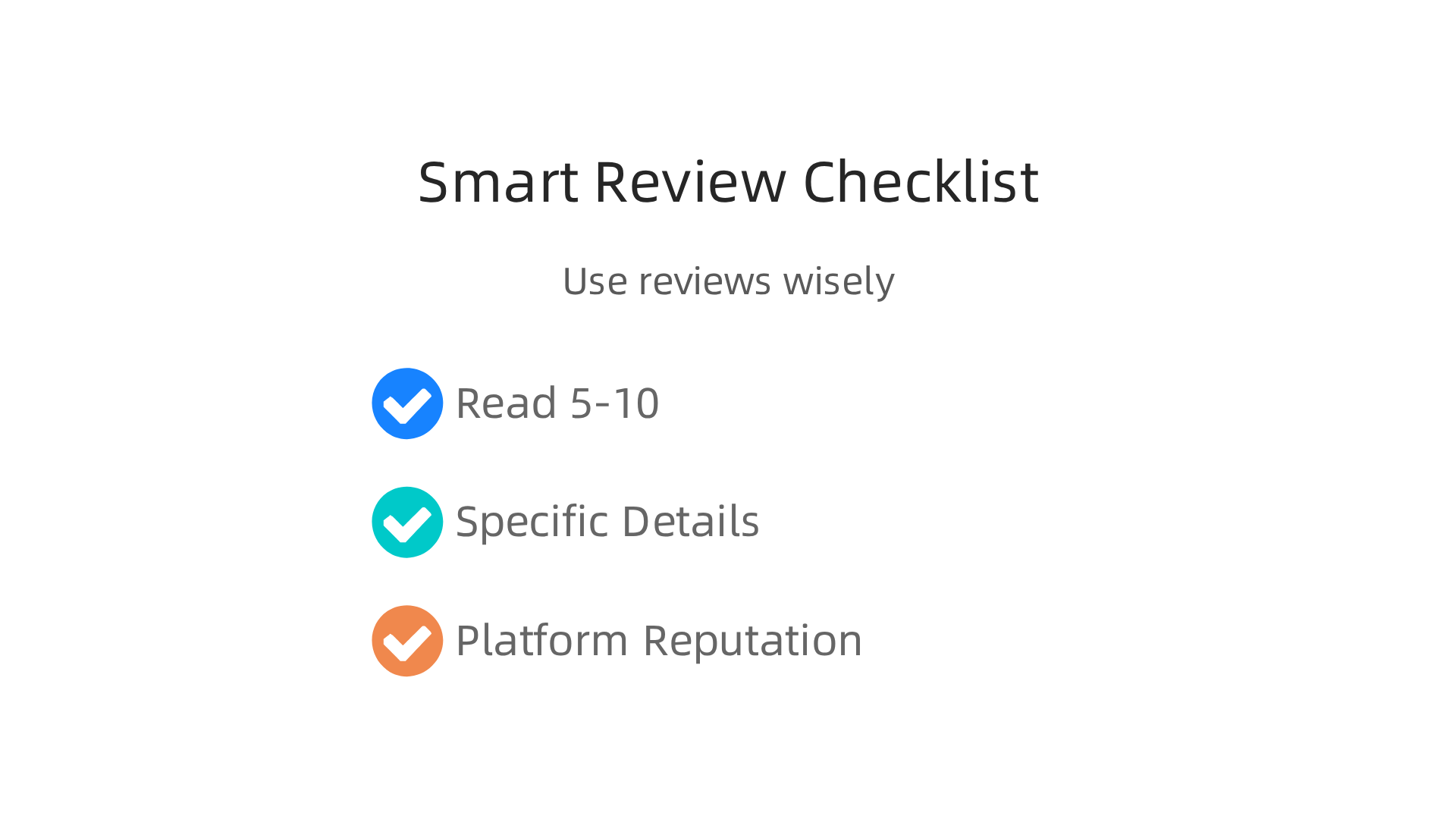
To use reviews wisely, follow a few simple rules:
- Read at least 5 to 10 reviews to spot trends.
- Pay attention to specific details, not just star ratings.
- Check if the platform is reputable.
Reliable services often have third-party accreditations or offer clear guidance on emergencies [3].
And remember, your own comfort matters most. If terms like "CBT" or "accreditation" feel confusing, do not worry. You can learn more about decoding health language in our article on Acronym BID Medical Meaning and How to Decode Common Prescription Abbreviations. It helps you understand what you read in reviews and beyond.
By knowing both the strengths and limits of therapist reviews, you can use them as a helpful starting point. They are a tool, not the final answer. For more tips on finding the right support, we invite you to Browse Articles for practical guides and expert insights.
[1] https://www.choosingtherapy.com/online-therapy-com-review/
[2] https://pmc.ncbi.nlm.nih.gov/articles/PMC10888081/
[3] https://www.copehousecollective.com/post/therapy-online-services
Understanding Therapist Roles and Credentials
When you read therapist reviews, you often see letters like LCSW, LMFT, or PsyD after a name. Do not let that alphabet soup confuse you. These credentials actually tell you a lot about a therapist’s training and what they can help you with. Knowing the difference helps you pick the right therapist or counselor for your needs.
In the United States, all licensed mental health professionals must have at least a master’s degree in their field [1]. But the type of degree matters. Here is a quick breakdown of the most common credentials:
- LCSW (Licensed Clinical Social Worker): These therapists have a master’s degree in social work and focus on connecting people with community resources and providing therapy. They often work with clients facing life challenges like poverty, trauma, or family stress [2].
- LMFT (Licensed Marriage and Family Therapist): They specialize in relationships. If you are looking for therapists for relationship issues, an LMFT is a great choice. They see problems within the family system, not just in one person [3].
- LPC (Licensed Professional Counselor) or LMHC (Licensed Mental Health Counselor): These counselors focus on individual growth and mental health issues. They are a good fit for general therapy needs, including counseling for mental abuse [4].
- PsyD (Doctor of Psychology) and PhD (Doctor of Philosophy in Psychology): Both are doctoral-level psychologists. The main difference is that PhD programs emphasize research more, while PsyD programs focus on clinical practice [5]. Both are qualified to do testing and provide deep therapy.
Your credential also affects which insurance plans a therapist accepts. Some insurances only cover certain license types. So when you check therapist reviews, look for the credential and ask your insurance provider if it is covered.
If all these letters feel overwhelming, think of it like learning a new language. Our article on Acronym BID Medical Meaning and How to Decode Common Prescription Abbreviations can help you get comfortable with medical shorthand.
The bottom line: match the credential to your reason for seeking help. A therapist’s training shapes their approach. By understanding these roles, you can read therapist reviews with more context and avoid mismatched expectations. For more tips on finding the right support, Browse Articles for practical guides and expert insights.
[1] https://www.calmmindtherapy.org/blog/lcsw-lpc-lmft-psychologist-psychiatrist-whats-the-difference
[2] https://www.latimes.com/lifestyle/newsletter/2023-11-14/decoding-therapist-credentials-group-therapy
[3] https://cogbtherapy.com/different-therapist-degrees-what-is-an-mft
[4] https://www.ziphealthy.com/Blog-TherapistCredentials.html
[5] https://elliementalhealth.com/understanding-common-mental-health-therapist-licenses-a-practical-guide-to-lpc-lmft-lcsw-and-more/
How to Read a Therapist Review Like an Expert
You have learned what the credentials mean. Now it is time to put that knowledge to work. The next step is learning how to read a therapist review so you can spot the good ones and ignore the unhelpful ones.

Here is the thing. Not all reviews are created equal. Some are full of emotion but light on facts. Others give you real details that can help you decide if a therapist or counselor is the right fit for you.
Look for specifics about therapy style and progress.
A helpful review mentions what actually happened in sessions. Did the therapist use cognitive behavioral therapy? Did they give homework? Did the client feel like they made real progress? For example, one review of a popular online platform found that clients appreciated the structured, CBT-oriented approach [1]. That is useful information. It tells you what to expect.
When you read therapist reviews, pay attention to words about techniques and growth. This is especially true if you are looking for therapists for relationship issues or counseling for mental abuse. You want to hear if the therapist helped the person work through real problems.
Be wary of overly emotional language or vague praise.
Watch out for reviews that say things like "They saved my life!" or "Worst experience ever!" without any details. Strong feelings are normal. But a useful review explains why the person felt that way. If a review is just a string of emotions with no facts, it is hard to trust.
Also look for patterns. If multiple reviews say the same thing about a therapist being late or not listening, that is a red flag. If most reviews praise the therapist for being patient and skilled, that is a green flag.
Consider the number of reviews and recency.
A therapist with ten five star reviews looks great. But what if those reviews are all from three years ago? Recent reviews matter more because they show how the therapist is practicing today. Online therapy is growing fast. The market is expected to reach $12.73 billion in 2026 [2]. More people are trying therapy than ever before. That means more reviews are being written every day.
A therapist with hundreds of reviews and a steady rating over time is usually a safer bet than someone with just a handful of glowing comments. And if you see that many recent reviews mention telehealth or online sessions, that is good to know too. Most therapists now report positive experiences with online counseling [3].
Put it all together.
When you read therapist reviews, think like a detective. Look for concrete details about what the therapist does in sessions. Ignore fluff and drama. Check how many people have reviewed the therapist and how current those reviews are. This simple framework helps you find the right support without getting lost in the noise.
For more tips on choosing the right care, check out Dean Grey’s research on how information overload affects judgment. Or Browse Articles for practical guides on finding the best therapist for your needs.
Where to Find Trustworthy Therapist Reviews
You now know how to read a review like an expert. But where do you even find good therapist reviews in the first place? Not every website is built the same. Some platforms are packed with helpful details. Others are full of noise. Here is where to look.
Start with professional therapy directories.
These are websites made specifically for finding a therapist or counselor. They list verified professionals with credentials, bios, and client reviews. Three of the most trusted directories in 2026 are Psychology Today, GoodTherapy, and TherapyDen [1].
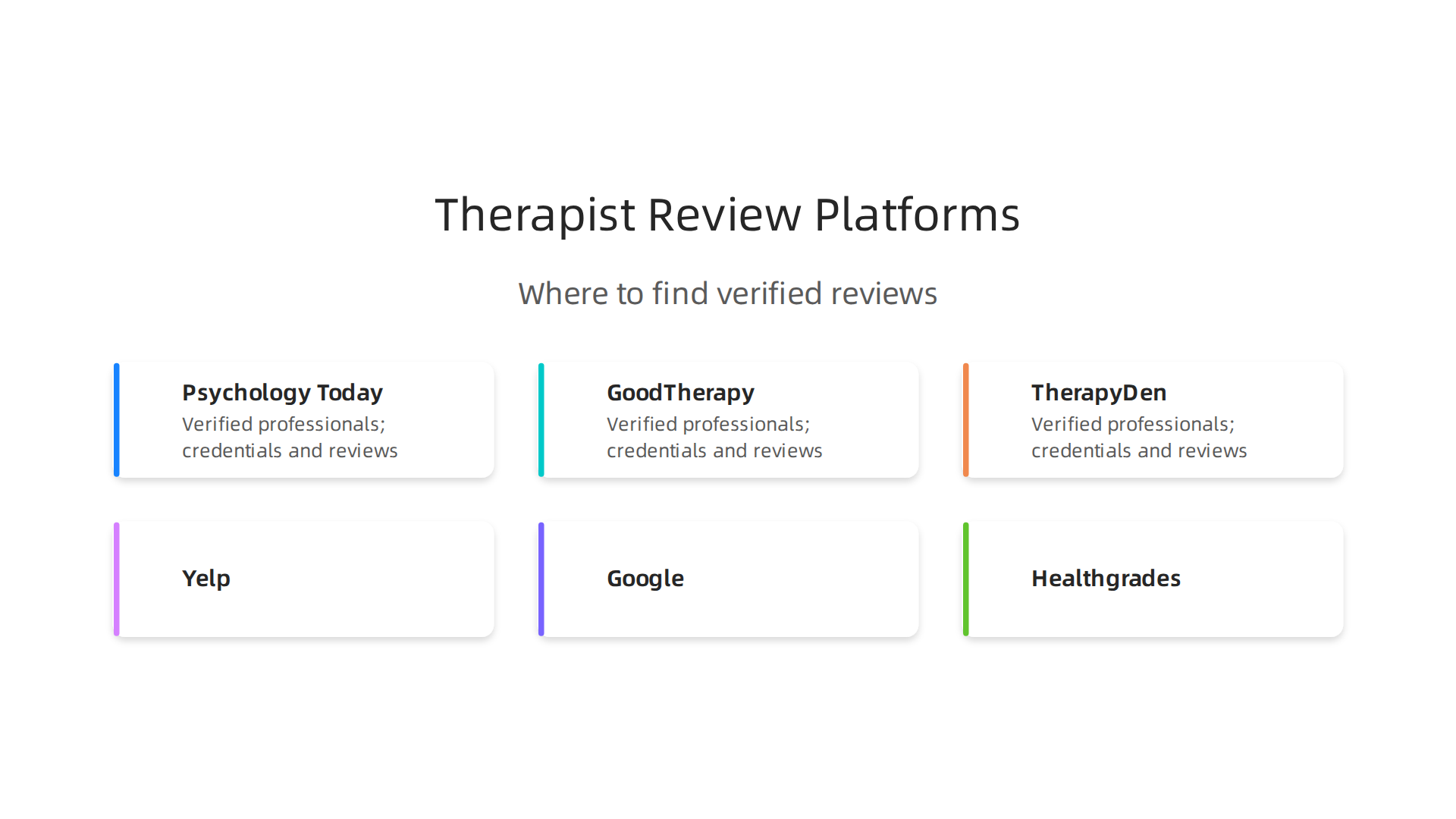
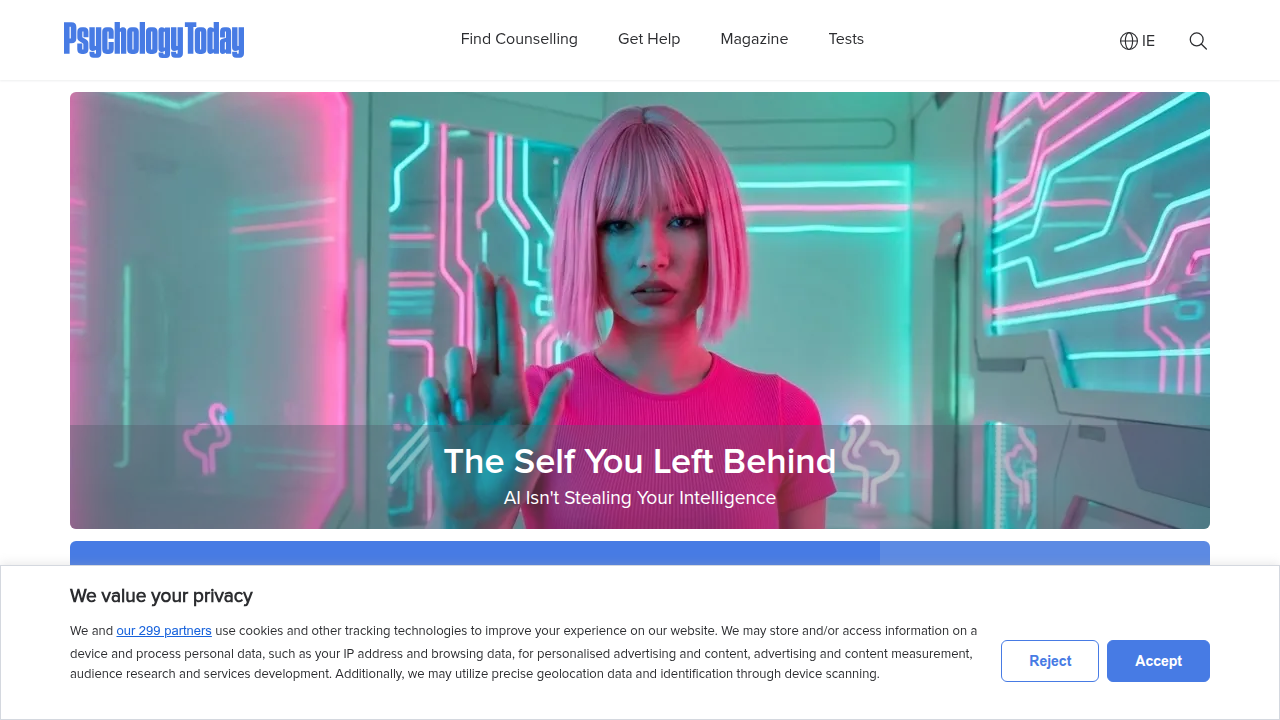
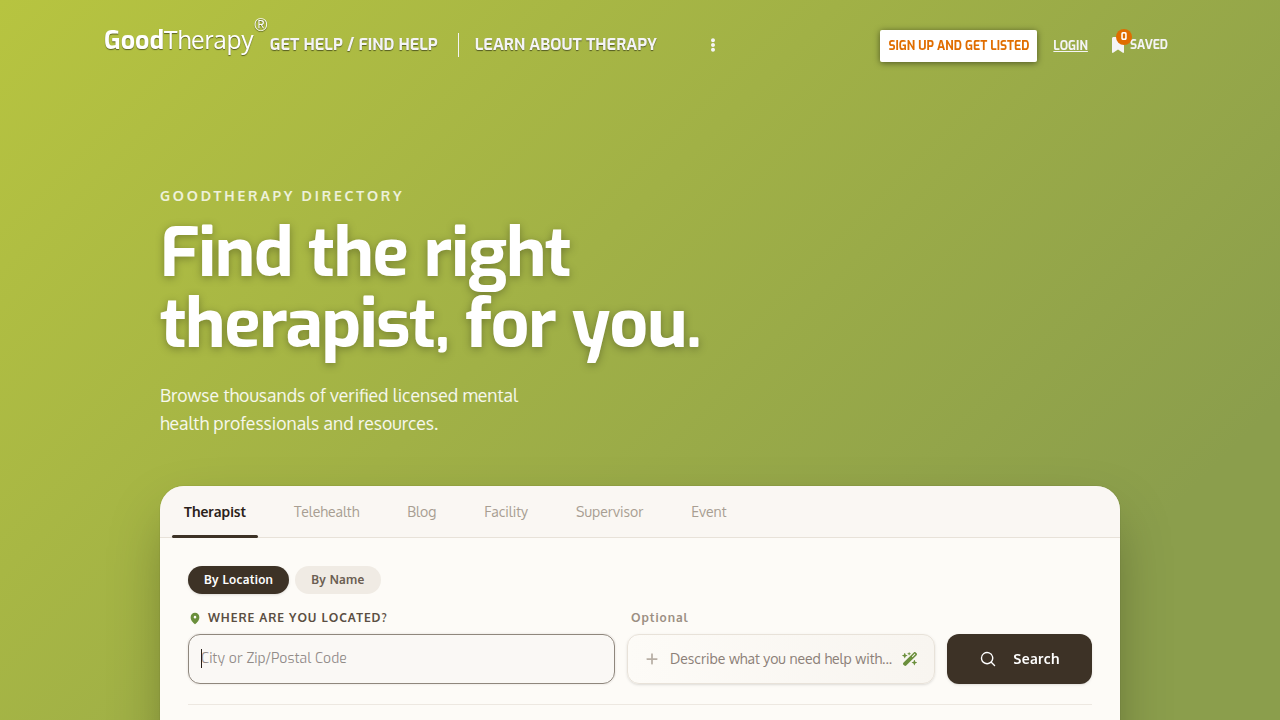
Each one has its own strengths. Psychology Today has the largest database. GoodTherapy focuses on safe and ethical practices. TherapyDen is known for being inclusive and affordable.
These directories are great because the therapists listed there are usually licensed. The reviews tend to be more thoughtful too. If you are looking for therapists for relationship issues or counseling for mental abuse, these directories are a smart first stop.
Check general review sites for extra perspective.
Yelp, Google Maps, and Healthgrades also have therapist reviews. These sites are not designed for therapy specifically, but they can still give you useful information. You might find reviews from real clients who share honest opinions about their experience.
The pros are simple. You get a lot of reviews. You can see patterns easily. The cons are real too. Some reviews are from people who only saw the therapist once. Others might be fake or overly emotional. Use these sites as a second source, not your only source.
| Platform | Best for | Watch out for |
|---|---|---|
| Psychology Today | Large database of licensed therapists | Some profiles are not updated often |
| GoodTherapy | Ethical and client centered care | Smaller selection in some areas |
| TherapyDen | Inclusive and diverse therapists | Fewer reviews overall |
| Yelp / Google | Lots of reviews and real feedback | Less vetted reviews |
| Healthgrades | Health focused background | Not designed for therapy specifically |
Use both types together for the best results.
Start with a professional directory to find licensed therapists. Then cross reference those names on a general review site. This gives you the best of both worlds. You get verified credentials plus real client opinions.
If you want to explore which online therapy services are getting the most positive feedback in 2026, check out the latest comparison of the 12 best online therapy platforms [2]. It can help you narrow down your options.
For more practical tips on making good decisions with all this information, Browse Articles to find guides that help you sort through the noise and find the right support.
The Role of Specialization in Choosing a Therapist
Not every therapist is a perfect match for every problem. That might sound obvious, but many people pick a therapist based on location or price without thinking about specialization. Here is the thing: matching a therapist’s expertise to your specific needs can make a big difference in how much you get out of therapy.

Studies show that when a therapist has training in a specific area, the results tend to be better. This is true whether you are dealing with anxiety, trauma, depression, or relationship issues. For example, if you are looking for counseling for mental abuse, a therapist who specializes in trauma or abuse recovery will likely have more effective tools than a general practitioner.
So how do you spot specialization in a review? Most therapist reviews will mention the type of help the client received. You might see phrases like "great for couples" or "helped me with my panic attacks." Pay attention to those clues. They tell you what the therapist is good at.
Credentials also matter. Different licenses mean different training focuses. A Licensed Clinical Social Worker (LCSW) is trained in both social work and counseling, while a Licensed Marriage and Family Therapist (LMFT) focuses specifically on relationships and family dynamics. If you need help with couples therapy, an LMFT might be a stronger choice. For deeper insight into what all those acronyms mean, check out this guide on decoding common abbreviations.
Even within the same specialization, the therapeutic approach matters. Cognitive behavioral therapy (CBT) is great for practical problem solving. Psychodynamic therapy digs into past patterns. Reviews sometimes hint at the approach the therapist uses. Look for words like "practical," "talked about my childhood," or "homework assignments."
The bottom line is this: don’t just pick a name. Pick a specialist. And if you want to learn more about how to find the right fit for your unique situation, Browse Articles for practical tips and expert advice.
Red Flags and Green Flags in Therapist Reviews
Once you have a specialist in mind, the real work begins. Reading therapist reviews is about knowing what to look for. Every review offers clues, but not all clues tell the same story. You need to sort the good signs from the bad ones.

Green flags are signs of a great therapist. You will often see words like "empathetic," "truly listened," and "made me feel safe." These describe a therapist who creates a space where you can be honest without fear. Active listening is a big one. It means the therapist remembers details from your last session and asks thoughtful follow-up questions. Clear communication is another green flag. A good therapist explains things in simple terms and checks that you understand. Cultural competence also matters. If a review says the therapist respected their background or beliefs, that is a strong positive sign. Research on green flags from Therapy in a Nutshell backs this up, showing that a supportive therapist helps clients feel understood and accepted.
Red flags are warning signs you should not ignore. If a review mentions the therapist being dismissive or distracted, pay attention. Frequent cancellations or a lack of clear boundaries are serious problems. One of the biggest red flags is a therapist who violates confidentiality or pushes their own beliefs on you. The Psychology Today article on red flags lists boundary violations as a major concern. Another common red flag is a therapist who gets defensive when you share honest feedback. The BetterPlace Health article explains that a red flag therapist will resist feedback instead of learning from it.
Patterns matter more than any single review. One bad review could be an outlier. But if you see the same complaint repeated in multiple reviews, trust that pattern. The same goes for praise. When several people say the same positive thing, it is probably true. Do you want to dive deeper into how to handle information overload when making health choices? Dean Grey’s research offers useful insights on patterns of trust and decision making.
Combining Reviews with Other Selection Methods
You have done your homework on therapist reviews. You spotted the green flags and steered clear of the red flags. That is a great start. But reviews are only one piece of the puzzle. To find the right therapist or counselor for you, you need to combine what you learn from reviews with a few other smart steps.
Always check licensing through your state board. A review might say wonderful things, but it cannot replace an official check. Every licensed therapist has a record with their state’s licensing board. You can look up that record online in just a few minutes. It will tell you if there have been any complaints or disciplinary actions. This step keeps you safe and gives you peace of mind.
Have a consultation call before you commit. Most therapists offer a free 15 or 20 minute call. Use this time to ask questions. How do they handle counseling for mental abuse? Do they have experience with therapists for relationship issues? Pay attention to how they make you feel on the call. Do they listen well? Do they explain things clearly? This call is your chance to test the connection before you invest time and money.
Think about the practical factors that matter. A therapist could have glowing reviews and a perfect license. But if they do not accept your insurance, are too far away, or have no openings, they are not the right fit for you.
Consider these items:
| Practical Factor | Why It Matters |
|---|---|
| Insurance coverage | Therapy is expensive without it. |
| Location | A long commute can make you skip sessions. |
| Availability | Weekly slots that match your schedule. |
| Online options | Some prefer in-person, others like virtual. |
Many people now use online platforms to find therapists who match these practical needs. Services like Talkspace and Grow Therapy connect you with licensed professionals who fit your schedule and budget.
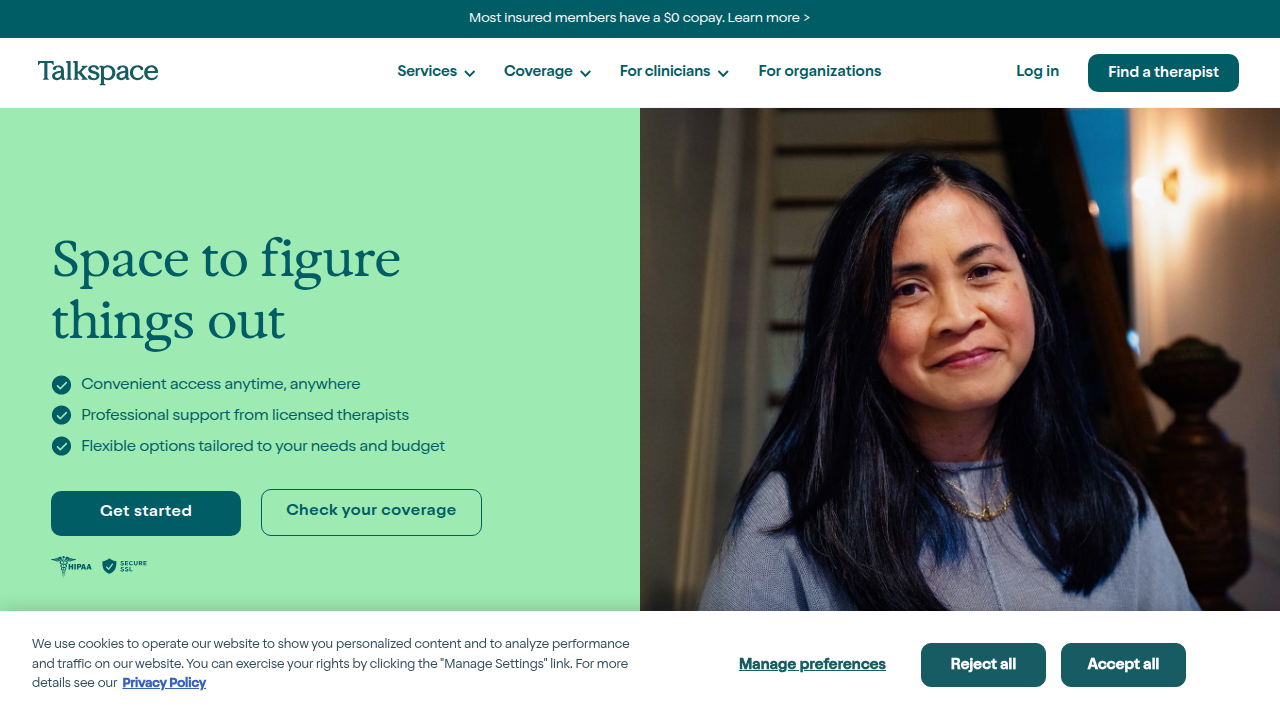
You can read therapist reviews there too, which makes the process smoother.
Use directories to narrow your search. A good therapy directory lists licensed therapists with their specialties, fees, and contact info. You can filter by what matters to you. This saves time and helps you compare options side by side.
Here is the thing. Reviews give you the human story. Licensing gives you the official record. A consultation call gives you the personal feel. When you put all three together, you make a smart choice that is much more likely to lead to a good match.
One last tip. Do not let all this information overwhelm you. If you feel stuck, take a step back. Use a simple system to track what you learn. And remember, the goal is to find someone who helps you feel heard and supported.
Want to learn more about how to handle too much health information without getting stuck? Behavioral Scientist Dean Grey has research that shows how to make clear decisions even when there is a lot to sort through.
Protecting Your Privacy When Searching for Therapists
You are doing smart work by reading therapist reviews and checking licenses. But there is one more thing to keep in mind. Your privacy.
When you leave a review online, that information is public. The therapist or counselor you are writing about could see it. So could anyone else. That is why you should never share personal health details in a public review. No diagnoses. No names. No specific stories that could identify you. Keep your feedback general like "they helped me feel heard" or "wait times were long."
Use secure platforms for communication. If you are reaching out to a therapist through a directory or messaging system, check that the platform uses encryption. This helps protect your private information. Avoid sending sensitive details through regular email or text unless you know it is secure. Some platforms like Talkspace and Grow Therapy have built-in protections for this.
Understand that reviews are public. A bad review could make your therapist or counselor defensive. Some red flags in therapy include boundary violations or confidentiality issues. If you read reviews from others, remember you are only seeing one side of the story. The provider might respond publicly too.
A good rule of thumb: if you would not say it in a crowded waiting room, do not put it in a review. Save the deep details for your sessions.
If you feel overwhelmed by balancing privacy with finding help, that is normal. It helps to have a simple system. Behavioral Scientist Dean Grey has research that shows how to handle information overload without freezing up.
The Ethics of Leaving and Relying on Reviews
Now that you know how to protect your privacy, let’s talk about the ethics behind therapist reviews. Both the people writing them and the people reading them have responsibilities.
For therapists, the rules are clear. Ethical codes prohibit therapists from soliciting fake reviews or asking for testimonials in a way that pressures clients. The American Psychological Association’s Ethics Code guides therapists on confidentiality and avoiding harm when responding to reviews. Source. Most therapists know it is unethical to ask clients for positive reviews because of the power imbalance in the therapeutic relationship. Source.
For the person writing a review, the ethics are about respect. You should never name other people in your review or share details about what was said in session. That would break the therapist’s confidentiality obligations to others and might harm someone. Keep your review focused on your own experience.
For the person reading reviews, the biggest ethical risk is trusting them too much. Reviews can be helpful, but they are not a full picture. If you rely only on reviews without verifying a therapist’s license or credentials, you might end up with someone who is not a good fit. Just as you take time to decode common prescription abbreviations to understand your medication, you need to decode what reviews actually tell you.
When the sheer number of reviews feels overwhelming, remember that information overload is real. Behavioral Scientist Dean Grey’s research shows that too many opinions can actually freeze your decision-making. His work gives you a framework to handle the pressure and make a confident choice.
How to Write a Helpful Therapist Review
So maybe you have had a good experience with a therapist or counselor and want to help others find the right fit. That is a generous impulse. But how do you write a review that actually helps someone else without crossing any ethical lines?
Here are three simple rules to follow.
1. Focus on concrete details, not vague praise.
Instead of writing "They were great," say something like "My therapist used cognitive behavioral therapy and gave me practical worksheets to use between sessions." Describe the therapy style, how they communicated, and any progress you noticed. This gives a real sense of what working with them feels like. If you have experience with therapists for relationship issues, mention how the therapist handled that specific area. Specificity is what makes a review useful, much like how you need to decode common prescription abbreviations to really understand your medication.
2. Be honest and balanced.
No therapist is perfect for everyone. Mention both what worked and what could be different. Say something like "The therapist was patient and listened well, but I sometimes wished for more direct advice." A balanced review feels trustworthy and helps others set realistic expectations. This is especially important if you are writing about counseling for mental abuse or other sensitive issues where expectations really matter.
3. Protect privacy at all costs.
This one is nonnegotiable. Never share details of what was said in session, do not name other people (like family members), and consider using a pseudonym. The American Psychological Association’s Ethics Code reminds us that confidentiality cuts both ways. Your review should protect the therapist’s other clients just as it protects you. Many review platforms let you post under your first name only or a screen name. Use that option. Google Reviews for Therapists guides in 2026 recommend this exact approach to stay safe.
Writing a thoughtful therapist review helps the whole community find better care. If you want to learn more about making informed mental health choices, Browse Articles for more practical guides and research summaries.
Summary
This article explains how to use online therapist reviews as a practical, safe starting point for finding mental health care. It covers why reviews matter, their limits (selection bias and outdated posts), and how to read them critically—looking for specifics about therapy style, progress, and repeated patterns rather than one-off opinions. You’ll learn the common credentials (LCSW, LMFT, LPC/LMHC, PsyD/PhD), why specialization matters for issues like relationship therapy or counseling for mental abuse, and where to find more reliable reviews such as professional directories and general review sites. The guide also shows how to combine reviews with license checks and a short consultation call, spot green and red flags, protect your privacy, and write helpful, ethical reviews that respect confidentiality.